
What Size Dehumidifier Do I Need for a 2000 Sq Ft House?
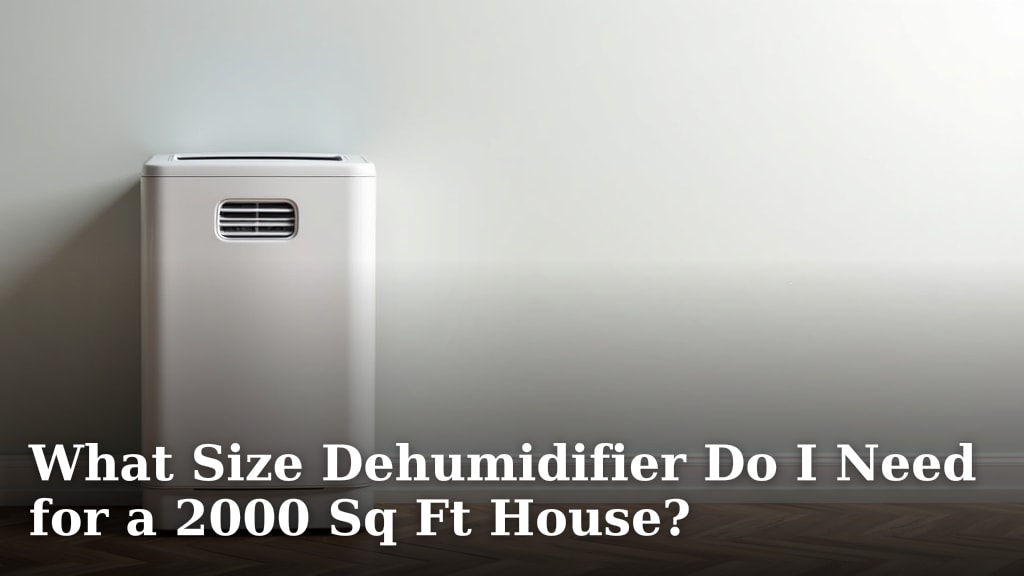
For a 2000 sq ft house, you’ll generally need a dehumidifier with a capacity of 30-40 pints per day. This range effectively tackles moderate humidity levels. Your exact needs might vary based on your home’s conditions, but this is a great starting point.
Picking the right size prevents underperforming units or energy waste. We found that matching the dehumidifier’s capacity to your home’s square footage and moisture level is key for comfort. Don’t worry, we’ll help you figure out the best fit for your space.
- Match dehumidifier capacity to your home’s size.
- Consider existing humidity levels in your house.
- Understand pint ratings and what they mean for you.
- Learn about different types of dehumidifiers.
- Find tips for optimal placement and use.
Ready to banish that muggy feeling? Let’s walk through exactly how to choose the perfect dehumidifier for your home.
Choosing the Right Dehumidifier Size for Your Home
For most 2000 square foot homes, a dehumidifier capable of removing 30-40 pints of moisture per day is a good starting point. This range handles average humidity levels effectively.
You’re looking for that sweet spot where your home feels comfortable, not clammy or bone dry. The right size prevents you from buying a unit that’s too small and runs constantly, or one that’s too large and wastes energy. Let’s break down how to find that perfect fit.
Understanding Dehumidifier Capacity: What Do Pints Mean?
When you see a dehumidifier rated in “pints per day,” it refers to the amount of moisture the unit can remove from the air in a 24-hour period. This is its capacity. A higher pint rating means it can remove more water.
Think of it like a car’s engine size. A bigger engine can do more work. Similarly, a dehumidifier with a higher pint capacity can handle more moisture in a larger space or a very damp environment.
We found that many manufacturers use standard testing conditions. These conditions often involve temperatures around 65°F and relative humidity around 60%. Your home’s actual conditions might differ, so it’s good to keep that in mind.
Standard Capacity Categories
Dehumidifiers usually fall into these general categories:
- Small Capacity (up to 20-30 pints): Best for small rooms, bathrooms, or closets.
- Medium Capacity (30-50 pints): Ideal for mid-sized rooms, apartments, or smaller homes. This is often where a 2000 sq ft home with moderate humidity would fit.
- Large Capacity (50-70+ pints): Suited for large basements, entire homes with high humidity, or very damp areas.
Since your home is 2000 sq ft, we’re likely looking at the medium to large capacity range, depending on how damp your home feels.
Assessing Your Home’s Humidity Level
Square footage is just one piece of the puzzle. Your home’s actual humidity level is a major factor. Is your house just a little clammy, or does it feel like a tropical rainforest indoors?
You can use a hygrometer, an inexpensive device, to measure your home’s relative humidity. We recommend keeping indoor humidity between 30% and 50% for optimal comfort and health (Environmental Protection Agency).
Humidity Levels and Their Impact on Dehumidifier Sizing
Let’s consider how different humidity scenarios affect the dehumidifier size you’ll need for your 2000 sq ft house.
| Humidity Description | Signs You Might Notice | Recommended Capacity for 2000 Sq Ft |
|---|---|---|
| Moderately Damp | Slightly clammy air, occasional musty odors in one or two areas. | 30-40 Pints |
| Very Damp | Sticky air, consistent musty odors, some visible moisture on surfaces. | 40-50 Pints |
| Wet | Wet spots on walls or floors, frequent condensation on windows, strong moldy smell. | 50-60 Pints |
| Extremely Wet | Standing water, significant condensation, severe mold growth. (Requires immediate professional attention first!) | 60-70+ Pints |
As you can see, the wetter your home, the more powerful (higher pint capacity) a dehumidifier you’ll need. Don’t undersize, or it will struggle to keep up.
Factors That Increase Indoor Humidity
What makes a home more humid? Several things can contribute to excess moisture. Understanding these can help you better gauge your needs.
- Local Climate: Living in a naturally humid region (like the Southeast US) means your home will likely be damper.
- Basements and Crawl Spaces: These areas are notorious for trapping moisture, especially if not properly sealed.
- Poor Ventilation: Lack of airflow in bathrooms or kitchens can let moisture build up from showers and cooking.
- Leaks or Water Intrusion: Even small plumbing leaks or cracks in the foundation can introduce significant moisture.
- Daily Activities: Things like showering, cooking, doing laundry, and even house plants release water vapor into the air.
If your 2000 sq ft home has a damp basement or is in a humid climate, you’ll want to lean towards the higher end of the recommended pint capacity.
Different Types of Dehumidifiers for Home Use
You’ll encounter a few main types when shopping for a home dehumidifier. Knowing the differences can help you pick the right one for your 2000 sq ft home.
Compressor Dehumidifiers (Refrigerant)
These are the most common type you’ll find. They work by drawing air over a cold coil, condensing the moisture, and then releasing dry air back into the room. They are very effective in warmer, more humid conditions (above 65°F).
If your 2000 sq ft home is primarily damp during warmer months, or if you plan to use it in conditioned spaces, a compressor model is a great choice.
Desiccant Dehumidifiers
Desiccant dehumidifiers use a special material that absorbs moisture from the air. They then use a heating element to dry out the desiccant and release the moisture into a water tank. They are more effective in cooler temperatures (below 60°F).
If you have a very cold basement or plan to use the dehumidifier in an unheated garage in your 2000 sq ft home, a desiccant model might be a better fit, though they can be less energy-efficient at higher temperatures.
Whole-House Dehumidifiers (Ducted)
These units are integrated directly into your home’s HVAC system. They treat the air for your entire 2000 sq ft home, offering consistent humidity control. They are more expensive to install but provide a comprehensive solution.
If you’re building a new home or doing a major HVAC upgrade, a whole-house unit could be a smart, long-term investment for consistent comfort.
Placement and Usage Tips for Optimal Performance
Even with the right-sized dehumidifier, placement matters. Proper use ensures it works efficiently in your 2000 sq ft house.
- Central Location: If you’re using a portable unit for a large area, place it in a central spot where air can freely circulate.
- Away from Walls: Give the unit at least 6-12 inches of space from walls and furniture to avoid blocking airflow.
- Close Doors and Windows: To maximize efficiency, keep doors and windows closed in the area you’re dehumidifying. Otherwise, you’re trying to dehumidify the outside!
- Continuous Drain Option: Many units have a hose attachment for continuous drainage, which is super handy if you have a floor drain or sink nearby. No more emptying the bucket!
- Regular Cleaning: Clean the air filter regularly, usually every 2-4 weeks. A dirty filter reduces efficiency and can damage the unit.
Your Dehumidifier Sizing Checklist
Ready to make your choice? Use this quick checklist to confirm you’ve considered all the key elements for your 2000 sq ft home:
- Home Size: Is your home approximately 2000 sq ft?
- Current Humidity: Have you measured or estimated your home’s dampness level (moderately damp, very damp, etc.)?
- Environmental Factors: Do you live in a humid climate or have a damp basement?
- Dehumidifier Type: Are you looking for a portable unit or a whole-house solution?
- Capacity Match: Does the pint rating align with your home’s size and humidity conditions?
- Drainage Preference: Do you want manual emptying or a continuous drain option?
By carefully reviewing these points, you’ll be well on your way to selecting the ideal dehumidifier that will make your 2000 sq ft home feel much more comfortable and fresh.
Conclusion
Choosing the right dehumidifier for your 2000 sq ft home doesn’t have to be complicated. You’ve learned that a 30-40 pint unit is often ideal, but your home’s unique dampness level, climate, and even basement conditions can shift that need. We covered how to assess your specific situation, from using a hygrometer to understanding different dehumidifier types.
Remember, a well-sized dehumidifier creates a healthier, more comfortable living space and saves energy. By using the checklist and tips we provided, you’re ready to make an informed decision and finally banish that muggy feeling for good. Go ahead and select the perfect unit for your home!
Frequently Asked Questions
Is a 50-pint dehumidifier too big for a 2000 sq ft house?
Generally, a 50-pint dehumidifier is not too big for a 2000 sq ft house, especially if your home is very damp, located in a humid climate, or has a damp basement. It offers more power to quickly reduce high humidity levels. However, if your home is only moderately damp, a smaller unit might be more energy-efficient.
How long should a dehumidifier run in a 2000 sq ft house?
Initially, you might need to run your dehumidifier continuously for 24-48 hours to bring the humidity down to your target level (30-50%). After that, it should run intermittently, cycling on and off as needed to maintain that set humidity. How long it runs depends on external humidity and how well your home is sealed.
Can one dehumidifier cover an entire 2000 sq ft house?
A single portable dehumidifier can effectively cover a 2000 sq ft house if it’s centrally located and the home has good airflow. However, for consistent humidity control throughout every room, especially if you have multiple levels or isolated damp areas, a whole-house (ducted) dehumidifier or multiple smaller units might be more effective.
Where is the best place to put a dehumidifier in a 2000 sq ft house?
For a portable unit covering a large area, place it in the most humid part of your home or a central location for best air circulation. Basements are common spots. Ensure it’s away from walls and furniture to allow unrestricted airflow. If only one area is damp, place it directly in that room.
How can I tell if my dehumidifier is working effectively?
You can tell your dehumidifier is working by noticing a drop in the relative humidity on its display or a separate hygrometer. The air should feel less sticky and more comfortable. You should also see water collecting in the water tank, or draining continuously if you have that option set up.
