
What Is the Best Dehumidifier for Mold?

The best dehumidifier for mold is a desiccant or refrigerant dehumidifier with an adjustable humidistat and a continuous drain option. These features allow you to control humidity levels precisely, which is key to preventing mold growth. We found that maintaining humidity below 50% effectively stops mold.
You’re likely dealing with musty smells or visible mold, and you want to know how to stop it. We understand your frustration. Choosing the right dehumidifier can make a big difference in your home’s air quality and your peace of mind. Many experts agree that reducing excess moisture is your first line of defense against fungal invaders.
- Target Humidity: Keep it below 50%.
- Dehumidifier Types: Desiccant or refrigerant models work best.
- Key Features: Look for an adjustable humidistat and continuous drain.
- Placement Matters: Put it where mold is a problem.
- Maintenance: Clean your dehumidifier regularly.
Below, we break down everything you need to know to select the perfect dehumidifier for your home and finally kick mold to the curb. Let’s get started!
Choosing the Right Dehumidifier to Combat Mold
The best dehumidifier for mold control uses either refrigerant or desiccant technology, features an adjustable humidistat, and offers continuous drainage. These elements give you the power to keep your home’s humidity below the mold-friendly zone.
Understanding How Dehumidifiers Fight Mold
Mold thrives in moisture. It’s that simple. If your home has too much humidity, mold spores will find a cozy spot to grow. A dehumidifier’s job is to pull excess moisture out of the air. Think of it like a sponge for your home’s atmosphere.
By lowering the relative humidity, you create an environment where mold can’t grow or spread. We found that keeping humidity levels under 50% is generally effective. Some sources even suggest below 60% is good, but 50% gives you a better safety margin (Environmental Protection Agency).
Dehumidifier Types: Which One is Best for Mold?
When you’re looking at dehumidifiers, you’ll mainly encounter two types: refrigerant (or compressor) and desiccant. Both work, but they do so in different ways and excel in different conditions.
Refrigerant Dehumidifiers
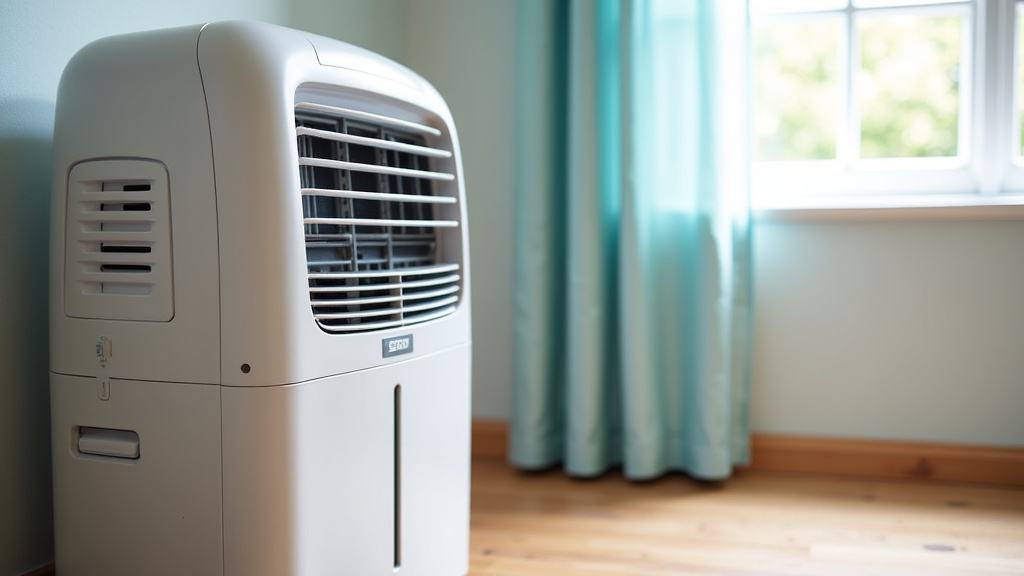
These are the most common types you’ll see. They work a lot like your refrigerator or air conditioner. Air passes over cold coils, and the moisture in the air condenses into water droplets, which then collect in a bucket. The drier air is then released back into the room.
- Pros: They’re very efficient in warmer, humid environments (above 65°F). They often have higher capacity and are generally more affordable to buy.
- Cons: They don’t work as well in cooler temperatures (below 60°F) because the coils can freeze up. This makes them less ideal for cold basements or garages. They can also be a bit noisier.
If your mold problem is in a warm, damp area, a refrigerant dehumidifier is a solid choice.
Desiccant Dehumidifiers
Desiccant dehumidifiers use a special material, often silica gel, to absorb moisture from the air. This material is typically mounted on a rotating wheel. As the wheel turns, a separate heater regenerates the desiccant, releasing the absorbed moisture into a collection tank.
- Pros: They work very well in cooler temperatures, even down to freezing. They are often quieter and lighter than refrigerant models.
- Cons: They tend to be less energy-efficient in warmer conditions and can be more expensive to purchase. They also produce some heat during operation, which might be a downside in already warm areas.
For chilly basements, garages, or unheated spaces, a desiccant dehumidifier is often the superior option for mold prevention.
Whole-House Dehumidifiers
These are built into your home’s HVAC system and control humidity throughout the entire house. They are a significant investment but offer comprehensive humidity control.
- Pros: Controls humidity in every room, no emptying buckets, less noticeable.
- Cons: Very expensive to install, not portable, may require professional help for maintenance.
For persistent, widespread humidity issues, a whole-house system could be worth considering, but for targeted mold problems, portable units are usually sufficient.
Key Features to Look For in a Dehumidifier for Mold
Beyond the type, certain features can make a big difference in how effective and convenient your dehumidifier is at fighting mold.
Adjustable Humidistat
This feature is like a thermostat for humidity. You set your desired humidity level (e.g., 45%), and the dehumidifier turns on and off automatically to maintain it. This saves energy and prevents the air from becoming too dry. Without one, you’d have to constantly monitor and manually control the unit, which isn’t practical.
Continuous Drain Option
Many dehumidifiers come with a small bucket you need to empty regularly. For mold prevention, you want a “set it and forget it” solution. A continuous drain allows you to attach a hose directly to a floor drain or sink. This means no more emptying buckets, ever. This is especially helpful if you’re using the dehumidifier in a basement or a vacation home.
Capacity (Pints Per Day)
Dehumidifier capacity is measured in pints of water removed per day. The right size depends on the area’s square footage and how damp it is. A larger capacity unit will remove more moisture faster. Too small a unit will run constantly and still not keep up. We found that most homeowners dealing with mold need at least a 30-pint unit for a medium-sized room, and up to 70 pints for very damp basements (DOE guidelines).
Here’s a quick guide to help you choose:
| Area Size (Sq Ft) | Condition | Recommended Capacity (Pints/Day) |
|---|---|---|
| Small (500-1500) | Slightly damp | 20-30 pints |
| Medium (1000-2000) | Moderately damp | 30-50 pints |
| Large (1500-2500+) | Very damp/Wet | 50-70+ pints |
Remember, these are guidelines. If your space is extremely wet or has poor ventilation, you might need to go up a size.
Auto-Defrost Feature
If you choose a refrigerant dehumidifier for a cooler space (like a basement that drops below 65°F), an auto-defrost feature is important. This prevents ice from building up on the coils, which would stop the unit from working. It cycles off the compressor periodically to melt any ice, ensuring continuous operation.
Built-in Pump
A continuous drain is great, but what if your drain is higher than the dehumidifier? That’s where a built-in pump comes in handy. It actively pushes the water upward through a hose, allowing you to drain into a sink or even out a window. This offers incredible flexibility for placement.
Where to Place Your Dehumidifier for Mold Control
Optimal placement is critical. You want to put your dehumidifier in the area where humidity is highest or where mold is most visible. Common problem spots include basements, crawl spaces, bathrooms, and laundry rooms.
- Place it in the center of the affected room, not tucked away in a corner. This allows for better airflow.
- Ensure there’s at least 6-12 inches of space around the unit for air circulation.
- Keep it away from walls, furniture, and curtains that could block its vents.
- If possible, close windows and doors in the area you’re dehumidifying to maximize efficiency.
Setting the Right Humidity Level
So, what’s the magic number for humidity? For mold prevention, you want to keep the relative humidity in your home between 30% and 50%. We found that staying below 50% is generally effective at stopping mold growth (American Society of Heating, Refrigerating and Air-Conditioning Engineers). Going too low (below 30%) can lead to other issues like dry skin, static electricity, and damage to wood furnishings. Aim for that sweet spot of 40-45% for both comfort and mold control.
Dehumidifier Maintenance for Long-Term Mold Prevention
Just like any appliance, your dehumidifier needs a little TLC to keep working effectively. Regular maintenance ensures it continues to pull moisture efficiently and prevents it from becoming a breeding ground for mold itself.
- Empty the water bucket regularly (if not using continuous drain). Don’t let it overflow.
- Clean or replace the air filter every 2-4 weeks, or as recommended by the manufacturer. A dirty filter reduces efficiency and can restrict airflow.
- Clean the coils once a season with a soft brush or vacuum to remove dust and debris.
- Wipe down the unit’s exterior and the inside of the water bucket to prevent mold or mildew growth on the unit itself.
- Check the drain hose (if applicable) for kinks or blockages.
Beyond the Dehumidifier: A Holistic Approach to Mold
While a dehumidifier is a powerful tool, it’s part of a larger strategy. If you have visible mold, you’ll need to clean it thoroughly first. A dehumidifier prevents it from coming back, but it won’t clean what’s already there. Also, fix any water leaks promptly. A dehumidifier can’t compensate for a leaky roof or a burst pipe. Think of your dehumidifier as your home’s bouncer, keeping unwanted moisture out, but you also need to patch the holes in the fence.
To truly beat mold, you need a multi-pronged approach. Here’s a quick checklist:
- Identify and fix any water leaks immediately.
- Clean up existing mold with appropriate cleaners and protective gear.
- Ensure proper ventilation, especially in bathrooms and kitchens.
- Use your chosen dehumidifier effectively and consistently.
- Monitor indoor humidity levels with a hygrometer.
- Consider mold-resistant paints or building materials in high-risk areas.
By combining these efforts, you can create a healthier, mold-free environment in your home. Your efforts will not only prevent mold but also improve overall air quality and comfort.
Conclusion
Choosing the best dehumidifier for mold means selecting a unit with an adjustable humidistat and continuous drain, whether it’s a refrigerant or desiccant model. By understanding your home’s unique needs, especially temperature and dampness levels, you can effectively combat mold. We found that maintaining humidity below 50% is your best defense against these unwelcome guests. Invest in the right dehumidifier, keep it well-maintained, and pair it with good ventilation and leak repair. Taking these steps gives you a powerful tool to protect your home and your health.
Frequently Asked Questions
Can a dehumidifier alone get rid of existing mold?
No, a dehumidifier cannot remove mold that has already grown. Its primary function is to prevent new mold growth by reducing moisture. You must first clean and remove any existing mold before using a dehumidifier to keep it from returning.
How quickly does a dehumidifier start working to reduce humidity?
You should notice a difference in humidity levels within a few hours of turning on your dehumidifier. The full effect, where the target humidity is consistently maintained, often takes 1-3 days, depending on the room size and initial moisture content.
Is it okay to run a dehumidifier 24/7?
Yes, many people run dehumidifiers continuously, especially in very damp areas like basements. With an adjustable humidistat and continuous drain, the unit will cycle on and off as needed to maintain your set humidity level, saving energy and preventing constant operation.
Do dehumidifiers use a lot of electricity?
Dehumidifier electricity usage varies greatly by model capacity and how often it runs. Larger units and those running constantly in very humid conditions will use more power. Look for ENERGY STAR certified models, as they are designed to be more energy-efficient.
Can a dehumidifier help with musty smells in my home?
Absolutely. Musty smells are a common indicator of mold or mildew growth due to high humidity. By removing excess moisture, a dehumidifier eliminates the environment where these odors thrive, significantly improving your home’s air quality and freshness.
