
How Many Pints Do I Need for a Bedroom?
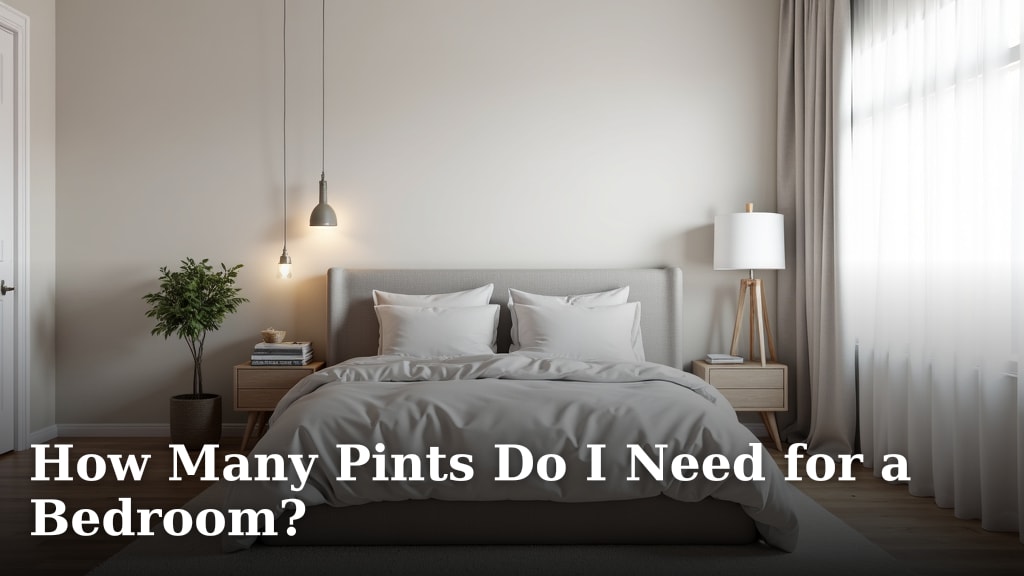
You generally need two to four pints of paint for a standard bedroom. This usually covers two coats on the walls. Larger rooms or those needing more coats might require a bit more.
Figuring out paint quantities can feel tricky, right? You want enough for a great finish, but you don’t want too much leftover. We found that considering your room size and ceiling height is key. Also, think about the type of paint and the surface you’re covering.
- Standard bedrooms need 2-4 pints.
- Always measure your room first.
- Factor in door and window areas.
- Two coats are almost always best.
- Darker new colors might need more paint.
Let’s walk through how to easily calculate exactly how much paint your bedroom truly needs. We’ll make sure you get it right the first time.
Figuring Out How Much Paint Your Bedroom Really Needs
The amount of paint you need depends on a few key factors. We found that the biggest influences are your room’s size, ceiling height, and surface condition. Getting this right saves you time and money.
Standard Room vs. Larger Spaces
Most bedrooms fall into a “standard” size. But what does that mean? We found that a typical bedroom is about 10×12 feet or 12×12 feet. This size often needs two to three pints for two coats on the walls.
If your bedroom is larger, say 15×20 feet, you’ll obviously need more paint. Think of each extra wall as another canvas requiring coverage. It’s not just about the floor space, but the total wall area.
What about those grand ceilings? A standard ceiling is around 8 feet high. If yours reaches 10 or 12 feet, that’s extra surface to cover. This easily adds another half pint or full pint to your estimate.
The Importance of Measuring Your Space
Guessing can lead to headaches. We always recommend taking a few minutes to measure accurately. It’s easier than you think and prevents multiple trips to the hardware store.
How to Measure Your Walls
Grab a measuring tape! First, measure the length of each wall. Write these down. Then, measure the height of your walls, from floor to ceiling. Most homes have consistent ceiling heights, but it’s good to check.
Once you have these numbers, you can calculate the square footage. Add up the lengths of all your walls to get the total perimeter. Then, multiply that total perimeter by the wall height. This gives you your total wall square footage.
For example, if your room is 10 feet by 12 feet, and the ceiling is 8 feet high:
- Wall 1: 10 feet long
- Wall 2: 12 feet long
- Wall 3: 10 feet long
- Wall 4: 12 feet long
Total perimeter: 10 + 12 + 10 + 12 = 44 feet. Total wall area: 44 feet x 8 feet (height) = 352 square feet. This number is your starting point for paint calculations.
Don’t Forget Doors and Windows
You won’t paint over your doors and windows, right? So, you should subtract their area from your total wall square footage. Measure the height and width of each door and window. Multiply them to get their individual areas.
Add up all those door and window areas. Then, subtract that total from your wall square footage. This gives you the paintable square footage. It makes your estimate much more precise.
If a door is 3 feet by 7 feet (21 sq ft) and a window is 3 feet by 5 feet (15 sq ft), you’d subtract 36 sq ft from your total. This small step can make a difference in how much paint you buy.
Understanding Paint Coverage Rates
Not all paints cover the same amount of area. We found that most paint cans will tell you their average coverage rate right on the label. This is a very helpful number to look for.
What the Paint Can Says
Typically, one pint of paint covers about 50-60 square feet per coat. However, some premium paints with better pigments might cover more, while cheaper paints might cover less. Always check the specific can you’re buying.
This coverage is usually for one coat on a smooth, primed surface. Keep in mind that your situation might be different. Rougher walls or unprimed surfaces absorb more paint.
Factors Affecting Coverage
Several things can change how far your paint goes. We’ve seen that these factors can make you need an extra pint or two.
- Surface Texture: Rough, textured walls (like popcorn ceilings or heavily stuccoed walls) soak up more paint than smooth drywall. They have more surface area for the paint to grip.
- Surface Porosity: Unprimed drywall is very porous, meaning it drinks up paint. Previously painted walls, especially with a glossy finish, are less porous. Priming always helps paint go further (Home Depot Guide).
- Color Change: Painting a dark wall a very light color, or vice versa, often requires extra coats. The old color can “bleed through” if not covered thoroughly.
- Paint Quality: Higher quality paints generally have better pigments and binders, leading to superior coverage in fewer coats. They might cost more upfront but save you money in the long run.
The Two-Coat Rule and Beyond
Why do we always talk about two coats? Because, in almost every situation, two coats are best. It gives you the truest color and the most durable finish.
Why Two Coats Are Essential
One coat might look okay initially, but we found that it often appears streaky or uneven once dry. The true, rich color of your chosen paint only comes out with the second coat. It also hides minor imperfections better.
Beyond aesthetics, two coats provide better durability. It creates a stronger film that stands up better to everyday wear and tear, scuffs, and cleaning. It’s like a protective shield for your walls.
Think of it like painting your nails. One coat looks thin and uneven; two coats give you that salon-quality finish and last longer. The same applies to your walls.
When You Might Need Three Coats
Sometimes, two coats just aren’t enough. We found that a third coat is often needed in specific scenarios:
- Dramatic Color Change: Going from a deep red to a pale yellow? A third coat, or even more, might be necessary to completely hide the old color.
- Poor Quality Paint: If you chose a very inexpensive paint, its coverage might be lower. This can force you to apply an extra coat for proper opacity.
- Unprimed, Porous Surfaces: New, unprimed drywall or heavily patched areas will absorb a lot of the first two coats. A third might be needed for a uniform look.
It’s always better to have a little extra paint on hand than to run out mid-project. A small amount of leftover paint is much better than having to pause and buy more.
Calculating Your Bedroom Paint Needs: A Simple Checklist
Let’s put it all together. Use this checklist to guide your calculation. It will help you arrive at a solid estimate.
| Step | Action | Example (10×12 ft room, 8ft ceiling) |
|---|---|---|
| 1 | Measure wall lengths. Add them up. | 10+12+10+12 = 44 feet |
| 2 | Measure wall height. | 8 feet |
| 3 | Calculate total wall area (length x height). | 44 x 8 = 352 sq ft |
| 4 | Measure doors/windows area. Subtract from total wall area. | (3×7=21) + (3×5=15) = 36 sq ft. 352 – 36 = 316 sq ft (paintable) |
| 5 | Determine paint coverage (from can, approx 50-60 sq ft/pint). | Using 55 sq ft/pint for example. |
| 6 | Calculate pints per coat (paintable area / coverage). | 316 / 55 = 5.75 pints (approx 6 pints for one coat) |
| 7 | Multiply by coats needed (usually 2). Add 10-15% buffer. | 6 pints x 2 coats = 12 pints. Add 10% (1.2 pints) = 13.2 pints total. |
A Quick Paint Purchasing Checklist
Before you head to the store, double-check these items. It helps ensure you get everything right on your first trip.
- Have you measured all walls and ceiling?
- Did you subtract areas for doors and windows?
- Are you planning on at least two coats of paint?
- Have you considered if your surface needs a primer first?
- Do you know the square footage coverage per pint for your chosen paint?
- Have you added a little extra for touch-ups or mistakes?
Common Mistakes to Avoid
We’ve all been there – rushing into a project only to realize we forgot something. With painting, a small oversight can mean a big delay. We found a few common pitfalls you can easily sidestep.
Underestimating or Overestimating
Running out of paint halfway through a wall is a nightmare. Color matching can be tricky, and batch variations can cause noticeable differences. It’s truly better to buy slightly more than you think you need. A little extra paint for touch-ups is always useful.
On the flip side, buying too much means wasted money and storage space. While a little extra is good, a whole unused gallon can be frustrating. That’s why accurate measurement is so important.
Forgetting About Primer
Primer isn’t always exciting, but it’s often essential. We found that primer creates a uniform surface for your paint, improving adhesion and often reducing the number of topcoats needed. It’s especially important for new drywall, dark-to-light color changes, or walls with stains.
Some paints are “paint and primer in one.” These can be a great option for simpler projects. However, for truly challenging surfaces or drastic color changes, a dedicated primer might still be your best bet.
When to Buy More Than Just Pints
Sometimes, your bedroom might be larger or need a lot more paint than a simple pint calculation suggests. Don’t be afraid to think bigger.
Considering Gallons for Larger Rooms
Most paint is sold in pints,
Conclusion
You now have the tools to accurately calculate your bedroom’s paint needs. Remember, a little measuring goes a long way in avoiding frustration. Don’t skip those crucial steps like subtracting windows and planning for two coats. By understanding coverage rates and factoring in potential challenges, you’ll feel confident heading to the paint store. Get ready to transform your bedroom with a fresh, beautiful finish, without the stress of running out or buying too much paint.
Frequently Asked Questions
Is it always necessary to use two coats of paint?
We found that for the best look and durability, two coats are almost always essential. One coat often appears streaky and doesn’t provide the true color or lasting protection your walls need.
Can I use leftover wall paint for trim or doors?
It’s generally not recommended. Wall paints are usually a different sheen and formulation than trim paints. Using wall paint on trim might not offer the same durability or smooth finish you’d want for those high-traffic areas.
What’s the difference between a pint of paint and a gallon?
A gallon is simply a larger unit of measure for paint. There are eight pints in one gallon. When you need a lot of paint, buying by the gallon is usually more cost-effective.
Should I prime my walls even if I’m using “paint and primer in one”?
For drastic color changes, very porous surfaces, or walls with stains, a dedicated primer is often still beneficial. “Paint and primer in one” works best on surfaces that are already in good condition and similar in color.
How can I store leftover paint properly for touch-ups?
Ensure the lid is sealed tightly to prevent air from getting in. Store the can upside down in a cool, dry place, away from extreme temperatures. This helps create a better seal and keeps the paint fresh longer.
