
Is a Dehumidifier Good for a Grow Tent?
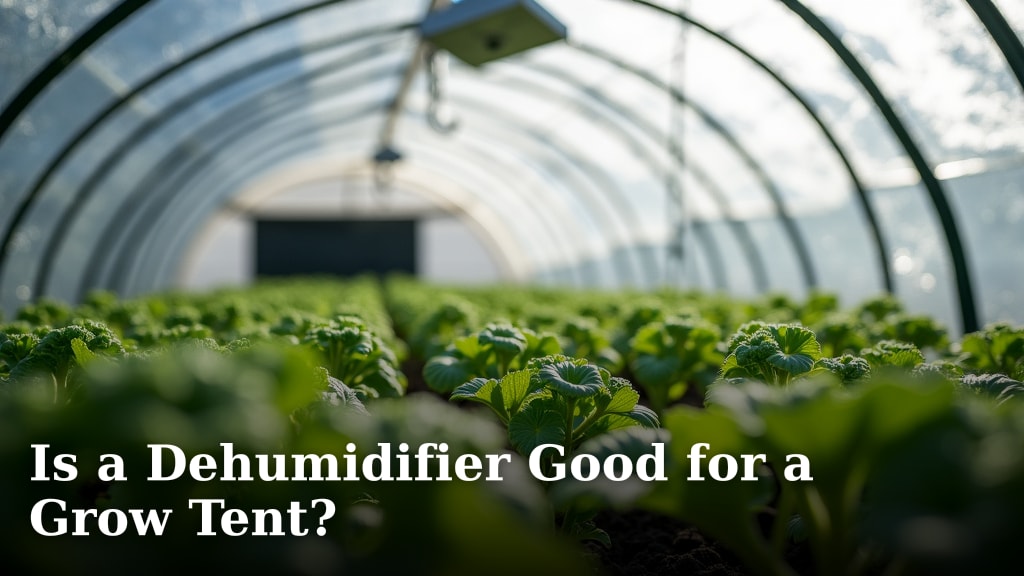
Yes, a dehumidifier is absolutely good for a grow tent. It helps you control humidity, which is vital for preventing mold and encouraging healthy plant growth. If your tent feels too damp, a dehumidifier can be a game-changer.
Maintaining the right humidity levels is key for indoor growing. Too much moisture can lead to common problems like powdery mildew and root rot. A dehumidifier helps you keep your plants happy and your grow space healthy.
- Dehumidifiers control humidity in grow tents.
- They prevent mold and promote plant growth.
- Proper humidity is essential for plant health.
- Too much moisture causes plant diseases.
Let’s walk through exactly why a dehumidifier is a smart addition to your grow tent setup.
You’re growing plants indoors, and you’ve probably heard about maintaining the perfect environment. Humidity plays a big role. Sometimes, your grow tent can feel like a sauna. That’s where a dehumidifier might come in handy. Let’s look at how one can help your leafy friends thrive.
Why Humidity Control Matters in Your Grow Tent
Think of your grow tent as a mini-environment. Just like us, plants need the right conditions to be healthy. Humidity is one of those conditions. It’s the amount of water vapor in the air. Too much, and your plants can get sick. Too little, and they might struggle to grow.
Many indoor growers face challenges keeping humidity just right. This is especially true in smaller spaces like grow tents. The plants themselves release moisture through transpiration. If your tent is sealed tight, this moisture builds up. That’s often when problems start to creep in.
The Risks of High Humidity
High humidity levels are a party invitation for unwanted guests. These include various types of mold and mildew. Powdery mildew is a common one. It looks like white dust on your plant’s leaves. It can spread quickly in damp conditions. This can stress your plants and reduce their yield.
Beyond mold, excessive moisture can lead to fungal diseases affecting the roots. Root rot is serious. It damages the plant’s ability to absorb water and nutrients. Many guidelines point to high humidity as a major risk factor for these issues (University Extension Services). Your plants will definitely not thank you for that.
The Benefits of Optimal Humidity
On the flip side, the right humidity levels can really boost your plants. For many common cannabis strains, there are ideal ranges. During the vegetative stage, plants like slightly higher humidity, perhaps 50-70%. As they move into flowering, they prefer it a bit drier, often between 40-50% (Cannabis Cultivation Guides).
When humidity is balanced, your plants can breathe easier. They can absorb CO2 more efficiently. This supports healthy photosynthesis. Stronger plants are also more resistant to pests and diseases. You’ll often see **faster growth** and **better overall health** when you hit that sweet spot.
How a Dehumidifier Contributes to Your Grow Tent Setup
So, how does a dehumidifier fit into this picture? Simply put, it’s a tool to manage that excess moisture. It pulls water vapor out of the air. This actively lowers the humidity percentage inside your tent.
Imagine your grow tent is a contained breathing space. Plants exhale moisture. Without proper ventilation or drying, that moisture stays. A dehumidifier acts like an air conditioner that doesn’t cool much but *dries* the air. It’s a **direct way to combat dampness**.
Taking Control of Your Environment
One of the biggest advantages of using a dehumidifier is the **predictability** it brings. Instead of guessing or hoping for the best, you can actively set and maintain your desired humidity. This is especially important if your home environment is naturally humid. Your local climate can heavily influence your tent’s internal conditions.
Let’s say you live in a basement or a humid coastal area. Without intervention, your grow tent might constantly be too wet. A dehumidifier gives you the power to override these external factors. You create a controlled zone, ensuring your plants get the conditions they need, when they need them. This **consistency is gold** for plant health.
Preventing Costly Plant Problems
Dealing with mold or root rot can be devastating. It can set back your grow cycle for weeks. Sometimes, it means losing your entire crop. The cost of replacing plants and lost time can be significant. A dehumidifier is a **preventative measure**.
By keeping humidity in check, you’re actively reducing the risk of these issues. It’s much easier and cheaper to prevent a problem than to fix it once it’s taken hold. Think of it as pest control for moisture-related problems. It’s a **smart investment** in your grow’s success.
Choosing the Right Dehumidifier for Your Tent
Not all dehumidifiers are created equal, especially for grow tents. You need to pick one that’s the right size for your space. A unit that’s too big might cycle on and off too much, which isn’t ideal. A unit that’s too small won’t be effective.
Consider the size of your grow tent. You’ll also want to think about its capacity, often measured in pints of water removed per day. For typical small to medium grow tents, smaller, portable units are usually sufficient. We want something effective but not overkill.
Key Features to Look For
When shopping, look for a few key features. **Adjustable humidistat** is a must. This allows you to set your target humidity level. The dehumidifier will then automatically turn on and off to maintain it.
Another important feature is the **water collection tank**. How large is it? Does it have an auto-shutoff when full? For continuous operation, some units offer a **drainage hose option**. This lets you continuously drain water out, so you don’t have to empty the tank manually.
Consider the **noise level**. Some dehumidifiers can be quite loud. If your grow space is near living areas, a quieter model might be preferable. Also, think about **energy consumption**. More efficient models will save you money on your electricity bill over time. Consider the energy consumption; more efficient models will save you money on your electricity bill over time.
Sizing Your Dehumidifier Correctly
Getting the size right is critical. A dehumidifier that’s too small will run constantly and still won’t lower humidity enough. A unit that’s too large might cool the air too much or cycle too frequently, which can be less effective for consistent humidity control.
As a general guideline, for a small grow tent (e.g., 2’x2′ or 3’x3′), a compact dehumidifier with a capacity of around 10-20 pints per day is often suitable. For larger tents (e.g., 4’x4′ or larger), you might need a unit with a capacity of 30-50 pints per day. Factors like ambient temperature and existing humidity levels also play a role (Energy Star Guidelines).
A Quick Sizing Guide (General Estimates)
Here’s a rough idea, but always check manufacturer recommendations:
- Small Tent (2’x2′ to 3’x3′): 10-20 pint capacity unit.
- Medium Tent (4’x4′): 20-30 pint capacity unit.
- Large Tent (5’x5′ or more): 30-50 pint capacity unit.
Remember, these are starting points. If your environment is very damp, you might need to size up.
Where to Place Your Dehumidifier
Placement matters for efficiency. You want the dehumidifier to circulate air well. Ideally, place it on the floor inside the tent. Make sure there’s some space around it for air intake and exhaust.
Avoid placing it directly against the tent walls or other equipment. Good airflow ensures it can effectively pull moisture from the entire space. If you’re using a drainage hose, make sure it’s routed properly to drain into a suitable container or drain.
Integrating a Dehumidifier with Your Ventilation
A dehumidifier and your ventilation system work together. Your exhaust fan is designed to remove heat and stale air. It also helps control humidity, but it might not be enough on its own.
If your tent is too humid, you might be tempted to just run your exhaust fan at a higher setting or more often. This can work, but it also removes heat. If you’re in a cooler stage of growth or live in a cooler climate, this can make your tent too cold. A dehumidifier addresses moisture **without significant cooling**. This gives you more control.
Finding the Right Balance
You’ll need to experiment to find the best combination. Some growers run their exhaust fan on a timer. They might use the dehumidifier to catch any humidity spikes between fan cycles. Others find that with a dehumidifier, they can run their exhaust fan less, saving energy and maintaining better temperatures.
Consider your grow light. Lights generate heat, which naturally lowers relative humidity. If you have a powerful light, you might need less dehumidification. If you’re using LED lights that produce less heat, your dehumidifier might be working harder.
Monitoring Humidity Levels
Even with a dehumidifier, you need to keep an eye on things. You’ll need a **hygrometer**. This device measures humidity. Many digital versions also measure temperature.
Place your hygrometer in the middle of your tent, away from direct airflow from the dehumidifier or fan. Check it regularly, especially when you first set up your dehumidifier. This helps you calibrate and understand how your system is working. Most experts recommend keeping humidity within a target range for optimal plant health (Plant Science Journals).
When to Use Your Dehumidifier
You’ll likely use your dehumidifier most during:
- Periods of high external humidity.
- When your plants are larger and transpiring more water.
- During the late stages of flowering, when lower humidity is preferred.
- If you notice condensation on the inside of your tent.
It’s a tool to be used as needed. You don’t necessarily need to run it 24/7. Pay attention to your hygrometer readings and your plants. They will often give you clues about the environment. You don’t necessarily need to run it 24/7; our guide explains when continuous operation is beneficial.
Dehumidifier vs. Other Humidity Control Methods
You might be wondering if there are other ways to control humidity. Ventilation is the primary method. An exhaust fan pulls moist air out and brings fresh air in. This is essential for any grow tent setup.
If your humidity is still too high after optimizing ventilation, a dehumidifier is often the next logical step. You can also use a humidifier if your humidity is too low, but that’s a different problem. For reducing humidity, a dehumidifier is the **direct solution**.
When Ventilation Isn’t Enough
Sometimes, your ventilation system just can’t keep up. This can happen in very small, sealed tents. It can also happen in environments with extremely high ambient humidity. In these cases, relying solely on ventilation might require running your fan at maximum settings constantly. This can be noisy and inefficient.
A dehumidifier can help take the load off your ventilation system. It tackles the excess moisture directly. This allows your fan to focus on air exchange and temperature control. It’s about **efficiently managing your environment**. Many growers find this combination works best for **consistent results**.
Potential Downsides to Consider
While very useful, dehumidifiers aren’t without their considerations. They do generate some heat. This might be a benefit in cooler environments but could be a problem in warmer setups. They also consume electricity.
The water tank needs to be emptied regularly if you don’t have a continuous drain. This is a task you’ll need to remember. And, as mentioned, some units can be noisy. So, weigh these factors against the benefits for your specific situation.
Heat Generation and Energy Use
Dehumidifiers work by condensing water vapor, and this process creates a small amount of heat. For many indoor grows, especially those with powerful lights, this extra heat can be absorbed by the exhaust fan. In cooler environments, this heat can actually be beneficial, helping to maintain warmer temperatures without needing a separate heater.
However, if you’re already struggling with high temperatures, a dehumidifier might make the problem worse. You’ll need to monitor your tent’s temperature closely. And, like any appliance, they use electricity. Choose an **energy-efficient model** if this is a major concern.
Maintenance and Noise
Remember that dehumidifiers are mechanical devices. They require some basic maintenance. This includes cleaning the air filter regularly to ensure efficient operation. The water tank also needs emptying, or a drain hose needs to be kept clear. These are **manageable tasks**.
Noise is another factor. If your grow tent is in your bedroom or a living area, a loud dehumidifier can be disruptive. Many manufacturers now offer quieter models, so look for those if noise is a concern for you. Reading reviews can give you a good idea of a unit’s noise level.
Conclusion
You’ve learned that a dehumidifier is a fantastic tool for your grow tent. It’s your best bet for actively managing humidity, preventing mold, and ensuring your plants thrive. Consistent humidity control means healthier growth and fewer worries about plant diseases. By choosing the right unit and placing it smartly, you create a stable environment your plants will love. Make this smart investment to help your indoor garden reach its full potential and achieve better results.
Frequently Asked Questions
Do I really need a dehumidifier if I have good ventilation?
Yes, even with good ventilation, a dehumidifier can be very beneficial. Ventilation helps exchange air but may not remove excess moisture efficiently, especially in humid climates or when plants are large. A dehumidifier directly targets moisture removal, working alongside your fan for optimal control.
Can a dehumidifier make my grow tent too cold?
A dehumidifier does produce a small amount of heat, which can sometimes help maintain warmer temperatures. However, if your tent is already struggling with heat, it could contribute to higher temps. Monitor your tent’s temperature closely and adjust your ventilation as needed.
How often do I need to empty the dehumidifier’s water tank?
This depends on the size of your dehumidifier, the humidity level, and the size of your tent. Smaller units in high humidity might need emptying daily. If you have a continuous drain option, you won’t need to worry about this task.
What’s the difference between a dehumidifier and an exhaust fan for humidity control?
An exhaust fan removes moist air and exchanges it with fresh air, also affecting temperature. A dehumidifier specifically pulls water vapor from the air, lowering humidity without significantly impacting temperature or air exchange rate. They are complementary tools.
Can I use a dehumidifier in a small seedling tent?
Generally, seedlings prefer higher humidity, so a dehumidifier isn’t usually necessary for them. You’ll likely only need one once your plants grow larger and begin transpiring more moisture, or if your ambient environment is unusually dry and requires more humidity. Focus on managing humidity for your mature plants first.
