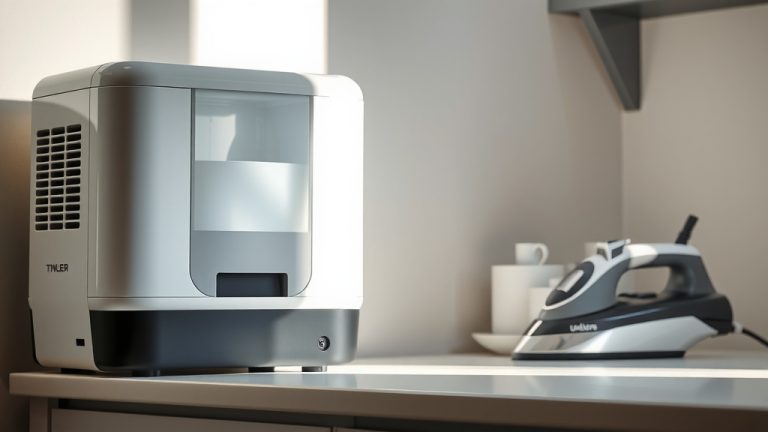
Are Dehumidifiers Good for Cooling?
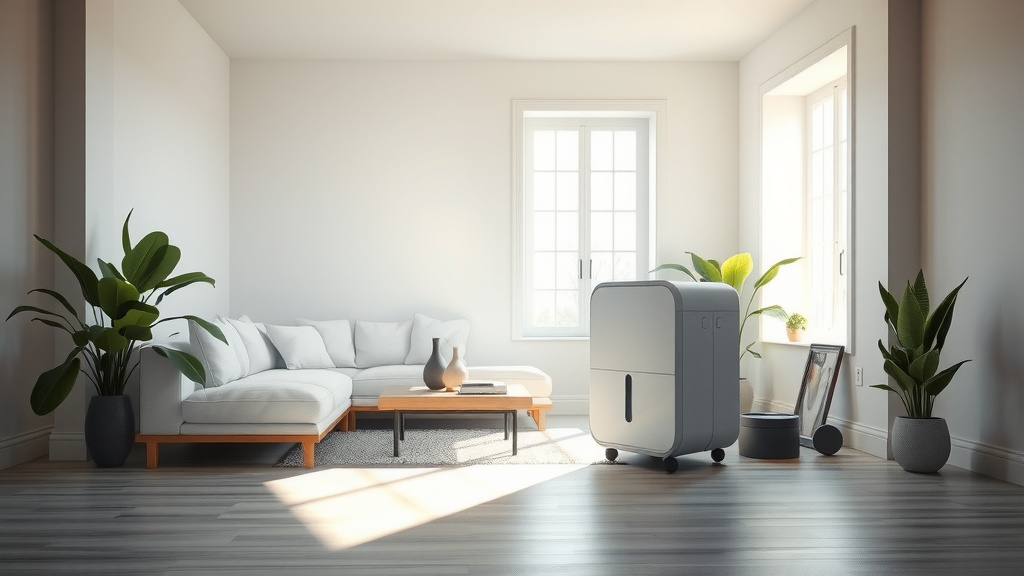
No, dehumidifiers are not designed to directly cool a room like an air conditioner.
They primarily remove moisture from the air, which can make a space feel cooler and more comfortable by reducing humidity.
- Dehumidifiers remove moisture, not heat, so they don’t actively cool your air.
- Removing humidity makes humid air feel much cooler and more comfortable for you.
- They work best *with* AC to boost comfort and even save energy.
- Some dehumidifiers can add a very small amount of heat to the room during operation.
- Understanding their true role helps you create a truly comfortable and healthy home environment.
Are Dehumidifiers Good for Cooling?
Dehumidifiers do not actively cool your home by lowering the air temperature. Their main job is to pull excess moisture out of the air.
This process can make your living space feel significantly more comfortable, especially on hot, muggy days, because humidity makes heat feel worse.
How Dehumidifiers Actually Work
Think of a dehumidifier as a magnet for moisture. It pulls humid air over cold coils inside the machine.
As the warm, moist air touches these cool surfaces, the water vapor condenses into liquid droplets. These droplets then fall into a collection bucket.
The now drier air is released back into the room. This cycle continues until your desired humidity level is reached.
The Science Behind “Feeling Cooler”
Your body cools itself through sweat evaporation. When the air is full of moisture, sweat cannot evaporate easily from your skin.
This means you feel hotter and stickier, even if the temperature isn’t extremely high. Removing humidity allows your body to cool itself naturally.
Many experts say that reducing indoor humidity by just 10-20% can make a 75-degree room feel like 70 degrees (EPA).
Dehumidifiers Versus Air Conditioners: Key Differences
It’s easy to confuse these two appliances, but they have distinct purposes. An air conditioner is a cooling appliance, while a dehumidifier focuses on moisture.
An AC lowers air temperature by removing heat. A dehumidifier lowers humidity by removing water vapor. You often want both for true comfort.
| Feature | Dehumidifier | Air Conditioner |
|---|---|---|
| Primary Function | Removes moisture from air | Removes heat from air |
| Impact on Temperature | Indirectly makes you *feel* cooler | Directly lowers air temperature |
| Impact on Humidity | Significantly lowers humidity | Lowers humidity as a byproduct |
| Energy Use | Generally less than AC for moisture removal | Higher, especially for cooling a whole house |
Beyond Cooling: The Real Benefits of Dehumidifiers
While dehumidifiers don’t directly cool, their benefits go far beyond just making a room feel less sticky. They play a big role in your home’s health.
Reducing humidity can prevent costly damage to your home and even protect your health. We found that proper humidity levels are key for many reasons.
Protecting Your Home and Health
- Mold and Mildew Prevention: Mold thrives in damp conditions. A dehumidifier stops it before it starts (CDC).
- Dust Mite Control: These tiny pests love humidity. Lowering moisture helps keep their populations down, reducing allergens.
- Protecting Wood and Furniture: Excess moisture can warp wood floors, doors, and furniture over time.
- Improved Air Quality: By curbing mold and dust mites, you often breathe easier. This is especially true for allergy sufferers.
- Eliminating Musty Odors: That damp, stale smell often comes from high humidity and mold growth. A dehumidifier removes it.
When to Use a Dehumidifier for Comfort
So, if they don’t cool, when should you use one? You should use a dehumidifier any time your home feels clammy, sticky, or has a damp odor.
Many experts point to relative humidity levels above 50-60% as a sign you need a dehumidifier (NIH). You can buy a hygrometer to check this easily.
Identifying High Humidity Areas
Basements are classic spots for high humidity. Garages, laundry rooms, and bathrooms are also common culprits.
You might notice condensation on windows or cold pipes. These are clear signs that a dehumidifier could greatly improve your comfort and protect your home.
Selecting the Perfect Dehumidifier
Choosing the right dehumidifier ensures you get the most comfort and efficiency. It’s not just about grabbing the first one you see.
Consider your space size and specific needs. A tiny bedroom won’t need the same power as a large, damp basement.
Understanding Dehumidifier Capacity
Dehumidifier capacity is measured in “pints per day.” This number tells you how much water the unit can remove in 24 hours.
We found that selecting a unit too small for your space means it will run constantly and still not reach the desired humidity. A unit too large might cycle on and off too quickly, wasting energy.
Essential Features for Your Needs
Look for features that make your life easier. An auto-shutoff feature prevents overflow when the bucket is full.
A continuous drain option lets you attach a hose, so you never have to empty the bucket manually. Adjustable humidistats and fan speeds also give you better control.
Mastering Dehumidifier Placement and Settings
Where you put your dehumidifier matters a lot. Proper placement helps it work efficiently and evenly dry the air in your room.
Also, setting the right humidity level is key to avoiding overly dry air and maximizing comfort without wasting energy.
Optimal Room Placement Tips
Place your dehumidifier in a central location within the dampest area. Keep it away from walls and furniture to allow for good airflow.
Make sure there are at least 6-12 inches of clearance around the air intake and exhaust vents. This helps the unit work its best.
Integrating with Your Air Conditioning
Using a dehumidifier alongside your air conditioner can be a power duo for comfort and efficiency. When the air is less humid, your AC doesn’t have to work as hard.
This means your AC can cool the air more effectively, and you might even be able to set your thermostat a few degrees higher. This can lead to noticeable energy savings (Energy Star).
Busting Common Dehumidifier Myths
There are many ideas floating around about dehumidifiers. Let’s clear up some common misunderstandings you might have heard.
It’s important to know what your appliance can and cannot do to manage expectations and use it most effectively.
Do Dehumidifiers Add Heat?
This is a common question. Yes, a dehumidifier does generate a small amount of heat during operation. It’s a byproduct of the motor running and the condensation process.
However, this added heat is usually minimal and is generally outweighed by the comfort you gain from reduced humidity. You likely won’t even notice it.
Quick Comfort Checklist
- Check your home’s humidity with a hygrometer.
- Aim for humidity between 40-50% for optimal comfort.
- Place your dehumidifier centrally in the dampest room.
- Keep doors and windows closed when running the unit.
- Clean the air filter regularly for peak performance.
- Use your dehumidifier with your AC for energy savings.
Conclusion
Dehumidifiers are not designed to cool your home like an air conditioner. They are specialists in one crucial area: removing excess moisture from the air.
By doing so, they make your environment feel much cooler, less sticky, and dramatically more comfortable. They also play a vital role in protecting your home from mold, dust mites, and moisture damage.
Understanding their unique function helps you create a healthier and more pleasant living space. When you pair a dehumidifier with your air conditioner, you get the ultimate comfort combo.
Can a dehumidifier make a room too dry?
Yes, a dehumidifier can make a room too dry if you set the humidistat too low or run it for too long in a small space. We found that experts generally recommend maintaining indoor humidity between 40% and 50% for optimal comfort and health. Going much lower than this can cause dry skin, irritated sinuses, and static electricity.
Is it cheaper to run a dehumidifier or an air conditioner?
A dehumidifier is generally cheaper to run than an air conditioner for its specific task. While a dehumidifier uses less electricity than an AC, it does not provide the same cooling effect. Many experts say that using both together can actually save you money on your overall energy bill, as the AC doesn’t have to work as hard to cool humid air.
Where is the best place to put a dehumidifier in a house?
The best place to put a dehumidifier is in the dampest part of your home. This is often a basement, crawl space, or a central area on the lower level. For specific rooms like a humid bedroom, place it centrally, away from walls and furniture, ensuring good airflow around the unit. Keep doors and windows closed in the area you are dehumidifying.
Do dehumidifiers purify the air?
No, dehumidifiers do not purify the air. Their primary function is to remove moisture, not airborne particles like dust, pollen, or pet dander. Some high-end models might include a basic filter to protect their internal components from large dust particles, but this is not an air purification feature. If you need air purification, you will need a dedicated air purifier.
How long should I run my dehumidifier each day?
The length of time you should run your dehumidifier depends on your home’s humidity levels and the size of the unit. Initially, you might need to run it continuously until the desired humidity (40-50%) is reached. After that, most modern dehumidifiers have a humidistat that will automatically turn the unit on and off to maintain your chosen humidity level, so it will run only as needed.