Can You Make Your Own Dehumidifier?
Yes, you can make your own dehumidifier using simple household items, but these DIY solutions are generally far less effective than commercial units.
While homemade dehumidifiers can offer a temporary fix for very small areas, they won’t tackle significant moisture issues in your home.
- DIY dehumidifiers typically use materials like rock salt, charcoal, or calcium chloride to absorb moisture.
- They are budget-friendly and easy to assemble, best suited for extremely confined spaces like small cupboards.
- Homemade methods offer minimal moisture removal compared to electric dehumidifiers.
- For any noticeable or widespread humidity problem, a proper commercial dehumidifier is essential.
- Always ensure good ventilation and consider safety when trying any DIY moisture control.
Ever walked into a room and felt that damp, heavy air? It’s an uncomfortable feeling, right? High humidity can make your home feel sticky, smell musty, and even promote mold growth. So, it’s natural to wonder if there’s a cheap, easy fix.
Perhaps you’ve seen ideas floating around about making your own dehumidifier. It sounds like a great idea to save some money and tackle that muggy air. But is it really a practical solution? Let’s dive in and see what’s possible.
Can You Make Your Own Dehumidifier?
Yes, you absolutely can rig up a basic dehumidifier at home. These DIY solutions rely on materials that naturally absorb moisture from the air.
Think of them more as tiny moisture absorbers rather than true dehumidifiers. They work on a much smaller scale.
Why Consider a DIY Dehumidifier?
The appeal of a homemade dehumidifier is obvious. It’s often about saving money, or maybe just satisfying your curiosity. We understand that wanting to try a quick fix is natural.
Perhaps you have a tiny space, like a storage bin or a small wardrobe, where humidity is a minor concern. These DIY tricks might offer a temporary band-aid solution.
The Core Concept Behind DIY Solutions
Most homemade dehumidifiers operate on a simple principle: hygroscopy. This is the ability of certain substances to attract and hold water molecules from the surrounding air. It’s like a tiny sponge for airborne moisture.
You’re essentially creating a passive system, unlike an active electric dehumidifier that pulls air through a cooling coil.
Simple DIY Dehumidifier Methods You Can Try
If you’re curious, there are a few common household items you can use. These methods are simple to assemble and require very few materials.
Remember, these are for small, localized problems, not for an entire room or basement.
The Rock Salt Method
Rock salt (calcium chloride) is a popular choice for DIY dehumidifiers. It’s inexpensive and readily available. Many experts point to salt as a simple absorbent (Cleveland Clinic).
Its natural absorbent properties make it suitable for collecting moisture. However, it collects water slowly and in small amounts.
How to Set Up Your Salt Dehumidifier
- Get a large plastic container.
- Drill several small holes near the bottom of the container.
- Place a smaller container inside, elevated slightly.
- Fill the top container with about 1-2 inches of rock salt.
- Position the whole setup in your humid spot, like a closet.
As the salt absorbs moisture, water will drip into the bottom container. You’ll need to empty this regularly. We found that this method works best in very small, enclosed areas.
Charcoal Briquettes for Absorption
Activated charcoal is known for its filtering abilities, and it can also absorb some moisture. You might have seen it in air purifiers or odor eliminators.
Just like salt, charcoal has limitations. It won’t work miracles, but it can help reduce musty smells along with a bit of humidity.
To use, simply place a bowl of charcoal briquettes (unlit, of course!) in the affected area. Replace them when they feel heavy or stop absorbing odors. We found that this helps more with smell than actual moisture removal.
Calcium Chloride: A More Potent Option
Calcium chloride is the active ingredient in many commercial moisture absorbers. It’s more powerful than regular rock salt in attracting water. You can buy it in crystal form.
This substance is more aggressive at pulling moisture from the air. However, it can be an irritant, so always handle it with gloves and keep it away from children and pets. Research often connects calcium chloride with effective water absorption (NIH).
You can use it similar to the rock salt method, placing it in a perforated container over an empty one to collect the runoff. Be very careful with placement.
How Effective Are Homemade Dehumidifiers, Really?
Let’s be honest: the effectiveness of DIY dehumidifiers is quite limited. They are not a substitute for a proper electric unit.
Think of them as a tiny bucket catching drips, not a pump removing floodwater. They offer a very modest reduction in humidity.
The “Catch” with DIY Solutions
Homemade dehumidifiers are passive. They don’t have fans to circulate air, meaning they only impact the air immediately surrounding them. This drastically reduces their reach.
Their capacity to absorb moisture is also very small. You’d need an incredible number of these setups to make a difference in even a small room. We found that they require constant monitoring and replacement of materials.
When DIY Might Be Enough
There are rare cases where a DIY solution might be “enough.” If you have a sealed plastic storage bin with some important papers, a small sachet of silica gel or a tiny bowl of rock salt might keep moisture at bay.
It’s about protecting specific items, not changing the air quality of a living space.
| Feature | DIY Dehumidifier | Commercial Dehumidifier |
|---|---|---|
| Cost | Very low | Moderate to high |
| Effectiveness | Extremely limited (tiny spaces) | High (rooms, basements) |
| Maintenance | Frequent material replacement/emptying | Regular tank emptying/filter cleaning |
| Coverage | Inches to a few feet | Hundreds to thousands of square feet |
| Speed | Very slow, passive | Fast, active (with fan) |
When to Call in the Big Guns (Commercial Units)
If you’re consistently noticing condensation on windows, musty smells throughout a room, or seeing signs of mold, a DIY solution simply won’t cut it. These are signs of a more serious humidity problem.
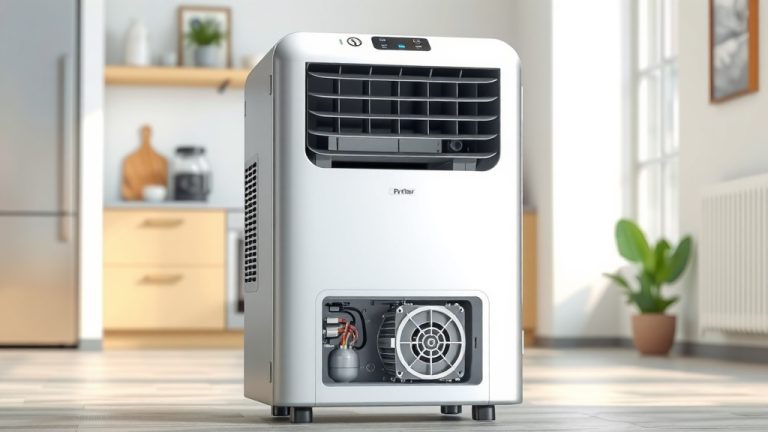
A proper commercial dehumidifier is designed to actively pull air, cool it to condense moisture, and collect that water in a reservoir. This is a robust solution.
Health Risks of Untreated Humidity
High humidity isn’t just uncomfortable; it can be a health hazard. It creates an ideal breeding ground for mold, mildew, and dust mites. Many guidelines point to controlling humidity as a good first step against allergens (Mayo Clinic).
These can trigger allergies, asthma attacks, and other respiratory issues. We found that maintaining indoor humidity below 60% helps greatly (CDC).
Energy Efficiency and Long-Term Costs
While an electric dehumidifier uses power, it’s far more efficient at removing moisture than any homemade option. The cost of continuously replacing salt or charcoal can add up. Plus, you’re not solving the core problem.
A good quality electric dehumidifier is an investment in your home’s air quality and structural integrity. Many experts say the benefits outweigh the running costs for persistent humidity issues.
Safety First: Important Considerations
When trying any DIY solution, safety should always be your top concern. Materials like calcium chloride need careful handling.
Always ensure the area has some ventilation, even if minimal. Stagnant, damp air is never good.
Keep any absorbent materials out of reach of children and pets. They might mistake them for food or toys, leading to potential harm.
Conclusion
Making your own dehumidifier can be an interesting experiment for very minor, localized dampness. It’s a fun way to use household items and understand basic science.
However, it’s crucial to have realistic expectations. For any significant or ongoing humidity problem in your home, DIY methods are simply not powerful enough. Investing in a proper commercial dehumidifier is the only way to effectively control moisture, protect your home, and safeguard your health. Listen to what your home is telling you about its humidity levels!
How long does a DIY dehumidifier last?
A DIY dehumidifier’s effectiveness lasts only as long as its absorbent material can hold water. For rock salt or charcoal, this might be a few days to a week before the material becomes saturated and needs replacement or drying out.
Can a homemade dehumidifier prevent mold?
A homemade dehumidifier is unlikely to prevent mold effectively in any noticeable area. Mold requires consistent humidity control, which passive DIY methods cannot provide. They might help a tiny, contained space, but not a room.
Are homemade dehumidifiers safe for pets and children?
It depends on the materials used. Rock salt (calcium chloride) can be harmful if ingested. Always keep any homemade setup out of reach of children and pets, or choose pet-safe alternatives if you must use them.
What are the signs I need a real dehumidifier?
If you see recurring condensation on windows, feel sticky air indoors, smell mustiness, notice peeling paint, or spot actual mold growth, these are clear indicators that you need a robust commercial dehumidifier to address the problem.
Can plants act as natural dehumidifiers?
No, plants generally release moisture into the air through a process called transpiration. While some might absorb tiny amounts from their surroundings, their overall effect is to increase, not decrease, indoor humidity.