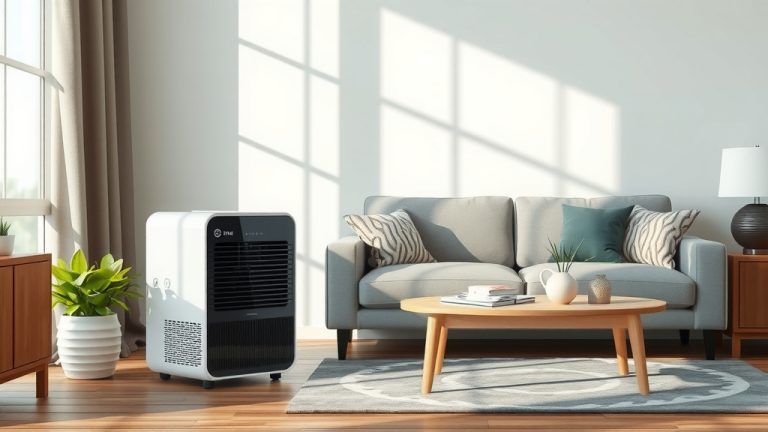
Can You Oversize a Dehumidifier?

Yes, you can oversize a dehumidifier, and doing so can actually lead to new problems rather than better air quality.
While a larger capacity unit might seem like a good idea, an oversized dehumidifier removes moisture too quickly, leaving the air feeling clammy and not adequately managing humidity levels long-term.
- An oversized dehumidifier removes moisture too fast, making your home feel clammy.
- It cycles on and off rapidly, wasting energy and wearing out components sooner.
- The unit won’t run long enough to properly filter air or remove musty odors effectively.
- It can lead to uneven dehumidification, with some areas still feeling damp.
Can You Oversize a Dehumidifier?
Yes, you absolutely can oversize a dehumidifier for your space. It’s a common misconception that buying the biggest unit available is always the best solution for dampness.
However, we found that an oversized unit often creates new, unwelcome issues that make your indoor environment less comfortable, not more so.
Why Bigger Isn’t Always Better
You might think a more powerful dehumidifier means faster results, right? But with dehumidifiers, bigger isn’t always the answer. When a unit is too large for the area, it can cause several unexpected problems for your home.
Think of it like trying to fill a teacup with a fire hose – it’s just too much too fast.
The Clammy Feeling
One of the most immediate problems you’ll notice with an oversized unit is a strange, clammy feeling in the air. This happens because the dehumidifier removes moisture too quickly from the air.
It doesn’t run long enough to also lower the air temperature. This combination can make your space feel cold and damp, even if the humidity percentage is technically low (research often points to this effect, Mayo Clinic).
Short-Cycling and Energy Waste
An oversized dehumidifier will turn on, quickly reach its target humidity, and then shut off. This rapid on-and-off cycle is known as “short-cycling.” It’s like turning your car on and off every few blocks instead of driving smoothly.
Short-cycling uses more energy than continuous operation and puts extra wear and tear on the unit’s components, shortening its lifespan. We found that this can significantly increase your electricity bill.
Missed Air Filtration Benefits
Many modern dehumidifiers come with filters that help clean the air as they remove moisture. If your unit is short-cycling, it won’t run long enough to pull sufficient air through its filters.
This means you miss out on those important air purification benefits, like reducing dust, pollen, or pet dander. You’re losing a key feature of your appliance.
Finding Your Perfect Fit: The Right Dehumidifier Size
Choosing the right size is all about balance. You want a unit that can effectively remove excess moisture without overdoing it. It’s about finding the Goldilocks zone for your space.
Many experts recommend carefully assessing your needs before making a purchase (Consumer Reports guidelines).
Consider Your Room Size
The first step is always to measure the square footage of the area you want to dehumidify. A unit’s capacity is usually listed in pints of water removed per day.
A smaller room needs a smaller capacity unit, while a larger open-plan area will require something more powerful.
Assess Your Home’s Initial Dampness
Beyond square footage, how damp is your home to begin with? Is it just slightly humid, or do you have visibly wet walls and musty odors? Your starting point influences the capacity you need.
Here’s a quick guide based on a 500 sq ft room, assuming an average temperature:
| Condition | Description | Recommended Capacity (Pints/Day) |
|---|---|---|
| Moderately Damp | Feels slightly damp, occasional musty odor. | 10-12 Pints |
| Very Damp | Feels damp, smells musty, mildew on walls/floor. | 15-20 Pints |
| Wet | Wet spots on walls/floor, continuous musty smell. | 25+ Pints |
Think About Your Climate
Do you live in a naturally humid climate, like the Southeast US, or somewhere drier? External humidity levels play a big role in how hard your dehumidifier needs to work.
Consider these factors when sizing your unit:
- Is your home in a constantly humid region?
- Do you have a basement prone to flooding?
- Are there frequent heavy rains where you live?
- Do you dry clothes indoors often?
- How many people live in your home (people add humidity)?
What Happens When a Dehumidifier is Just Right?
When you have the right-sized dehumidifier, it runs consistently but not constantly. It effectively maintains your desired humidity level, typically between 40-50% (CDC guidelines for optimal health).
The air feels comfortable, not clammy, and any musty odors disappear. Your unit also gets to run long enough to utilize its filtration systems, keeping your air cleaner.
What If You Already Oversized?
Don’t worry if you think your current dehumidifier might be too large. There are steps you can take to make the situation better without necessarily buying a new unit.
You can often adjust its settings or even its placement to optimize its performance.
Adjusting Settings
Many dehumidifiers allow you to set a target humidity level. Try setting it slightly higher, perhaps at 55% instead of 40%. This might allow it to run longer and more efficiently without short-cycling.
Experiment to find the sweet spot for comfort in your home.
Using it in Different Spaces
If your dehumidifier is too powerful for your bedroom, perhaps it’s perfect for your damp basement or a larger open-plan living area. Consider moving it to a space that has higher humidity challenges.
This can often be a simple and effective solution (many DIY guides suggest this, This Old House).
Consider a Smaller Unit
If adjustments don’t work, and you’re still experiencing the issues of oversizing, it might be time to invest in a smaller, more appropriately sized unit. You could use the larger one for extreme situations or in a different part of the house.
Sometimes, getting the right tool for the job truly makes all the difference.
Conclusion
While the thought of buying a bigger, more powerful dehumidifier might seem appealing, remember that when it comes to moisture control, size does matter, but not always in the way you expect. Oversizing a dehumidifier can lead to discomfort, wasted energy, and less effective air purification.
Taking the time to measure your space and assess its actual dampness will help you choose a unit that works harmoniously with your home, creating a truly comfortable and healthy environment. It’s all about finding that perfect balance for optimal humidity control.
Can an oversized dehumidifier make my house feel colder?
Yes, an oversized dehumidifier can make your house feel colder and clammy. This happens because it removes moisture too quickly without running long enough to cycle air and reduce the overall temperature effectively. You end up with dry air that feels cool but not comfortable.
What is short-cycling in a dehumidifier, and why is it bad?
Short-cycling is when a dehumidifier turns on and off very frequently and for short periods. It’s bad because it wastes energy, causes more wear and tear on the unit’s compressor and other components, and ultimately shortens the appliance’s lifespan, leading to more frequent repairs or replacement.
How do I know if my dehumidifier is the right size?
A properly sized dehumidifier will run consistently, but not constantly, to maintain your desired humidity level (typically 40-50%). The air should feel comfortable, not overly dry or clammy, and you shouldn’t notice excessive noise from frequent start-ups and shut-downs. It should be able to reach and hold the target humidity without struggling or overdoing it.
Can an oversized dehumidifier increase my electricity bill?
Yes, an oversized dehumidifier can definitely increase your electricity bill. The constant starting and stopping (short-cycling) inherent with an oversized unit uses more energy than if the unit ran for longer, more efficient cycles. This repeated power surge can add up significantly over time.
Should I get a dehumidifier with a humidistat for better control?
Absolutely, selecting a dehumidifier with a built-in humidistat is highly recommended for optimal control. A humidistat allows you to set a specific target humidity level, and the unit will automatically turn on and off to maintain that level, preventing both under-dehumidification and oversizing issues by reacting to your home’s actual needs.