Do I Need a Dehumidifier in an Apartment?
You likely need a dehumidifier in your apartment if you notice signs of high humidity, such as mold growth, musty smells, condensation on windows, or if you live in a naturally damp climate. These devices help maintain a healthy indoor environment.
A dehumidifier in an apartment effectively removes excess moisture from the air, preventing issues like mildew, allergen buildup, and structural damage to your living space and belongings. It’s a smart investment for comfort and health.
- You might need a dehumidifier if your apartment feels damp, smells musty, or shows condensation.
- High humidity can cause mold, mildew, dust mites, and worsen allergies or asthma.
- Dehumidifiers remove excess moisture, improving air quality and protecting your belongings.
- Look for visible signs of moisture or use a hygrometer to check your humidity levels.
- Choosing the right size and type is key for effective moisture control in your specific apartment.
Do I Need a Dehumidifier in an Apartment?
You probably do need a dehumidifier if your apartment struggles with excess moisture. It’s a common issue that affects both your comfort and health.
Understanding Apartment Humidity
Humidity simply measures the amount of water vapor in the air. In an apartment, certain activities like cooking, showering, and even breathing add moisture.
Without proper ventilation, this moisture gets trapped, creating a stuffy, damp environment. You might not always see it, but you can definitely feel it.
Signs Your Apartment Might Be Too Humid
How can you tell if your apartment is too humid? Look for some common indicators. You might notice a sticky feeling on your skin, even when it’s not hot.
Another big clue is a persistent musty or damp odor, especially in closets or less-used areas. Condensation forming on windows or cold pipes is also a clear sign.
Visible mold or mildew spots on walls, ceilings, or shower curtains are serious warnings. These are strong indicators that you need to address your apartment’s humidity.
Why High Humidity is a Problem
Excess humidity does more than just make your apartment feel uncomfortable. It can pose real threats to your health and damage your property.
Health Impacts of Excess Moisture
Many experts say that high humidity creates an ideal breeding ground for allergens. These include dust mites, mold spores, and even certain bacteria (CDC).
If you experience increased allergies, asthma symptoms, or persistent respiratory irritation, excess moisture could be a factor. We found that managing humidity can often ease these issues (Mayo Clinic).
Damage to Your Apartment and Belongings
Beyond health, high humidity can wreak havoc on your apartment itself. It encourages mold and mildew growth on surfaces and fabrics.
Your wooden furniture might warp, paint can peel, and even electronics can suffer damage. Think of your apartment as a living organism; it thrives best in a balanced environment.
How a Dehumidifier Works
A dehumidifier acts like a sponge for your air. It pulls in moist air, cools it over coils to condense the water, and then releases drier air back out.
The collected water drips into a bucket, which you then empty. It’s a simple yet very effective way to literally dry out your living space.
Types of Dehumidifiers for Apartments
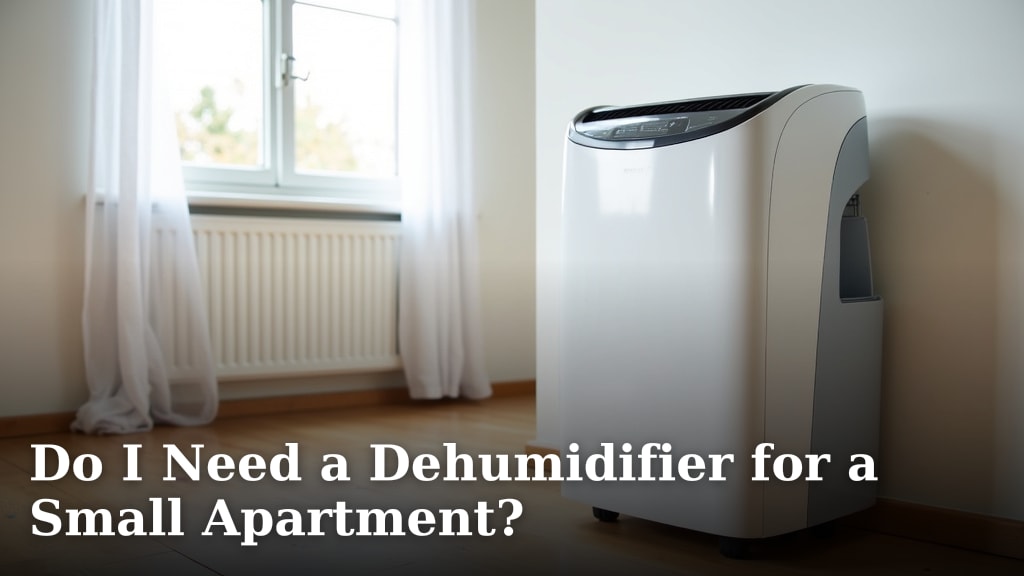
For apartments, you’ll typically look at portable dehumidifiers. These come in various sizes, often measured by their pint capacity per day.
Smaller units (around 30-50 pints) are common for apartments. You might also find desiccant models, which work well in cooler environments, unlike compressor types.
Measuring Your Apartment’s Humidity Levels
Want to know your exact humidity? Grab a hygrometer. These small, affordable devices give you an instant reading of the relative humidity in your air.
Many experts recommend keeping indoor humidity between 30% and 50% for optimal comfort and health (EPA). If your reading is consistently higher, a dehumidifier is a good idea.
| Humidity Level | What It Means | Dehumidifier Action |
|---|---|---|
| Below 30% | Too dry; can cause skin irritation, static. | No action needed; potentially add moisture. |
| 30-50% | Ideal comfort zone; healthy air quality. | Maintain current levels. |
| 50-60% | Slightly elevated; monitor for dampness. | Consider running occasionally. |
| Above 60% | Too high; prime for mold, dust mites. | Run dehumidifier consistently. |
When to Definitely Consider a Dehumidifier
If you live in a basement apartment, moisture control is often a must. Areas with high natural humidity, like coastal cities, also benefit greatly from a dehumidifier.
Do you dry clothes indoors often? Or perhaps you have a noticeable persistent mildew smell? These are all strong indicators it’s time for a dehumidifier.
- Do you see condensation on your windows or pipes?
- Does your apartment feel clammy or smell musty?
- Have you noticed any mold or mildew spots?
- Do you or your family members experience increased allergies or asthma symptoms indoors?
- Is your apartment below ground level or in a particularly humid climate?
- Do you dry laundry inside often?
Choosing the Right Dehumidifier for Your Space
Consider the size of your apartment when choosing a unit. A small studio might need a 30-pint model, while a larger two-bedroom could require a 50-pint unit.
Also, think about noise levels, especially if you plan to run it in a living area or bedroom. Look for features like an auto-shutoff when the bucket is full or a continuous drain option.
Placement Tips for Optimal Performance
For the best results, place your dehumidifier in a central location within the most humid area. Ensure there’s plenty of airflow around the unit, not tucked against a wall.
Avoid placing it directly in front of an air vent, as this can interfere with its operation. A good spot is often in a hallway or a living room.
Maintenance for Your Dehumidifier
Keeping your dehumidifier running efficiently is easy. You’ll need to empty the water bucket regularly, depending on how much moisture it collects.
Also, clean the air filter every few weeks to prevent dust buildup. A clean filter ensures the unit works effectively and lasts longer.
Alternatives to a Dehumidifier (When Possible)
While a dehumidifier is the most effective solution for high humidity, some other steps can help. Using exhaust fans in the bathroom and kitchen can reduce moisture immediately.
Opening windows for cross-ventilation, when outdoor humidity is low, also helps. However, these are often supplemental steps, not direct replacements for a dehumidifier in very damp conditions.
Conclusion
Deciding if you need a dehumidifier for your apartment comes down to observing your living space and understanding your local climate. If you’re seeing signs of dampness, smelling musty odors, or experiencing discomfort, it’s a wise investment.
A dehumidifier offers a straightforward, practical solution for creating a healthier, more comfortable apartment. It helps you control your environment and protect both your health and your belongings. Take control of your apartment’s air today!
How much electricity does a dehumidifier use?
The electricity usage of a dehumidifier depends on its size and how often it runs. Smaller models use less power, similar to a refrigerator, while larger ones will consume more. Look for Energy Star certified models to save on utility bills.
Can a dehumidifier help with allergies?
Yes, a dehumidifier can often help reduce allergy symptoms, especially if your allergies are triggered by mold, mildew, or dust mites. These allergens thrive in humid environments. By lowering humidity, you make your apartment less hospitable for them.
What size dehumidifier do I need for a studio apartment?
For most studio apartments, a 30-pint dehumidifier is usually sufficient. If your studio is particularly large, or you live in an exceptionally humid climate, you might consider a 40-50 pint model for better coverage.
How long should I run my apartment dehumidifier?
You should run your dehumidifier as long as necessary to maintain relative humidity between 30% and 50%. This might mean continuous operation in very damp conditions or only a few hours a day once ideal levels are reached. Many units have a humidistat to automatically control this.
Are there noiseless dehumidifier options for apartments?
Completely noiseless dehumidifiers are rare, as most have a fan or compressor. However, many models are designed for quiet operation. Look for units specifically advertised as “quiet” or check decibel ratings in product specifications. Desiccant dehumidifiers can sometimes be quieter than compressor models.