
Does a Dehumidifier Get Rid of Paint Smell?
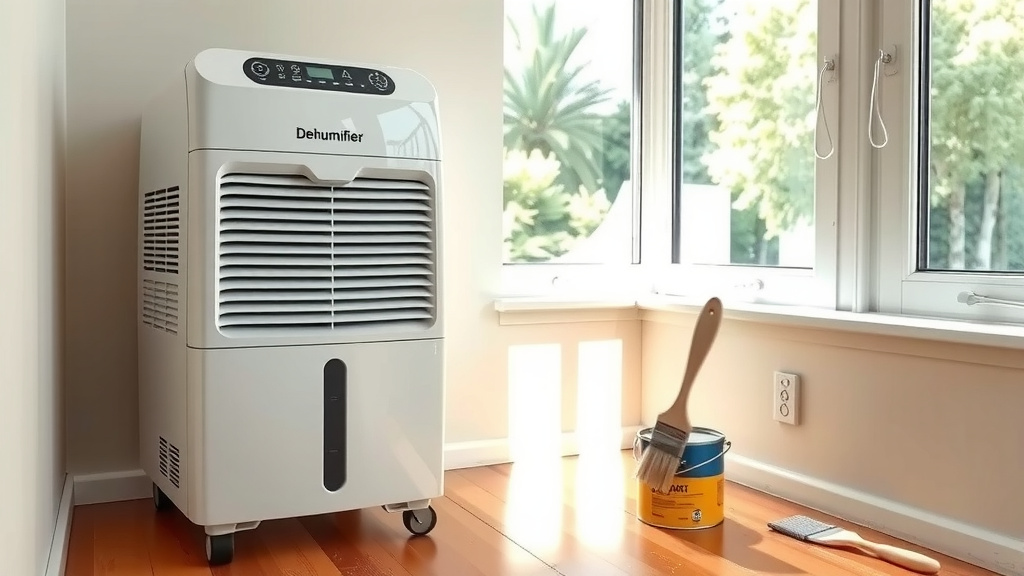
A dehumidifier primarily removes moisture from the air, but it does not directly get rid of paint smell, which is caused by volatile organic compounds (VOCs). While it might indirectly aid in faster drying, which can help dissipate the smell quicker, its main function isn’t odor removal.
To truly tackle paint smell, you need good ventilation and possibly an air purifier designed to filter out VOCs, as dehumidifiers aren’t built for chemical odor extraction.
- TL;DR: Dehumidifiers don’t remove paint smell directly.
- They handle moisture, not the chemical fumes (VOCs) that cause paint smell.
- Good ventilation is the most effective solution for fresh paint odors.
- Air purifiers with activated carbon filters are much better at removing VOCs.
- Dehumidifiers might help paint dry faster, which can shorten the time the smell lingers.
Does a Dehumidifier Get Rid of Paint Smell?
No, a dehumidifier does not directly get rid of paint smell. Its primary job is to extract moisture from the air.
You’ve just finished painting, and that distinct, strong smell is lingering. You might wonder if your trusty dehumidifier can help clear the air. It’s a common question, and we’re here to give you a clear answer.
A dehumidifier’s core function is to reduce humidity levels. It pulls water vapor from the air, making your space feel less damp. This is fantastic for preventing mold or creating a more comfortable environment. But paint smell? That’s a different beast entirely.
Understanding Paint Smell and VOCs
When you smell fresh paint, what you’re actually smelling are volatile organic compounds (VOCs). These are chemicals released into the air as the paint dries and cures. They aren’t moisture; they are airborne chemical particles.
Think of VOCs like tiny, invisible guests that throw a party in your nose. They are everywhere after painting, especially with oil-based paints, but even modern low-VOC paints still release some odors. These compounds can cause headaches or dizziness in some people, so dealing with them is important.
The length of time paint smell lingers varies greatly. It depends on the paint type, how well you ventilate the room, and even the temperature. Sometimes it’s a few days, sometimes weeks (Environmental Protection Agency).
How Dehumidifiers Work (and Don’t Work) on Odors
A dehumidifier works by drawing in humid air, passing it over cold coils to condense the moisture, and then releasing drier air. It’s like a tiny, focused cloud machine, but for your home. This process is excellent for battling dampness and humidity-related issues.
However, VOCs are not water vapor. They are gas-phase chemicals. A dehumidifier is simply not designed to capture or neutralize these chemical compounds. It’s akin to trying to catch a mosquito with a fishing net designed for tuna – different tools for different jobs.
So, while your dehumidifier is doing its best to make the air less sticky, it’s not filtering out the microscopic chemical particles that cause the paint odor. You need a different kind of tool for that.
Can a Dehumidifier Indirectly Help?
There’s a tiny “maybe” here, but it’s indirect. Paint dries faster in a less humid environment. If your room is very damp, a dehumidifier might help speed up the drying process. Faster drying means the paint releases its VOCs in a shorter timeframe.
So, it could potentially shorten the overall duration of the smell slightly. But it won’t actively remove the smell that’s already in the air. It’s a bit like giving the paint a gentle nudge to hurry up, rather than cleaning up the mess it’s making.
The Real Solutions for Paint Smell Removal
If you’re battling a paint smell, don’t rely solely on a dehumidifier. There are far more effective strategies you can use. Our research shows a combination of these methods works best for fresh paint smells.
Ventilation is Your Best Friend
The single most effective way to get rid of paint smell is good old-fashioned ventilation. Opening windows and doors creates a cross-breeze that literally blows the VOCs out of your home. It’s like airing out a stuffy shirt; you just need fresh air moving through.
Use fans to help circulate the air. Point box fans towards open windows to push stale, smelly air out. Ceiling fans also help mix the air, which can aid in pushing VOCs towards an exit point. Keep this up for several days, or even a week, after painting. Many experts say this is the gold standard for reducing post-painting odors (CDC).
Air Purifiers: A Better Choice for VOCs
If you want to actively remove airborne chemicals, an air purifier is the right device. Look for models with activated carbon filters. These filters are specially designed to absorb gaseous pollutants like VOCs, odors, and chemical fumes.
Unlike a dehumidifier, an air purifier with a carbon filter acts like a sponge for chemical odors. It pulls the smelly air in, traps the VOCs in its filter, and releases cleaner air. This is a direct approach to neutralizing those unwelcome paint odors.
Other Practical Tips to Banish the Fumes
Beyond ventilation and air purifiers, several simple household tricks can help absorb or mask paint smells:
- Bowls of Activated Charcoal: Place several bowls of activated charcoal (available at pet stores or garden centers) around the freshly painted room. It’s a natural odor absorber.
- Vinegar or Coffee Grounds: Bowls of white vinegar or fresh coffee grounds can also help absorb odors. Many people swear by this simple method.
- Sliced Onions: Some find that half an onion placed in a bowl absorbs paint fumes. It might seem strange, but it’s a popular home remedy.
- Baking Soda: Sprinkle baking soda on carpets or upholstery in the painted room. Let it sit for several hours, then vacuum it up. Baking soda is a fantastic odor neutralizer.
- Lemon Water: Bowls of lemon water can add a fresh scent while helping to absorb some mild odors.
Make sure to wash any reusable painting tools or spills thoroughly. Clean brushes and rollers immediately to prevent lingering smells from those sources. A good wipe-down of surfaces after painting can also reduce residual odors.
When to Call a Professional
If the paint smell is unusually strong, causes health issues, or persists for more than a few weeks despite your best efforts, consider seeking professional help. Sometimes, heavy-duty ventilation equipment or specialized air treatment might be needed. This is rare for typical house painting, but good to keep in mind for extreme cases.
Comparing Dehumidifiers vs. Air Purifiers for Odors
Let’s clarify the difference between these two devices when it comes to tackling odors. Knowing which tool is for which job makes all the difference.
| Feature | Dehumidifier | Air Purifier (with Carbon Filter) |
|---|---|---|
| Primary Function | Removes moisture from the air | Filters particles and gases from the air |
| Effect on Paint Smell | No direct effect; might aid drying process | Actively removes VOCs and chemical odors |
| What it Handles | Humidity, dampness, mold prevention | Dust, pollen, pet dander, smoke, VOCs, odors |
| Mechanism | Condensation on cold coils | HEPA filtration, activated carbon absorption |
Quick Checklist for Fresh Air After Painting
Ready to get that room smelling fresh again? Here’s a simple checklist to guide you:
- Open all windows and doors for continuous airflow.
- Place fans to push stale air out and pull fresh air in.
- Run an air purifier with an activated carbon filter.
- Set out bowls of activated charcoal or white vinegar.
- Clean up any paint drips or spills immediately.
- Consider painting during warmer, drier weather for better ventilation.
Conclusion
While a dehumidifier is a valuable tool for managing indoor humidity and preventing issues like mold, it’s not designed to eliminate paint smell. Paint odors are caused by VOCs, which are chemical compounds, not moisture. For these smells, ventilation is king, with air purifiers being a strong second line of defense. By focusing on air circulation and odor absorption, you can get your freshly painted space smelling clean and inviting much faster.
What is the fastest way to get rid of paint smell?
The fastest way to get rid of paint smell is by maximizing ventilation. Open all windows and doors, use multiple fans to create a cross-breeze, and consider running an air purifier with an activated carbon filter. This combination physically removes the odor-causing VOCs from the space.
How long do VOCs stay in the air after painting?
VOCs can linger in the air for varying lengths of time, depending on the paint type, ventilation, and temperature. While the strongest smell typically dissipates within a few days to a week, some VOCs can continue to off-gas at lower levels for several weeks or even months after painting. Proper ventilation helps reduce this significantly.
Are low-VOC paints truly odor-free?
Low-VOC paints contain fewer volatile organic compounds compared to traditional paints, which reduces their smell. However, they are not typically 100% odor-free. They will still have some smell, especially during application and initial drying, but it will be much milder and dissipate quicker than high-VOC options.
Can plants help reduce paint smell?
Some houseplants are known to filter certain airborne toxins, but they are generally not effective enough to make a significant difference in quickly removing strong paint odors. While beneficial for general air quality, relying on plants alone to combat fresh paint smell is not a practical solution; ventilation is far more impactful.
Is paint smell dangerous for pets or children?
Yes, strong paint fumes (VOCs) can be harmful to pets and children, who are more sensitive to airborne chemicals. Exposure can cause irritation to eyes, nose, and throat, headaches, or dizziness. It’s best to keep pets and children out of freshly painted areas until the smell has significantly dissipated through proper ventilation and air purification.
