Why Is My Dehumidifier Not Reaching the Set Humidity?
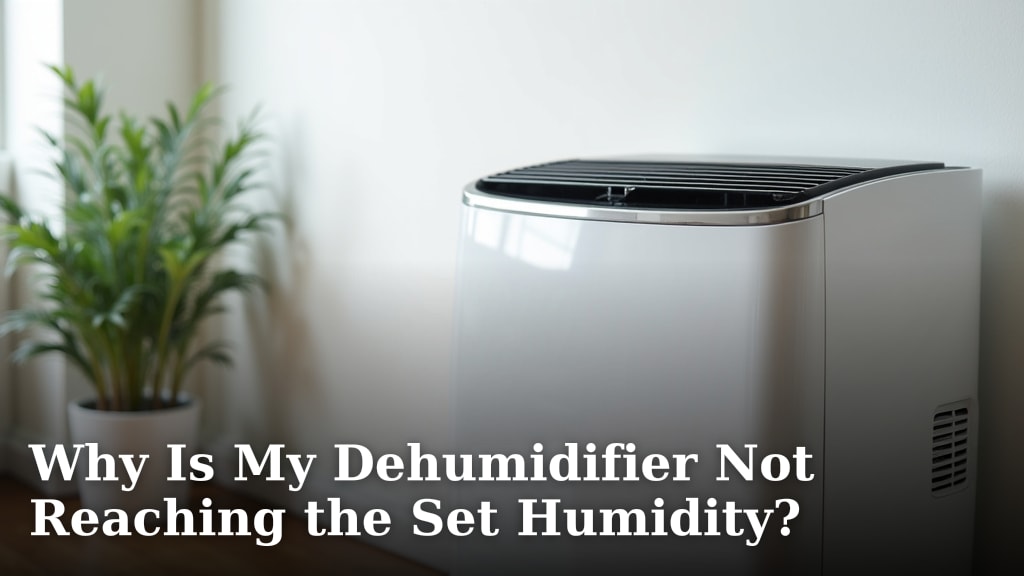
Your dehumidifier is likely not reaching the set humidity because of poor placement, a dirty filter, or a faulty humidistat. It could also be that the room size is too large for the unit. Sometimes, cold temperatures can also affect its performance.
It’s frustrating when your dehumidifier isn’t doing its job, isn’t it? We understand you want your home to feel comfortable and dry. Many factors can stop your dehumidifier from reaching the perfect humidity level. We found that most problems are easy to fix yourself.
- Check placement and room size.
- Clean or replace the air filter.
- Inspect for frost or ice buildup.
- Verify the humidistat settings.
Let’s walk through these common issues. We will help you get your dehumidifier working correctly again. You’ll be breathing easier in no time!
Why Your Dehumidifier Isn’t Reaching Its Target Humidity
There are several common reasons why your dehumidifier might struggle to hit its set humidity level. Often, it’s a simple fix.
Is Your Dehumidifier Placed Correctly?
Placement is surprisingly important. Many people just set it down and hope for the best. But where you put your dehumidifier can greatly affect how well it works.
Avoid Walls and Obstructions
Your dehumidifier needs room to breathe. We found that units placed too close to walls or furniture can’t circulate air properly. This means they won’t dry the room effectively.
- Give it at least 6-12 inches of space on all sides.
- Ensure air inlets and outlets are clear.
- Don’t tuck it away in a corner where air gets trapped.
Think of it like a fan; it needs open space to do its job.
Consider Room Layout and Airflow
Is your dehumidifier in the most humid part of the room? We often see people place them in a less-than-ideal spot. For example, if your bathroom is humid, placing the unit in a far hallway won’t help much.
Place the unit in the area with the highest humidity. This allows it to tackle the moisture at its source. Good airflow throughout the room is also key.
Is Your Dehumidifier Clean? Check the Filter!
A dirty filter is a common culprit. Just like your vacuum cleaner, a dehumidifier works by pulling air through a filter. If that filter is clogged, it can’t do its job.
The Importance of a Clean Air Filter
A dirty filter restricts airflow. This makes your dehumidifier work harder but less efficiently. It can’t pull enough moist air in, so it struggles to reach your desired humidity.
Many manufacturers recommend cleaning the filter every two weeks. If you have pets or allergies, you might need to clean it more often. A simple rinse with warm water is usually all it takes (GE Appliances).
Signs of a Clogged Filter
- Reduced airflow coming out of the unit.
- The unit runs constantly but humidity doesn’t drop.
- A strange smell coming from the dehumidifier.
- The “filter light” might be on (if your unit has one).
We found that checking the filter should always be one of your first steps. It’s an easy and often overlooked solution.
Is Your Room Too Big for the Dehumidifier?
Dehumidifiers come in different sizes, measured by their pint capacity. This capacity indicates how much moisture they can remove in 24 hours. Using a unit that’s too small for your space is like trying to dry a swimming pool with a sponge.
Matching Dehumidifier Size to Room Size
You need to consider the square footage of your room and how humid it typically is. For example, a small 30-pint unit won’t do much for a large, very damp basement.
| Room Size (Sq Ft) | Conditions | Recommended Pint Capacity |
|---|---|---|
| Up to 500 | Moderately Damp (feels damp sometimes) | 20-30 Pints |
| Up to 1,000 | Very Damp (always feels damp, musty) | 30-45 Pints |
| Up to 1,500 | Wet (damp spots on walls/floor) | 45-60 Pints |
| Up to 2,500 | Extremely Wet (standing water, leaks) | 60-90 Pints |
If your current unit is too small, it will run constantly and still not reach your set humidity. You might need a larger unit or consider running two smaller ones in different areas.
Cold Temperatures Affect Performance
Did you know that cold can stop your dehumidifier from working? It’s true! Most dehumidifiers are designed to work best in warmer temperatures.
Why Cold Leads to Freezing
Dehumidifiers work by drawing air over cold coils. The moisture in the air condenses on these coils, just like water droplets on a cold glass. If the room temperature is too low (typically below 65°F or 18°C), these coils can get too cold and freeze up.
When the coils ice over, airflow stops. The unit can’t remove moisture. It’s like trying to remove water from an ice block. Many units have an auto-defrost feature, but it takes time and reduces efficiency.
Ideal Operating Temperatures
For optimal performance, we found that most dehumidifiers work best between 65°F and 90°F (18°C and 32°C). If you’re using it in a cold basement or garage, this could be your problem.
You might need a specialized “low-temperature” dehumidifier if you operate it in a consistently cool environment.
Is Your Humidistat Working Right?
The humidistat is like the thermostat for your humidity. It senses the current humidity and tells the unit when to turn on and off. If it’s faulty, it can give incorrect readings.
Checking Your Humidistat Settings
First, make sure you’ve set your desired humidity correctly. A common indoor humidity target is between 40-50% (EPA). If you set it too low, like 20%, your unit might struggle to ever reach it, especially in very humid climates.
Try setting your unit to a lower percentage than your current reading. For example, if your room is 60% humidity, set the dehumidifier to 50%. See if it kicks on and starts reducing the humidity.
How to Test for a Faulty Humidistat
If you suspect the humidistat, you can use a separate hygrometer (a device that measures humidity) to compare readings. Place the hygrometer near your dehumidifier. If the readings are significantly different, your unit’s humidistat might be inaccurate.
Sometimes, simply unplugging the unit for a few minutes and plugging it back in can reset the electronics, including the humidistat. It’s worth a try!
Is Water Draining Correctly?
A dehumidifier collects water. If that water isn’t draining, the bucket will fill up, and the unit will stop working. Many units have an automatic shut-off when the bucket is full.
Check the Water Bucket and Drain Hose
Is the water collection bucket full? This is a super simple check, but it’s often overlooked. Empty the bucket and see if the unit restarts.
If you’re using a continuous drain hose, make sure it’s not kinked or clogged. The hose needs a downward slope for gravity to do its work. If there’s no slope, water won’t drain, and the bucket will fill up.
- Ensure the hose is clear of debris.
- Verify a continuous downward slope.
- Check for any blockages at the drain outlet.
Checklist for Troubleshooting Your Dehumidifier
Here’s a quick list to help you get your dehumidifier back on track:
- Ensure the unit has proper clearance from walls and furniture.
- Clean the air filter thoroughly.
- Verify your dehumidifier’s pint capacity matches room size. If one unit isn’t enough, our guide on How Many Dehumidifiers Do You Need can help you decide if you need more.
- Check the room temperature; raise it if it’s too cold.
- Confirm your humidistat settings are reasonable.
- Empty the water bucket or check the drain hose for clogs.
Going through these steps will often reveal the problem. Most issues are minor and can be fixed without needing a professional.
Conclusion
Don’t let a struggling dehumidifier get you down. Most issues, as we’ve discussed, are simple to diagnose and fix right at home. By checking placement, keeping your filter clean, confirming the right size, and understanding temperature impacts, you can restore your unit’s efficiency.
We found that a little troubleshooting goes a long way. Take action on these tips to bring your home’s humidity back to comfortable levels. You’ll breathe easier and protect your home from moisture damage!
Frequently Asked Questions
How long should it take for a dehumidifier to lower humidity?
The time it takes varies widely based on room size, initial humidity, and the unit’s capacity. Generally, you should notice a significant difference within a few hours to a day. Large, very damp spaces will naturally take longer.
Can a dehumidifier make a room too dry?
Yes, it can. Setting your dehumidifier too low, especially in drier climates, can lead to static electricity, dry skin, and wood damage. Most experts recommend keeping indoor humidity between 40-50% for optimal comfort and health.
Why is my dehumidifier running but not collecting water?
If your dehumidifier is running but not collecting water, the ambient humidity might already be low. Other common reasons include very cold room temperatures causing frost, a dirty filter restricting airflow, or a faulty humidistat giving incorrect readings.
Is it better to run a dehumidifier continuously or on a timer?
Running it on a humidistat setting is generally best. This allows the unit to cycle on and off as needed to maintain your desired humidity level. Running it continuously, without a humidistat setting, can waste energy and over-dry the air.
Can an old dehumidifier be inefficient even if it seems to work?
Yes, older dehumidifiers can become less efficient over time. Components can wear out, and newer models often have better energy efficiency ratings. If your unit is old and consistently struggles despite troubleshooting, it might be time to consider an upgrade.