
Can a Small Dehumidifier Work in a Large Room?
So, you’re wondering if that small dehumidifier you’ve got tucked away can handle a large room? The short answer is: it’s unlikely to be very effective. While a small unit might make a slight dent, it won’t adequately control the humidity across a big space.
Think of it like trying to dry a wet car with a single paper towel. It’s just not the right tool for the job. For larger areas, you really need a dehumidifier built for size. Trying to force a small one will likely lead to disappointment and still leave you with that sticky, damp feeling.
- Small dehumidifiers are best for small, enclosed spaces.
- Large rooms need dehumidifiers with a higher capacity.
- Using a small unit in a big room results in ineffective humidity control.
- You’ll likely end up with a damp room and a wasted effort.
We found that matching the dehumidifier’s capacity to your room’s square footage is key. Let’s break down why this matters and what to look for. Our guide to sizing a dehumidifier for a room explains the math.
Assessing Dehumidifier Size for Your Space
So, you’re wondering if that small dehumidifier you’ve got tucked away can handle a large room? The short answer is: it’s unlikely to be very effective. While a small unit might make a slight dent, it won’t adequately control the humidity across a big space. Many experts agree that matching dehumidifier capacity to room size is essential for effective moisture removal (EPA).
Think of it like trying to dry a wet car with a single paper towel. It’s just not the right tool for the job. For larger areas, you really need a dehumidifier built for size. Trying to force a small one will likely lead to disappointment and still leave you with that sticky, damp feeling. We found that matching the dehumidifier’s capacity to your room’s square footage is key.
Understanding Dehumidifier Capacity and Room Size
Dehumidifiers are rated by their water extraction capacity, usually in pints per day. This isn’t about how much water the tank holds, but how much moisture it can pull from the air. Manufacturers typically provide recommendations based on square footage and the general dampness of the space.
A small dehumidifier, often those rated for 20-30 pints per day, is generally designed for spaces up to 500 square feet. This might include a small bedroom, a bathroom, or a closet. If your room is significantly larger than this, a small unit will simply struggle to keep up.
The “Pint” Rating Explained
The pint rating is a standard way to measure a dehumidifier’s power. A 30-pint dehumidifier, for instance, is expected to remove up to 30 pints of water from the air in a 24-hour period under specific test conditions. These conditions are usually set at 80°F and 60% relative humidity.
It’s important to note that real-world performance can vary. Factors like lower temperatures or less humid conditions might mean the unit removes fewer pints than its rating. This is why it’s always better to err on the side of a larger capacity if you’re unsure.
Why a Small Dehumidifier Fails in a Large Room
When you place a small dehumidifier in a large room, it can’t circulate air effectively enough to cover the entire area. It might dry out the immediate vicinity, but the rest of the room will remain humid. This leads to uneven moisture levels and persistent dampness in different parts of the space.
The unit will likely run constantly, working overtime without achieving the desired humidity level. This constant running can lead to increased energy consumption without delivering the results you want. You might even notice the unit struggling to fill its small tank, as it’s working so hard and still not making a dent in the overall humidity.
The Impact of Airflow and Circulation
Airflow is critical for any dehumidifier to work efficiently. The unit needs to draw in moist air, condense the moisture, and then release drier air back into the room. In a large space, a small dehumidifier simply doesn’t have the fan power or capacity to move enough air around to make a difference throughout the entire area.
Imagine a tiny fan trying to cool down a gymnasium. It might create a small breeze right in front of it, but the rest of the space will remain stagnant. The same principle applies to dehumidifiers and humidity. You need a unit that can effectively move and process the air for the entire volume of the room.
Energy Inefficiency and Wear and Tear
Constantly running a dehumidifier that’s too small for the job isn’t just ineffective; it’s also energy-inefficient. The motor will be under constant strain, potentially leading to a shorter lifespan for the appliance. You’re essentially using more electricity for less (or no) result.
Many homeowners find they spend more on electricity in the long run when using an undersized unit. It’s a classic case of buying the wrong tool and paying for it twice. Many energy efficiency guidelines suggest that properly sized appliances generally operate more efficiently (Energy Star).
What Dehumidifier Size Do You Actually Need?
To determine the right size dehumidifier for your large room, you need to consider its square footage. Manufacturers and consumer organizations often provide charts or guidelines to help you match capacity to room size and desired humidity levels. We found these charts to be quite helpful. To determine the right size dehumidifier for your large room, consult our guide.
For example, a room that is 1000 square feet might need a dehumidifier with a capacity of 50-60 pints per day, especially if it’s quite damp. If the room is even larger, say 1500-2000 square feet, you’d be looking at units with 70-pint capacity or higher.
Calculating Your Room’s Square Footage
This is the first and most important step. Measure the length and width of your room in feet and multiply them together. For example, a room that is 20 feet long and 25 feet wide is 500 square feet (20 x 25 = 500).
If you have an irregularly shaped room, break it down into smaller rectangular or square sections, calculate the area of each, and then add them up. This gives you a clear picture of the volume you’re working with.
Considering Room Dampness and Climate
Beyond square footage, the level of humidity in your room plays a big role. Is it a basement prone to mustiness? A bathroom with poor ventilation? Or just a generally humid climate area? These factors mean you might need a slightly larger capacity unit than the basic square footage recommendation suggests.
Additionally, if your home is located in a particularly humid region, like the Southeastern United States, you’ll likely need a more robust dehumidifier. The U.S. Department of Energy notes that larger capacity units are often necessary in high-humidity environments (DOE).
Recommended Dehumidifier Capacities by Room Size
Here’s a general guide based on common recommendations. Remember, these are starting points, and you may need to adjust based on your specific conditions.
| Room Size (Square Feet) | Recommended Capacity (Pints per Day) | Ideal for Spaces Like… |
|---|---|---|
| Up to 500 | 20-30 | Small bedrooms, bathrooms, closets |
| 500 – 1000 | 30-40 | Medium bedrooms, small living areas |
| 1000 – 1500 | 40-50 | Large living rooms, basements |
| 1500 – 2000 | 50-60 | Very large living areas, multiple rooms, damp basements |
| 2000+ | 70+ | Whole-house basements, large open-plan areas |
As you can see, for rooms significantly larger than 500 square feet, you’ll need a dehumidifier with a higher pint rating. Trying to use a 30-pint unit in a 1500-square-foot space will be like asking that paper towel to dry the entire car. It’s just not built for that scale of work.
Tips for Maximizing Dehumidifier Effectiveness in Large Rooms
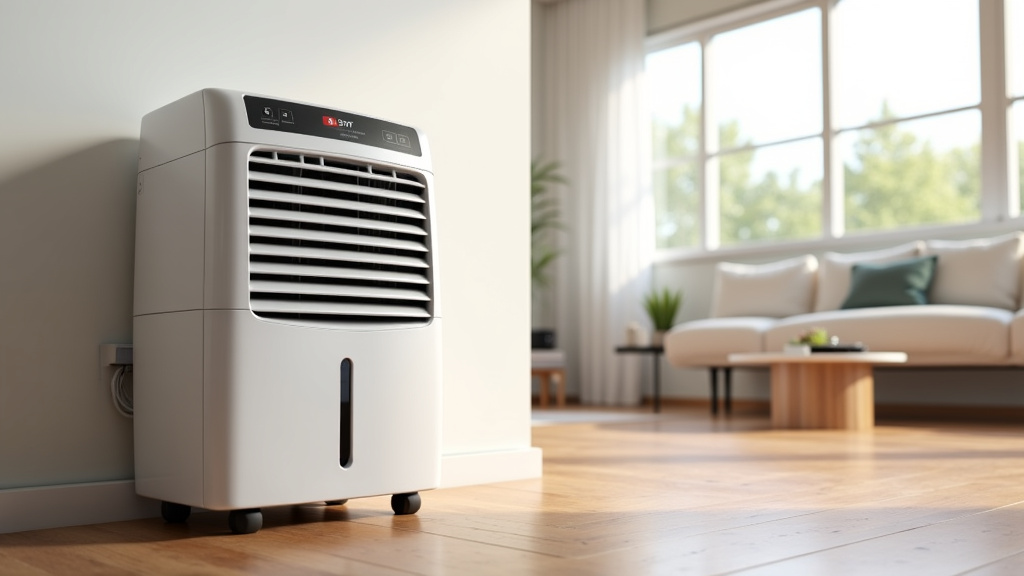
Even with the right-sized unit, you can take steps to ensure your dehumidifier works as efficiently as possible in a large space. Proper placement and maintenance are key. We found that these simple steps make a big difference.
Strategic Placement for Optimal Airflow
Don’t hide your dehumidifier in a corner or behind furniture. Place it in a central location where it can draw in air from all directions. Ensure there’s at least a foot of clearance around the unit for unrestricted airflow. If your room is very long and narrow, you might even consider using two smaller units placed strategically rather than one undersized one.
Many manufacturers recommend placing the unit away from walls and obstructions. This allows the fan to pull moist air in more easily and distribute drier air more effectively. Think of it as giving the machine breathing room.
Maintaining Your Dehumidifier
Regular maintenance ensures your dehumidifier runs efficiently and lasts longer. This includes cleaning the filter regularly, usually every few weeks. A clogged filter restricts airflow, making the unit work harder and less effectively. Emptying the water tank promptly is also important.
Some larger units have options for continuous drainage via a hose. If you have this feature, use it to prevent the unit from shutting off when the tank is full. This is especially helpful in very damp environments.
Sealing Up the Room
For a dehumidifier to work effectively in a large room, you need to minimize the amount of humid air entering the space. Keep windows and doors closed while the unit is running. Check for any drafts or air leaks around windows and doors and seal them up.
This creates a more contained environment, allowing the dehumidifier to cycle the air within the room and reduce moisture levels more efficiently. It’s about creating the best possible conditions for your dehumidifier to do its job.
What to Do If You Only Have a Small Dehumidifier
If your heart is set on using your small dehumidifier for a large room, or if it’s your only option for now, manage your expectations. You’ll likely only see a slight improvement in humidity levels, if any. You might notice a difference in the immediate vicinity of the unit.
You’ll need to empty the tank very frequently, potentially multiple times a day, as it will fill up quickly from the sheer volume of air it’s trying to process. It’s a temporary band-aid, not a long-term solution for effectively controlling humidity in a large space.
Here’s a quick checklist to help you decide:
- Measure your room’s square footage accurately.
- Check the dehumidifier’s pint rating.
- Compare your room size to the manufacturer’s recommendations.
- Assess how damp your room typically is.
- Consider your climate and the general humidity levels.
- Don’t expect miracles from a unit that’s too small.
Conclusion
So, can a small dehumidifier tackle a large room? As we’ve seen, the answer is generally no. Trying to make a small unit work in a big space often leads to disappointment and wasted energy. We found that proper humidity control hinges on matching your dehumidifier’s capacity to your room’s square footage and dampness level. For effective moisture removal, don’t guess – measure your room and check the pint rating. Your next step should be to assess your room size and consult our guide to find a properly sized dehumidifier that will actually get the job done.
Frequently Asked Questions
Will a small dehumidifier make any difference in a large room?
A small dehumidifier might make a very minor, localized difference in a large room. You might notice slightly drier air directly around the unit. However, it won’t be enough to significantly reduce overall humidity levels throughout the entire space.
How often would I need to empty a small dehumidifier in a big room?
You would likely need to empty a small dehumidifier very frequently, potentially multiple times a day. The unit would be working overtime and filling its small tank much faster than it could effectively lower the room’s humidity.
Can I use multiple small dehumidifiers to cover a large room?
Using multiple small dehumidifiers can be more effective than one, especially if you strategically place them. However, it’s still generally more efficient and effective to use one correctly sized unit for the space. We found this can sometimes work as a temporary fix.
What’s the biggest risk of using an undersized dehumidifier?
The biggest risk is increased energy consumption without achieving desired results, leading to higher electricity bills. Additionally, the unit will be under constant strain, potentially shortening its lifespan and requiring premature replacement.
Should I still seal my large room if I’m using a properly sized dehumidifier?
Yes, absolutely. Sealing your large room by keeping windows and doors closed is essential, even with the right-sized dehumidifier. This minimizes outside humid air from entering, allowing your unit to work more efficiently and control moisture levels effectively.
