
How to Size a Dehumidifier for a Room?
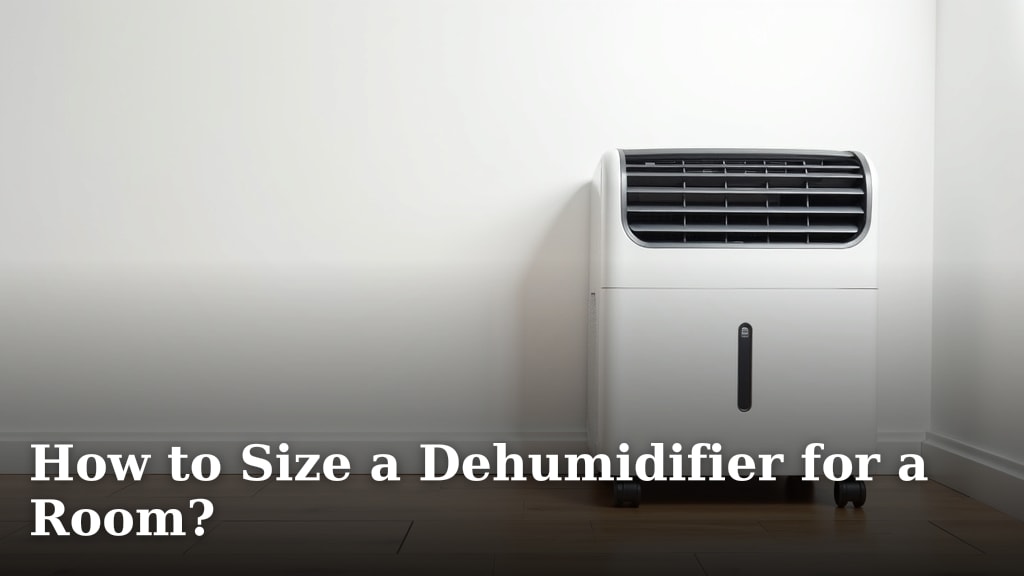
To size a dehumidifier for a room, you need to first measure the room’s square footage and assess its dampness level. You then match these to a dehumidifier’s pint capacity, which indicates how much moisture it can remove daily. Getting the right size is key for effective moisture control.
Choosing the correct dehumidifier size keeps your home comfortable and prevents mold. An undersized unit won’t do enough, while an oversized one can waste energy. It’s about finding that perfect balance for your space. We found that understanding both your room and the dehumidifier’s power is essential.
- Measure your room’s size in square feet.
- Determine how damp the room feels.
- Match room size and dampness to pint capacity.
- Consider extra factors like climate or laundry.
Let’s walk through exactly how to size a dehumidifier so you can make the best choice for your home.
Selecting the Right Dehumidifier Size for Your Space
Choosing the correct dehumidifier size is crucial for effective moisture removal. It ensures your unit works efficiently without wasting energy or being ineffective.
You want to match the dehumidifier’s capacity to your room’s specific needs. We found this balance saves you money and keeps your home comfortable.
Understanding How Dehumidifiers Are Measured
Dehumidifier capacity is measured in pints per day. This number tells you how much moisture the unit can remove from the air in a 24-hour period.
For example, a 50-pint dehumidifier can pull 50 pints of water out of the air daily. This rating is typically based on specific testing conditions, often 80°F and 60% relative humidity (AHAM standards).
It’s important to remember that real-world conditions might vary. Your home might be cooler or warmer, affecting the actual amount of moisture removed.
Step 1: Determine Your Room’s Square Footage
The first step in sizing a dehumidifier is knowing the exact size of your room. This is a fundamental measurement you’ll need.
To find the square footage, measure the room’s length and width, then multiply those two numbers together. For example, a room that is 10 feet long and 12 feet wide would be 120 square feet (10 x 12 = 120).
Don’t forget to include any oddly shaped areas or alcoves that are part of the same open space. You want an accurate total.
Step 2: Assess Your Room’s Dampness Level
Beyond size, how damp your room feels is a huge factor. This helps you determine if you need a more powerful unit.
Think about the air quality and visible signs of moisture. We recommend you take a moment to look for clues.
Slightly Damp
This room feels generally dry but has a slightly musty odor during humid weather. Perhaps it’s just a bit stuffy.
You might notice a sticky feeling on surfaces only on the most humid days. It’s not a constant issue.
Moderately Damp
A room that is moderately damp consistently feels damp and smells musty. The air might feel heavy or clammy.
You could see condensation on windows or cold pipes (like in a basement). Clothes might take longer to dry when hung indoors.
Very Damp
In a very damp room, the air feels wet, and there’s a strong, persistent musty smell. You might even see water stains on walls.
Paint might be peeling, or wood might be warped. This level of dampness often suggests a more serious moisture problem.
Wet or Extremely Damp
This is a room with standing water or visible wet spots on the floor or walls. There’s usually a strong moldy smell.
This level of dampness requires immediate attention. A dehumidifier alone might not solve the core issue, but it’s part of the solution.
Step 3: Match Room Size and Dampness to Dehumidifier Capacity
Now that you have your room’s square footage and dampness level, you can match these to the appropriate dehumidifier size. This is where the pint capacity comes in.
We’ve found this chart is a helpful guide for most homes (AHAM standards typically assume 80°F, 60% RH).
| Room Size (Square Feet) | Slightly Damp (Pints/Day) | Moderately Damp (Pints/Day) | Very Damp (Pints/Day) | Wet/Extremely Damp (Pints/Day) |
|---|---|---|---|---|
| Up to 500 sq ft | 10-15 Pints | 15-20 Pints | 20-25 Pints | 25-30 Pints |
| 500-1000 sq ft | 15-20 Pints | 20-25 Pints | 25-30 Pints | 30-35 Pints |
| 1000-1500 sq ft | 20-25 Pints | 25-30 Pints | 30-40 Pints | 40-50 Pints |
| 1500-2000 sq ft | 25-30 Pints | 30-40 Pints | 40-50 Pints | 50-60 Pints |
| 2000-2500 sq ft | 30-35 Pints | 40-50 Pints | 50-60 Pints | 60-70 Pints |
Use this table as your starting point. If you fall between categories, it’s generally better to choose a slightly larger capacity. A bigger unit can more easily handle unexpected humidity spikes.
Factors That Might Require a Larger Dehumidifier
The general guidelines are helpful, but your specific home might have unique conditions. These conditions often call for a dehumidifier with a higher pint capacity.
Always consider these additional factors to ensure you don’t undersize your unit. You want it to keep up with your challenges.
Climate of Your Region
Do you live in a naturally humid climate, like the Southeast US? Regions with high average humidity will put more strain on a dehumidifier.
In these areas, we often recommend moving up one size category. That extra capacity helps manage the constantly moist air.
Number of Occupants and Pets
People and pets add moisture to the air through breathing and evaporation. More bodies mean more humidity to remove.
A larger household may need a slightly more powerful dehumidifier than a single person in the same size room.
Household Activities and Appliances
Certain activities generate a lot of moisture. Think about showering without proper ventilation, cooking, or even doing laundry.
If you dry clothes indoors or have frequent steamy showers, bump up your chosen capacity. Kitchens and bathrooms are often prime areas for this type of added humidity.
Presence of a Basement or Crawl Space
Basements and crawl spaces are notorious for dampness. They are often cooler and less ventilated, trapping moisture.
If your room is in a basement, you’ll almost certainly need a more powerful unit than the chart suggests for an above-ground room of the same size. Consider even dedicated basement dehumidifiers (ASHRAE recommends specific guidelines for these spaces).
Poor Ventilation
Is your room well-ventilated, or is it rather sealed off? Rooms with poor airflow accumulate moisture more easily.
If you have few windows or an ineffective exhaust fan, opt for a larger dehumidifier to compensate. It will have to work harder.
The Dangers of an Incorrectly Sized Dehumidifier
You might think choosing any dehumidifier is better than none. But getting the wrong size can lead to both inefficiency and new problems.
We found that both undersized and oversized units present their own set of drawbacks. You want that “just right” fit.
Undersized Dehumidifier
An undersized unit will run constantly, struggling to reach your desired humidity levels. It works overtime and still falls short.
This leads to higher energy bills, faster wear and tear on the unit, and continued dampness in your home. It’s frustrating and ineffective.
You might still experience mold growth, musty odors, and uncomfortable air. It can’t keep up with the moisture load.
Oversized Dehumidifier
An oversized dehumidifier removes moisture too quickly. It can shut off before it effectively filters enough air in the room.
This leads to a phenomenon called “short-cycling.” The unit turns on and off frequently, which wastes energy.
An oversized unit might also make the air too dry. Very low humidity can cause dry skin, respiratory irritation, and damage to wood furnishings (research by the Environmental Protection Agency highlights these risks).
Your Dehumidifier Sizing Checklist
Review this quick checklist to make sure you’ve covered all your bases before making a purchase.
- Measure your room’s length and width to calculate accurate square footage.
- Honestly assess your room’s dampness level (slightly, moderately, very, or extremely damp).
- Use the sizing chart to find the baseline pint capacity for your room.
- Consider any additional factors like climate, household size, or specific activities that might increase humidity.
- Adjust your pint capacity upwards if these factors suggest higher moisture levels.
- Ensure you’re not choosing a unit that’s too small or excessively large for your needs.
By following these steps, you’ll be well on your way to selecting a dehumidifier that provides optimal comfort and moisture control for your home. You’ll thank yourself later.
Conclusion
You now have the tools to confidently size a dehumidifier for your home. By accurately measuring your room and assessing its dampness, you can choose a unit that truly meets your needs. Remember to consider those extra factors like climate or household activities. We found that taking these steps ensures you pick a dehumidifier that works efficiently. It prevents mold while creating a healthier, more comfortable living space.
Take action today to reclaim your comfort!
Frequently Asked Questions
Should I get a dehumidifier that’s slightly smaller or larger if I’m between sizes?
We recommend going with a slightly larger capacity if you’re between sizes. A larger unit can more easily handle unexpected humidity spikes. It will also run less frequently, potentially extending its lifespan compared to an undersized one constantly battling moisture.
Can I use one large dehumidifier for an entire open-concept living space?
Yes, you can often use one larger dehumidifier for an open-concept area. Be sure to calculate the total square footage of the entire connected space. Place the unit in a central location for the best coverage. For rooms with many obstructions or separate closed-off areas, multiple smaller units might be more effective.
How often should I empty my dehumidifier’s water reservoir?
How often you empty it depends on its capacity and your room’s humidity. In very damp conditions, you might need to empty it daily, or even twice a day. Many modern units have a ‘continuous drain’ option. This allows you to attach a hose to a floor drain so you never have to empty it manually.
Will running a dehumidifier significantly increase my electricity bill?
Running a dehumidifier will use some electricity, but the increase might be less than you expect. An appropriately sized and efficient unit can save you money in the long run. It prevents damage from excessive moisture. It also helps your AC unit run more efficiently by removing humidity, making the air feel cooler.
Can a dehumidifier help with allergies or asthma?
Yes, a dehumidifier can help with allergies and asthma, especially if triggers like dust mites or mold are present. These thrive in humid environments. By lowering indoor humidity, you create a less hospitable environment for these allergens, which can alleviate symptoms for many people.
