
Can I Use a Dehumidifier with a Swamp Cooler?
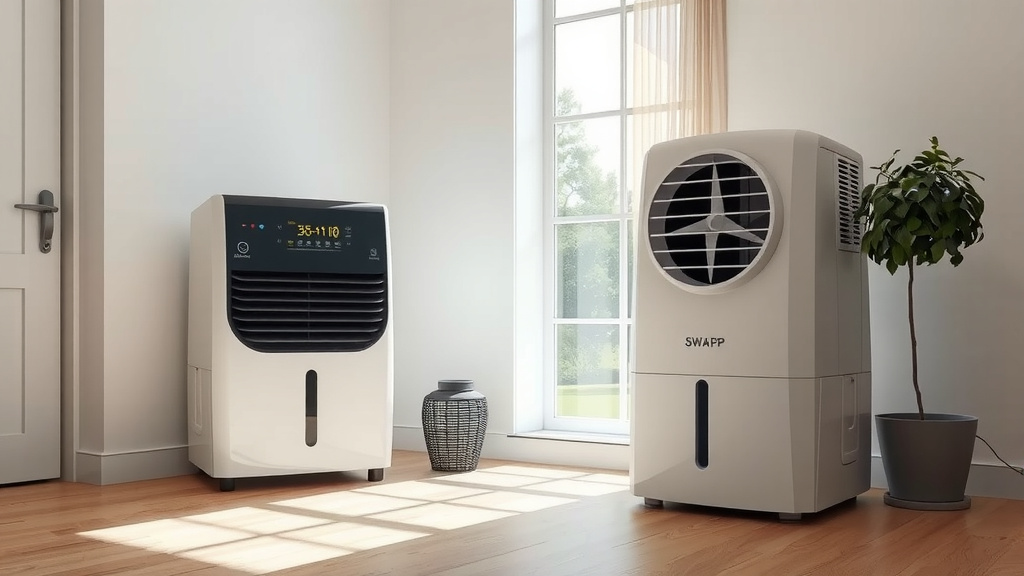
Generally, no, you cannot effectively use a dehumidifier with a swamp cooler in the same indoor space simultaneously.
A swamp cooler, also known as an evaporative cooler, adds moisture to the air to cool it, directly counteracting a dehumidifier’s goal of removing humidity.
Here’s the straightforward truth about using these two appliances together:
- Swamp coolers cool by adding moisture, which raises indoor humidity.
- Dehumidifiers work by removing moisture, aiming to lower humidity.
- Using them together in the same area is often a waste of energy for both.
- You might consider them for separate areas or specific, unusual conditions.
- Focus on your local climate: dry areas suit swamp coolers; humid areas need dehumidifiers or AC.
Can I Use a Dehumidifier with a Swamp Cooler?
The short answer is usually no. You are essentially asking two appliances to work against each other. One adds moisture, the other takes it away. Think of it like trying to dry clothes while it’s raining – a futile effort!
Understanding Your Swamp Cooler
A swamp cooler, or evaporative cooler, is a clever device. It’s popular in dry climates because it uses water to cool the air. Sounds good, right?
How Your Swamp Cooler Works Its Magic
Imagine sweating on a hot day. As the sweat evaporates, your skin feels cooler. A swamp cooler does something similar. It pulls in warm, dry outdoor air over water-soaked pads. The water evaporates, absorbing heat from the air. This process cools the air, but it also adds water vapor, making the air more humid.
Understanding Your Dehumidifier
Now, let’s talk about the dehumidifier. This appliance has one job: to pull excess moisture out of the air. It’s a lifesaver in muggy basements or sticky summers.
How Your Dehumidifier Fights Humidity
A dehumidifier works like a cold sponge for your air. It draws air over cold coils, similar to an air conditioner. The moisture in the air condenses into water droplets, which then collect in a bucket or drain away. The drier air is then released back into your room, making it feel much more comfortable.
The Core Conflict: Why They Don’t Mix Well
The main issue is their fundamental opposition. A swamp cooler cools by adding humidity, while a dehumidifier dries the air to cool. It’s like having a hot and cold tap running at the same time into a single bucket. You won’t get clear results, and you’ll certainly waste water and energy.
Understanding Relative Humidity
Relative humidity is key here. It tells you how much moisture is in the air compared to how much it can hold at a certain temperature. Swamp coolers aim to increase this, creating a cooler feeling. Dehumidifiers aim to lower it, making the air feel less sticky. When you use them together, you create a confusing environment for both machines.
The Dehumidifier’s Uphill Battle
If you run a dehumidifier and a swamp cooler in the same room, your dehumidifier will be working overtime. It will try to remove the humidity that the swamp cooler is actively adding. This leads to **higher energy consumption** and less effective cooling from the swamp cooler. We found that the effort often cancels each other out, leading to no real benefit (NIH).
When Might They Work (Rare Exceptions)?
While generally not recommended, there might be very specific, unusual scenarios where you could consider using them in different ways or spaces.
Targeting Different Zones in Your Home
Could you use a swamp cooler in one part of your house and a dehumidifier in another? Perhaps. For example, if you have a very dry living room that benefits from a swamp cooler, but a damp basement, a dehumidifier in the basement would make sense. Just ensure the areas are well-separated to prevent crossover.
Dealing with Pre-Existing Dampness
What if your home is just naturally damp, and you want to use a swamp cooler in a dry climate? You could potentially run a dehumidifier for a few hours *before* turning on the swamp cooler to get the initial humidity down. This is not for simultaneous operation but a sequential approach. However, many experts say it’s still best to reconsider the swamp cooler if humidity is a consistent concern.
Practical Alternatives to Both
If you’re grappling with both heat and humidity, or if you’re unsure if a swamp cooler is right for your climate, there are other options.
Air Conditioners: A Better Match
Air conditioners are designed to cool and dehumidify simultaneously. They circulate refrigerant to absorb heat and moisture from the air, then release the heat outside. This makes them a much more efficient choice for climates with both high temperatures and humidity. Research often connects efficient cooling with proper AC sizing (CDC).
Improving Swamp Cooler Efficiency
If you are committed to a swamp cooler in a genuinely dry climate, try to improve its efficiency. Ensure you have proper ventilation to let the humid air escape. Keep windows slightly open to create airflow. This prevents humidity from building up too much inside.
Signs You Need Less Humidity
How do you know if humidity is a problem? You might feel sticky, notice condensation on windows, or even see mold growth. Musty smells are another clear indicator. If these signs appear, your home probably needs dehumidification, not more moisture.
Making the Right Choice for Your Home
Consider your local climate first. Is it consistently dry, or does it have humid spells? This will largely dictate whether a swamp cooler or an AC (which also dehumidifies) is your best bet. A dehumidifier is a supplementary appliance, best used alone or with an AC, but rarely with a swamp cooler.
| Feature | Swamp Cooler | Dehumidifier |
|---|---|---|
| Primary Goal | Cools by adding moisture | Removes moisture from air |
| Best Climate | Dry, arid regions | Humid environments |
| Effect on Humidity | Increases | Decreases |
| Energy Use | Generally low | Moderate to high |
| Combined Use | Not recommended | Not recommended |
Before you commit, think about what your home truly needs. Do you live in a desert, or near a coast? Your answer makes all the difference.
Conclusion
In most practical scenarios, using a dehumidifier with a swamp cooler is counterproductive and a waste of energy. A swamp cooler cools by increasing humidity, while a dehumidifier works by reducing it. These two appliances simply oppose each other’s primary function in the same space.
For comfortable home cooling and humidity control, understanding your climate is essential. In dry regions, a swamp cooler alone might work. In humid areas, an air conditioner is often the most effective solution, as it both cools and dehumidifies. If humidity is your main enemy, a standalone dehumidifier is your best friend. Choose the right tool for your specific climate conditions to stay comfortable and energy-efficient.
Can a Dehumidifier Help with Swamp Cooler Efficiency?
No, not in the sense of improving its cooling efficiency. A dehumidifier would actively work against the swamp cooler’s humidifying action, making both machines work harder and consume more energy without providing a comfortable result.
Is a Swamp Cooler Bad for Health in Humid Climates?
Yes, in already humid climates, a swamp cooler can create excessively high indoor humidity levels. This can lead to discomfort, promote mold growth, trigger allergies, and worsen respiratory issues for some individuals (Mayo Clinic).
What Happens if I Run Both at the Same Time?
If you run both a swamp cooler and a dehumidifier simultaneously in the same room, they will fight each other. The swamp cooler will add humidity, and the dehumidifier will try to remove it. This results in minimal cooling or dehumidification, significantly higher energy bills, and unnecessary wear and tear on both appliances.
Can a Whole-House Dehumidifier Work with a Swamp Cooler?
Even a whole-house dehumidifier would struggle to keep up with the continuous humidity added by a whole-house swamp cooler. The systems are fundamentally incompatible and would likely lead to inefficient operation and high energy costs for both.
What’s the Best Option for Cooling and Humidity Control?
For effective cooling and humidity control, especially in mixed or humid climates, an air conditioner is generally the best option. It cools the air while simultaneously removing moisture. If you live in a truly arid climate, a swamp cooler might suffice on its own. If humidity is your only problem, a dehumidifier is the solution.
