Are Insignia Dehumidifiers Quiet?
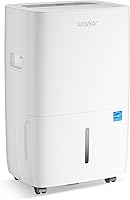
Are Insignia dehumidifiers quiet? Many Insignia units are quiet enough for occupied living spaces, but noise varies by model and fan speed. Check the decibel rating for your exact model, use low fan speed at night, and place the unit where airflow is not blocked.
On this page (10 sections)
- Are Insignia dehumidifiers quiet in a living room?
- Are Insignia dehumidifier quiet on low fan speed?
- Which Insignia models suit noise sensitive buyers?
- How do decibel ratings work for dehumidifiers?
- How does room size affect dehumidifier noise?
- Where should you place a dehumidifier to reduce noise?
- What sounds do dehumidifiers make besides fan noise?
- Are Insignia dehumidifiers quiet enough for a bedroom?
- Should you pick a passive absorber instead of an electric unit?
- What should you check before you buy an Insignia dehumidifier?
Are Insignia dehumidifiers quiet? Many Insignia units are quiet enough for occupied living spaces, but noise varies by model and fan speed.
Check the decibel rating for your exact model, use low fan speed at night, and place the unit where airflow is not blocked.
That answer matters most in a bedroom, home office, or shared living room. A unit can be fine on low speed at a distance and annoying on high speed near a couch.
Are Insignia dehumidifiers quiet in a living room?
Many Insignia dehumidifiers are quiet enough for a living room on low speed with a normal seating distance. Insignia sells different sizes for different room areas, and a larger unit on high speed will sound louder than a smaller unit on low speed.
Look for the decibel rating for your exact model before you assume quiet operation. If a rating is missing, check buyer comments for fan hum, compressor clicks, or beeps.
Placement helps as much as the rating. Put the unit on a hard, level floor, keep clear space around the vents, and aim exhaust away from seats.
For a broader view of value beyond noise, our guide to Are Insignia Dehumidifiers Any Good? covers performance for your room size.
Are Insignia dehumidifier quiet on low fan speed?
Yes, low fan speed is the main reason a dehumidifier can run quietly enough for evening use. Lower speed usually means less fan noise, even if the compressor still cycles.
Test it for an hour before bedtime if you want to judge it fairly. Sit where you normally sit, then move to the distance where you sleep or work.
Expect a trade-off with moisture removal. Low speed moves less damp air through the unit, so a very humid room may take longer to dry.
Do not block the intake or outlet to cut noise. Move it farther from your seat instead and let it run on low for longer.
Which Insignia models suit noise sensitive buyers?
Noise sensitive buyers should pick the smallest Insignia model that still fits their space. An oversized unit may run on high speed more often.
An undersized unit may run nonstop, which can also make a room feel less peaceful.
Check three things before you choose. First, match pint capacity and coverage area to your room.
Second, compare the decibel rating at low speed. Third, check for a humidistat, sleep mode, and drain options.
If your room is small and you mainly want to stop musty odors in a closet, cabinet, or car, a passive absorber may be quieter than any electric unit. The Eva-Dry Wireless Mini Dehumidifier needs no cord or batteries and works in spaces up to 333 cubic feet.
It absorbs up to 6 ounces and lasts 20 to 30 days before the silica gel beads need recharging.
For a side by side look at a common alternative brand, see hisense versus insignia dehumidifier reviews.
How do decibel ratings work for dehumidifiers?
Decibel ratings help compare sound levels only when test conditions are similar. A rating taken at a set distance on low speed is more useful than a vague claim of whisper quiet operation.
Lower numbers mean less sound, but hearing is not linear. A unit in the low 40s may feel fine in a living room and noticeable in a quiet bedroom.
A unit in the 30s is more likely to fade into the background at night.
The Eva-Dry EDV-1100 gives a clear reference point. Eva-Dry says it was measured at 33 dB, compared with a 53.2 dB average for thermo-electric dehumidifiers.
It can absorb up to 16 ounces per week when run continuously in high temperature and humidity.
Use a specific rating like that as a benchmark for Insignia specs. If an Insignia model lists no decibel rating, treat its noise as unknown.
How does room size affect dehumidifier noise?
Room size affects noise because it changes how hard the unit must work. A unit too small for a large, damp room may run on high speed or nonstop to reach your target.
Room shape also matters. Hard floors, high ceilings, and bare walls reflect fan noise, while rugs, curtains, and upholstered furniture soften it.
Match the unit to the space, then keep it on low when you are in the room. If air still feels damp, run higher speed when the room is empty and switch back to low on return.
For large problem areas with no fan noise at all, a passive bucket can help with musty odors. The DampRid Moisture Absorber Hi-Capacity Bucket is made for basements, garages, and storage rooms and lasts up to 6 months depending on temperature and humidity.
If you want a quiet electric model instead, our Best Quiet Dehumidifier guide focuses on units for occupied spaces.
Where should you place a dehumidifier to reduce noise?
Place a dehumidifier where air can circulate freely and sound can spread out. A spot in the open part of the room, away from your seat or bed, usually sounds quieter than a corner or a spot behind furniture.
Hard floors can transmit vibration, so a rug or mat under the unit may soften buzzing. Make sure the unit still sits level and the tank or drain hose stays secure.
Distance is your best tool. Moving it a few feet farther from your pillow or desk can matter more than any setting.
Keep the filter clean and the tank empty. A clogged filter can change airflow and make a fan work harder.
A full tank shuts the unit off, which stops noise but also stops drying.
What sounds do dehumidifiers make besides fan noise?
Fan noise is only part of the picture. Many electric dehumidifiers also make compressor clicks, relay sounds, water drips into the tank, and beeps when the tank is full.
Those sounds can bother light sleepers more than a steady low hum.
Compressor cycling is normal on many models. The unit may switch on, run for a while, then pause at your humidity setting.
The Eva-Dry EDV-1100 shows how some small units handle a full tank. Its auto shut off stops the unit when the tank is full, and a yellow light tells you to empty the removable reservoir.
You still need to empty the 16 ounce tank every 2 to 5 days depending on humidity.
Passive absorbers avoid fan, compressor, and beep sounds because they have no motor. That makes them useful for a closet, car, or small storage area.
Are Insignia dehumidifiers quiet enough for a bedroom?
Many Insignia dehumidifiers are quiet enough for a bedroom on low speed, away from the bed, with a realistic humidity target. A target around 40 to 50 percent relative humidity is common for comfort, and chasing a much lower target can keep the unit running longer.
Test the setup before you rely on it nightly. Run it on low while you read or watch TV at your normal bedtime distance.
If you notice the hum more than normal room sounds, move it farther away.
For a small bedroom or bathroom up to 122 square feet, the Eva-Dry EDV-1100 is a plug in option with auto shut off, auto restart after a power interruption, and a compact 6.5 by 5 by 11 inch size. Eva-Dry says it generates less noise to help you sleep better at night.
If your space is even smaller and you want no sound at all, a hanging mini absorber may fit better. The Eva-Dry Wireless Mini Dehumidifier has a hanging hook, a sleek plastic body, and no cords for use.
Should you pick a passive absorber instead of an electric unit?
Pick a passive absorber if your main goal is quiet operation in a small, enclosed space. A bucket or hanging unit has no fan, no compressor, and no tank full beep, so it adds no operating noise.
Pick an electric dehumidifier if the room is larger, humidity is high, or you need faster removal. Passive units work steadily, but they cannot match a plug in unit in a damp basement or laundry room.
You can combine both. Use an electric unit in the main room on low speed, and place a passive absorber in a closet or cabinet where musty odors linger.
For a quieter electric option for small rooms, see our Best Ultra Quiet Dehumidifier guide.
What should you check before you buy an Insignia dehumidifier?
Check the decibel rating, coverage area, pint capacity, tank size, and drain options for the exact Insignia model you want. Those specs tell you more about real noise than a general claim on the box.
Read buyer comments with noise in mind. Look for patterns on low speed hum, compressor clicks, and night beeps.
Repeated reports of a loud high pitched sound are a warning sign.
Also check reliability and recall history before you commit to any brand. Our posts on Are Hisense Dehumidifiers Reliable? and Are Hisense Dehumidifiers Being Recalled? show the checks worth doing for any brand.
Finally, match the noise question to the room. In a living room, a quiet Insignia unit on low speed with good placement is often enough.
In a bedroom or tiny office, a very low decibel electric unit or a passive absorber may be the better fit.
Frequently asked questions
Are Insignia dehumidifiers quiet at night?
Many Insignia dehumidifiers can run at a low noise level on low fan speed, but the answer depends on the model and room size. Check the decibel rating for your exact unit, keep the filter clean, and place it away from your bed or desk.
If you are very noise sensitive, a non-electric absorber may suit a small space better.
How do I make a dehumidifier quieter?
Place it on a hard, level floor away from walls and furniture, run it on low speed, and keep vents clear. Close doors to the room you are sleeping in when you can, and empty the tank before it shuts off.
A rug under the unit can reduce vibration, but do not block airflow around it.
What decibel level is quiet for a dehumidifier?
In general, lower decibels mean less noise, and units in the low 30s or 40s are often described as whisper quiet by their makers. The Eva-Dry EDV-1100 is measured at 33 dB, which Eva-Dry says is 23 dB below the 53.2 dB average for thermo-electric dehumidifiers.
Compare ratings only when they use the same test conditions.
Can a dehumidifier run silently?
A passive absorber with no motor or fan can run without operating noise, because there is no motor to hum or fan to spin. The DampRid Hi-Capacity Bucket attracts and traps moisture without electricity.
Electric units make some sound from fans and compressors, so placement and speed matter.