9 Best Non Electric Dehumidifiers for Bathrooms (October 2026)
The best non electric bathroom dehumidifiers include the BREEZOME 60 OZ Dehumidifiers for Home for bathrooms with an outlet, the Eva-Dry Wireless Mini Dehumidifier for small cordless spaces, and the Arm & Hammer Essentials Disposable Moisture Absorber for odor control with moisture capture.
On this page (4 sections)
The best non electric dehumidifier for a bathroom without a convenient outlet is a passive absorber, such as a refillable crystal cup or disposable tub. For a small enclosed space, a rechargeable cordless model can be easier to move, but it needs periodic renewal.
The right choice depends on where the dampness gathers. Use a passive tub near a sink or in a bathroom cabinet, and consider a cordless silica gel unit for a small enclosed area that is awkward to reach with a plug.
If you're comparing powered options too, see our guide to the Best Dehumidifier For Bathroom. Our overview of Are Dehumidifiers Good for Bathrooms? explains where a small absorber fits in a bathroom moisture plan.
Our picks at a glance
-
1
 Best for bathrooms with an outlet
BREEZOME 60 OZ Dehumidifiers for Home
9.6/10 our score
See it on Amazon -
2

-
3
 Best for odor control with moisture capture
Arm & Hammer Essentials Disposable Moisture Absorber
9.4/10 our score
See it on Amazon
- 4
 Best for bathrooms with a nearby outletCheck it
- 5
 Check it
Eva-Dry E-500 Renewable Silica Gel Dehumidifier
Best for enclosed bathroom storage - 6
 Best for a powered small bathroomCheck it
- 7
 Check it
LasVacde Dehumidifier for Bathroom with 3.3 ft
Best for a bathroom with drainage access - 8
 Check it
CLEVAST Refillable Moisture Absorber
Best for refillable passive use - 9
 Check it
ABSODRY by TORRBOLLEN the original Closet dehumidifier
Best for freestanding passive placement
Which non electric dehumidifiers suit bathrooms best?
Passive absorbers work without an outlet, while rechargeable cordless models need a plug only for renewal. The powered picks below are included as alternatives for bathrooms that do have a suitable outlet.
We compared each option's stated moisture collection method, upkeep and intended space. Our score weighs specs, features and buyer feedback against what you're shopping for.
| Product | Best for | Type | Tank | Power | Our score |
|---|---|---|---|---|---|
| BREEZOME 60 OZ Dehumidifiers for Home | bathrooms with an outlet | Powered semiconductor dehumidifier | 1.8 L | 48 W | 9.6 |
| Eva-Dry Wireless Mini Dehumidifier | small cordless spaces | Rechargeable silica gel | 9.5 | ||
| Arm & Hammer Essentials Disposable Moisture Absorber | odor control with moisture capture | Disposable passive absorber | 9.4 | ||
| ToLife Dehumidifier | bathrooms with a nearby outlet | Powered semiconductor dehumidifier | 95 fl oz | 9.3 | |
| Eva-Dry E-500 Renewable Silica Gel Dehumidifier | enclosed bathroom storage | Renewable silica gel | 9.2 | ||
| Deyagoo 50OZ Dehumidifier | a powered small bathroom | Powered dehumidifier | 50 fl oz | 28 W | 8.6 |
| LasVacde Dehumidifier for Bathroom with 3.3 ft | a bathroom with drainage access | Powered dehumidifier | 2.8 L | 8.4 | |
| CLEVAST Refillable Moisture Absorber | refillable passive use | Refillable passive absorber | 8.1 | ||
| ABSODRY by TORRBOLLEN the original Closet dehumidifier | freestanding passive placement | Refillable passive absorber | 7.9 |
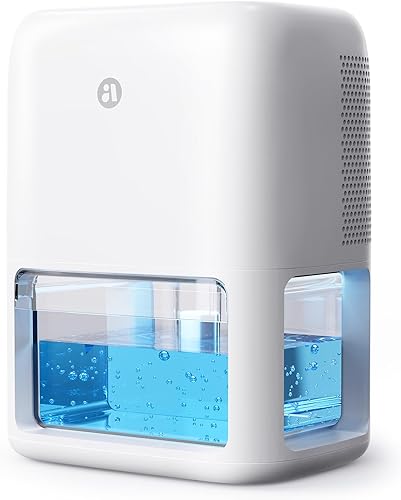
BREEZOME 60 OZ Dehumidifiers for Home: Best for bathrooms with an outlet
BREEZOME 60 OZ Dehumidifiers for Home: Best for bathrooms with an outlet
- Dual semiconductor condensers
- 1.8 L tank
- Auto shutoff
- 12 to 48 hour timer
This powered unit is not a non-electric absorber, but it can suit a bathroom where an outlet is available and active moisture collection is preferred. Its tank, timer and auto shutoff are useful features to compare.
Pros
- Large 1.8 L tank
- Auto shutoff
- Timer settings
Cons
- Requires a power outlet
- Not a passive absorber
The BREEZOME is the top choice here only if you can place a powered unit near a suitable outlet. Its dual semiconductor condensers and 1.8 L tank make it a different tool from a passive tub or rechargeable cordless absorber.
The tank shuts the unit off when full, and it has a 12 to 48 hour timer, sleep mode and adjustable light. Those controls can help you set a limited run time in a bathroom, but this model still needs a power cord.
Keep the air path clear and place the unit where splashes cannot reach the controls or outlet. If an outlet is not practical, choose a passive absorber or cordless silica gel unit instead.
Eva-Dry Wireless Mini Dehumidifier: Best for small cordless spaces
Eva-Dry Wireless Mini Dehumidifier: Best for small cordless spaces
- Cordless while absorbing
- Rechargeable silica gel beads
- Up to 6 oz capacity
- Hang or place
This compact absorber works without a cord while it collects moisture, then needs a recharge. Its small capacity makes it better suited to an enclosed bathroom cabinet or other small area than a large, frequently used bathroom.
Pros
- Cordless during use
- Can hang or stand
- Reusable silica gel
Cons
- Needs periodic recharging
- Small stated capacity
The Eva-Dry Wireless Mini suits a small enclosed space where a cord would be inconvenient. It absorbs moisture with silica gel beads and can hang or sit on a surface, so it may fit a cabinet or compact bathroom storage area.
Its capacity is up to 6 oz, and it can run for 20 to 30 days before recharging. The beads change color to signal when renewal is needed, so plan for a plug-in period even though the device is cordless while absorbing moisture.
This scale is not meant to manage the moisture load of a large bathroom after repeated showers. For a no-plug alternative that can sit near a bathroom floor, consider a refillable cup such as CLEVAST.
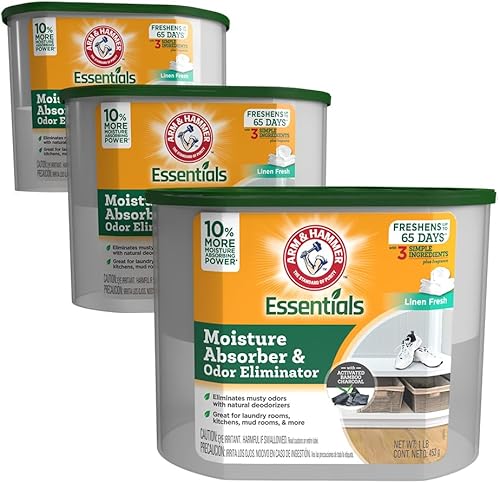
Arm & Hammer Essentials Disposable Moisture Absorber: Best for odor control with moisture capture
Arm & Hammer Essentials Disposable Moisture Absorber: Best for odor control with moisture capture
- Disposable tub
- Baking soda, bamboo charcoal and mineral salts
- Three 1 lb tubs
- Up to 60 days depending on conditions
The disposable tubs combine moisture capture with odor control ingredients. They need a stable, out-of-the-way spot and replacement when the collected liquid reaches the indicator line.
Pros
- No outlet needed
- Odor control ingredients
- Three tubs included
Cons
- Disposable
- Keep away from children, leather and metal
Arm & Hammer's tubs offer a simple disposable option for a bathroom where a passive absorber can sit safely out of the way. Baking soda, activated bamboo charcoal and mineral salts are the ingredients, and the tubs are designed to capture moisture and help control musty odors.
Each tub collects liquid as it works, so place it on a stable surface and check it from time to time. A tub can last up to 60 days depending on temperature and humidity, but a humid bathroom may call for more frequent checks.
Keep the tubs away from children, leather and metal. If you prefer to refill a container rather than replace it, the CLEVAST cups use loose crystals and have a visible reservoir.
ToLife Dehumidifier: Best for bathrooms with a nearby outlet
ToLife Dehumidifier: Best for bathrooms with a nearby outlet
- 95 oz tank
- Sleep and powerful modes
- Auto shutoff
- Two speed modes
ToLife is a powered option for a bathroom with a safe, suitable outlet. The larger tank and automatic shutoff offer a different routine from passive tubs, which collect moisture without electricity.
Pros
- Large tank
- Auto shutoff
- Sleep mode
Cons
- Requires electricity
- Automatically stops after 48 hours of operation
ToLife is a powered alternative for an outlet-equipped bathroom, with a 95 oz tank and automatic shutoff. Its powerful and sleep modes offer two operating choices, but it does not fit the no-electricity requirement while running.
This model is designed for small spaces such as bathrooms and stops automatically after 48 hours of operation. Check the tank and room conditions as part of regular use, and leave the front and back air paths open.
For bathrooms without a suitable outlet, a passive absorber needs less setup. For a comparison focused on room layout and airflow, read best dehumidifiers for bathrooms without a vent.
Eva-Dry E-500 Renewable Silica Gel Dehumidifier: Best for enclosed bathroom storage
Eva-Dry E-500 Renewable Silica Gel Dehumidifier: Best for enclosed bathroom storage
- Cordless while absorbing
- 6 to 8 oz capacity
- Plug in to renew
- Intended for enclosed spaces
The E-500 absorbs moisture without a cord while in use, then plugs in for renewal. It is intended for enclosed spaces, so it fits a cabinet or small enclosed bathroom area better than an open, ventilated room.
Pros
- Cordless during use
- Reusable
- Indicator window
Cons
- Needs a careful plug-in renewal cycle
- Not intended for open rooms
The E-500 fits enclosed storage spaces because it works silently without a cord while absorbing moisture. Its silica gel holds 6 to 8 oz, then the unit plugs in for a 16 to 18 hour renewal cycle.
The indicator window helps show when renewal is due. During that cycle, the unit can become warm to hot, so use a power strip and a hard, heat-resistant surface in a well-ventilated area.
This is not intended for an open room or ventilated enclosure. Choose it for a small cabinet or enclosed space, and look at a passive tub if you want an absorber that does not need a renewal plug-in step.
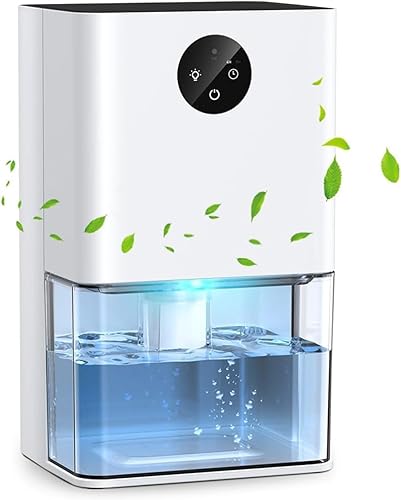
Deyagoo 50OZ Dehumidifier: Best for a powered small bathroom
Deyagoo 50OZ Dehumidifier: Best for a powered small bathroom
- Powered semiconductor unit
- 50 oz tank
- Auto shutoff
- 28 W
This is a powered small-space unit, not a non-electric absorber. Consider it only if you have a suitable outlet and want a tank-based option with automatic shutoff.
Pros
- 50 oz tank
- Auto shutoff
- Compact size
Cons
- Requires electricity
- Air inlet and outlet must stay clear
Deyagoo is a powered small-space unit with a 50 oz tank and automatic shutoff. It is not a non-electric dehumidifier, but it gives buyers with an outlet another tank-based option to compare with passive absorbers.
Its air inlet and outlet need to remain clear. The tank is removable for pouring and cleaning, which makes regular emptying part of the routine.
Choose this only if the bathroom has a suitable outlet and enough open space around the unit. For an outlet-free bathroom, a refillable crystal cup is simpler to place.
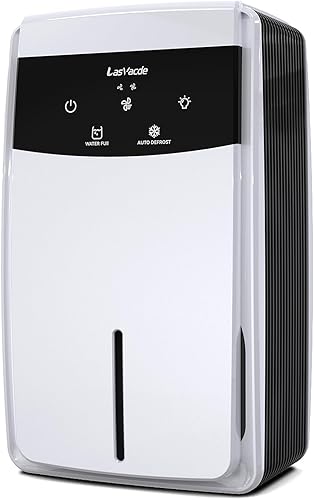
LasVacde Dehumidifier for Bathroom with 3.3 ft: Best for a bathroom with drainage access
LasVacde Dehumidifier for Bathroom with 3.3 ft: Best for a bathroom with drainage access
- Powered unit
- 2.8 L tank
- 3.3 ft drain hose
- Auto shutoff
This powered unit has a tank or hose drainage option, but it needs electricity and room for airflow. It is a practical comparison for bathrooms with an outlet and a suitable drain route.
Pros
- Tank or hose drainage
- Auto shutoff
- Two speed settings
Cons
- Requires electricity
- Needs clearance around the air inlet and outlet
LasVacde is another powered alternative, with a 2.8 L tank and a 3.3 ft drain hose for continuous drainage. The hose can reduce manual emptying when a suitable drain route is available, though the unit still needs electricity and clearance.
It has two speed settings, automatic shutoff and a defrost function. Keep the inlet and outlet open, and check that the hose connection is secure and water flows where intended.
The hose and tank make this a better comparison for an outlet-equipped bathroom than for a truly cordless setup. For a compact moisture absorber without a cord while working, the Eva-Dry models are a closer fit.
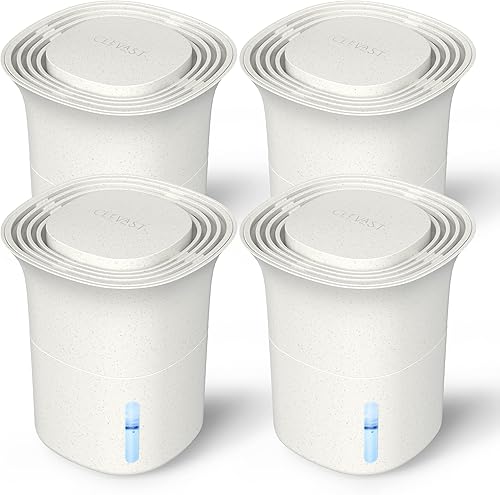
CLEVAST Refillable Moisture Absorber: Best for refillable passive use
CLEVAST Refillable Moisture Absorber: Best for refillable passive use
- Refillable calcium chloride crystals
- Four cups
- 500 ml reservoir per cup
- Up to 80 days depending on conditions
These refillable cups use calcium chloride crystals that dissolve as they collect moisture. Their clear water-level window helps you see when to empty the reservoir and add fresh beads.
Pros
- No outlet needed
- Refillable cups
- Water-level window
Cons
- Collected liquid needs handling
- Keep away from valuables
CLEVAST is the best fit for a refillable, no-outlet setup among these picks. The four cups use calcium chloride crystals, which attract moisture and dissolve into liquid collected in a 500 ml reservoir.
The clear window lets you check the liquid level, and each cup can last up to 80 days depending on temperature and humidity. Empty the reservoir and refill the cup when needed, and keep it away from valuables.
The crystals may clump before liquid appears, which is a normal part of absorption. This is a good choice when you want multiple passive units for separate enclosed spots.
ABSODRY by TORRBOLLEN the original Closet dehumidifier: Best for freestanding passive placement
ABSODRY by TORRBOLLEN the original Closet dehumidifier: Best for freestanding passive placement
- Electricity-free calcium chloride absorber
- Freestanding upright design
- Refill included
- Can be refilled
ABSODRY works without electricity and stands upright on a stable surface. Its refillable design suits a bathroom corner or enclosed area where a larger freestanding absorber can sit safely.
Pros
- No outlet needed
- Refill included
- Freestanding design
Cons
- Must stay upright
- Needs refill replacement
ABSODRY is a freestanding passive absorber for a flat, stable surface. It uses calcium chloride crystals and comes with one refill, so it works without electricity while collecting moisture.
It is designed to stand upright and can be refilled. Its placement needs more floor or shelf space than a small hanging silica gel unit, so measure the spot and keep it where it will not be knocked over.
Choose it for a bathroom corner or enclosed area where a freestanding container fits. If you need several smaller units, the CLEVAST four-pack may be easier to place around a home.
How do passive and rechargeable absorbers differ?
Passive absorbers collect moisture into a tub or reservoir, while rechargeable cordless models store it in silica gel that needs periodic renewal. Choose based on how you want to maintain the unit and where it will sit.
| Type | Examples | Upkeep | Best fit |
|---|---|---|---|
| Disposable tub | Arm & Hammer | Replace when full or spent | Occasional moisture and odor concerns |
| Refillable crystal cup | CLEVAST | Empty liquid and add fresh beads | Several small areas without outlets |
| Freestanding refillable absorber | ABSODRY | Replace or replenish refill | A stable floor or shelf spot |
| Rechargeable silica gel | Eva-Dry E-333 or E-500 | Plug in to renew | Small enclosed spaces |
Passive tubs are ready to work without charging, but collected liquid must be handled and the container replaced or refilled. Rechargeable units can be reused, though you need to remember the renewal cycle and use a suitable outlet safely.
For an outlet-free bathroom, start with the placement and upkeep you can manage. If the room stays damp after showers, improve ventilation or address the moisture source rather than adding more small absorbers.
How should you choose a bathroom dehumidifier without electricity?
Choose by the size of the damp area, how often you can check the absorber and whether it can sit safely away from splashes. A compact cordless unit is for an enclosed spot, while tubs and cups suit passive collection in a stable location.
A few practical checks help narrow the options:
- For a cabinet or small enclosed spot: choose a rechargeable silica gel unit like Eva-Dry E-333 or E-500.
- For a passive unit you can refill: choose a calcium chloride cup with a reservoir, such as CLEVAST.
- For a disposable setup: choose a tub and check it regularly for collected liquid.
- For a floor or shelf location: make sure a freestanding container cannot tip.
- For a persistently damp bathroom: improve ventilation and check for leaks instead of relying on an absorber alone.
Avoid placing a moisture absorber where it can spill onto metal, valuables or surfaces that could be damaged by collected liquid. Follow the product's placement and renewal directions, and keep it out of reach of children and pets.
If you need a powered machine, compare tank sizes and room placement in our Top 7 Pint Dehumidifier For Bathroom guide. For more cordless models, see Best Cordless Rechargeable Dehumidifier and Best Dehumidifier Cordless.
Which non electric bathroom dehumidifier should you choose?
Choose CLEVAST if you want multiple refillable passive cups, Arm & Hammer if you prefer disposable tubs with odor-control ingredients, or Eva-Dry E-333 if a small enclosed space needs a cordless absorber that you can recharge. For a larger bathroom that stays damp, address ventilation and moisture sources first.
A non electric absorber can help with mild moisture in a contained spot, but it has limited capacity. For a room-sized option, compare small dehumidifiers for bedrooms.
Use a bathroom fan or suitable ventilation after showers, and choose a powered dehumidifier only when an outlet and safe placement are available.
Our top 3 picks at a glance
-
1
Best for bathrooms with an outlet
BREEZOME 60 OZ Dehumidifiers for Home
9.6/10 our score
See it on Amazon -
2
-
3
Best for odor control with moisture capture
Arm & Hammer Essentials Disposable Moisture Absorber
9.4/10 our score
See it on Amazon
Frequently asked questions
Do non electric dehumidifiers work in bathrooms?
Yes, passive tubs and crystal absorbers can collect some moisture in a bathroom, while rechargeable silica gel units suit smaller enclosed spaces. Their capacity is limited, so they are best for mild dampness or cabinets.
Use an exhaust fan or other ventilation to clear moisture after showers.
What is the difference between passive and rechargeable cordless absorbers?
Passive absorbers use crystals or salts that collect moisture into a reservoir, and some can be refilled. Rechargeable cordless absorbers hold silica gel that must be plugged in periodically to renew it.
Both avoid a cord while working, but their capacity and upkeep differ.
Can a cordless dehumidifier replace a bathroom fan?
No. A small cordless absorber is meant to collect limited moisture in an enclosed space.
A bathroom fan removes humid air from the room, so use ventilation during and after showers when available.
If dampness persists, check for leaks or poor ventilation instead of relying on a small absorber.
Where should I place a bathroom moisture absorber?
Place it on a stable, dry surface where it cannot tip, spill or be reached by children or pets. Keep liquid collecting units away from metal and valuables, and follow the product's placement directions.
Do not block a powered dehumidifier's air inlet or outlet.