Can You Use an Extension Cord with a Dehumidifier?
On this page (3 sections)
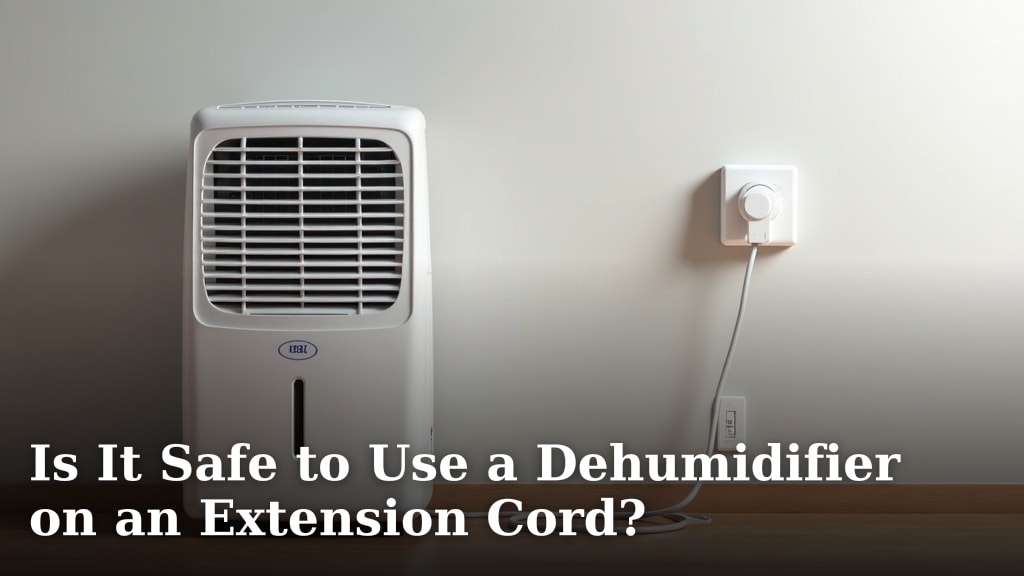
Yes, you can use an extension cord with a dehumidifier, but you must choose the right one to stay safe. A heavy-duty, grounded cord with a thick gauge is essential. Using a cheap or thin cord can cause overheating and create a serious fire hazard in your home.
The real issue is power draw. Dehumidifiers use a lot of electricity, especially when the compressor kicks on. We found that most experts recommend a cord rated for at least 15 amps. A standard household cord is often only 10 or 13 amps, which isn’t enough for the job.
- Always match the cord’s amperage to or exceed the dehumidifier’s rating.
- Use a short, heavy-duty extension cord (12 or 14-gauge wire).
- Never use a multi-outlet tap or a damaged cord.
- Plug the cord directly into a wall outlet, not a power strip.
- If you use it for a long time, check for heat in the cord or plug.
Below, we walk through exactly how to pick the correct cord and what to avoid. Let’s make sure you can run your dehumidifier safely without any worries.
Using an Extension Cord with Your Dehumidifier Safely
So you need to run your dehumidifier in a spot that’s far from the wall outlet. You grab an extension cord and think you’re good to go. But wait. Not every cord is up to the task, and picking the wrong one can lead to overheating or even a fire. Let’s break down what you actually need to know to keep your home safe and your dehumidifier running smoothly.
The short version? Yes, an extension cord works with a dehumidifier. But only if you choose the right type. Think of it like putting the right size gas nozzle in your car. A mismatch creates problems, fast.
Why Dehumidifiers Draw So Much Power
Dehumidifiers are heavy-duty appliances. They pull a lot of electricity, especially when the compressor cycles on. Many standard units draw between 500 and 1,000 watts. Larger models can go even higher, sometimes reaching 1,500 watts or more.
That energy demand means the cord carrying that electricity has to handle a lot of current. We found that the U.S. Department of Energy recommends matching the cord’s capacity to the appliance’s requirements. A weak cord gets hot. A hot cord is a fire risk.
Here’s the key number you need to know: amps. Most dehumidifiers need between 6 and 12 amps to operate. When the compressor kicks in, that spike can push the draw even higher. Your extension cord has to handle that spike without breaking a sweat.
How to Pick the Right Extension Cord
Choosing a cord isn’t rocket science. But it does require a quick look at the specs. You need to match the cord’s amperage rating to your dehumidifier’s needs. And you want a cord that’s short and thick.
Why short? Because electricity loses power over distance. A longer cord means more resistance and more heat. Keep the cord as short as possible while still reaching the outlet. If you need 25 feet, don’t buy a 50-foot cord and coil up the slack.
Why thick? Because thicker wire carries more current safely. The gauge (or thickness) of the wire matters more than almost anything else. A 12-gauge cord is much safer than a 16-gauge cord for a dehumidifier.
Wire Gauge and Amperage Explained
Wire gauge works backward from what you might expect. Lower gauge number means thicker wire. A 10-gauge wire is thicker than a 14-gauge wire. Thicker wire handles more amps without overheating.
Here’s a quick comparison to help you pick:
| Wire Gauge | Max Amps (Typical) | Good For | Good for Dehumidifier? |
|---|---|---|---|
| 14-gauge | 15 amps | Small appliances, fans | Maybe (check your unit) |
| 12-gauge | 20 amps | Power tools, larger appliances | Yes — recommended |
| 10-gauge | 30 amps | Heavy-duty equipment | Yes — great choice |
| 16-gauge | 10-13 amps | Lamps, light devices | No — too weak |
Many experts recommend a 12-gauge cord for most dehumidifiers. It gives you a comfortable safety margin. If your unit pulls 10 amps, a 12-gauge cord rated for 20 amps has plenty of room to spare.
Understanding Dehumidifier Power Requirements
Every dehumidifier comes with a label or manual that lists its power needs. You’ll see watts and amps listed there. Pay attention to the amps. That’s the number that matters most when picking a cord.
For example, a typical 30-pint dehumidifier might draw around 6 amps. A 50-pint model could draw 10 amps or more. A commercial-grade unit? Even higher. The point is, you need to know your specific model’s rating before you buy a cord.
We found that the National Electrical Manufacturers Association (NEMA) advises that the extension cord’s rating should always be equal to or higher than the appliance’s amperage. No exceptions.
Best Practices for Running a Dehumidifier with an Extension Cord
Let’s get practical. Here are the things you should do every single time:
- Plug the cord directly into a wall outlet. Never plug it into a power strip or surge protector. Those aren’t built for the sustained load a dehumidifier puts out.
- Check the cord for damage before each use. Look for frayed wires, bent prongs, or cracked insulation. A damaged cord is a waiting disaster.
- Don’t run the cord under rugs or furniture. Heat needs to dissipate. Covering the cord traps heat and increases fire risk. The Consumer Product Safety Commission (CPSC) warns against this in their home electrical safety guidelines.
- Keep the cord away from water. Dehumidifiers often live in damp basements. Make sure the cord and outlet are dry and away from puddles or leaks.
- Feel the cord and plug for heat. If the cord or plug feels warm to the touch, unplug it. That’s a sign it’s overloaded.
Think of these steps like checking your tires before a road trip. A few minutes of attention now can prevent a serious problem down the road.
What Happens with the Wrong Cord
Ever tried to fill a garden hose with a fire hose? It doesn’t work well. Using a weak cord with a powerful dehumidifier is the same idea. The cord can’t handle the load, so it overheats.
An overloaded cord can melt its insulation, damage your dehumidifier, or start a fire. The National Fire Protection Association (NFPA) reports that electrical failures and malfunctions are a leading cause of home fires. Many of those fires involve overloaded cords or outlets.
The risk is real. It’s not just about tripping a breaker. A thin cord can overheat silently, without tripping anything, and cause damage inside the walls or under the carpet.
Signs Your Cord Is Overloaded
Watch for these warning signs. They’re not subtle:
- The cord feels hot when you touch it (even after just a few minutes of use).
- The plug discolors or melts at the outlet.
- You notice a burning smell near the cord or outlet.
- Lights flicker when the dehumidifier compressor kicks on.
- The breaker trips repeatedly — that’s your home’s safety system saying something’s wrong.
If any of these show up, stop using the cord immediately. Unplug everything and get a proper replacement. Your safety matters more than convenience.
Safe Extension Cord Shopping Checklist
Before you buy, run through this checklist. It takes two minutes and could save you a lot of trouble:
- Is the cord rated for at least 15 amps? Check the label or packaging.
- Is the wire gauge 12 or 14? Thicker wire = safer.
- Is it a 3-prong grounded cord? Never use a 2-prong cord with a dehumidifier.
- Is the cord length 25 feet or less? Shorter is always better.
- Is it listed by a safety testing lab (UL, CSA, or ETL)? This means it’s been tested for safety.
- Does it feel sturdy and heavy? Cheap, flimsy cords are a red flag.
If you check all six boxes, you’re in good shape. If you can’t check even one, keep shopping.
When You Should Avoid Using an Extension Cord Entirely
Sometimes the best answer is to skip the extension cord altogether. If you can, plug your dehumidifier directly into a wall outlet. That’s the safest option, full stop.
Some experts, including those at the National Fire Protection Association, say that permanent hardwired solutions or dedicated circuits are always the safest bet for heavy appliances. If you need your dehumidifier in a spot without a nearby outlet, consider having an electrician install one.
It’s an investment, but it removes the cord risk entirely. Think of it as a long-term fix versus a temporary band-aid.
Common Misconceptions About Extension Cords
There’s a lot of bad advice floating around. Let’s clear a few things up.
“All Extension Cords Are the Same”
They’re not. Not even close. A cord made for holiday lights is very different from one designed for power tools. The wire gauge, insulation, and plug design all vary. Always choose a heavy-duty, grounded cord rated for the appliance’s amperage.
“Power Strips Work Fine for Dehumidifiers”
Most power strips are not rated for the sustained load a dehumidifier requires. The U.S. Fire Administration recommends plugging high-draw appliances directly into the wall. A power strip adds another connection point, and that means another spot where heat can build up.
Quick Recap Before You Go
Using an extension cord with your dehumidifier is perfectly fine when you do it right. The key is matching the cord’s capacity to the dehumidifier’s demands. Go with a short, heavy-duty, grounded cord with a gauge of 12 or lower. Always check for damage. Never use a power strip.
Your home’s safety depends on making smart choices about electrical equipment. A few extra minutes of thought can prevent a dangerous situation. Stay safe, stay cool, and let that dehumidifier do its job.
We found that the most common mistake people make is grabbing whatever cord they have lying around. Don’t be that person. Pick the right cord, and you’ll never have to worry.
Conclusion
You can safely run your dehumidifier with an extension cord. The secret is choosing the right one. Always pick a short, heavy-duty cord with a 12-gauge wire or lower. Make sure it’s rated for at least 15 amps and has a three-prong grounded plug. We found this combination prevents overheating and keeps your home safe. Your next step should be simple: check your dehumidifier’s amp rating now. Then, grab a cord that meets or exceeds that number. This small action gives you peace of mind and lets your appliance work without worry.
Frequently Asked Questions
Can I use a power strip with my dehumidifier?
No, you should not. Most power strips are not built to handle the high, sustained power draw of a dehumidifier. We recommend plugging the cord directly into a wall outlet to avoid overheating and fire risks. Your safety is the priority here.
How do I know if my extension cord is overloaded?
Watch for clear warning signs. If the cord or plug feels hot to the touch, smells like burning, or causes lights to flicker, it’s overloaded. Unplug it immediately. These are signals that the cord can’t handle the dehumidifier’s power demand.
Does the length of the extension cord matter?
Yes, it matters a lot. A longer cord can cause more heat buildup and reduce power. We found that a shorter cord, ideally 25 feet or less, is safer and more efficient. If you need more length, choose a thicker gauge wire to compensate.
Is a two-prong extension cord safe for my dehumidifier?
No, it is not safe. You must use a three-prong grounded cord. A grounded plug provides a safe path for electricity if there’s a fault. Using a two-prong cord increases the risk of electric shock, so always look for that third prong.
Can I run my dehumidifier 24/7 with an extension cord?
It’s not recommended for long-term, continuous use. While a proper cord is safe for daily use, leaving it plugged in for days increases heat and wear. We suggest plugging it directly into the wall for 24/7 operation. This removes any cord-related risk.