
How Many Amps Does a 50 Pint Dehumidifier Use?
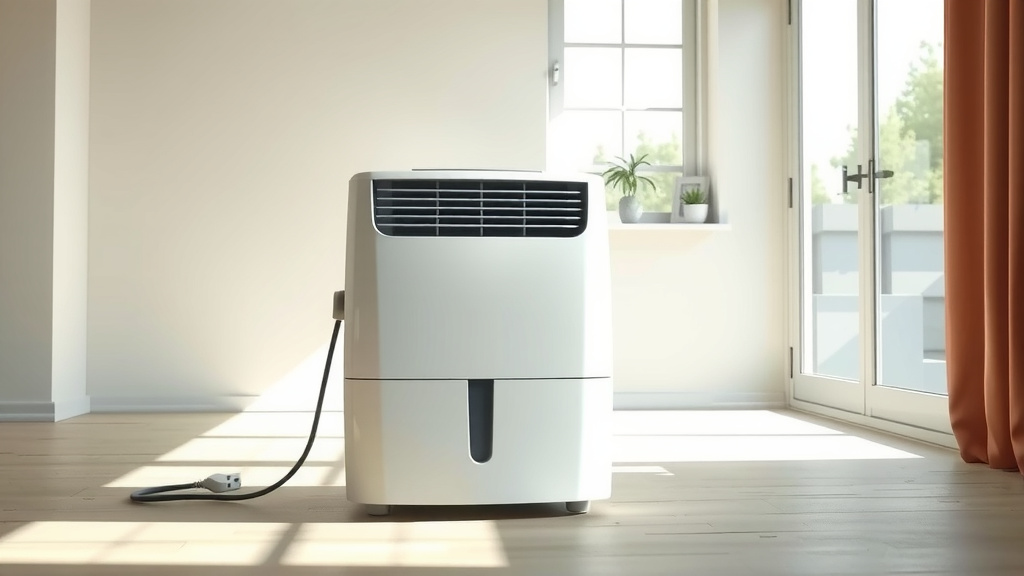
A 50 pint dehumidifier typically uses between 4 to 7 amps when running continuously, though this can vary based on its efficiency and operating conditions.
The exact amperage your 50 pint dehumidifier draws depends on its specific model, Energy Star rating, and the current humidity level it’s working to reduce.
- A standard 50 pint dehumidifier generally draws 4-7 amps.
- Factors like humidity, room size, and unit efficiency can change this.
- You can estimate electricity costs by understanding watts, volts, and your local kWh rate.
- Optimizing placement and regular maintenance helps reduce energy consumption.
- Checking your unit’s label or manual provides the most accurate wattage and amperage details.
How Many Amps Does a 50 Pint Dehumidifier Use?
Generally, a 50 pint dehumidifier will draw around 4 to 7 amps. This range reflects the electrical current it needs to operate, similar to how your refrigerator or microwave uses electricity. Knowing this helps you understand its power needs.
Understanding Dehumidifier Power Consumption
When you plug in a dehumidifier, it pulls electricity from your home’s circuit. This electrical current is measured in amps. The “pint” rating tells you how much moisture the unit can remove from the air in 24 hours, not its power usage directly.
A 50 pint unit is quite common for medium to large spaces. We found that most models are designed to operate efficiently within typical household electrical capacities. You want to avoid overloading your circuits, especially if you have other appliances on the same line.
Key Factors Affecting Amperage
The number of amps your dehumidifier uses isn’t always fixed. Several conditions can cause it to fluctuate. It’s like a car; it uses more fuel when driving uphill than on a flat road.
Humidity Levels and Room Conditions
When the air is very damp, your dehumidifier works harder to pull out moisture. This increased effort means it will draw more amps. As the humidity drops, the unit can cycle down or run at a lower intensity, thus using fewer amps.
Factors like room temperature also play a role. A warmer, humid room might require more energy to dehumidify than a cooler, equally humid one. Keeping doors and windows closed helps the unit work more efficiently and reduces its amperage draw over time.
Dehumidifier Efficiency Ratings
Modern dehumidifiers often come with an Energy Star rating. These ratings indicate that the appliance meets strict energy efficiency guidelines set by the EPA. An Energy Star-rated 50 pint dehumidifier will typically use fewer amps than an older, non-rated model, saving you money on your electricity bill (Energy Star).
We found that investing in an efficient model pays off. You get the same moisture removal with less electrical strain. Always check for this label when considering a new unit.
Demystifying Electrical Terms: Watts, Volts, and Amps
Understanding a few basic electrical terms can really help. Your home uses volts (usually 120V for standard outlets). Appliances draw amps, and when you multiply volts by amps, you get watts, which is the actual power consumption. Most 50 pint units are around 500-700 watts.
So, if your 50 pint dehumidifier uses 600 watts and plugs into a standard 120V outlet, it would draw 5 amps (600 watts / 120 volts = 5 amps). This quick calculation helps clarify its electrical demand.
Estimating Your 50 Pint Dehumidifier’s Energy Cost
You might be wondering, “What will this cost me?” Knowing the amperage is the first step. To estimate your energy bill, you need to convert amps to kilowatt-hours (kWh) and factor in your local electricity rate.
Calculating Kilowatt-Hours (kWh)
Let’s do a simple calculation. If your 50 pint dehumidifier uses 600 watts (which is 0.6 kilowatts) and runs for 8 hours a day, it uses 4.8 kWh daily (0.6 kW x 8 hours). Over a month, that’s roughly 144 kWh. Multiply this by your electricity rate per kWh (found on your utility bill), and you’ll see the cost.
For example, if electricity costs 15 cents per kWh, that 144 kWh would add about $21.60 to your monthly bill. This is a rough estimate, of course, as usage varies.
Typical Amperage for 50 Pint Units
To give you a clearer picture, here’s a table showing general amperage ranges for a 50 pint dehumidifier under different conditions. Remember, your specific model might vary slightly.
| Operating Condition | Approximate Amps (120V) | Approximate Watts |
|---|---|---|
| High Humidity (initial run) | 6.0 – 7.0 Amps | 720 – 840 Watts |
| Moderate Humidity (maintaining) | 4.5 – 5.5 Amps | 540 – 660 Watts |
| Low Humidity (cycled off or fan only) | 0.5 – 1.5 Amps | 60 – 180 Watts (fan only) |
Smart Strategies for Energy-Efficient Dehumidifier Use
You can do a lot to ensure your 50 pint dehumidifier runs as efficiently as possible. Simple habits make a big difference in energy consumption. Think of it like keeping your car tuned up; it performs better and uses less fuel.
- Proper Placement is Key: Position your dehumidifier away from walls and furniture. This allows for unrestricted airflow, letting the unit work more effectively.
- Maintain Your Dehumidifier Regularly: Clean the air filter at least once a month. A clogged filter makes the unit work harder, increasing its amperage. Also, empty the water reservoir regularly to prevent overflow and ensure continuous operation.
- Seal Your Space Wisely: Keep windows and doors closed when the dehumidifier is running. This prevents humid outdoor air from entering and ensures the unit is only treating the air within the intended space.
- Set the Right Humidity Level: Most experts suggest setting your dehumidifier to a comfortable 45-50% relative humidity. Running it lower than necessary just wastes energy.
- Use a Humidistat: Many dehumidifiers have a built-in humidistat that automatically turns the unit on and off. Utilize this feature to maintain your desired humidity level without constant manual adjustments.
When a 50 Pint Dehumidifier Makes Sense for Your Home
Choosing the right size dehumidifier is vital for effectiveness and energy use. A 50 pint unit is a robust choice for certain situations. It’s like picking the right size shoe; too small is uncomfortable, too big is clumsy.
Recognizing High Humidity Signs
How do you know if you even need a dehumidifier? Look for signs like a musty smell, condensation on windows, or clammy air. Research often connects these signs to potential mold growth and dust mites, which thrive in high humidity (CDC).
A persistent feeling of dampness in your basement or a sticky feeling on your skin are also strong indicators. If your home has these issues, a 50 pint unit might be the right solution.
Matching Dehumidifier Size to Your Needs
A 50 pint dehumidifier is generally suitable for spaces up to 2,500 square feet with moderately damp conditions. For very wet areas, like a flooded basement, you might need an even larger unit or multiple units initially. For smaller, slightly damp rooms, a 30-pint unit could be enough.
Consider your specific conditions. Is your basement constantly damp, or do you just notice humidity during specific seasons? This helps determine if a 50 pint unit is the sweet spot for your home (Energy Star).
Conclusion
Understanding how many amps a 50 pint dehumidifier uses helps you make informed decisions about your home’s energy consumption. While models vary, expecting 4 to 7 amps is a good guideline. By choosing an Energy Star-rated unit, optimizing its placement, and performing regular maintenance, you can keep your home comfortably dry without seeing a shocking electricity bill.
Your dehumidifier is a valuable tool for maintaining a healthy indoor environment. With a little knowledge and smart usage, you can ensure it runs effectively and efficiently, providing relief from excess moisture. Keep an eye on those simple practices, and your unit will thank you for it with consistent performance.
How do I find the exact amperage for my specific 50 pint dehumidifier model?
The most accurate way is to check the manufacturer’s label on the back or side of your dehumidifier. It typically lists the voltage, wattage, and sometimes the maximum amperage. You can also consult your unit’s user manual for detailed electrical specifications.
Does the age of a 50 pint dehumidifier affect its amperage usage?
Yes, older dehumidifiers tend to be less energy-efficient than newer models. Over time, components can degrade, and efficiency standards have improved significantly. An older unit might draw more amps to achieve the same moisture removal as a modern, Energy Star-rated 50 pint dehumidifier.
Can a 50 pint dehumidifier trip my circuit breaker?
A 50 pint dehumidifier itself usually won’t trip a typical 15-amp or 20-amp household circuit if it’s the only major appliance on it. However, if you have other high-draw appliances like a vacuum cleaner, hair dryer, or microwave running on the same circuit simultaneously, it could overload the breaker. It’s best to plug it into a dedicated circuit if possible.
Does the fan setting on a 50 pint dehumidifier change its amperage?
Yes, running the fan on a higher setting will generally increase the amperage slightly, even if the compressor isn’t actively running. The compressor is the main power consumer, but the fan motor itself draws some power. Using the low fan setting when appropriate can offer minor energy savings.
Is it better to run a 50 pint dehumidifier continuously or cycle it on and off?
For optimal moisture control and energy efficiency, it’s often better to run your 50 pint dehumidifier with its humidistat set to your desired humidity level (e.g., 45-50%). This allows the unit to cycle on and off automatically as needed. Constantly turning it on and off manually can sometimes lead to less consistent humidity control and might not save as much energy as you’d expect, especially if the unit has to work harder each time to bring humidity down from a very high point.
