
How Many Amps Does a Dehumidifier Draw?
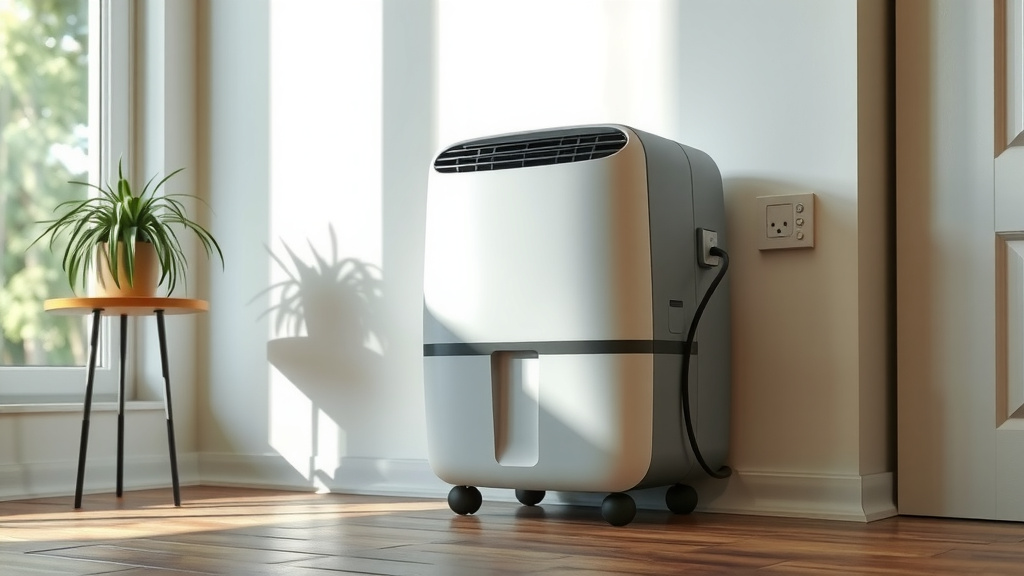
A typical residential dehumidifier usually draws between 3 to 8 amps, though larger or commercial models can draw more. This amperage depends heavily on the unit’s capacity, energy efficiency rating, and whether it’s running at full power.
Understanding how many amps a dehumidifier draws helps you choose the right unit and avoid tripping your circuit breakers. It also gives you a clearer picture of your energy consumption.
- Dehumidifiers typically use 3 to 8 amps, varying by size and type.
- Check your unit’s label or manual for its exact amp draw.
- Amp draw impacts your home’s electrical circuits and energy costs.
- Newer, ENERGY STAR rated models often use less electricity.
- Proper maintenance can help keep your dehumidifier running efficiently.
How Many Amps Does a Dehumidifier Draw?
Most home dehumidifiers pull between 3 and 8 amps of electricity. This range covers many common units you might use in a basement or living space.
The exact number always depends on the specific model you own. A small bedroom unit will naturally use less power than a large basement workhorse.
Understanding Dehumidifier Power Needs
Thinking about amps can feel a bit like talking about car engines. You want enough power to do the job, but not so much that it causes problems.
Your home’s electrical circuits have limits. Knowing your dehumidifier’s amp draw helps you stay within those limits and keep your home safe.
What Determines Amp Draw?
Several factors play a role in how many amps your dehumidifier needs. It’s not a one-size-fits-all answer.
The unit’s pint capacity is a big factor. A 50-pint dehumidifier will generally draw more power than a 30-pint model.
The type of dehumidifier also matters. Some technologies are simply more power-hungry than others, which we will explore shortly.
Also, features like a powerful fan or continuous drainage can affect the overall amp usage. More features often mean more power demand.
Average Amp Draw by Dehumidifier Size
Let’s look at some general ranges for different dehumidifier sizes. Keep in mind these are averages, and your specific model may differ.
Small units (20-30 pints) often draw around 3-5 amps. These are great for smaller rooms or bedrooms.
Medium units (40-50 pints) might use 5-7 amps. These are popular for larger rooms or basements.
Large units (70+ pints) can draw 7-9 amps or sometimes even more. These are designed for very damp, large spaces.
| Dehumidifier Capacity | Typical Amp Draw (Approx.) |
|---|---|
| 20-30 Pint | 3-5 Amps |
| 40-50 Pint | 5-7 Amps |
| 70+ Pint | 7-9 Amps |
Types of Dehumidifiers and Their Amperage
Not all dehumidifiers work the same way, and their technology impacts power usage. This is a key difference to note.
The two main types are refrigerant (compressor) and desiccant models.
Refrigerant Dehumidifiers
These are the most common type for homes. They work much like a refrigerator, using a compressor to cool coils and condense moisture.
They are very effective in warm, humid conditions. Their amp draw typically falls within the ranges we’ve already discussed.
Many experts point out that refrigerant models become less efficient in colder temperatures (Mayo Clinic).
Desiccant Dehumidifiers
Desiccant dehumidifiers use a special material to absorb moisture from the air. They then use a heater to dry out this material.
They often have a higher amp draw because of that built-in heating element. However, they perform very well in cooler environments.
If you need dehumidification in a cold basement or garage, a desiccant model might be ideal, despite its higher amp use.
Why Does Amp Draw Matter to You?
Understanding amp draw is more than just technical jargon. It has real-world implications for your home and your wallet.
You want your dehumidifier to run safely and without unexpected problems. Amp draw plays a big part in that.
Circuit Overload Risks
Every electrical circuit in your home has a maximum amp capacity. If you plug too many high-amp devices into one circuit, you risk an overload.
An overload will trip your circuit breaker, shutting off power to that area. It’s an inconvenience and a potential safety concern if it happens often.
Knowing your dehumidifier’s amp draw helps you plug it into a suitable outlet, often one on its own dedicated circuit.
Energy Bill Impact
Amps directly relate to watts, which is how your electricity bill is calculated. Higher amp draw generally means higher energy consumption.
A dehumidifier running continuously with a high amp draw can add a noticeable amount to your monthly electricity bill.
Choosing an ENERGY STAR rated model can help you save money. These models are designed to be more efficient (Energy.gov).
How to Find Your Dehumidifier’s Amp Draw
The easiest way to know your specific unit’s amp draw is to check its label. Look for a sticker on the back or side of the unit itself.
The owner’s manual will also list the electrical specifications. You are looking for a rating in “Amps” or “A.”
If you can’t find it, you might see “Watts” or “W.” You can convert watts to amps if you know your household voltage (typically 120V in North America).
Practical Tips for Safe Dehumidifier Use
Using your dehumidifier safely is paramount. Here are some quick tips to help prevent any electrical issues:
- Use a dedicated circuit: If possible, plug your dehumidifier into an outlet that isn’t shared with other high-power appliances.
- Avoid extension cords: Plug the unit directly into a wall outlet. If an extension cord is essential, use a heavy-duty, properly rated cord.
- Check for damage: Regularly inspect the power cord and plug for any signs of wear or damage. Replace if needed.
- Clear around the unit: Ensure good airflow around the dehumidifier to prevent overheating and maintain efficiency.
- Read the manual: Your specific unit may have unique safety guidelines or recommendations.
Saving Energy While Dehumidifying
Running a dehumidifier can be an energy hog if not managed well. However, you can take steps to minimize its impact.
Think about how your home contributes to humidity in the first place. Addressing those sources can help your dehumidifier work less.
Optimal Placement Tips
Where you place your dehumidifier significantly impacts its efficiency. Don’t just stick it in a corner and forget about it.
Place it in the most humid area, away from walls and furniture. This allows for better airflow and more effective moisture removal.
Close windows and doors in the room where it operates to prevent new humid air from entering.
Maintenance for Efficiency
Just like any appliance, a well-maintained dehumidifier performs better and uses less energy. Keeping it clean is a simple step.
Regularly clean the air filter according to your manual’s instructions. A clogged filter makes the unit work harder (CDC).
Empty the water collection bucket frequently or ensure continuous drainage is working. This prevents the unit from shutting off unnecessarily.
Common Dehumidifier Myths About Power
Let’s clear up a couple of common misunderstandings about dehumidifier power usage. These myths can lead to incorrect decisions.
Some people believe that smaller units always save more energy. While often true, a small unit overworked in a large, damp space might use more power than a correctly sized, larger unit working efficiently.
Another myth is that running it on “low” setting always uses vastly less energy. While it does save power, a unit struggling on low to reach your target humidity might run longer, negating some savings.
Conclusion
Understanding how many amps your dehumidifier draws is crucial for both electrical safety and energy management. Most residential units fall into the 3 to 8 amp range, with larger capacities generally requiring more power.
By checking your unit’s specifications, maintaining it well, and placing it strategically, you can ensure your dehumidifier operates safely and efficiently. This knowledge helps you keep your home comfortable without unexpected surprises on your electricity bill.
How do I know if my circuit can handle a dehumidifier?
You can check the amp rating on your circuit breaker, usually found inside your electrical panel. Most household circuits are 15 or 20 amps. If your dehumidifier draws 6 amps, and nothing else significant is on that circuit, you should be fine. If you’re unsure, consulting an electrician is always the best choice for safety.
Does an ENERGY STAR dehumidifier really use fewer amps?
Yes, ENERGY STAR certified dehumidifiers are designed to be more energy-efficient than standard models. While their peak amp draw might be similar to non-certified units of the same size, they generally remove more moisture per kilowatt-hour of electricity, meaning they achieve the desired humidity levels with less overall energy consumption over time.
Can I use a smart plug to monitor my dehumidifier’s amp draw?
Many smart plugs include energy monitoring features that can track the real-time power consumption (watts) of connected devices. While they might not directly show amps, you can often infer it or use online calculators (Watts / Volts = Amps) to get an idea. This can be a useful tool for understanding your unit’s actual energy usage patterns.
Why does my dehumidifier sometimes trip the circuit breaker?
If your dehumidifier trips the breaker, it’s likely drawing too many amps for that specific circuit. This can happen if the circuit is overloaded with other appliances, if the dehumidifier is faulty, or if its starting current (a momentary surge when it turns on) is too high for the circuit’s tolerance. Try plugging it into a different, less loaded circuit, or have an electrician inspect the unit and wiring.
Is it more energy-efficient to run my dehumidifier continuously or in cycles?
For optimal energy efficiency and consistent humidity control, it’s generally best to run your dehumidifier on its “auto” or “humidistat” setting. This allows the unit to cycle on and off as needed to maintain your desired humidity level, rather than running constantly. Continuous operation is only usually advised for extremely damp conditions where constant moisture removal is crucial.
