
How Many Kwh Does a Dehumidifier Use?
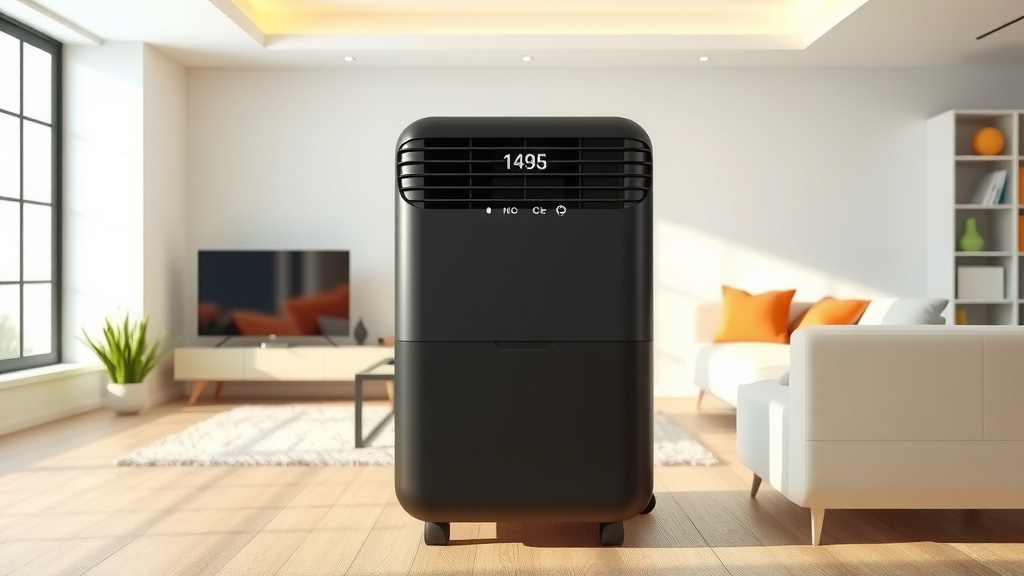
A typical dehumidifier uses between 0.2 to 0.7 kilowatt-hours (kWh) of electricity per hour, depending on its size and efficiency.
This means running a standard 50-pint dehumidifier for 24 hours could consume roughly 9.6 to 16.8 kWh daily, impacting your electric bill.
Here’s a quick summary of what you’ll learn about your dehumidifier’s energy use:
- Most dehumidifiers use between 0.2 to 0.7 kWh per hour, but this varies widely.
- Daily electricity cost changes based on run time, model efficiency, and local electricity rates.
- Factors like unit size, Energy Star rating, and the humidity in your home greatly affect consumption.
- Upgrading to an energy-efficient model can significantly reduce your operating costs.
- Smart usage and proper maintenance are key to keeping your power bill in check.
How Many Kwh Does a Dehumidifier Use?
Your dehumidifier’s energy consumption typically ranges from 0.2 to 0.7 kWh per hour, making it an appliance that can certainly influence your electricity bill.
The exact kilowatt-hours used by a dehumidifier depends on several factors, which we will explore to help you manage your home’s energy.
Understanding Dehumidifier Power Consumption
When you see “kWh,” it stands for kilowatt-hour. This is the unit your electricity company uses to charge you.
It measures how much energy an appliance uses over a specific time, usually one hour. Knowing this helps you predict your costs.
For your dehumidifier, understanding kWh is like knowing the miles per gallon for your car. It tells you how “thirsty” it is.
Many experts say keeping tabs on this number can help you save money (Energy Star).
Factors Influencing Energy Use
Not all dehumidifiers are created equal when it comes to power use. Several things can change how much electricity your unit draws.
Think of it like different car models having different fuel efficiencies. What are these key factors?
Size and Capacity
Larger dehumidifiers, often measured in “pints” (how much moisture they remove daily), naturally use more electricity.
A 70-pint model will typically consume more power than a 30-pint unit. This is because they have bigger compressors and fans.
Energy Efficiency Rating (Energy Star)
An Energy Star certified dehumidifier is like getting a gold star for efficiency. These models meet strict energy performance standards.
Research consistently shows that Energy Star appliances use significantly less energy than conventional models (EPA).
Choosing one of these can save you a lot of money in the long run.
Ambient Humidity and Temperature
Your dehumidifier works harder when the air is very humid or very hot. Imagine running uphill versus downhill.
The higher the humidity, the more moisture it needs to pull from the air. This requires more power.
Similarly, operating in cooler temperatures can sometimes make it work less efficiently, as the coil might ice up.
Run Time
This one is simple: the longer your dehumidifier runs, the more electricity it uses. An hour running means X kWh.
Ten hours running means 10 times X kWh. Managing how long it operates is a direct way to control costs.
Calculating Your Dehumidifier’s Daily kWh
Want to know your dehumidifier’s daily energy footprint? It’s not too difficult to figure out.
You will need two pieces of information: its wattage and how many hours you run it.
First, find the wattage on your unit’s label, usually in watts (W). Then use this simple formula:
(Wattage / 1000) x Hours Used Per Day = Daily kWh
For example, a 500-watt dehumidifier running 12 hours a day would be (500 W / 1000) x 12 hours = 6 kWh per day.
Dehumidifier Sizes and Typical kWh Range
Here’s a quick look at what you might expect from different sizes:
| Dehumidifier Size (Pints) | Typical Wattage Range | Estimated kWh per Hour |
|---|---|---|
| 30-Pint | 300-400W | 0.3 – 0.4 kWh |
| 50-Pint | 450-600W | 0.45 – 0.6 kWh |
| 70-Pint | 600-800W | 0.6 – 0.8 kWh |
Remember, these are estimates. Your specific model may vary slightly based on its design and efficiency.
Is Your Dehumidifier an Energy Hog?
Are you wondering if your dehumidifier is costing you more than it should? There are some clear signs.
If your energy bills are unusually high, and you run your unit often, it might be working overtime.
An old unit, or one that’s always running in very high humidity, can certainly drain more power.
Old vs. New Models: The Efficiency Gap
Technology advances, and dehumidifiers are no exception. Older models are often much less efficient.
They might use a lot more energy to do the same job as a newer, Energy Star rated unit. It’s like comparing an old flip phone to a new smartphone.
Research often connects older models with significantly higher energy usage due to less efficient compressors and fan motors (Energy Star).
Upgrading can feel like a cost, but it’s an investment that pays itself back through lower electricity bills.
Smart Strategies to Reduce Dehumidifier kWh
You can take control of your dehumidifier’s energy use. Simple changes can make a big difference.
Here are some practical tips to help you keep those kilowatt-hours down:
- Set the Right Humidity Level: Most experts recommend keeping your home’s humidity between 30% and 50% (Mayo Clinic). Don’t aim for desert-dry air, as this makes your unit work harder.
- Proper Placement: Position your dehumidifier in the center of the room, away from walls. This allows for better airflow and more efficient operation.
- Seal Leaks: Drafts and air leaks let humid air in. Seal windows, doors, and cracks to prevent your dehumidifier from fighting a losing battle.
- Regular Maintenance: Clean the air filter regularly. A dirty filter restricts airflow, making the motor work harder and use more power.
- Run Only When Needed: Use the built-in humidistat. Set it and forget it. The unit will only run when humidity rises above your desired level.
- Consider Zoned Dehumidification: Only dehumidify the areas that truly need it, like a basement or damp room, instead of trying to dry your entire home if not necessary.
When to Run Your Dehumidifier
You don’t need to run your dehumidifier 24/7 if it’s not always humid. Use it strategically.
Run it during humid seasons, after showers, or in damp areas like basements. A good rule is when you feel the sticky air.
Many experts suggest using a hygrometer to monitor your home’s actual humidity levels, giving you data-driven control.
The Financial Impact: What Does it Cost You?
The kWh usage directly impacts your wallet. Let’s look at how.
If your electricity costs 15 cents per kWh (a common rate), and your dehumidifier uses 12 kWh per day, that’s $1.80 daily.
Over a month, that adds up to about $54. This can be a significant part of your utility bill.
Knowing your unit’s consumption helps you budget and find ways to save. Every kWh saved is money in your pocket.
Comparing Dehumidifier Types: Refrigerant vs. Desiccant
There are two main types of dehumidifiers, and they have different energy profiles.
Refrigerant (compressor) dehumidifiers are most common for homes in warmer climates and are generally more energy-efficient.
Desiccant dehumidifiers are often better in colder conditions, but they typically use more electricity (about 300-1000W) due to a heating element.
Many experts say refrigerant models are the go-to for general home use because of their efficiency in typical temperatures (EPA).
Conclusion
Understanding how many kWh your dehumidifier uses is more than just a number; it’s about smart home management and saving money.
By choosing an efficient model, running it wisely, and keeping it well-maintained, you can control your energy consumption effectively.
You have the power to keep your home comfortable without breaking the bank. It’s all about making informed choices.
Take these tips, apply them, and enjoy a drier, more energy-efficient home environment. Your wallet will thank you!
Is it OK to run a dehumidifier 24/7?
While you can run a dehumidifier continuously, it’s generally not necessary unless you live in an extremely humid climate or have a specific dampness problem like a flooded basement. Running it 24/7 will significantly increase your electricity bill. Most modern dehumidifiers have a humidistat that allows them to cycle on and off to maintain a set humidity level, which is a more energy-efficient approach.
What is the most energy efficient dehumidifier size?
The “most” energy-efficient size is the one that is appropriately sized for your specific space. An oversized unit will cycle on and off frequently, potentially wasting energy, while an undersized unit will run constantly and struggle to reach the desired humidity, also wasting energy. Always match the pint capacity to the square footage and humidity level of the area you want to dehumidify for optimal efficiency.
Does a dehumidifier increase my electric bill significantly?
Yes, a dehumidifier can increase your electric bill noticeably, especially if it runs for many hours each day. Depending on its size, efficiency, and how often it runs, it can add anywhere from $20 to $80 or more to your monthly bill. However, this cost can be mitigated by choosing an Energy Star model, setting the humidistat correctly, and performing regular maintenance.
How can I tell if my dehumidifier is working efficiently?
You can tell if your dehumidifier is working efficiently if it reaches and maintains your desired humidity level without running constantly. Check the water collection bucket to see if it’s accumulating moisture. If your electricity bills seem unusually high, or if the unit runs non-stop but the humidity remains high, it might be working inefficiently or needs maintenance like a filter cleaning.
What is the ideal humidity level for my home?
Many guidelines point to maintaining an indoor humidity level between 30% and 50% as ideal for comfort, health, and preventing mold growth (CDC). Keeping humidity within this range helps reduce allergens, protects wooden furniture, and makes your home feel more comfortable. Your dehumidifier’s humidistat can help you achieve this specific target.
