
How Many Kw Does a Dehumidifier Use?
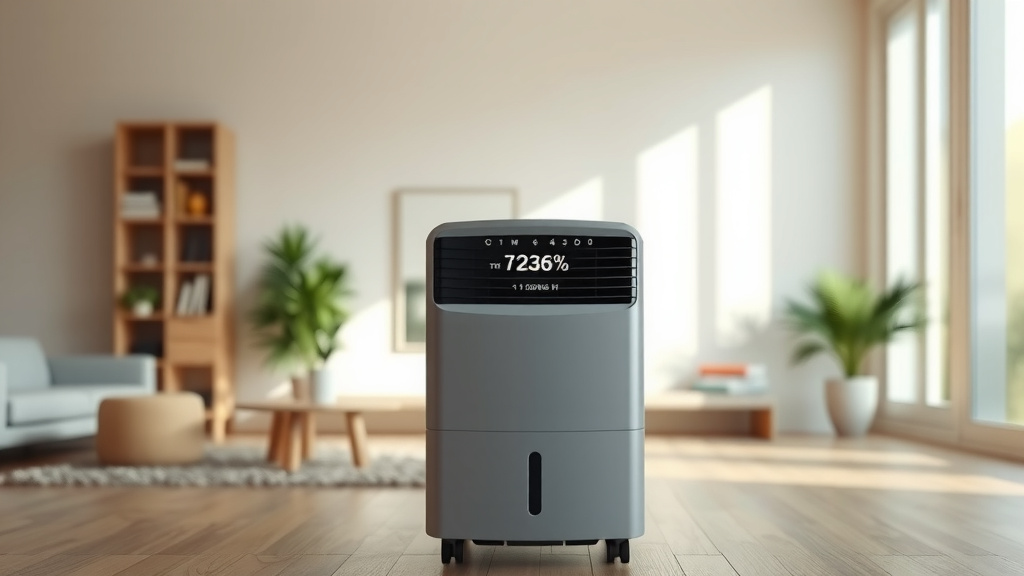
A typical home dehumidifier uses between 300 to 700 watts of power, which translates to roughly 0.3 to 0.7 kilowatts (kW) per hour.
The actual power consumption of a dehumidifier depends on its capacity, efficiency rating, and the specific conditions of your space.
- Dehumidifiers typically use 0.3 to 0.7 kW per hour, like a powerful light bulb or a small appliance.
- The exact kilowatt usage changes based on the unit’s size, its Energy Star rating, and how humid your room is.
- You can estimate your cost by multiplying its wattage by how many hours you run it and your electricity rate.
- Regular maintenance and proper sizing help keep energy costs down and improve efficiency.
How Many Kw Does a Dehumidifier Use?
A standard residential dehumidifier will typically use anywhere from 0.3 to 0.7 kilowatts per hour. This range covers most models you might find for your home or basement.
The Basics: What is a Kilowatt?
Before we go deep, let’s talk about kilowatts. A kilowatt, or kW, is simply 1,000 watts. You see watts on light bulbs and appliances.
When you measure electricity over time, it becomes kilowatt-hours (kWh). Your electric bill charges you based on how many kWh you use.
Understanding this helps you grasp how much energy your dehumidifier consumes.
Dehumidifier Wattage: A Quick Look
Most dehumidifiers list their power use in watts. A small 30-pint unit might draw around 300 watts.
A larger 70-pint model could use up to 700 watts or sometimes more. This gives you a clear picture of its immediate power draw.
Why Does Wattage Vary So Much?
The difference in wattage often comes down to the dehumidifier’s capacity. Larger units need more power to remove more moisture.
Also, how efficiently a unit converts electricity into moisture removal plays a big part. Newer models often use less energy.
How to Calculate Your Dehumidifier’s Energy Use
Want to know your exact energy usage? It’s simpler than you might think. You only need a few pieces of information.
You can often find the wattage listed on a label on the back or bottom of your dehumidifier. Look for “W” or “watts.”
The Simple Formula You Need
To find out how many kWh your dehumidifier uses, here’s the straightforward calculation:
(Wattage / 1000) x Hours Used Per Day = kWh Per Day
For example, a 500-watt unit running for 10 hours a day would use (500/1000) x 10 = 5 kWh per day. This helps you budget your energy costs.
Factors Affecting Dehumidifier Power Consumption
Several things determine how much power your dehumidifier really uses. It’s not just a fixed number.
- Capacity: A larger dehumidifier, like a 50-pint model, naturally uses more power than a smaller 20-pint unit. It has a bigger motor and fan.
- Room Size: Running a small unit in a large, damp basement means it works harder and longer. This uses more electricity.
- Humidity Level: If your space is very humid, the dehumidifier runs constantly to reach your set point. High humidity means higher power consumption.
- Temperature: Dehumidifiers are more efficient in warmer temperatures. They struggle and use more power in colder environments (below 65°F / 18°C).
- Efficiency Rating: An Energy Star certified dehumidifier is designed to be more efficient. It removes the same amount of moisture using less power.
Breaking Down Dehumidifier Types and Their Usage
Different types of dehumidifiers have varying power needs. Here’s a general idea of what to expect:
| Dehumidifier Type / Capacity | Typical Wattage Range (Watts) | Equivalent kW Range |
|---|---|---|
| Small (20-30 Pint) | 250 – 400 W | 0.25 – 0.4 kW |
| Medium (40-50 Pint) | 400 – 600 W | 0.4 – 0.6 kW |
| Large (60-70 Pint) | 600 – 750 W | 0.6 – 0.75 kW |
| Whole-Home (Ducted) | 700 – 1500+ W | 0.7 – 1.5+ kW |
As you can see, the size directly relates to its power needs. Think about your space’s specific humidity needs.
Saving Energy: Practical Tips for Your Dehumidifier
You want to keep your home dry without breaking the bank, right? There are some simple ways to make your dehumidifier more efficient.
These tips can help you reduce its runtime and, in turn, its kilowatt usage.
- Seal Air Leaks: Block drafts around windows and doors. This keeps humid outside air from entering your home.
- Run Smart: Use the built-in humidistat. Set it to your desired humidity (often 40-50%). It will turn off automatically.
- Clean Filters Regularly: A dirty filter makes the motor work harder. We found that cleaning it monthly can boost efficiency notably (Energy Star).
- Empty the Bucket: If you don’t have a drain hose, empty the bucket often. A full bucket can cause some units to shut off.
- Proper Placement: Keep the unit away from walls and furniture. Ensure good airflow around it for best performance.
- Buy Energy Star: When buying a new unit, always choose an Energy Star certified model. They use less energy for the same job.
The Cost Factor: What Will It Add to Your Bill?
Let’s talk money. Your electricity rate, measured in cents per kWh, is the biggest factor here. Rates vary widely by location.
Some areas might pay 10 cents per kWh, while others pay 25 cents or more. Check your utility bill for your exact rate.
Quick Cost Estimation
Using our previous example of a 500-watt dehumidifier running 10 hours a day (5 kWh/day):
If your electricity rate is 15 cents per kWh, it would cost: 5 kWh x $0.15/kWh = $0.75 per day.
Over a month, that’s roughly $22.50. This small calculation helps you understand the real impact on your budget.
When to Run Your Dehumidifier
You don’t always need your dehumidifier running at full blast. Understanding when to use it saves energy.
Most experts suggest running it when humidity levels exceed 50-60%. This prevents mold and mildew growth (CDC).
Consider running it mostly during the dampest times of year or in specific problem areas like basements or laundry rooms. Your nose often tells you when it’s time!
Conclusion
Your dehumidifier’s kilowatt usage is a simple calculation based on its wattage and how long you run it. Most home units range from 0.3 to 0.7 kW per hour, like a typical kitchen appliance.
By choosing an efficient model, keeping it clean, and running it only when needed, you can effectively manage moisture without significantly impacting your energy bill. A little knowledge goes a long way in keeping your home comfortable and your wallet happy.
FAQs About Dehumidifier Power Use
Does running a dehumidifier continuously use a lot of electricity?
Running a dehumidifier continuously can use a fair amount of electricity, especially if it’s a larger unit or the room is very humid. However, most modern dehumidifiers have humidistats that turn them off once the desired humidity level is reached, preventing constant running and saving energy. It’s best to set it to an appropriate humidity level, like 45-50%.
Is a 500-watt dehumidifier considered high energy use?
A 500-watt dehumidifier is a mid-range energy user. For comparison, a typical refrigerator uses around 100-200 watts when running, while a microwave might use 800-1500 watts. So, 500 watts is not excessively high, but it’s not the lowest either. Its total energy impact depends on how many hours per day you operate it.
How can I tell if my dehumidifier is energy efficient?
Look for the Energy Star label. Dehumidifiers with this label are certified to be more energy-efficient than standard models. They are designed to remove more pints of water per kilowatt-hour of electricity used. Checking the “Integrated Energy Factor” (IEF) on the product specifications also helps; a higher IEF means better efficiency.
Does room temperature impact how much power a dehumidifier uses?
Yes, room temperature definitely affects power usage. Dehumidifiers work best in warmer temperatures. In colder rooms (below 65°F or 18°C), the coils can ice up, causing the unit to work harder or defrost more often, which increases electricity consumption. Some models have “low temperature operation” features to help with this.
Is it cheaper to run a dehumidifier or use air conditioning for humidity?
For primary humidity control, a dehumidifier is generally more energy-efficient than running air conditioning (AC) if cooling isn’t also needed. AC units are designed to cool air first, and dehumidification is a secondary effect. If your goal is solely to reduce humidity without lowering the temperature much, a dehumidifier uses less electricity for that specific task. If you need both cooling and dehumidification, AC is the combined solution.
