
How Many Kilowatts Does a Dehumidifier Use?
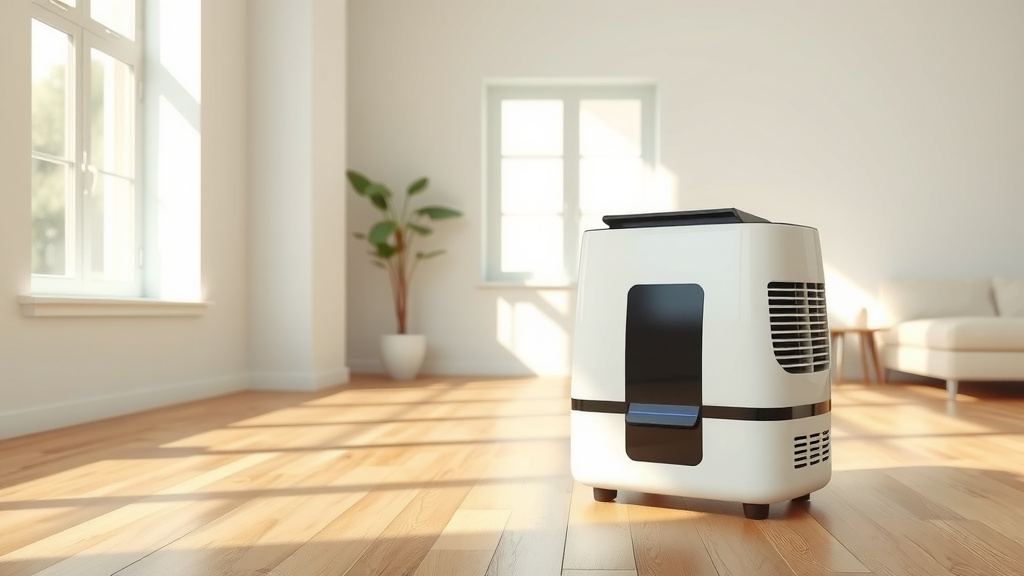
A typical home dehumidifier uses between 300 to 700 watts of power, which translates to roughly 0.3 to 0.7 kilowatts (kW) per hour of operation.
This energy usage depends significantly on the unit’s capacity, model efficiency, and how hard it has to work to remove moisture from your air.
Here’s a quick overview of what you’ll discover in this article to help you manage your home’s humidity and energy use:
- Most dehumidifiers use a modest amount of electricity, often less than 1 kW per hour.
- Several factors, like unit size and room humidity, directly impact how much energy your dehumidifier consumes.
- You can easily estimate your operating costs by knowing your unit’s wattage and your electricity rate.
- Choosing the right-sized unit for your space is a key step to saving energy and money.
- Simple maintenance and smart usage can significantly reduce your energy bill without sacrificing comfort.
How Many Kilowatts Does a Dehumidifier Use?
Most standard dehumidifiers you find for home use consume around 0.3 to 0.7 kilowatts (kW) when running. This makes them relatively energy-efficient appliances, especially when compared to larger household items like a clothes dryer or central air conditioning.
You might be surprised to learn that a typical 50-pint dehumidifier, a common size for many homes, usually operates in this range. Its actual draw varies based on its current workload.
Why Does Kilowatt Usage Matter for Your Home?
Understanding your dehumidifier’s kilowatt usage is like knowing how much fuel your car burns. It directly impacts your electricity bill. Every kilowatt-hour (kWh) adds to your monthly cost.
When you know this number, you can make smarter decisions about when and how to run your unit. You gain control over your home’s energy consumption and your budget.
Factors That Influence a Dehumidifier’s Power Draw
It’s not just one thing that determines how much electricity your dehumidifier uses. Several elements play a significant role. Think of it like cooking: different ingredients affect the final dish.
Unit Size and Capacity
Larger dehumidifiers, designed to remove more pints of moisture per day, generally use more watts. A small 30-pint unit uses less power than a big 70-pint one. This is because they have larger compressors and fans.
Ambient Humidity Levels
The more humid your room is, the harder your dehumidifier works. When there’s a lot of moisture in the air, the unit runs longer and more frequently. This directly leads to higher energy consumption.
Desired Humidity Setting
If you set your dehumidifier to achieve a very low humidity level, say 30%, it will operate longer than if you set it to 50%. Most experts suggest keeping your home’s relative humidity between 40% and 50% for optimal comfort and health (EPA).
Room Size and Airflow
Running a small dehumidifier in a large, open basement means it will struggle and run constantly. On the other hand, a properly sized unit in a contained space will reach its target humidity faster. Good airflow around the unit helps it work more efficiently, too.
Energy Star Rating and Model Efficiency
Just like other appliances, dehumidifiers come with Energy Star ratings. These units are designed to operate using less electricity while removing the same amount of moisture. Investing in an Energy Star model can lead to significant long-term savings.
Kilowatt Consumption by Dehumidifier Type
Let’s look at some general power consumption figures for different types of dehumidifiers. These are approximations, but they give you a good idea.
| Dehumidifier Type (Pint Capacity) | Typical Wattage Range | Kilowatts (kW) |
|---|---|---|
| Small (30-50 pint) | 300-500 watts | 0.3-0.5 kW |
| Medium (50-70 pint) | 500-700 watts | 0.5-0.7 kW |
| Large / Whole-House (70+ pint) | 700-1000+ watts | 0.7-1.0+ kW |
Remember, these numbers are averages. Your specific model may vary slightly. Always check the manufacturer’s specifications for precise energy details.
Calculating Your Dehumidifier’s Daily Running Cost
Want to know what your dehumidifier adds to your electric bill? It’s easier than you think! You just need three pieces of information:
- The unit’s wattage (find this on the label or manual).
- How many hours per day it runs.
- Your electricity rate (per kWh) from your utility bill.
The Simple Formula
Here’s the basic calculation: (Wattage / 1000) x Hours Used x Electricity Rate = Daily Cost. For example, a 500-watt dehumidifier running for 10 hours a day at $0.15/kWh would cost: (500 / 1000) x 10 x $0.15 = 0.5 kW x 10 hours x $0.15 = $0.75 per day. This means about $22.50 per month.
Smart Ways to Lower Your Dehumidifier’s Energy Use
You can enjoy a comfortable, dry home without breaking the bank. Many experts agree that small changes can lead to big energy savings.
Choose the Right Size
An oversized unit might cycle on and off too frequently, while an undersized one will run constantly. Matching the unit to your room size and humidity levels is essential. We found that a properly sized unit performs much more efficiently.
Set the Humidistat Wisely
Aim for 45-50% relative humidity. Going lower often isn’t necessary and uses more energy. If you’re not sure, check the guidelines from organizations like the EPA for healthy indoor humidity levels.
Seal Air Leaks
Cracks around windows or doors let humid outdoor air sneak in. Sealing these leaks helps your dehumidifier maintain its set humidity with less effort. Think of it as putting a lid on a pot to help it boil faster.
Close Doors and Windows
When your dehumidifier is running, keep external doors and windows closed in that area. Otherwise, you’re trying to dehumidify the great outdoors, which is a losing battle. This is a common-sense tip for any air conditioning or heating use.
Clean the Filter Regularly
A dirty filter restricts airflow, making the unit work harder and consume more power. Many manufacturers suggest cleaning the filter every two weeks during heavy use. This simple task can significantly boost efficiency.
Maintain Clear Airflow
Ensure the dehumidifier has space around it – don’t push it against a wall or block its vents. Good airflow helps it draw in moist air and expel dry air effectively. This also prevents overheating of the unit.
When is the Best Time to Run Your Dehumidifier?
You don’t need to run your dehumidifier 24/7. Focus on times when humidity is highest or most problematic. This includes muggy summer days, during or after showers, or in damp basements. Many units have a continuous drainage option, which is great for basements as it avoids manual emptying.
Consider using your dehumidifier in conjunction with your air conditioner. An AC unit also removes some humidity, so your dehumidifier might not need to work as hard. This often leads to a more balanced energy use.
A Checklist for Optimal Dehumidifier Efficiency
Follow these quick steps to ensure your dehumidifier is running at its best:
- Choose an Energy Star rated model.
- Select the correct pint capacity for your space.
- Set the desired humidity level between 45% and 50%.
- Clean the air filter at least once a month.
- Keep doors and windows closed where the unit operates.
- Ensure adequate space around the dehumidifier for airflow.
Conclusion
Understanding how many kilowatts a dehumidifier uses is key to managing your home’s energy consumption. While they do use electricity, most models are quite efficient, typically drawing between 0.3 and 0.7 kW. By choosing the right size, maintaining your unit, and using smart settings, you can effectively control humidity without seeing a scary jump in your utility bills. You’re now equipped with the knowledge to make your home comfortable and energy-conscious. It’s about working smarter, not harder, right?
How much does it cost to run a dehumidifier for a month?
The monthly cost to run a dehumidifier varies widely, but typically ranges from $15 to $40. This depends on your unit’s wattage, how many hours it operates each day, and your local electricity rates. An Energy Star certified unit and efficient usage can keep costs lower.
Is it cheaper to run AC or a dehumidifier?
Generally, it is cheaper to run a dehumidifier to specifically tackle humidity than to run an AC unit for the sole purpose of dehumidifying. While AC removes some moisture, it’s designed for cooling. A dehumidifier is more energy-efficient for direct humidity control, especially if the temperature is already comfortable.
What is a good wattage for a dehumidifier?
A “good” wattage for a dehumidifier depends on its capacity. For a standard 30-50 pint unit, a wattage between 300-500W is considered good and efficient. For larger 70-pint units, 600-700W is typical. Look for Energy Star ratings to ensure optimal wattage for its size.
Should I run my dehumidifier 24/7?
You generally don’t need to run your dehumidifier 24/7. It’s best to run it until your desired humidity level (often 45-50%) is reached, then allow its humidistat to cycle it on and off as needed. Continuous operation is only necessary in extremely damp conditions or if specified by a continuous drainage setup.
Does a dehumidifier increase the temperature of a room?
Yes, a dehumidifier does slightly increase the temperature of a room. This is because the process of removing moisture generates a small amount of heat as a byproduct of its operation. The temperature increase is usually minor, only a few degrees Fahrenheit, and often less noticeable than the relief from the reduced humidity.
