
Do Dehumidifiers Use a Lot of Electricity?
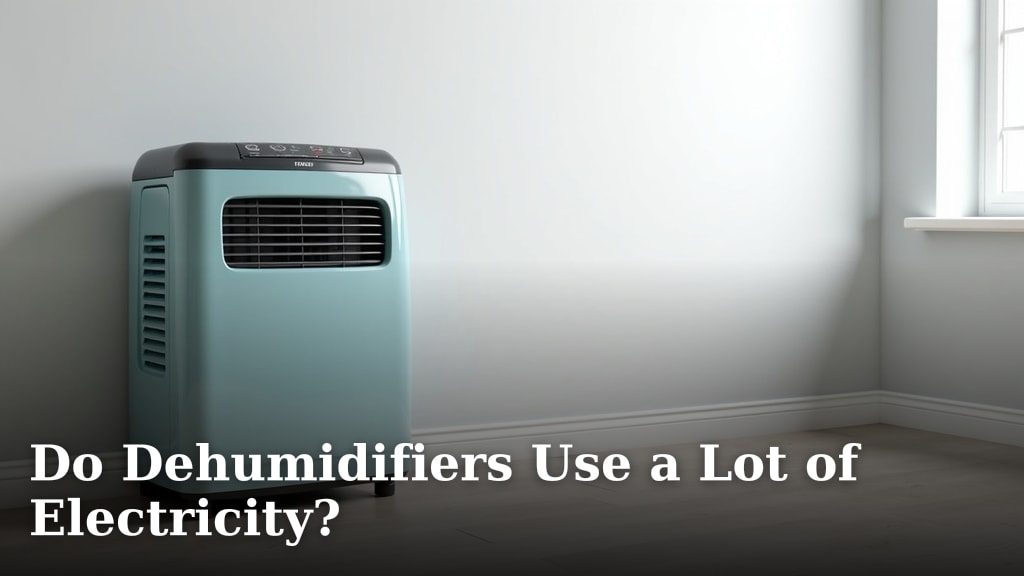
Yes, dehumidifiers can use a fair amount of electricity, especially larger models running continuously. Think of them like small air conditioners, working to remove moisture and affecting your energy bill.
The exact power consumption depends on the unit’s size, its efficiency, and how humid your space is. Understanding these factors helps you predict the impact on your wallet.
- Dehumidifiers use electricity, similar to a small AC unit.
- Larger, less efficient models use more power.
- Run time and room humidity affect energy use.
- There are ways to reduce their electrical consumption.
- Choosing the right size is key for efficiency.
Let’s dive into how much electricity dehumidifiers truly consume and what you can do about it.
Understanding Your Dehumidifier’s Power Usage
Yes, your dehumidifier uses electricity, but just how much can vary quite a bit. It’s like asking how much gas a car uses – it depends on the car, how fast you drive, and how far you go. For dehumidifiers, it boils down to a few key factors you’ll want to understand.
The main job of a dehumidifier is to pull moisture out of the air. This process requires energy. Think of it as a small refrigerator or air conditioner for your air, working to condense water vapor into liquid. That work translates directly into kilowatt-hours (kWh) on your electric bill.
How Dehumidifiers Consume Electricity
The core components of a dehumidifier are what drive its electricity use. There’s a fan that pulls in humid air and a compressor that cools coils to condense the moisture. Both of these parts need power to run effectively.
When you turn on your dehumidifier, the fan starts up immediately. Then, the compressor kicks in, which is often the most power-hungry part. It chills the coils, making them cold enough for water to condense. This cycle repeats as long as the unit is running.
The Role of the Compressor
The compressor is the heart of most dehumidifiers, much like it is in your refrigerator. It’s responsible for the cooling process. A larger compressor means more cooling power, but also more electricity usage. This is why bigger units generally use more energy.
If your dehumidifier has to work harder to cool the air, say in a very hot and humid basement, its compressor will be running more often and at higher intensity. This directly impacts your electricity consumption. Efficient compressors are key to lower bills.
Fan Operation and Power
The fan might seem less significant, but it runs continuously when the unit is on. Its job is to circulate air over the cold coils. The size of the fan and its motor also contribute to the overall power draw. Some dehumidifiers have multiple fan speeds, which can affect energy use.
Running the fan on a higher setting will use more electricity than a lower setting. However, a higher fan speed might help the unit dehumidify faster, potentially reducing the overall run time needed to reach your desired humidity level.
Key Factors Influencing Energy Use
Several elements play a big role in how much electricity your dehumidifier sips or gulps. Understanding these can help you make smart choices and manage your energy bill better.
- Unit Size (Pints/Day): This is perhaps the biggest factor. Larger units designed for bigger spaces remove more moisture but also use more power.
- Energy Efficiency (Energy Star Rating): Just like appliances, dehumidifiers have efficiency ratings. An Energy Star certified unit uses less electricity for the same amount of moisture removal.
- Ambient Humidity and Temperature: The more humid and warmer your environment, the harder your dehumidifier has to work, and the more electricity it will consume.
- Run Time: This is straightforward – the longer it runs, the more power it uses. Continuous operation will cost more than intermittent use.
- Desired Humidity Level: Setting your dehumidifier to a very low humidity target means it will run longer to achieve that goal, thus using more electricity.
Dehumidifier Capacity and Its Impact
Dehumidifiers are rated by how many pints of moisture they can remove from the air in 24 hours. A 30-pint unit is for smaller spaces, while a 50-pint or 70-pint unit is for larger rooms or very damp basements.
A larger capacity unit will naturally have a more powerful compressor and fan. This means a 70-pint dehumidifier will almost always use more electricity per hour than a 30-pint unit, even if both are running at full tilt. We found that choosing the right size for your space is critical for efficient operation (Energy Star).
Energy Efficiency Ratings Explained
When you’re shopping for a dehumidifier, you’ll see an Energy Star label. This certification means the unit meets strict energy efficiency guidelines set by the U.S. Environmental Protection Agency. An Energy Star dehumidifier uses less energy to remove the same amount of moisture compared to a non-certified model.
While an Energy Star unit might cost a bit more upfront, the savings on your electricity bill over its lifespan often make it a worthwhile investment. Think of it as investing in your future energy savings.
Average Electricity Consumption of Dehumidifiers
So, what does this look like in real numbers? Let’s break down some typical scenarios. We researched common models to give you a clearer picture.
Most residential dehumidifiers draw between 300 to 700 watts per hour when running. To convert this to your electricity bill, you’ll look at kilowatt-hours (kWh). One kilowatt-hour is 1,000 watts used for one hour.
| Dehumidifier Size (Pints/Day) | Typical Wattage | kWh per Hour | Cost per Hour (at $0.15/kWh) |
|---|---|---|---|
| 30-Pint (Small) | 300-400W | 0.3-0.4 kWh | $0.045 – $0.06 |
| 50-Pint (Medium) | 450-550W | 0.45-0.55 kWh | $0.0675 – $0.0825 |
| 70-Pint (Large) | 600-700W | 0.6-0.7 kWh | $0.09 – $0.105 |
These figures are estimates. Your actual costs will vary based on your local electricity rates, which can fluctuate. For example, if your rate is $0.15 per kWh and you run a 50-pint dehumidifier for 12 hours a day, it could cost around $0.90 to $0.99 daily, or about $27-$30 per month.
Strategies to Reduce Dehumidifier Electricity Usage
You don’t have to just accept a high energy bill. There are several practical steps you can take to make your dehumidifier run more efficiently and save money. A little effort can go a long way.
Optimizing Dehumidifier Operation
The goal is to let your dehumidifier do its job without overworking it. This means using it strategically rather than just letting it run non-stop. Think about when and where it’s truly needed.
- Set the Right Humidity Level: Most experts recommend setting your dehumidifier to between 40% and 50% relative humidity. Going lower than 40% makes the unit work much harder and rarely provides additional comfort (CDC).
- Close Doors and Windows: Make sure the space you’re dehumidifying is sealed off from the outside. If you leave windows or doors open, you’re trying to dehumidify the whole neighborhood!
- Use a Humidistat: Most modern dehumidifiers have a built-in humidistat. Set it to your desired humidity, and the unit will turn off automatically when that level is reached, saving energy.
- Empty the Water Bucket Regularly: If your unit has a bucket, it might stop running when full. If it’s connected to a drain, ensure the hose isn’t kinked.
Maintenance for Better Efficiency
Just like any appliance, a well-maintained dehumidifier runs more efficiently. A few simple tasks can prevent your unit from working harder than it needs to.
Here’s a quick checklist to keep your dehumidifier in top shape:
- Clean the air filter regularly (monthly is often recommended).
- Inspect coils for dust or ice buildup.
- Ensure there’s good airflow around the unit.
- Check the water collection bucket for any mildew.
- Clean the fan blades if they become dusty.
A dirty filter restricts airflow, forcing the fan and compressor to work harder. This uses more electricity and can even shorten the lifespan of your unit. A clean unit is a happy, efficient unit!
Conclusion
While dehumidifiers do use electricity, you now understand the factors that influence their energy consumption. By choosing the right size for your space, prioritizing Energy Star models, and practicing smart usage habits, you can significantly reduce their impact on your utility bills. Don’t let humidity make your home uncomfortable or unhealthy; manage your dehumidifier’s energy use wisely.
Take control of your indoor air quality and energy costs. Implement these tips to keep your home dry and your wallet happier.
Frequently Asked Questions
Is it cheaper to run a dehumidifier or air conditioning?
Generally, it’s cheaper to run a dehumidifier for moisture control alone. Air conditioning cools and dehumidifies, but it uses much more energy because its primary job is cooling large air volumes. If your main concern is humidity, a dehumidifier is more energy-efficient.
Will running a dehumidifier continuously damage it?
Modern dehumidifiers are designed for continuous operation when needed, especially in very damp environments. However, constant running can lead to more wear and tear over time. Following maintenance guidelines and using a humidistat to cycle the unit can help prolong its lifespan.
How much does a dehumidifier add to the electric bill per month?
The added cost varies based on your unit’s size, efficiency, local electricity rates, and how often it runs. As we researched, a 50-pint unit running 12 hours a day could add about $27-$30 per month to your bill, but this is just an estimate.
Does an Energy Star dehumidifier really save money?
Yes, Energy Star certified dehumidifiers are tested to be more energy-efficient than standard models. While they might have a higher upfront cost, we found that their reduced electricity consumption often leads to significant savings on your energy bill over their operational lifetime.
Can a dehumidifier make a room feel cooler?
Yes, by removing excess moisture from the air, a dehumidifier can make a room feel cooler and more comfortable, even without lowering the temperature. High humidity makes you feel hotter because sweat evaporates less effectively. Removing that humidity allows your body to cool itself more naturally.
