
How Much Electricity Does a Dehumidifier Use?
A dehumidifier uses between 300 and 700 watts of electricity per hour. This depends largely on its size and efficiency. Running a dehumidifier for 8-12 hours daily can add $30 to $80 to your monthly electric bill.
Understanding your dehumidifier’s energy use helps manage household costs. Many factors affect how much electricity a dehumidifier uses. These include the unit’s capacity, your home’s humidity levels, and how often it runs.
- Most dehumidifiers use 300-700 watts per hour.
- Monthly costs range from $30-$80, depending on usage.
- Larger units generally use more electricity.
- Energy Star models are more efficient.
- Your local electricity rates also play a big role.
Let’s dive into the details to help you understand your dehumidifier’s electricity consumption. We’ll show you how to keep your home dry without breaking the bank.
Understanding Your Dehumidifier’s Power Consumption
Your dehumidifier’s power consumption depends on several factors. We found that the main ones are the unit’s size, its energy efficiency rating, and how often you run it. It’s like comparing different car models; some are fuel-efficient, and some are gas guzzlers.
How Dehumidifier Size Impacts Energy Use
Think of dehumidifiers like air conditioners – the bigger they are, the more power they typically need. Dehumidifier capacity is measured in “pints per day.” This number tells you how much moisture the unit can remove from the air in 24 hours.
A smaller unit, say 20-30 pints, is great for a single room. It uses less electricity, often around 300-400 watts per hour. A larger unit, like a 50-70 pint model, is designed for basements or whole homes. These can draw 500-700 watts or more.
Choosing the right size is key. If you pick a unit too small for your space, it will run constantly and still not do the job. This wastes electricity and won’t improve your comfort. A unit that’s too large might cycle on and off too often, which can also be inefficient.
Energy Star Certification: Your Efficiency Guide
When you’re shopping for appliances, have you ever noticed the blue Energy Star label? This label is your friend. It means the product meets strict energy efficiency guidelines set by the U.S. Environmental Protection Agency (EPA).
Energy Star dehumidifiers are designed to remove more moisture with less electricity. They can be 15-30% more efficient than standard models. This translates to real savings on your electric bill over time. For example, an Energy Star 50-pint dehumidifier might use the same amount of energy as a non-Energy Star 30-pint unit.
We found that investing in an Energy Star model often pays for itself through reduced energy costs. It’s a smart choice for both your wallet and the environment. Always check for this label when buying a new dehumidifier.
Factors Affecting How Often Your Dehumidifier Runs
Even the most efficient dehumidifier will use more electricity if it runs all the time. Several things influence how often your unit needs to operate.
- Outdoor Climate: Live in a humid region like Florida or the Gulf Coast? Your dehumidifier will naturally work harder.
- Home Insulation: A poorly insulated home lets in more humid air, making your dehumidifier run longer.
- Moisture Sources: Leaky pipes, damp basements, or even frequent showering can add extra moisture to the air.
- Your Desired Humidity Level: If you set your dehumidifier to maintain a very low humidity (e.g., 30%), it will run more often than if set to 50%.
The goal is to find a balance. You want to remove enough moisture to be comfortable and prevent issues like mold, without running the unit excessively. Most experts recommend keeping indoor humidity between 40% and 60% (CDC).
Calculating Your Dehumidifier’s Electricity Cost
Want to know exactly what your dehumidifier is costing you? You can do a simple calculation. It involves knowing your unit’s wattage, how many hours it runs, and your local electricity rate.
Finding Your Dehumidifier’s Wattage
The wattage tells you how much power your dehumidifier draws. You can usually find this information in a few places:
- On a sticker on the back or side of the unit itself.
- In the owner’s manual.
- On the manufacturer’s website.
Sometimes, the unit might list amps (A) and voltage (V) instead of watts. If so, you can calculate wattage using the formula: Watts = Amps × Volts. Most household circuits in the US are 120 volts.
Let’s say your dehumidifier is rated at 5 Amps. Multiply that by 120 Volts, and you get 600 Watts. Easy, right?
Understanding Kilowatt-Hours (kWh)
Your electric bill doesn’t charge you for watts; it charges for kilowatt-hours (kWh). One kilowatt-hour is equal to 1,000 watts used for one hour. It’s the standard unit for measuring electricity consumption.
To convert your dehumidifier’s wattage to kWh per hour, simply divide the wattage by 1,000. So, a 500-watt dehumidifier uses 0.5 kWh per hour.
This little conversion is important for accurate cost calculations. Don’t skip this step!
Determining Your Electricity Rate
Your electricity rate varies depending on where you live and your electricity provider. It’s typically shown on your monthly utility bill in cents per kWh or dollars per kWh.
For example, you might see a rate of $0.15 per kWh. We found that rates can range from $0.10 to $0.30 or more across different states. Some utility companies also have tiered rates, meaning you pay more per kWh once you exceed a certain usage.
Grab your latest bill to find your exact rate. This is the final piece of the puzzle for calculating your running costs.
Putting It All Together: A Cost Example
Let’s walk through an example. Imagine you have a 500-watt dehumidifier. You run it for 10 hours a day. Your electricity rate is $0.15 per kWh.
Step 1: Convert watts to kWh per hour.
500 watts ÷ 1,000 = 0.5 kWh per hour
Step 2: Calculate daily kWh consumption.
0.5 kWh/hour × 10 hours/day = 5 kWh per day
Step 3: Calculate daily cost.
5 kWh/day × $0.15/kWh = $0.75 per day
Step 4: Calculate monthly cost (assuming 30 days).
$0.75/day × 30 days = $22.50 per month
This example shows how the costs can add up. Your actual costs might be higher or lower based on your specific unit and usage.
| Dehumidifier Size (Pints) | Typical Wattage | Daily kWh (8 hrs) | Approx. Monthly Cost ($0.15/kWh) |
|---|---|---|---|
| 20-30 Pints | 300-400W | 2.4 – 3.2 kWh | $10.80 – $14.40 |
| 40-50 Pints | 400-550W | 3.2 – 4.4 kWh | $14.40 – $19.80 |
| 60-70 Pints | 550-700W | 4.4 – 5.6 kWh | $19.80 – $25.20 |
| Whole Home (90+ Pints) | 700-1000W+ | 5.6 – 8 kWh+ | $25.20 – $36.00+ |
Strategies to Lower Your Dehumidifier’s Energy Use
Nobody wants a high electric bill. The good news is there are many ways to make your dehumidifier run more efficiently. Small changes can lead to noticeable savings.
Optimizing Dehumidifier Placement and Settings
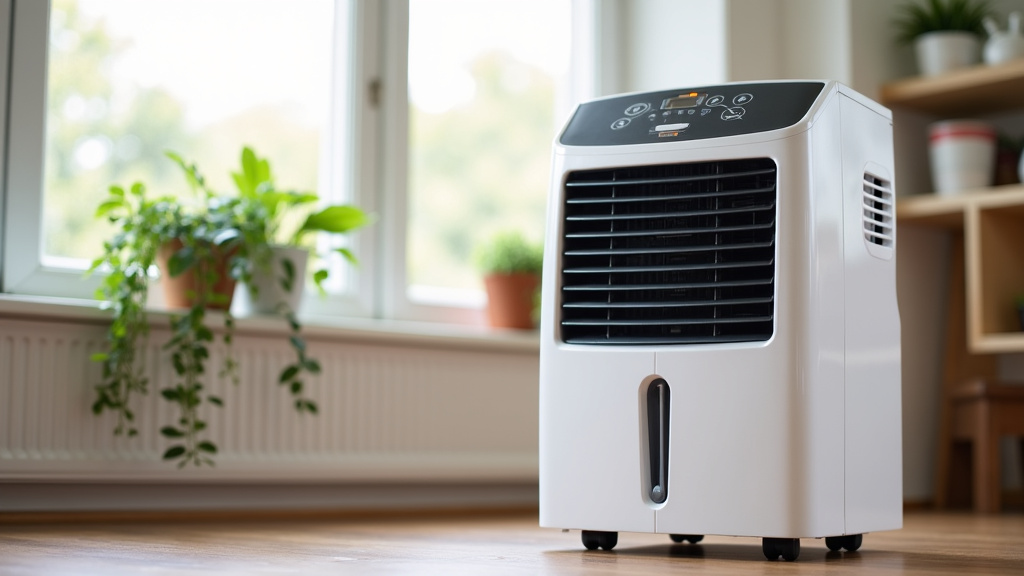
Where you put your dehumidifier matters. Place it in the dampest area of your home, usually the basement or a humid room. Make sure there’s plenty of space around it for air to circulate.
Keep doors and windows closed in the area where it’s running. Why dehumidify the whole neighborhood? Use the built-in humidistat. Set it to your desired humidity level, typically between 40% and 50%. The unit will then turn on and off automatically as needed, saving energy.
Avoid setting the humidity too low. Lowering the setting from 50% to 40% can make the unit work much harder for only a slight change in comfort. A good rule of thumb is to aim for a setting that feels comfortable and prevents mold growth.
Regular Maintenance for Peak Efficiency
Just like your car needs oil changes, your dehumidifier needs a little TLC. A well-maintained unit performs better and uses less energy. It’s truly a win-win.
The most important task is cleaning the air filter. A dirty filter restricts airflow, forcing the motor to work harder. This uses more electricity and can even damage the unit over time. We recommend checking and cleaning the filter every two to four weeks, more often if your home is dusty.
Also, keep the coils clean. Dust and grime on the coils can reduce the unit’s ability to extract moisture. A soft brush or vacuum attachment can help remove buildup. Make sure to unplug the unit before any cleaning.
Addressing the Source of Humidity
The best way to reduce your dehumidifier’s workload is to stop the humidity from getting into your home in the first place. Think of it like plugging a leaky faucet instead of just mopping up the water.
Here’s a quick checklist of things you can do:
- Fix Leaks: Check pipes, roofs, and foundations for any water leaks.
- Seal Cracks: Seal cracks around windows, doors, and in your foundation.
- Improve Ventilation: Use exhaust fans in bathrooms and kitchens.
- Vent Appliances: Ensure clothes dryers are properly vented outside.
- Drainage: Make sure gutters and downspouts direct water away from your foundation.
- Run Shorter Showers: Believe it or not, long, hot showers add a lot of moisture!
These actions can significantly reduce the amount of moisture your dehumidifier needs to tackle. This means it runs less often and uses less electricity. It’s all about working smarter, not just harder.
Conclusion
Understanding your dehumidifier’s electricity use helps you manage your home’s comfort and your budget. We’ve walked through how factors like unit size, Energy Star ratings, and even your local climate impact energy consumption. By knowing your unit’s wattage and your electricity rate, you can accurately estimate costs. We found that simple actions like proper placement, regular cleaning, and fixing humidity sources can significantly reduce how hard your dehumidifier works. Take control of your indoor air quality and your electric bill today by applying these tips.
Frequently Asked Questions
Is it cheaper to run a dehumidifier or an air conditioner for humidity?
Generally, it’s cheaper to run a dehumidifier specifically for humidity control if your main issue is mugginess, not heat. Air conditioners use significantly more electricity because they also cool the air. If the temperature is comfortable but the air feels heavy, a dehumidifier is the more energy-efficient choice.
Should I run my dehumidifier 24/7?
No, running your dehumidifier 24/7 is often unnecessary and can increase electricity costs. It’s best to use the built-in humidistat. Set it to your desired humidity level (typically 40-50%). The unit will then cycle on and off as needed, saving energy while maintaining comfort.
Does a dehumidifier increase the temperature in a room?
Yes, a dehumidifier does slightly increase the temperature in a room. This is because the process of removing moisture generates a small amount of heat as a byproduct. The temperature increase is usually minimal, often just a few degrees, but it’s something to consider in warmer climates.
What’s the ideal humidity level for a home?
The ideal indoor humidity level for most homes is between 40% and 60%. This range helps prevent mold growth, dust mites, and makes the air feel comfortable. Too low can cause dry skin and static, while too high can lead to health issues and damage to your home.
Can a dehumidifier help with allergies?
Yes, a dehumidifier can help alleviate allergy symptoms. Many common allergens, such as dust mites, mold, and mildew, thrive in high-humidity environments. By reducing indoor humidity, you can create an environment less favorable for these triggers, potentially improving air quality and reducing allergy flare-ups.
