
How Long Should a Dehumidifier Run Per Day?
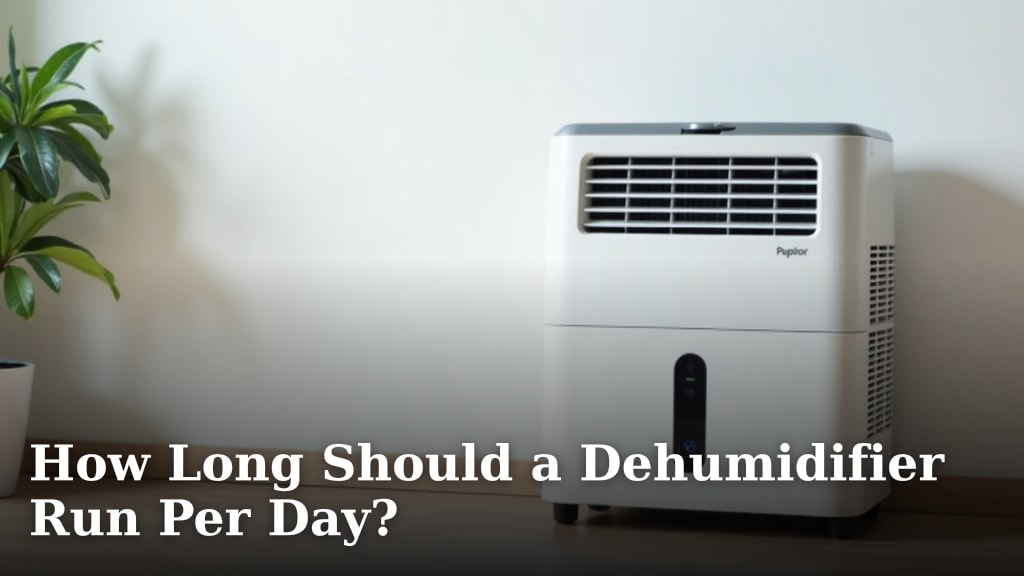
For most homes, a dehumidifier should run for about 10-12 hours per day to effectively control humidity. We found this is the sweet spot for maintaining comfortable and healthy indoor air. The exact runtime depends on your home’s humidity levels and the unit’s capacity.
You want to reduce excess moisture, but not dry out the air too much. Running it for the right duration helps prevent mold growth, musty odors, and damage to your home. It’s all about finding that perfect balance for your living space.
- Aim for 10-12 hours daily.
- Check your home’s humidity.
- Adjust based on your dehumidifier’s size.
- Don’t over-dry your air.
Ready to get your home’s humidity just right? Let’s walk through how long your dehumidifier should run each day, and why it matters.
Finding the Right Dehumidifier Runtime for Your Home
Generally, you’ll want your dehumidifier to run for about 10-12 hours per day. This usually gets your indoor humidity into the ideal range of 30-50% (EPA).
Think of it like balancing a seesaw. Too much moisture, and you get mold and musty smells. Too little, and your skin feels dry, and wood furniture might crack. We’re aiming for that sweet spot in the middle.
The exact time your dehumidifier needs to run can change. It depends on a few key things. We’ll walk you through them so you can set yours just right.
Why Daily Dehumidification is Important
Running your dehumidifier daily isn’t just about comfort. It’s a health and home protection strategy. High humidity creates a perfect breeding ground for all sorts of unwelcome guests.
- Mold and Mildew Growth: These fungi thrive in damp environments. They can trigger allergies and asthma.
- Dust Mites: These tiny creatures love humidity. Reducing moisture helps keep their populations down.
- Structural Damage: Excess moisture can warp wood floors, swell doors, and even damage your home’s foundation over time.
- Musty Odors: That damp, stale smell? It’s often a sign of too much moisture.
By running your unit consistently, you create an environment where these problems struggle to take hold. It’s like putting up a “No Vacancy” sign for moisture-loving pests.
The Health Impact of High Humidity
When humidity levels are too high, your body reacts. You might feel sticky or clammy. Breathing can even feel harder for some people, especially those with respiratory conditions. Research shows that maintaining proper indoor humidity is key for respiratory health (NIH).
Low humidity has its own issues, though. Dry air can irritate your nose, throat, and skin. It can also worsen conditions like eczema. So, it’s not about making your home bone-dry, but finding that comfortable middle ground.
Factors That Influence Dehumidifier Run Time
There isn’t a one-size-fits-all answer for how long to run your dehumidifier. Several factors play a big role. Let’s break them down so you can tailor the runtime to your specific situation.
Your Home’s Current Humidity Levels
This is perhaps the biggest factor. Is your home already quite damp, or just a little humid? You need to know your starting point.
Many dehumidifiers have a built-in humidistat. This handy feature lets you set a target humidity level, say 45%. The unit will then run until it reaches that level and kick back on if humidity rises again. It’s a smart way to keep things steady.
If your home is very humid (over 60%), it will naturally take longer for the dehumidifier to bring levels down. On rainy days, or during humid summers, it will work harder. In drier seasons, it might not need to run as much.
Dehumidifier Capacity and Size
Dehumidifiers come in various sizes, measured by how many pints of moisture they can remove per day. A larger unit can tackle more moisture faster than a smaller one.
If you have a small dehumidifier trying to dry a large, very damp basement, it will need to run almost constantly. Conversely, a powerful unit in a moderately humid bedroom might only need a few hours a day.
Here’s a quick guide to help you match capacity to your needs:
| Space Size (sq ft) | Humidity Level | Recommended Capacity (Pints/Day) |
|---|---|---|
| Up to 500 | Moderately Damp | 10-12 |
| Up to 500 | Very Damp | 15-20 |
| 500-1000 | Moderately Damp | 15-20 |
| 500-1000 | Very Damp | 25-30 |
| 1000-1500 | Moderately Damp | 25-30 |
| 1000-1500 | Very Damp | 35-40 |
| Over 1500 | Moderately Damp | 40-50 |
| Over 1500 | Very Damp | 50-70 |
Choosing the right size means your unit won’t have to overwork, saving energy and extending its lifespan.
Local Climate and Seasonal Changes
Where you live makes a huge difference. If you’re in a naturally humid climate, like Florida or the Gulf Coast, your dehumidifier will be working overtime for much of the year. If you live in a drier region, it might only be needed during specific seasons, like a rainy spring.
We often find that people in the Midwest and Northeast run their dehumidifiers more in summer. The air gets heavy and sticky. In winter, when furnaces dry out the air, you might even need a humidifier instead! It’s all about listening to your environment.
Insulation and Air Sealing in Your Home
How well your home is sealed and insulated also plays a part. A drafty old house might let in a lot more humid air from outside. This means your dehumidifier will constantly battle new moisture entering the space.
A well-sealed, modern home will hold its humidity levels more consistently. This often means less work for your dehumidifier. So, if your unit is running a lot, consider checking for drafts around windows and doors.
Optimizing Your Dehumidifier’s Schedule
You don’t want to just set it and forget it. A little observation and adjustment can go a long way. Here’s how to fine-tune your dehumidifier’s operation.
Using a Humidistat for Automatic Control
Most modern dehumidifiers come with a humidistat. This is your best friend. Set it to your desired humidity level (we recommend between 40-50%). The unit will then cycle on and off as needed to maintain that level.
This automatic control is energy-efficient. Your dehumidifier only runs when it’s actually needed, saving you money on your electricity bill. It also prevents over-drying your home, which can be just as uncomfortable as too much humidity.
When to Run Your Dehumidifier Continuously
There are times when continuous operation is necessary. If you’ve had a water leak, a flood, or if your basement is extremely damp, running the dehumidifier continuously for a few days can help dry things out quickly.
Once the initial crisis is over, you can switch back to using the humidistat. Continuous running is for emergencies or initial heavy moisture removal, not for everyday use.
Checklist for Optimal Dehumidifier Use
Here’s a quick checklist to help you get the most out of your dehumidifier:
- Place the dehumidifier in the dampest area of your home.
- Keep doors and windows closed in the room where it’s running.
- Clean the air filter regularly (every 2-4 weeks) for efficiency.
- Ensure there’s good airflow around the unit.
- Monitor your home’s humidity with a separate hygrometer if your unit doesn’t have one.
- Empty the water bucket often, or use a continuous drain option if available.
Conclusion
Finding the right balance for your home’s humidity is easier than you think. By understanding factors like your home’s natural dampness, your dehumidifier’s size, and even your local climate, you can set an optimal runtime.
Aiming for that 10-12 hour sweet spot, especially with a humidistat, helps protect your health and your home. You’ll prevent mold, eliminate musty smells, and enjoy a more comfortable living space. Take a moment to assess your environment and adjust your dehumidifier for peak performance today!
Frequently Asked Questions
Should I run my dehumidifier all night?
Running your dehumidifier all night can be beneficial, especially if humidity levels are very high or you’re trying to dry out a damp area quickly. Many units are quiet enough not to disturb sleep. Remember to check the water collection bucket in the morning.
Does a dehumidifier use a lot of electricity?
Dehumidifiers do use electricity, and the amount varies by size and efficiency. Running a large unit continuously will use more power than a smaller, more efficient one that cycles on and off with a humidistat. Using a humidistat to maintain 40-50% humidity is the most energy-efficient approach.
Can a dehumidifier make you sick?
If not maintained properly, a dehumidifier can potentially circulate dust or mold spores if its filter is dirty or its water bucket isn’t cleaned. However, when used correctly and kept clean, a dehumidifier helps prevent health issues associated with high humidity, like mold allergies.
Where is the best place to put a dehumidifier in a house?
The best place to put your dehumidifier is in the dampest part of your home. This is often the basement, a humid bathroom, or a laundry room. Placing it in an open area rather than tucked away in a corner allows for better air circulation and more effective moisture removal.
How can I tell if my dehumidifier is working correctly?
You can tell if your dehumidifier is working correctly by observing a few things. The water collection bucket should fill up, and the air should feel noticeably drier and less musty. Using a separate hygrometer to monitor room humidity will give you a precise reading of its effectiveness.
