How to Choose a Humidifier for Your HVAC System
The best humidifier for your HVAC system depends on your duct layout, home size, water access and control needs. Compare evaporative capacity, fan operation, controls and compatibility before choosing a model.
On this page (9 sections)
- Which humidifier type fits an HVAC system?
- What should you check before connecting a humidifier?
- Should you choose a portable evaporative unit or a duct-mounted model?
- What control features matter on a whole-house humidifier?
- When does a fan-powered humidifier make sense?
- How much electricity does an HVAC humidifier use?
- How should you maintain an HVAC humidifier?
- Can a dehumidifier be added to an HVAC system?
- Which humidifier should you choose?
The best humidifier for your HVAC system depends on your duct layout, home size, water access and control needs. Compare evaporative capacity, fan operation, controls and system compatibility before choosing a model.
A whole-house humidifier works with forced-air heating by adding moisture to air that moves through the HVAC system. It can serve more rooms than a portable unit, but only when the air path, water supply and controls are planned as one system.
Your furnace layout matters because the humidifier must sit where supply or return air can reach it. A tight mechanical closet, a finished ceiling or a duct run that leaves little room can change which design will fit.
Home size matters in a different way, since coverage claims assume a certain amount of air leakage and insulation. A lightly sealed home may still feel dry even with a unit rated for a larger area.
Water access is often the practical limit. The unit needs a controlled supply line, a place for overflow or drain water to go and enough access to service valves and panels without removing the equipment.
Control needs decide how much attention the system will require during the season. Manual control suits owners who want to set a target and check it themselves, while automatic control suits owners who prefer the target to respond to outdoor temperature.
This humidifier for HVAC system comparison focuses on 3 useful choices: a freestanding evaporative unit for large rooms, a dedicated automatic control and a fan-powered whole-house humidifier. Each one solves a different part of the problem, so they should not be treated as interchangeable.
The freestanding option is for a single large room where duct work is not wanted. The automatic control is for an existing compatible humidifier that needs better regulation.
The fan-powered option is for a duct-connected installation with a built-in fan.
That distinction helps narrow the choice before product details enter the picture. Once the air path and control plan are clear, capacity and maintenance become easier to judge.
A buyer who starts with installation limits usually avoids a common mismatch, such as buying a control for the wrong humidifier or a unit that has no place to drain. The right sequence is layout first, water next, then model.
It also helps to separate comfort from protection. Steady humidity can ease dry indoor air and reduce stress on wood and furnishings, but it cannot fix cold drafts, poor insulation or a furnace that short cycles.
Seasonal change is another reason to plan ahead. Heating season dryness often arrives gradually, so a system set up before the coldest weeks gives the home a steadier indoor climate from the start.
If your home already has some humidity equipment, note what it does and what it does not do. That record makes later upgrades simpler and prevents paying for a second function you already have.
The sections that follow keep that order. They explain evaporative types, portable against duct-mounted use, controls, fan-powered operation, electricity and maintenance, so the final choice rests on the whole system rather than a single feature.
In short, match the humidifier to the air path first. Then confirm water, drainage, power and control compatibility with the furnace and duct layout you already have.
Which humidifier type fits an HVAC system?
Evaporative humidifiers are the simplest starting point for most forced-air systems, but the best choice depends on how your furnace, ducts and controls are arranged.
An evaporative unit uses a water panel or wick and moving air to add moisture. A bypass design depends on furnace airflow, while a fan-powered model uses its own fan to move air through the evaporator.
A steam humidifier creates moisture by heating water. It can suit some homes, but its electrical and installation needs differ from evaporative equipment.
Do not assume that a control designed for an evaporative humidifier will work with a steam model.
Portable evaporative units can help when you need humidity in one large room without modifying ductwork. They are easier to place than a whole-house system, but they do not connect to every room through the HVAC ducts.
What should you check before connecting a humidifier?
Check available duct space, water access, drain routing, control wiring and furnace operation before choosing the humidifier itself.
The installation area must allow the unit to fit securely beside or on the supply or return duct, depending on the design. Measure the duct width and nearby obstructions before ordering.
Water access matters because whole-house humidifiers need a controlled water supply. The installation also needs a suitable drain route for excess water or maintenance water, depending on the model.
The control must match the humidifier's voltage and wiring. Low-voltage equipment is not automatically compatible just because both products are called whole-house humidifiers.
Your HVAC technician should confirm the correct installation location, wiring and water connections. Follow the humidifier and furnace instructions rather than relying on a generic diagram.
If your home already has humidity equipment, first check do HVAC systems have dehumidifiers to understand what your current system may already control.
Should you choose a portable evaporative unit or a duct-mounted model?
Choose a portable evaporative unit when you need large-room coverage without HVAC installation. Choose a duct-mounted model when you want moisture distributed through the home's forced-air system.
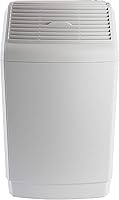
AIRCARE Space Saver Large Evaporative Whole House
The AIRCARE Space Saver suits buyers who want evaporative humidification for large rooms up to 2,700 sq ft without selecting a duct-mounted installation.
Its 6-gallon capacity means you can add more water than with a small room humidifier, although refill frequency still depends on the room, weather and humidity setting. The unit measures 12.5 in deep, 17.5 in wide and 22.5 in high, and it weighs 14 lb.
The Space Saver uses an included 1043 Super Wick. Its digital controls include an auto humidistat, and it shuts off when the desired humidity level is reached or when the unit is empty.
This is the most flexible option when you are not ready to modify ductwork. It is also a practical comparison point for a whole-house system because its room coverage, corded electric power and wick care differ from a furnace-connected installation.
Choose it when your priority is large-room humidity with a simpler setup. Measure the floor space, doorway and refill path before placing it.
What control features matter on a whole-house humidifier?
Automatic outdoor-temperature adjustment is useful when you want the humidity target to change as outdoor conditions change. Manual control is simpler when you prefer to set the target yourself.
A humidistat measures or controls relative humidity. An automatic control can reduce the need for repeated manual adjustments, while a manual control leaves the target setting to you.
Look for clear humidity readings, service reminders and a control that matches the humidifier series. A control with the wrong voltage or incompatible wiring can prevent the system from operating correctly.
The best whole house humidifier control depends on the humidifier model, control mode and installation plan. Check those details together instead of choosing a control in isolation.
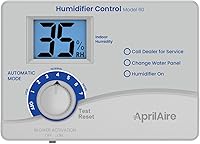
AprilAire 60 Automatic Digital Whole-House Humidifier Control
The AprilAire 60 suits owners of compatible AprilAire whole-house humidifiers who want automatic humidity adjustment from an outdoor temperature sensor.
The control measures 6 x 1.75 x 4.19 in and weighs 6.7 oz. It includes the humidifier control, outdoor temperature sensor, manual mode label, gasket and installation manual.
In Automatic Mode, the control adjusts indoor relative humidity as outdoor temperature changes. Manual Mode lets you set the humidity yourself, while the digital display shows the relative humidity and set point.
It works with AprilAire Whole Home Humidifiers in the 400, 500, 600 and 700 Series, including gray or almond housing models in the 700 Series. It does not work with the Model 800 Steam Humidifier.
Choose it when control accuracy and automatic adjustment matter more than adding another humidifier cabinet. Confirm your existing model and wiring before buying.
When does a fan-powered humidifier make sense?
A fan-powered humidifier makes sense when you want a dedicated fan to move heated furnace air through the water panel and your home needs broad whole-house coverage.
A built-in fan can help the humidifier operate as part of the HVAC system rather than depending only on air movement through a bypass duct. The installation still requires correct duct placement, water connections, drainage and control wiring.
Output claims are not the same as guaranteed indoor humidity. Air leakage, insulation, furnace runtime, outdoor conditions and the home's layout all affect the result.
A whole-house humidifier adds moisture. It does not automatically remove moisture, cool the home or replace a dehumidifier.
For that distinction, read does a whole house humidifier also dehumidify.
AprilAire 700M Whole-House Fan Powered Humidifier
The AprilAire 700M suits buyers who need fan-powered whole-house humidification for homes up to 5,300 sq ft and prefer a manual control.
The 700M measures 11.35 in deep, 15.91 in wide and 18 in high, and it weighs 11.7 lb. It includes a 24VAC transformer, humidifier control, valves, instructions and a 5 ft cord.
Its built-in fan pulls heated air from the furnace through the humidifier. Water moves through the distribution tray and over the Water Panel evaporator, where airflow carries moisture into the HVAC system.
The manual control uses a sensor to monitor indoor relative humidity. The humidifier is rated for 18 gallons per day, and its stated coverage is up to 5,300 sq ft in tightly built homes.
Choose it when whole-house coverage and built-in airflow are more important than a portable setup or automatic outdoor-temperature adjustment. Confirm the available installation space and HVAC compatibility first.
How much electricity does an HVAC humidifier use?
Electricity use depends on the humidifier design, fan operation, controls and runtime. A portable unit plugs into a standard outlet, while a duct-mounted system may use low-voltage controls and a transformer.
The AIRCARE Space Saver is corded electric. Its power use is tied to the unit's operation and the room's humidity demand.
The AprilAire 60 is a 24VAC control with an outdoor temperature sensor. It is a control component, not a complete humidifier, so its electrical needs should be considered with the compatible whole-house unit.
The AprilAire 700M uses AC power and includes a 24VAC transformer. Its built-in fan and HVAC operating schedule affect how often the system runs.
For a closer breakdown of operation and energy questions, see do humidifiers use a lot of electricity. Compare runtime and installation needs, not just the label on the control.
How should you maintain an HVAC humidifier?
Maintain a whole-house humidifier by checking the water panel or wick, cleaning accessible parts and inspecting water and drain connections on the schedule in the instructions.
Evaporative systems depend on a clean moisture surface. The AIRCARE Space Saver uses an 1043 Super Wick, while the AprilAire 700M uses a Water Panel evaporator.
The AprilAire 60 includes a Change Water Panel indicator for compatible AprilAire humidifiers. Its service lights can help you notice when the water panel needs attention.
Before seasonal use, inspect the cabinet, tubing, valves, drain path and control wiring. Turn off power and water as directed before opening the equipment.
For the Space Saver, wick care is central because the wick is the surface from which moisture leaves the unit. Follow the replacement schedule in the manual and keep the reservoir clean with fresh water as directed.
A scaled or worn wick can reduce evaporation even when water is present. Replacing it on time keeps output steadier and reduces mineral deposits in the base.
For the 700M, the Water Panel does similar work inside the duct-connected cabinet. It should be changed on the schedule given for your water condition, and the distribution tray should be checked for even water flow.
Care routines differ in access. A portable unit can be moved to a sink or utility area for cleaning, while a duct-mounted panel may need the furnace area to be clear before service.
Water connections deserve a periodic check for drips, kinks and loose fittings. A small leak near a furnace or duct can cause damage out of sight, so visible tubing and valves should be inspected during routine service.
Drain routing should also be confirmed, since a blocked drain can back water into the cabinet or overflow at the humidifier. Clear the path and test flow before the heating season gets under way.
Controls need the same attention as the water path. A humidistat that reads high or low can drive the system to run too often or not often enough, so compare its setting with window condensation and general comfort.
The AprilAire 60 service indicators help here because they flag humidifier operation, water panel change and the need for service. Treat those lights as prompts to inspect the system rather than as a full diagnosis.
Electrical safety comes first during any maintenance. Turn off power at the breaker and shut off the water supply before removing panels, changing a water panel or cleaning around valves.
After service, restore water and power in the order given in the manual and watch the first run for leaks. Confirm that the control responds, the fan or airflow starts as designed and the drain path remains clear.
Between seasons, clean the cabinet, empty standing water if the manual directs it and store or leave the unit as instructed. A clean, dry idle period makes the next start simpler.
Keep a short service record with dates for wick or panel changes and any plumbing checks. That log helps spot patterns, such as a panel that loads faster each year because of harder water.
Do not raise humidity to compensate for a dirty evaporator surface. Added runtime will not restore output properly and can push indoor humidity too high once the surface is clean again.
Likewise, do not ignore musty odors or damp spots near the installation, as they can point to a slow leak or blocked drain. Good maintenance is mostly steady, with clean surfaces, sound connections and a control that matches the season.
Can a dehumidifier be added to an HVAC system?
A dehumidifier can be added to some HVAC systems, but it needs separate equipment and a compatible installation plan. A humidifier adds moisture, while a dehumidifier removes it.
The two systems solve opposite humidity problems. A humidifier can help during dry heating periods, while a dehumidifier can help when indoor moisture remains high.
Do not expect a humidifier to balance high summer humidity. If your home needs both functions, an HVAC professional should check duct capacity, drainage, controls and equipment placement.
Read can a dehumidifier be added to an HVAC system before planning a combined setup. The correct solution may involve separate controls or a broader HVAC adjustment.
Which humidifier should you choose?
Choose the AIRCARE Space Saver if you need large-room evaporative humidity without duct installation. Its 6-gallon capacity, 2,700 sq ft coverage and portable-room format make it the simplest fit here.
Choose the AprilAire 60 if you already have a compatible AprilAire whole-house humidifier and want automatic control from an outdoor temperature sensor. It is a control upgrade, not a complete humidifier.
Choose the AprilAire 700M if your HVAC system can support a fan-powered evaporative installation and you need up to 5,300 sq ft of stated coverage. Its manual control and built-in fan suit buyers who want dedicated whole-house equipment.
The main decision rule is simple: match the humidifier to the air path first, then confirm water, drainage, power and control compatibility. If you are comparing a whole-house humidifier with a dehumidifier, start with does a whole house humidifier also dehumidify before choosing equipment.
Frequently asked questions
What type of humidifier works with an HVAC system?
Evaporative whole-house humidifiers are the common match for forced-air HVAC systems because they add moisture as air moves through a duct or furnace system. Choose a bypass, fan-powered or steam design only after confirming duct space, water access, electrical needs and control compatibility.
Does an HVAC humidifier need a separate control?
Some whole-house humidifiers include a manual control, while others can use a separate automatic humidistat. An automatic control can adjust indoor relative humidity from outdoor temperature, but it must match the humidifier model and wiring requirements.
How do I choose the right humidifier capacity?
Compare the humidifier's stated coverage or output with your home's size, insulation and HVAC layout. A unit rated for a large area may still need correct duct placement, airflow and water connections to distribute moisture through the home.