Does a Dehumidifier Require a GFCI Outlet?
A dehumidifier does not always require a GFCI outlet, but many locations do require GFCI protection by code. Check the room, the appliance manual, and the outlet label before you plug it in, and do not defeat a GFCI to stop nuisance trips.
On this page (11 sections)
- Which rooms require GFCI protection for a dehumidifier?
- How does a GFCI outlet protect you near a dehumidifier?
- When is a regular outlet acceptable for a dehumidifier?
- What does the dehumidifier manual usually say about outlets?
- How do you choose a dehumidifier outlet for a basement?
- Can a regular outlet trip when a dehumidifier runs?
- Does a small or cordless dehumidifier avoid the GFCI question?
- What about a whole-house humidifier in the same discussion?
- How do you size the circuit for a dehumidifier plug?
- What is the safest setup for a dehumidifier outlet?
- Does a dehumidifier require a GFCI outlet in the end?
A dehumidifier does not always require a GFCI outlet, but many rooms require GFCI protection where a dehumidifier is likely to sit. Bathrooms, kitchens, basements, garages, crawl spaces, laundry rooms, and outdoor or wet areas often fall under GFCI rules.
Your local code and the dehumidifier manual decide the exact answer for your home.
For a quick check, look at the room first and the appliance second. A large portable dehumidifier in a dry bedroom may use a standard outlet, while the same unit in a damp basement may need GFCI protection.
If you are unsure, ask a licensed electrician before long runs.
Which rooms require GFCI protection for a dehumidifier?
Rooms with water, dampness, or outdoor access most often require GFCI protection. That includes bathrooms, kitchens, laundry rooms, basements, crawl spaces, garages, and exterior walls.
The National Electrical Code sets GFCI rules by location, not by appliance name. A dehumidifier in a required GFCI location should use that protected outlet unless a specific exception applies.
Local amendments matter for finished basements, storage rooms, or dedicated appliance circuits. The outlet label and breaker panel give clues, but they do not replace code.
Do not move the unit to a non-GFCI outlet to avoid a trip. That creates a shock risk in a damp room, so find the cause or ask an electrician.
How does a GFCI outlet protect you near a dehumidifier?
A GFCI outlet watches for current leaking to ground and cuts power fast. That leak can come from water, a damp cord, a damaged plug, or a fault inside the appliance.
A standard breaker mainly protects wiring from overload and short circuits. It does not react to the small leakage current that a GFCI detects.
A dehumidifier creates the setting GFCI protection is meant for. It pulls moisture from air, collects water in a tank, and often sits near concrete, drains, pipes, or a sump pump.
When is a regular outlet acceptable for a dehumidifier?
A regular outlet is acceptable only where code does not require GFCI protection and the circuit can carry the load. Dry bedrooms, offices, and living rooms are the most common examples.
Check the manual for amperage, voltage, plug type, and placement limits. Some makers require a grounded outlet, a dedicated circuit, or distance from walls and furniture.
Also check the circuit load. A dehumidifier can share a circuit with lights or fans, but a compressor cycling on and off can stress a weak circuit.
Our guide to how many amps a dehumidifier draws explains why nameplate amps and startup demand matter.
What does the dehumidifier manual usually say about outlets?
Most manuals focus on grounding, dry hands, cord condition, and not using adapters or extension cords. They may also warn against use in standing water or near a bathtub or shower.
Read the whole placement section. Some manuals name a required plug type, a minimum circuit size, or a warning about outlets controlled by a switch.
A GFCI can shut off a dehumidifier during a power dip or leakage event. Some units restart on their own after power returns, while others need a manual restart or tank reset.
Restart behavior matters in a basement that loses power during storms. If the unit stops and the room stays damp, mold growth can continue, so plan a tank routine, drain, or high-water alarm.
How do you choose a dehumidifier outlet for a basement?
For a basement, start with code, then circuit capacity, then convenience. Many basements need GFCI protection in parts of the space and have outlets shared with other loads.
A dedicated circuit can reduce nuisance trips and breaker overloads. It also keeps the dehumidifier running when lights, tools, or a sump pump cycle.
Our guide on whether a dehumidifier needs a dedicated circuit helps you judge the load before you call an electrician.
Ask an electrician about a weatherproof cover, a raised outlet, and a drip loop where water can reach the plug. Keep the cord off the floor and away from puddles.
Can a regular outlet trip when a dehumidifier runs?
Yes, especially when a compressor, fan motor, or shared circuit adds load at startup. A breaker trip is different from a GFCI trip, and the fix depends on which one happens.
A breaker trip points to overload, a short circuit, or a weak breaker. A GFCI trip points to leakage current, moisture, or a fault.
Repeated trips need a real check. Inspect the cord, plug, tank seal, outlet face, and nearby water.
Our guide to why a dehumidifier keeps tripping the GFCI outlet covers the common causes in more detail.
How do you test whether the outlet or the dehumidifier is at fault?
Swap test tools carefully, then stop if the problem repeats. Use a lamp or phone charger to confirm the GFCI outlet works, then test the dehumidifier on another suitable outlet.
Keep receipts and dates if the unit is under warranty. Note the room, the circuit, the tank level, and whether the unit was running when it tripped.
That record helps an electrician find the pattern faster.
Never tape a GFCI reset button, replace it with a plain outlet in a required location, or run the unit through an extension cord to reach a non-GFCI outlet. Those shortcuts remove protection without fixing the fault.
Does a small or cordless dehumidifier avoid the GFCI question?
A cordless passive unit can avoid an outlet, but it does not replace an electric dehumidifier for a damp room. It suits drawers, closets, gun safes, cars, and small cabinets where moisture is mild.
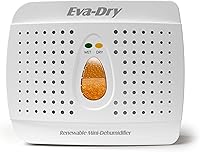
The Eva-Dry Wireless Mini Dehumidifier is a cordless passive unit for areas up to 333 cubic feet. It absorbs up to 6 oz of moisture, lasts 20 to 30 days before the silica gel beads need recharging, and uses no cord or battery during use.
That design helps where an outlet is far away or where a cord would be a hazard. It will not dry a wet basement, handle a sump leak, or pull moisture from a large room after flooding.
For a car, boat, or RV, also consider power and heat. Our guide on whether a car battery can run a dehumidifier shows why battery drain and inverter load matter before you choose an electric model.
Passive units avoid that load, but they also remove far less water.
What about a whole-house humidifier in the same discussion?
A whole-house humidifier adds moisture, so it does not answer a dehumidifier outlet question. It is useful context for winter dryness, but it should not be used where you need drying.
The AprilAire 700M Whole-House Fan Powered Humidifier is a fan-powered evaporative humidifier for homes up to 5,300 sq. ft, with 18 gallons per day capacity and manual control. It ties into an HVAC system and adds water vapor to dry indoor air.
That product helps in cold weather when indoor air is too dry. It does the opposite of a dehumidifier in summer, during a leak, or in a damp basement.
Do not use a humidifier to solve a moisture problem, and do not run both at once without a clear humidity target.
If you are deciding whether you need any moisture appliance at all, start with a humidity reading. Our guide on whether you really need a dehumidifier helps you match the reading to the room and the season.
How do you size the circuit for a dehumidifier plug?
Use the nameplate amps, not a guess, and leave room for startup demand. A compressor can draw more current for a short moment when it starts.
Our guide to how many amps a dehumidifier pulls breaks down running amps, startup amps, and why two similar units can behave differently on the same circuit. It also explains why a 15 amp circuit has less headroom than a 20 amp circuit.
Place the dehumidifier on the least crowded circuit that meets code. Keep space heaters, power tools, and air compressors on other circuits where possible.
If the breaker trips at startup, the circuit may be overloaded or the compressor may be failing. Do not keep resetting it, so note the time and load and have it checked.
What is the safest setup for a dehumidifier outlet?
Use a code-correct outlet, a grounded cord in good shape, and a dry placement with airflow. That combo protects you and lets the unit work.
Keep the unit upright on a level surface, away from walls and curtains, with the tank accessible. Do not cover it or block the intake and exhaust.
Empty the tank before it is full, or use a drain hose where the maker allows it. Wipe spills at once and keep the plug dry.
For long runs, use auto shutoff and restart behavior that fits your space. The EDV-1100 has auto shut off and auto restart after a power interruption, which helps in a small room you do not check daily.
Does a dehumidifier require a GFCI outlet in the end?
Pick the outlet by room code first, then by manual, then by circuit load. That order keeps you safe and stops most nuisance trips.
Choose a GFCI outlet where code requires it, especially in damp or wet rooms. Choose a standard grounded outlet only where code allows it and the manual permits it.
If you need drying in a small enclosed space with no outlet nearby, a cordless passive unit can help. For whole-room drying, size the electric unit to the room and give it a proper circuit.
Start with how many amps a dehumidifier draws and whether a dehumidifier needs a dedicated circuit. When in doubt, ask a licensed electrician to confirm the outlet type, circuit size, and placement.
Frequently asked questions
Can I plug a dehumidifier into any regular outlet?
Only where the outlet is suitable for the room and the dehumidifier manual allows it. Bathrooms, kitchens, basements, garages, and outdoor areas often need GFCI protection, and the circuit load also matters.
Why does a dehumidifier trip a GFCI outlet?
Moisture, compressor and motor electrical noise, a shared load, or a small ground fault can trip it. Repeated trips need a check of the cord, outlet, tank, and circuit, not a bypass.
Is a GFCI outlet better for a basement dehumidifier?
A GFCI outlet can add shock protection in a damp basement, but nuisance trips can stop drying. A correctly wired, dedicated, non-GFCI circuit may be better where code allows it.
Do small dehumidifiers need GFCI protection?
Small plug-in units still use electricity near water, so location rules apply. Cordless passive units avoid the outlet question, but they remove far less moisture than electric models.