Can a Dehumidifier Replace an HRV?
No, a dehumidifier cannot double as an HRV. A dehumidifier removes moisture from indoor air, while an HRV brings in fresh outdoor air and exhausts stale indoor air while recovering heat.
On this page (10 sections)
- What does an HRV do that a dehumidifier cannot?
- Can a dehumidifier double as an HRV for fresh air?
- Why does moisture removal not equal heat recovery?
- When does an HRV dehumidify on its own?
- Can a dehumidifier double as an HRV in a basement or crawl space?
- Small spaces: where a mini dehumidifier makes sense
- A naming trap: Honda HR-V is not an HRV ventilator
- Dehumidifier vs HRV: which controls humidity better?
- How do you run both systems without wasting energy?
- Bottom line: can a dehumidifier double as an HRV?
No, a dehumidifier cannot double as an HRV. A dehumidifier pulls moisture out of air that is already inside, while an HRV swaps indoor air for fresh outdoor air and recovers heat in the process.
That one difference explains most of the confusion. If your home feels damp, a dehumidifier helps.
If your home feels stuffy or short on fresh air, that is HRV territory.
What does an HRV do that a dehumidifier cannot?
An HRV, or heat recovery ventilator, moves air in both directions at once. It exhausts stale indoor air and supplies fresh outdoor air through a heat exchanger core.
The core lets outgoing air give up much of its heat to incoming air. That recovery is the point in cold weather.
You get ventilation without dumping all the heat outside.
A dehumidifier has no outdoor intake, no exhaust duct, and no heat exchanger for ventilation. It recirculates room air, cools a coil, collects water, and releases drier air back into the same room.
So a dehumidifier can make air drier, but it cannot make air fresher in the ventilation sense. Our guide on whether a dehumidifier helps with ventilation breaks down that gap in more detail.
Can a dehumidifier double as an HRV for fresh air?
No, because fresh air has to come from outside the house. A dehumidifier never opens a path to outdoor air.
In a tight modern house, indoor air can build up carbon dioxide, odors, and pollutants from everyday use. An HRV exhausts that air and replaces it.
Running a dehumidifier harder does not solve that problem. It may hide the symptom, since drier air can feel more comfortable while the air exchange need stays untouched.
Fans also do not bridge this gap. We covered that in whether a fan works as a dehumidifier, and the short answer is similar: moving air is not the same as supplying fresh air.
Why does moisture removal not equal heat recovery?
Heat recovery is about energy, not water. An HRV captures heat from air that is leaving and transfers it to air that is entering.
A compressor dehumidifier uses energy to cool a coil below the dew point, condense water, and reheat the air slightly over the condenser. That is moisture removal, not heat recovery for incoming air.
In winter, an HRV can bring in cold outdoor air without making the house feel as cold, because the core preheats it. A dehumidifier cannot preheat outdoor air because it never brings outdoor air in.
Cost also follows different logic. A dehumidifier's cost rises with the amount of water it removes.
An HRV's cost follows fan run time and how much heat the core recovers.
When does an HRV dehumidify on its own?
An HRV can lower indoor humidity when outdoor air is drier than indoor air, which is common in cold weather. Exhausting moist indoor air and replacing it with dry winter air drops the humidity level.
That effect is indirect and seasonal. In summer, outdoor air is often more humid, so ventilation can bring moisture in rather than remove it.
That is why whether an HRV dehumidifies depends so much on the weather outside. The HRV follows outdoor conditions; it does not actively condense water like a dehumidifier does.
Think of the HRV as a humidity influence, not a humidity control device. If you need a set humidity target year-round, a separate dehumidifier often gives you more direct control.
Can you run a dehumidifier with an HRV?
Yes, and this is common in homes that have both. The HRV handles fresh air exchange, while the dehumidifier handles excess moisture during humid spells.
Run the HRV on its normal ventilation schedule, then let the dehumidifier's humidistat respond to the room reading. Our guide on running a dehumidifier with an HRV covers settings and placement.
Can a dehumidifier double as an HRV in a basement or crawl space?
No, and basements show the difference clearly. A basement dehumidifier removes moisture from cool, damp air that is already down there.
An HRV in that same space would supply fresh air from outside and exhaust basement air. That may help with stale air, but it might also introduce outdoor moisture in summer.
For a basement with a moisture problem, the dehumidifier is usually the priority purchase. For a tight, occupied home with stale air complaints, ventilation is the priority.
Whole-home dehumidifiers exist, but they still do not replace an HRV. They condition air that the ventilation system or natural leakage supplies.
Small spaces: where a mini dehumidifier makes sense
Small enclosed spaces are where mini dehumidifiers shine. A closet, cabinet, car, or gun safe does not need whole-home ventilation, but it does need moisture control.
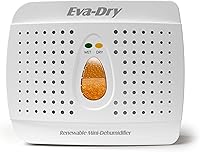
The Eva-Dry Wireless Mini Dehumidifier is 1.5 lb, measures 6.25 x 1.25 x 4.75 inches, and hangs from the included hook. Eva-Dry says the beads turn from orange to green when it is time to recharge.
That design suits drawers and closets because there is no cord, no tank to empty, and no drain. The trade-off is capacity.
At 0.38 pints per day, it is a maintenance tool for small spaces, not a substitute for a room dehumidifier.
Use it where you would never run an HRV anyway. Humidity control in a small closed space is the whole job, and fresh air exchange is not required.
##_large rooms: where a full dehumidifier earns its keep
A large basement or living area needs real pint capacity. That is where a compressor dehumidifier makes sense, and it still does not turn into an HRV.
The AEOCKY 5500 Sq.Ft Energy Star Most Efficient unit is model RHEA-001. AEOCKY says it removes 80 pints per day in humid mid-summer conditions and 56 pints per day in a warm, damp basement.
It has auto, constant humidity, continuous, smart drying, and sleep modes, plus a timer and child lock. The drain hose and garden hose adapter let you run it without emptying the tank.
Size matters here. The unit is 14.45 x 8.66 x 24.09 inches and weighs 31 lb.
AEOCKY says the lowest fan speed is 44 dB, which helps in a bedroom or living space rather than a utility corner.
Even with that capacity, it recirculates indoor air only. Pair it with an HRV if your home also needs fresh air exchange.
A naming trap: Honda HR-V is not an HRV ventilator
Search confusion sometimes comes from car parts. This next pick is a good example, and a reminder to read the full product name before buying.
The Rooppa 3 Wipers set fits the Honda HR-V, which is a vehicle. It has nothing to do with heat recovery ventilation or indoor air quality.
We include it here so you can see how the name collision happens in search results. If you are shopping for ventilation equipment, car wiper blades will not help your home at all.
If you do own a 2016 to 2022 Honda HR-V, the set includes 26 inch, 18 inch, and 10 inch blades with U/J hook adapters. Rooppa backs the set with a one-year warranty.
For everyone else, skip it and focus on the two dehumidifiers above. Naming traps waste time and money when the search term matches a car instead of a ventilation system.
Dehumidifier vs HRV: which controls humidity better?
For pure humidity control, the dehumidifier wins in most cases. It condenses water on demand and holds a set point regardless of outdoor air.
For fresh air and heat recovery, the HRV wins by default. A dehumidifier offers neither function at all.
Our full comparison of dehumidifier vs HRV walks through cost, noise, and maintenance side by side. Read it if you are deciding where to spend first.
A heater also does not solve the moisture side of this question. We addressed that in whether a heater can act as a dehumidifier, and warmer air that still holds the same water is not dehumidification.
What should you buy first if you can only pick one?
Pick the dehumidifier first if dampness, musty smell, or excess moisture is the main complaint. Pick the HRV first if stale air and poor ventilation is the main complaint.
If both problems coexist, budget for both. They are complements, not substitutes, and running one does not make the other unnecessary.
Check your current humidity with a hygrometer before buying either system. A reading that stays above 60% points toward a dehumidifier.
A home that feels stale despite normal humidity points toward ventilation.
How do you run both systems without wasting energy?
Set each system for its own job. Run the HRV on a regular ventilation schedule, and set the dehumidifier to the humidity level you want in the room.
Place the dehumidifier in the dampest occupied area, with clearance around it for air flow. Keep the HRV supply and exhaust grilles unblocked so the core can do its work.
Avoid pointing the dehumidifier at the HRV exhaust grille. That wastes effort, since the dehumidifier would try to dry air that is leaving the house.
In winter, watch for frost control cycles on the HRV. In summer, watch for the dehumidifier running longer, since outdoor air brings in more moisture.
Seasonal checks help too. Clean the dehumidifier filter as directed, check the drain hose for blockages, and confirm the HRV core and filters are clean before the season changes.
Bottom line: can a dehumidifier double as an HRV?
No. A dehumidifier removes moisture from indoor air.
An HRV exchanges stale indoor air for fresh outdoor air and recovers heat from the outgoing stream.
Buy a dehumidifier when moisture is the problem, like the AEOCKY for a large damp space or the Eva-Dry mini for closets and cabinets. Buy an HRV when fresh air is the problem.
If your home has both issues, running both systems together is the normal, correct answer.
Frequently asked questions
Can a dehumidifier double as an HRV in winter?
No. A dehumidifier lowers indoor humidity, but it does not supply fresh outdoor air or exhaust stale air.
An HRV handles that exchange and recovers heat from the outgoing air, so both systems do different jobs in a tight winter home.
Can you run a HRV and a dehumidifier at the same time?
Yes, many homes use both. The HRV supplies fresh air and exhausts stale air, while the dehumidifier removes extra moisture on humid days.
Set the HRV controls and the dehumidifier humidistat so they do not fight each other.
Which is better for humidity, a dehumidifier or an HRV?
A dehumidifier removes humidity faster in most rooms because it condenses water from air it recirculates. An HRV can lower humidity by exhausting moist air, but it also brings in outdoor air that may be humid or dry depending on conditions.