
Why Does My Dehumidifier Shut Off by Itself?
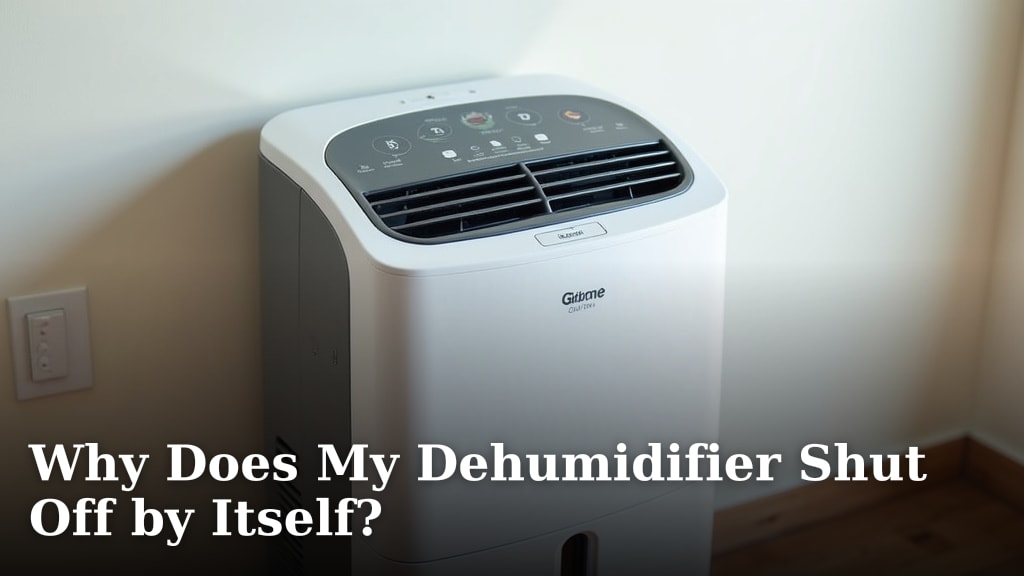
Your dehumidifier shutting off by itself can be puzzling, but it’s usually a sign it’s doing its job correctly. Most often, it stops running because the water tank is full or the humidity level you set has been reached. It’s designed to prevent overflows and save energy.
There are a few other reasons this might happen, too. Sometimes, it’s a safety feature kicking in, or it could be related to the room temperature. We found that understanding these common causes can save you a lot of head-scratching.
- Your dehumidifier likely shut off because the water tank is full.
- It could also be that the desired humidity level has been reached.
- Room temperature can sometimes trigger it to stop.
- A full tank is the most common reason.
Let’s walk through the most common reasons your dehumidifier might be taking a break, so you can get it running smoothly again.
When Your Dehumidifier Decides to Take a Break
It’s a common situation: you set up your dehumidifier, expecting it to quietly work its magic. Then, you notice it’s stopped. Why did your dehumidifier shut off by itself? Usually, this is a sign that your appliance is working exactly as it should. It’s designed to stop running for several key reasons. These aren’t malfunctions; they’re built-in features to keep things running smoothly and safely. We’ve found that understanding these triggers can save you a lot of worry. Let’s break down the most common culprits. If you’re wondering about continuous operation, our guide on whether you can run a dehumidifier all the time offers insights.
The Most Frequent Reason: A Full Water Tank
Think of your dehumidifier’s water tank like a bucket. When that bucket is full, it can’t hold any more water. Your dehumidifier is smart enough to know this. It has a sensor that detects when the tank is nearing capacity. Once it reaches that point, it will automatically shut off to prevent any spills or overflows. This is perhaps the most common reason you’ll find your unit silent.
This is a good thing! It means your dehumidifier is effectively pulling moisture from the air. You’ll usually see an indicator light or a message on the display screen telling you the tank is full. Many models also have a float mechanism. When the water level rises, this float lifts and triggers a switch, signaling the machine to power down.
The good news is that this is an easy fix. All you need to do is empty the water tank. Some dehumidifiers have a drain hose option. This allows for continuous drainage, so you won’t have to empty the tank as often. If you’re using the tank, just pull it out, empty it into a sink or bucket, and slide it back in. Your dehumidifier should then start back up on its own, or you might need to press the power button.
What If the Tank Isn’t Full, But It Still Stops?
Sometimes, you might check the tank, and it’s clearly not full. This can be a bit more confusing, but there are still logical explanations. It’s possible the water level sensor isn’t working quite right. Dust or debris could be interfering with its ability to accurately read the water level. You might need to clean the sensor area gently.
Another possibility is that the tank isn’t seated correctly. If it’s not pushed all the way in, the sensor might not be engaged, or the unit might think it’s missing. Give the tank a firm push to ensure it’s properly in place. We found that a simple jiggle or reseating of the tank often solves this issue.
Reaching Your Desired Humidity Level
Your dehumidifier isn’t designed to run 24/7 unless absolutely necessary. You set a specific humidity target, right? For example, you might aim for 50% relative humidity (RH). Once the air in the room reaches that level, the dehumidifier’s job is done – for now.
It has a humidistat, which is like a thermostat for moisture. This device constantly measures the humidity in the air. When it senses that the humidity has dropped to the level you selected, it signals the unit to turn off. This is incredibly efficient. It saves energy and prevents the air from becoming *too* dry, which can also be uncomfortable.
Think of it like your home’s thermostat. When the room gets warm enough, the air conditioner turns off. Your dehumidifier does the same for humidity. It will cycle on and off as needed to maintain your chosen humidity setting. This is its normal operating pattern.
How to Check and Adjust Your Humidity Settings
If you suspect your dehumidifier is shutting off because your desired humidity is met, the first step is to check the current humidity level in the room. Many modern dehumidifiers have a built-in hygrometer that displays the current RH. If yours doesn’t, you can get an inexpensive digital hygrometer from most hardware or home goods stores. Place it near the dehumidifier and let it acclimate for a few minutes.
If the reading matches your setting, then your dehumidifier is doing its job perfectly. If you want it to run more often, you’ll need to lower the target humidity percentage on your dehumidifier’s control panel. For instance, if it’s set to 50% and the room is at 48%, it will shut off. Setting it to 45% would encourage it to run longer.
Temperature Plays a Role Too
Dehumidifiers are most effective within a certain temperature range. They aren’t designed to work like air conditioners or heaters. If the room gets too cold, the coils inside the unit can freeze up. This can damage the dehumidifier and make it stop working efficiently, or even shut down entirely.
Many dehumidifiers have a built-in low-temperature cutoff. This feature automatically shuts off the unit if the ambient temperature drops below a certain point, often around 60-65°F (15-18°C). This prevents the coils from freezing. Some models might also have an auto-defrost feature that kicks in if they detect ice buildup.
We’ve found that older or less sophisticated models might not have these advanced temperature protections. If you’re using your dehumidifier in a cool basement or garage during cooler months, this is a likely reason for it to shut off. In such cases, you might need to either warm the area slightly or consider a dehumidifier specifically designed for cooler temperatures (sometimes called a “low-temperature” or “garage” dehumidifier).
Understanding Your Dehumidifier’s Operating Range
Always check your dehumidifier’s manual for its recommended operating temperature range. This information is usually found in the specifications section. Knowing this range helps you understand when your unit might struggle.
For example, if your manual states the ideal range is 65°F to 90°F (18°C to 32°C), and your basement is consistently below 65°F, the unit is likely shutting off due to the cold. In this scenario, you have a few choices. You could use a space heater to warm the room slightly when the dehumidifier is running.
Alternatively, you might need to invest in a dehumidifier that can operate effectively at lower temperatures. These models often use different cooling systems or have enhanced defrost capabilities. Don’t try to force a standard dehumidifier to work in temperatures it wasn’t built for; it could lead to damage (Energy Star). If your unit is shutting off due to temperature, consider an energy efficient dehumidifier designed for cooler climates.
Other Potential Issues to Consider
While a full tank, reaching the set humidity, or low temperatures are the most common reasons, a few other factors could cause your dehumidifier to shut off unexpectedly. These are less frequent but still worth investigating if the primary causes don’t apply.
Power Supply Problems
Your dehumidifier needs a steady stream of electricity to run. If it’s plugged into an outlet that’s on a timer, or if there’s a power fluctuation in your home, the unit could shut off. Sometimes, a loose plug connection can also cause intermittent power loss.
Check if the dehumidifier is plugged directly into the wall outlet. Avoid using extension cords if possible, as they can sometimes lead to voltage drops. Also, ensure the circuit breaker for that outlet hasn’t tripped. If it has, try resetting it. If it trips again immediately, there might be an issue with the outlet or the dehumidifier’s wiring.
Internal Safety Features and Malfunctions
Like any appliance, dehumidifiers have safety features to protect the motor and internal components. If the unit overheats due to poor ventilation, a blocked air filter, or a failing fan, it might shut down to prevent damage. You should always ensure there’s adequate space around the unit for air circulation.
A clogged air filter is a very common issue. A dirty filter restricts airflow, making the unit work harder and potentially overheat. Check your manual for instructions on how to clean or replace the filter. Many manufacturers recommend cleaning it every few weeks.
If you’ve ruled out the common causes and cleaned the filter, and your dehumidifier still shuts off randomly, it’s possible there’s an internal component failure. This might be a sign the compressor is overheating or a control board issue. In such cases, it might be time to consult the user manual for troubleshooting specific error codes or contact the manufacturer for support or repair options.
Is It Truly Shutting Off, or Just Cycling?
Sometimes, what appears to be a shutdown is just the unit cycling off because it’s met your set humidity level or the tank is full. It’s important to distinguish between a complete shutdown and a normal operational cycle. Pay attention to indicator lights and listen for the fan and compressor. If the fan stops completely, it’s likely off. If the fan continues to run but the compressor (the humming sound) stops, it’s likely just cycling to maintain humidity.
We suggest observing your dehumidifier over a few hours. Note down when it stops, check the tank, the humidity setting, and the room temperature. This information can help you pinpoint the exact reason why it’s taking a break. Most of the time, it’s a simple, deliberate action by the machine.
Quick Checklist for a Shutting-Off Dehumidifier
Having trouble figuring out why your dehumidifier stopped? Run through this quick checklist:
- Check the Water Tank: Is it full? If yes, empty it.
- Check Your Humidity Setting: Has the room reached the desired humidity level? If so, adjust setting or accept normal cycling.
- Inspect the Air Filter: Is it clogged with dust? Clean or replace it.
- Assess Room Temperature: Is it too cold for your unit’s operating range?
- Ensure Proper Ventilation: Is there enough space around the unit?
- Verify Power Connection: Is the plug secure and the outlet working?
Conclusion
Your dehumidifier shutting off isn’t usually a problem; it’s a smart appliance doing what you designed it to do. We’ve seen that the most common culprits are a full water tank or reaching your set humidity level. Temperature and power issues can also play a role. By quickly checking these common triggers—like the tank, humidity settings, air filter, and room temperature—you can often figure out why it stopped. Don’t overthink it; most often, it’s just doing its job. If you’ve checked these basics and still have concerns, consult your manual or the manufacturer for further assistance.
Frequently Asked Questions
Why does my dehumidifier stop running even when the tank is only half full?
This could be due to a few reasons. The water level sensor might be dirty or obstructed, leading to an inaccurate reading. Ensure the tank is properly seated in the unit; if it’s slightly ajar, the sensor may not engage correctly. Gently cleaning the sensor area and firmly reseating the tank can often resolve this.
Can my dehumidifier shut off if the room gets too humid?
No, quite the opposite! Your dehumidifier is designed to shut off once it has successfully lowered the humidity to your desired setting. If the room becomes too humid, the unit should continue running to address the moisture in the air.
Is it normal for my dehumidifier to turn on and off frequently?
Yes, that’s perfectly normal behavior. Your dehumidifier cycles on and off to maintain the humidity level you’ve set. It will run until it reaches your target humidity, then shut off. As the humidity rises again, it will turn back on. This cycling conserves energy.
My dehumidifier is in my cool basement. Could the cold be why it stopped?
It’s very likely. Many dehumidifiers have a low-temperature cutoff to prevent freezing. If the room temperature drops below the unit’s operational range (often around 60-65°F), it will shut down to protect itself. You might need a model designed for cooler environments or to slightly warm the space.
What should I do if my dehumidifier keeps shutting off and the tank is empty and the humidity is still high?
If the tank is empty, the humidity level hasn’t been reached, and the unit still shuts off, check the air filter. A clogged filter can cause overheating, triggering a safety shutdown. Also, ensure the unit has proper ventilation and isn’t placed too close to walls. If these don’t help, there might be an internal issue requiring professional attention.
