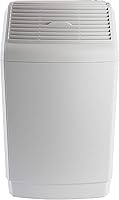
Air Purifier and Humidifier for a Bedroom
Separate units are usually the better bedroom choice because you can control air cleaning and moisture independently. A combo unit saves space, but it may limit placement, cleaning and separate use.
On this page (9 sections)
- Should you choose a combo or separate bedroom units?
- What does an air purifier do in a bedroom?
- What does a humidifier do in a bedroom?
- Can one bedroom air purifier and humidifier replace two devices?
- Which separate bedroom air purifier suits a small room?
- How should you place an air purifier and humidifier together?
- What should you check before buying bedroom units?
- Can humidity make a bedroom air problem worse?
- What is the best bedroom setup?
Separate units are usually better than a combo air purifier and humidifier for a bedroom because you can adjust clean air and moisture independently. A combo can save floor space, but separate devices are easier to position, clean and replace one at a time.
That independence matters across the seasons. Winter heating can leave bedroom air feeling dry, while pollen season can make filtration the priority, and separate units let you respond to each change without compromise.
An air purifier targets airborne particles such as dust, pollen, smoke and pet dander. A humidifier adds moisture to dry air, so the right choice depends on what your bedroom needs.
Those are different jobs that solve different problems. A purifier will not raise humidity, and a humidifier will not capture particles, so expecting one device to do both jobs equally well can lead to disappointment.
Separate units also make daily decisions simpler. You can run the purifier on a schedule for allergens while turning the humidifier off when the air already feels comfortable.
Placement is another practical advantage. A purifier works best with clear intake and outlet paths, while a humidifier needs a stable raised surface where mist can spread without reaching walls or bedding.
Maintenance follows the same logic. Each device has its own cleaning or filter routine, and handling one does not require moving or disturbing the other.
Cost over time is easier to judge with separate units too. If one device wears out or stops suiting your room, you can replace only that device rather than the whole setup.
A combo still has a place in a very small bedroom. Saving floor space and reducing cords can be worth it when furniture leaves little room for two appliances side by side.
Before choosing a combo, think about which function you use most often. If filtration runs nightly and moisture is only occasional, separate control will likely feel more useful day to day.
For a wider look at room coverage, filters and controls, see our guide to best air purifiers for home. Reading it can help you match purifier size and CADR to your bedroom rather than guessing.
Should you choose a combo or separate bedroom units?
Choose separate units when air cleaning and humidity are both important. You can run the purifier without adding moisture, turn off the humidifier when the room feels comfortable and replace only the device that needs attention.
That flexibility helps when needs do not rise and fall together. Allergy season may call for steady filtration, while a dry spell may call for a few nights of added moisture.
A combo unit may suit a small bedroom where floor space is limited. It can also reduce the number of controls and power cords, but you should check how easily you can reach the water tank, clean the internal parts and maintain the filter.
In a compact room, one cabinet can also look tidier on a nightstand or desk. Fewer devices can mean fewer choices at bedtime, which some buyers prefer for simplicity.
The main trade-off is control. Separate devices let you place the purifier near a pollution source and the humidifier where its mist can spread without reaching electronics or soft furnishings.
That separation also protects the purifier. Keeping moist air away from filtration parts can make filter care more straightforward and avoid unnecessary dampness around electrical components.
With separate units, you can also match each device to the room on its own terms. Purifier coverage and noise can be judged apart from tank size, mist output and refill routine.
A combo asks you to accept one design for both jobs. If its tank is awkward to clean or its filter is hard to reach, that friction appears every time you maintain it.
Consider your cleaning habits and placement before deciding. A purifier may belong near a door or window where particles enter, while a humidifier may belong higher and farther from bedding.
Separate units let you follow those different rules without compromise. A combo forces one location to serve both purposes, even when the room layout suggests otherwise.
Our best air purifier humidifier combo guide can help if one cabinet is more practical than two. Use it to compare access, controls and care, not just footprint.
If you have generous space and value control, separate units remain the stronger default. You gain placement freedom, clearer maintenance and the option to upgrade one function at a time.
What does an air purifier do in a bedroom?
An air purifier filters airborne particles and can help reduce odors, depending on its filter design. It does not add moisture, and it does not replace ventilation when outdoor air or a building problem needs attention.
The Levoit Air Purifier for Home Pets Hair has a 3-in-1 filtration system, a 143 CFM CADR and a 24 dB Sleep Mode. Its stated filtration efficiency is 99.97% for 0.1 to 0.3 micron airborne particles, including pollen, dust and animal dander allergens.
It is AHAM VERIFIDE, uses a 56W motor and covers 222 sq ft at 4.8 air changes per hour according to the product information. The purifier is 8.7 in deep, 8.7 in wide and 14.2 in high, so check your nightstand or floor space before placing it.
This model uses a 120V power source and is intended for use in the United States. Its filter should be replaced according to the maker's guidance, and the purifier needs space around its intake and outlet.
See whether HEPA filters are washable before cleaning any filter.
What does a humidifier do in a bedroom?
A humidifier adds moisture to dry room air, which can make a dry throat or dry-feeling room more comfortable. It does not remove dust, pollen or pet dander, so it cannot take the place of an air purifier.
The Levoit Top Fill Humidifiers for Bedroom has a 2.5L tank, a 25 dB noise level and a 360° nozzle. Its Classic 160 design can run for up to 25 hours on low, and the top-fill opening makes refilling easier than turning over a tank.
The humidifier is 6.38 in deep, 7.12 in wide and 10.14 in high, with a weight of 2.2 lb. It uses ultrasonic operation, BPA-free material and auto shut-off when the tank is empty or removed from the base.
Set it on a stable, raised surface in an open area, and use purified or distilled water if you want to reduce white dust. Clean the tank and base regularly, since standing water and neglected parts can make maintenance harder.
Can one bedroom air purifier and humidifier replace two devices?
A combo can replace two devices only if its air cleaning, moisture output and controls match your room. Check whether each function can run independently, how the water tank opens and how the filter is changed.
Independent operation is the first question to answer. You may want filtration without mist on humid nights, or moisture without filtration when the air is already clean.
Next, look at how water is stored and released. A tank that is hard to empty or clean can turn a space saving design into a chore you start to avoid.
Then check filter access. If reaching the filter means dismantling much of the unit, routine replacement may feel harder than it should.
Separate devices often make daily care clearer. You can empty and clean the humidifier without moving the purifier, and you can keep filtering air when the room no longer needs extra moisture.
That clarity also helps with safety and placement. Each device can live where its intake, outlet or mist path works best, rather than sharing one compromise position.
Separate units make troubleshooting simpler as well. If output changes, you can focus on the one device involved instead of testing combined functions together.
A combo may be more convenient for a small room, but convenience does not remove the need for water care, filter care and safe placement. Compare the controls before choosing based only on the smaller footprint.
Be honest about how often you will refill and clean. A design that saves space at night can still demand steady attention during the day.
Also think about noise and light at bedtime. Combined controls may limit your ability to dim one function while keeping the other running on its preferred setting.
Think about lifespan too. With separate units, a worn filter or a tired tank affects only one appliance, and replacement is usually a smaller decision.
With a combo, a problem in one area can sideline both functions. That matters if filtration is an everyday need rather than an occasional extra.
Room size should guide the comparison as well. A combo that suits a small room may struggle in a larger bedroom, while separate units can be sized more precisely.
For a compact setup, read our guide to a portable air purifier and humidifier. Use it to compare portability and placement before deciding on one cabinet.
If space is truly tight, a combo can still be the right answer. Choose it for measured reasons, not only because one device looks simpler than two.
Which separate bedroom air purifier suits a small room?
A smaller purifier suits a bedroom, dorm room or office when you need a compact device and do not need the larger coverage of a full-size model. The Levoit Air Purifiers for Bedroom Home Pets is the smallest option here.
Read the Levoit Core Mini review for its model details.
The Core Mini-P has a 6.5 in by 6.5 in by 10.4 in footprint and weighs 2.2 lb. Its power adapter accepts 100 to 240V input, while the purifier's rated power is 7W.
Its pre-filter and main filter are designed to capture lint, hair, pet dander, fine airborne pollutants and smoke particles. It also has a sleep mode, an auto-off display and aromatherapy support.
The maker warns not to overfill essential oil, with 2 to 3 drops only. That detail matters if you plan to use the device near your bed or on a small table.
How should you place an air purifier and humidifier together?
Place the purifier and humidifier apart, with open airflow around the purifier and no direct mist aimed at it. Keep the humidifier away from bedding, walls, electronics and surfaces that could be damaged by moisture.
Distance gives each device room to work as intended. The purifier can draw in room air without obstruction, and the humidifier can release mist into open space instead of onto nearby objects.
The purifier needs clear intake and outlet paths. Blocking those areas with a wall, curtain or pile of clothing can reduce useful airflow even when the unit is running.
Leave breathing room on every side where the maker recommends clearance. That space helps air circulate and makes it easier to reach controls and filters for routine care.
The humidifier needs a stable, raised position and an open area for mist. Avoid placing it directly beside the purifier, since moisture entering the purifier can make filter care and operation more difficult.
A raised surface also keeps the tank away from bedding and floor level clutter. It gives mist a clearer path into the room and reduces the chance of spills reaching soft furnishings.
Keep the humidifier away from electronics and wooden furniture. Mist is meant for room air, not for chargers, boards or surfaces that prefer to stay dry.
Aim the nozzle thoughtfully if the model allows adjustment. Direction matters, because mist blowing straight at a wall or pillow can leave that spot damp while the rest of the room stays dry.
Measure the available space before buying. A bedroom setup should leave room to refill the tank, access controls and remove filters without shifting heavy furniture.
That measurement should include walking room, not just the device footprint. You need space to lift a full tank, open a lid and clean parts without working over the bed.
Think about traffic through the room as well. A unit tucked behind a door or curtain may be hard to reach, and a unit in a walkway may be knocked or blocked.
Test the layout during the day before relying on it at night. Notice where air feels blocked, where mist gathers and whether controls are easy to reach in low light.
Keep cords tidy and away from bedding. Good placement supports safety as well as airflow, and it keeps refilling and cleaning simpler.
If space is limited, prioritize clear purifier airflow first. The humidifier can often use a higher shelf or table, while the purifier usually needs unobstructed room around it.
What should you check before buying bedroom units?
Check room size, noise, maintenance and placement before comparing extra features. Use this large-room purifier and humidifier guide when sizing a bigger bedroom.
A device that fits the room but is difficult to clean may be a poor long-term choice.
Use this checklist:
- Match the purifier's stated room coverage and CADR to the bedroom.
- Check Sleep Mode noise if the device will run overnight.
- Compare tank capacity and refill access for the humidifier.
- Look for automatic shut-off when the humidifier tank is empty.
- Confirm filter access and replacement guidance.
- Measure the device footprint and height.
- Check the power requirements for your location.
- Leave space around air inlets, outlets and mist paths.
The Levoit Core 300-P offers a larger purifier footprint and 143 CFM CADR, while the Core Mini-P is smaller and rated at 7W. The Classic 160 humidifier adds a 2.5L tank and 25 dB operation, making it a separate moisture option for buyers who want independent control.
If you are unsure whether moisture or air cleaning is the main need, compare air purifier vs humidifier.
Can humidity make a bedroom air problem worse?
Too much moisture can make a room feel damp and may create new maintenance problems, so add moisture only when the bedroom is genuinely dry. Watch for condensation on windows, damp surfaces or moisture collecting near the humidifier.
Dry air often shows itself in simple ways. A scratchy throat in the morning, static on bedding or skin that feels tight can all point to low humidity.
Condensation is a useful warning sign to respect. If windows fog or surfaces feel damp, the room may already have enough moisture without extra help.
A humidifier should not run without regular cleaning. Empty standing water, clean the tank and base as directed, and keep the mist away from the purifier and other electrical equipment.
Cleaning is not just about appearance. Fresh water and clean parts support better daily use and help you notice leaks, buildup or damage early.
Keep mist away from the purifier for the same practical reason. Moisture and filtration parts have different needs, and separation makes care for both devices easier.
Run the humidifier intermittently rather than by habit. Shorter sessions on dry nights can be more sensible than continuous use through damp weather.
Use a separate humidity meter if you want clearer feedback. It can help you stop adding moisture before the room feels clammy or musty.
Remember that an air purifier cannot control room humidity. If the room is already damp, compare the roles of an air purifier vs humidifier vs dehumidifier before adding moisture.
That comparison matters because each device addresses a different issue. Filtration handles particles, humidification adds moisture, and dehumidification removes it.
If dampness comes from poor ventilation or a building problem, neither a purifier nor a humidifier is the right fix. Those issues need attention beyond a bedroom appliance.
When dryness is the real problem, use the humidifier with restraint and care. Clean it often, place it safely and turn it off when the room no longer needs extra moisture.
What is the best bedroom setup?
The best setup is a separate purifier and humidifier when you need both functions, with each device placed where it can work safely and be maintained easily. Choose a combo when saving space matters more than independent placement and control.
Pick the Levoit Air Purifier for Home Pets Hair for a larger bedroom purifier with 143 CFM CADR and 24 dB Sleep Mode. Pick the Levoit Air Purifiers for Bedroom Home Pets when a smaller 7W purifier fits your room better.
Add the Levoit Top Fill Humidifiers for Bedroom when dry air is the reason you want moisture. For a different moisture-control question, see Best Air Purifier Dehumidifier Combo and Do They Make Humidifier Dehumidifier Combo?.
Frequently asked questions
Can you use an air purifier and humidifier in the same bedroom?
Yes, you can use an air purifier and humidifier in the same bedroom when both have suitable placement and airflow around them. Keep moisture away from the purifier, walls and bedding, and clean the humidifier as directed.
A separate humidity meter can help you avoid adding too much moisture.
Is it better to have an air purifier or humidifier in a bedroom?
Choose an air purifier for airborne particles such as dust, pollen and pet dander. Choose a humidifier when the room air is dry and you want to add moisture.
They solve different problems, so some bedrooms benefit from both separate devices rather than one replacing the other.
Can an air purifier and humidifier be combined?
Some products combine air cleaning and humidification, but a combo does not always give you the same placement and control as two separate units. Compare tank access, filter care, room coverage, noise and whether you can run either function alone before choosing a bedroom model.
Where should I put an air purifier and humidifier in a bedroom?
Place the air purifier where its intake and outlet have open space, and keep the humidifier on a stable, raised surface away from electronics, walls and bedding. Do not let mist blow directly into the purifier.
Follow each product's clearance and safety instructions.