Air Purifier vs Humidifier: Which Do You Need? (November 2026)
Choose an air purifier for particles and a humidifier for dry air. An air purifier or humidifier solves a different household problem, so your symptoms, room conditions and care routine should guide the choice.
On this page (8 sections)
- Air purifier vs humidifier: what problem do you have?
- Which device helps with allergies and pet hair?
- Which humidifier is better for dry air?
- Air purifier or humidifier for a bedroom?
- Can you use an air purifier and humidifier together?
- What care does each device need?
- More guides on this topic
- Air purifier vs humidifier: which one should you buy?
Choose an air purifier for airborne particles and a humidifier for dry air. Start with the problem you can notice in the room.
Dust on shelves and bedding, sneezing near pets, or lingering smoke after cooking points toward air cleaning. Tight skin, dry throats, static shocks, or stale rooms during heating season points toward humidity control.
An air purifier moves room air through filters and traps particles as the air passes. It can reduce pollen, dust, pet dander, and smoke particles you breathe in.
It does not add moisture. A room can have cleaner air and still feel dry.
A humidifier adds moisture to indoor air. Some models use evaporative operation, while others use ultrasonic operation.
The method changes how moisture is released, but the purpose stays the same. It addresses low humidity rather than particles.
A humidifier will not remove pollen or pet hair from the air.
For a comparison with fragrance devices, see air purifiers versus diffusers. Scent and filtration are different goals.
A diffuser focuses on fragrance, while an air purifier focuses on particle capture. Choosing by name alone can lead to the wrong device for the room.
These devices can work in the same home, and sometimes in the same room. That flexibility helps when a home has more than one issue.
One bedroom may need particle control, while a living area may need added moisture. Separate devices let you match each room to its main problem.
Buying one does not replace the other. An air purifier will not fix dry air, and a humidifier will not clean the air.
The best choice depends on symptoms, room conditions, and the care you are willing to do. Purifiers need filter changes, while humidifiers need regular cleaning and water care.
Room size also matters once the main problem is clear. A small bedroom and a large open living area place different demands on any device.
Coverage claims should be matched to the actual space, not just the room label. Placement matters too, since blocked airflow or poor positioning can limit what either device can do.
Your daily routine is another useful test. Bedrooms may suit quiet night operation and simple controls.
Busy living areas may need stronger airflow and easier access for cleaning. When the device fits the room and the routine, it is easier to use consistently.
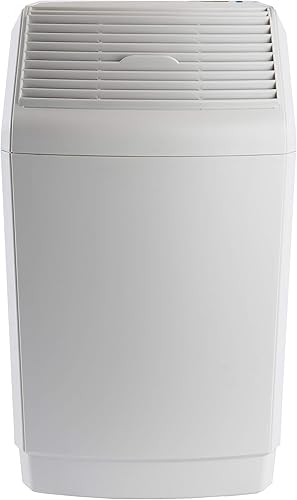 Best for large dry homes
AIRCARE Space Saver Large Evaporative Whole House

Air purifier vs humidifier: what problem do you have?
Buy an air purifier when particles or odors are the concern. Buy a humidifier when dry air is the concern.
Start with the condition you can observe or measure instead of choosing by room type alone.
Dust settling on surfaces, pollen entering through open windows, pet dander and smoke particles all point toward air cleaning. For a product example, read the Winix A230 air purifier review.
An air purifier may also help with certain odors when its filtration system is designed for them.
Dry or uncomfortable air points toward humidity control. A humidifier adds moisture, but it does not remove dust, pollen, smoke or pet hair from the room.
If both problems are present, separate devices may give you better control. The air purifier and humidifier for a bedroom guide covers how to plan that setup.
What does an air purifier remove?
An air purifier targets airborne particles that pass through its filtration system. For a look at ozone-related purifier designs, read what an ozone air purifier is.
For a comparison with ionizers, see air purifiers versus ionizers. The Levoit Air Purifier for Home Pets Hair lists dust, pollen, smoke, pet dander, pet hair, odors, volatile organic compounds and wildfire smoke among its target contaminants.
Its 3-in-1 filtration system and 143 CFM CADR suit shoppers who want measurable air-cleaning information. For another Levoit model, see the Core 400S purifier review.
The stated coverage reaches up to 1,073 sq ft, while its AHAM verified figures are given for smoke, dust and pollen.
The smaller Levoit Air Purifiers for Bedroom Home Pets focuses on compact-room use. Its pre-filter and main filter capture lint, hair, pet dander, fine airborne pollutants and smoke particles.
An air purifier does not make dry air more comfortable by adding water. It also does not replace ventilation, source control or cleaning habits that reduce particles at their source.
What does a humidifier do?
A humidifier adds moisture to indoor air. It can suit rooms that feel dry, especially during heating season or in homes where low humidity is a recurring issue.
The AIRCARE Space Saver Large Evaporative Whole House uses evaporative operation, a 6-gallon capacity and coverage up to 2,700 sq ft. Its auto humidistat is designed to stop the unit when the desired humidity level is reached.
The Pure Enrichment MistAire Ultrasonic Cool Mist Humidifier is aimed at smaller spaces up to 250 sq ft. It offers high and low mist settings, a 360° nozzle, quiet operation and automatic shutoff when water runs low or the tank is removed.
A humidifier does not filter pollen or pet dander. It also needs regular cleaning and careful placement because standing water and damp surfaces can create new household problems.
Which device helps with allergies and pet hair?
An air purifier is the better match for allergies and pet hair because it is designed to capture airborne particles. For a focused model shortlist, see air purifiers for pets and dust.
A humidifier may change how dry the room feels, but it does not remove the particles that trigger this concern.
The Levoit Core 300-P lists 99.97% filtration efficiency for 0.1 to 0.3 micron airborne particulates, including pollen, dust and animal dander allergens. For an allergy-focused comparison, read air purifier vs humidifier for allergies.
Its 24 dB Sleep Mode and display-light control make it suitable for nighttime use.
Choose the smaller Levoit model when the device will sit in a bedroom, kitchen, office or dorm room. Its compact dimensions and 7W rated power fit a different use pattern from a larger-room purifier.
Keep expectations tied to the room and filter condition. The Core 300-P's CADR and coverage figures apply to its Original Filters, and Levoit recommends official replacement filters for performance and fit.
Read whether HEPA filters are washable before attempting to clean one.
For a broader comparison of models, start with our guide to best air purifiers for home. It helps you compare room coverage, filtration and placement before choosing a unit.
Which humidifier is better for dry air?
Choose the AIRCARE unit for broad coverage and the Pure Enrichment unit for one smaller room. Their different operating styles and coverage areas matter more than the word humidifier on the box.
The AIRCARE Space Saver Large Evaporative Whole House covers up to 2,700 sq ft and holds 6 gallons. It includes a 1043 Super Wick, digital controls, an auto humidistat and automatic shutoff when the unit is empty or the desired humidity is reached.
Its 12.5 in D x 17.5 in W x 22.5 in H size and 14 lb weight make it a substantial appliance. Use it when a large living area or several connected rooms need humidity control.
The Pure Enrichment MistAire is a smaller ultrasonic cool mist humidifier for spaces up to 250 sq ft. Its stated runtime reaches up to 25 hours, and the easy-fill tank, night light and quiet operation fit bedroom or nursery routines.
Its included AC power adapter, disk cleaning brush and user manual support basic setup and care. The BPA-free PS and ABS plastic body is shaped for a more compact room placement.
Air purifier or humidifier for a bedroom?
Choose based on the bedroom problem: purifier for particles, humidifier for dryness, or both when you need separate control. A bedroom does not automatically call for one device type.
For pet hair, pollen, dust or smoke particles, the Levoit Core 300-P offers a 24 dB Sleep Mode and a filter-change indicator. Put it where air can circulate freely, while keeping the power cord away from pets.
For dry air in a room up to 250 sq ft, the Pure Enrichment MistAire offers high and low settings, a 360° mist nozzle and automatic shutoff. Keep the unit on a stable surface and follow its cleaning directions.
If the bedroom is large, compare the coverage needed before choosing a compact model. Our guide to a large room air purifier and humidifier covers the planning questions for bigger spaces.
Do not place a humidifier where mist can wet bedding, walls, electronics or the air purifier intake. If you use both, leave enough space for each device to draw and release air properly.
Can you use an air purifier and humidifier together?
Yes, an air purifier and humidifier can share a room when you manage moisture and airflow carefully. Keep mist away from the purifier intake and from surfaces that should stay dry.
That separation protects the filter, electronics, and furniture around both devices.
Put the humidifier on a level, water-safe surface. A nightstand, dresser, or table can work if it stays stable and does not wobble.
Keep it away from electronics, fabrics, and walls, since repeated mist can leave dampness where it is not wanted.
Adjust the mist output if nearby surfaces feel damp to the touch. Lower output often protects wood, paper, and bedding far better than high output aimed in the wrong direction.
Point the mist toward open room air instead of toward the purifier.
Place the air purifier where it can pull room air without being blocked by furniture. An open spot near the center of the room usually allows better circulation than a tight corner.
Avoid pushing it against curtains, beds, or shelves, since blocked sides can reduce airflow.
Leave enough distance between the two devices so each can do its job without interference. Avoid directing humidifier mist straight into the purifier intake, since moisture can affect the filter and surrounding surfaces.
Even if the purifier keeps running, wet air aimed at the intake is not helpful.
For a smaller setup, our guide to a portable air purifier and humidifier explains what to consider when space and portability matter. Small rooms bring tighter placement choices, so spacing and surface choice deserve extra care.
For model-specific placement, see the guide on using a Levoit air purifier and humidifier together. Different sizes and outputs may call for slightly different distances and angles.
Empty and clean the humidifier as directed, since standing water can create new problems. Check the purifier filter on schedule and replace it when needed.
Use the purifier when particles are the concern, and the humidifier when dry air is the concern. A calmer setting, good placement, and regular care usually give better results than more output.
What care does each device need?
Air purifiers need filter care, while humidifiers need water and surface care. Both work best when you follow the manufacturer's instructions and keep the surrounding area clean.
Check the purifier's filter indicator when the model has one. The Levoit Core 300-P recommends replacing filters every 6 to 8 months, while actual timing depends on room conditions and use.
The compact Levoit model uses an adapter stored inside the air purifier. Its essential oil instructions allow only 2 to 3 drops, so don't overfill the oil area.
Empty and clean a humidifier on the schedule in its manual. Remove standing water when the unit is not in use, clean the tank and nozzle, and let parts dry as directed.
The AIRCARE unit uses a wick and includes one 1043 Super Wick. Its automatic shutoff helps when the unit reaches the desired humidity or becomes empty, but it does not remove the need for routine care.
More guides on this topic
- Best Air Purifier and Humidifier Combos
Air purifier vs humidifier: which one should you buy?
Pick an air purifier for particles, a humidifier for dry air, and both when your home has both problems. Room size and maintenance should decide which model fits after you identify the main need.
Choose the AIRCARE Space Saver Large Evaporative Whole House for large-area humidity control, especially when up to 2,700 sq ft of coverage and a 6-gallon capacity fit your plan.
Choose the Levoit Air Purifier for Home Pets Hair for particles, pets and larger spaces, with AHAM verified performance, 3-in-1 filtration and quiet Sleep Mode.
Choose the smaller Levoit Air Purifiers for Bedroom Home Pets for compact-room particle control. Choose the Pure Enrichment MistAire for added moisture in a room up to 250 sq ft.
If you are comparing humidity control with another moisture appliance, read Best Air Purifier Dehumidifier Combo and Are Air Purifier and Dehumidifier the Same? before deciding. The right answer is the device that matches the air problem you actually need to manage.
Frequently asked questions
Is an air purifier or humidifier better?
An air purifier is better for dust, pollen, smoke particles, pet dander and some odors. A humidifier is better for dry indoor air.
They are not substitutes because one filters airborne particles while the other adds moisture.
Can you use an air purifier and humidifier together?
Yes, you can use an air purifier and humidifier in the same room when you need both particle control and added moisture. Keep them separated, prevent mist from blowing directly toward the purifier, and clean the humidifier as directed.
Should I buy a humidifier or air purifier for allergies?
An air purifier is usually the closer match for airborne allergy triggers such as pollen, dust and pet dander. A humidifier does not filter those particles.
If dry air also bothers you, you may need separate humidity control.
Does an air purifier remove humidity?
No. An air purifier cleans or filters airborne particles, but it does not remove meaningful amounts of humidity.
If indoor air is too damp, look at a dehumidifier instead.
The air purifier vs humidifier vs dehumidifier guide explains the three roles.


