9 Best Small Crawl Space Dehumidifiers (November 2026)
The best small crawl space dehumidifiers include the ALORAIR 113 Pints Crawlspace Dehumidifier for Commercial for rugged compact construction, the Waykar 70 Pint Energy Star Crawl Space for flexible pump drainage, and the ALORAIR 120 Pints Energy Star Crawlspace Dehumidifier for Energy Star crawl spaces.
On this page (3 sections)
The best small crawl space dehumidifier for most homes is the Waykar 70 Pint Energy Star Crawl Space, because it combines a compact metal cabinet with a built-in pump, a 16.4 ft pump hose and a separate gravity hose. That mix suits a home where the drain point is not conveniently below the unit.
Small crawl spaces create a specific buying problem. The unit must fit through the access opening, leave room for airflow and service, and remove enough moisture for the space without making drainage difficult.
Choose ALORAIR for rugged metal construction. Choose Abestorm or BaseAire for lower height.
Choose CADPXS 125 Pints for higher moisture loads.
The right pick depends on clearance first. Measure the opening and the bay before you compare pint ratings.
Drainage comes next. A pump helps when water must rise.
Gravity drainage can be simpler when a floor drain sits below the unit.
Capacity matters, but only after fit and drainage are settled. A unit that cannot be placed well will not maintain humidity control.
A tight entrance can rule out a unit that otherwise looks ideal on paper. Width often causes more trouble than height, because the cabinet still has to turn into the bay.
Depth also deserves a check. A long cabinet may fit the height but block the path you need for filter care or hose connections.
Start by marking the space where the unit will sit. Leave clear room around the intake and exhaust so air can move without restriction.
Think about the floor surface as well. A level spot helps the unit run steadily and keeps drainage simple.
If you're unsure whether moisture control is necessary, read Do I Need a Crawl Space Dehumidifier?. For a broader comparison, see our Best Dehumidifier For Crawl Space guide.
Set the target humidity after placement. Leave access to the filter and drain connection for routine care.
Think about who should buy it. It suits a homeowner who wants continuous operation without carrying water out.
It suits a crawl space with damp air, not a space with standing water or an active leak.
A small unit suits a buyer who plans to leave it in place for long periods. It also suits a home where access is awkward and regular bucket emptying would be impractical.
It is less suited to a space with a leaking pipe or water entry at ground level. Those problems need repair first, because a dehumidifier manages airborne moisture rather than stopping liquid water.
Plan care from the start. Check the filter, hose and controls on a regular schedule.
Keep the plan simple enough that you will actually follow it. A short monthly check can catch a blocked intake or a kinked hose before performance drops.
That approach keeps a small unit useful for tight spaces.
Our picks at a glance
-
1
 Best for rugged compact construction
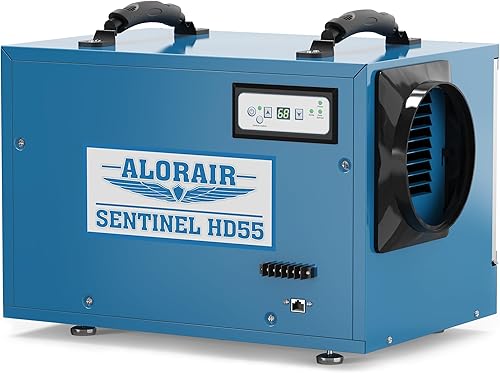
ALORAIR 113 Pints Crawlspace Dehumidifier for Commercial
9.7/10 our score
See it on Amazon -
2
 Best for flexible pump drainage
Waykar 70 Pint Energy Star Crawl Space
9.5/10 our score
See it on Amazon -
3
 Best for Energy Star crawl spaces
ALORAIR 120 Pints Energy Star Crawlspace Dehumidifier,
9.4/10 our score
See it on Amazon
- 4
 Check it
Moiswell 120 Pints Commercial Dehumidifier with Pump
Best for large crawl space airflow - 5
 Check it
CADPXS 80 Pints Crawl Space/Commercial Dehumidifier
Best for compact pump installation - 6
 Check it
Abestorm 70 PPD Dehumidifier with Pump
Best for 1,000 sq. ft. crawl spaces - 7
 Check it
Airecoler 70 Pints Commercial Dehumidifier for Crawl
Best for remote control access - 8
 Check it
BaseAire Crawlspace 70 PPD Dehumidifier with Pump
Best for very low clearance - 9
 Check it
CADPXS 125 Pints Crawl Space Dehumidifier
Best for higher moisture loads
The best small crawl space dehumidifiers for tight spaces
The best choice depends on clearance, drainage and moisture load. The scores weigh specs, features and buyer feedback against the needs of someone shopping for a small crawl space dehumidifier.
Measure first, then compare capacity. A low cabinet may suit a tight bay better than a higher rated unit.
Drainage can decide the pick. A pump suits a raised drain point.
Gravity drainage suits a clear downward route.
ALORAIR 113 Pints Crawlspace Dehumidifier for Commercial: Best for rugged compact construction
- 113 pints at saturation
- 53 pints per day at AHAM
- Up to 1,200 sq. ft.
- Metal outer casing
- Automatic defrost
The metal Sentinel HD55 combines compact dimensions with commercial moisture removal. Its automatic defrost and continuous operation suit a crawl space where regular tank emptying is impractical.
Pros
- Metal casing
- Automatic defrost
- 53 PPD AHAM capacity
Cons
- Larger footprint than several compact picks
- Remote control is optional
ALORAIR's 113-pint Sentinel HD55 is the top pick for buyers who want a compact commercial unit with a metal outer casing. It removes 53 pints per day at AHAM conditions and is sized for up to 1,200 sq. ft.
The 19.2 in depth, 12.2 in width and 13.3 in height fit many crawl space layouts, but measure the access route before choosing it. The unit has automatic drainage and no internal tank, so you won't need to carry collected water out of the crawl space.
Automatic defrost supports operation when temperatures fall, while the MERV-1 filter helps protect internal parts from dust. ALORAIR includes the dehumidifier and user manual, and the brand gives this model a 6-year limited warranty.
Choose it when the metal casing, automatic drainage and lower 1,200 sq. ft. target match your space. A remote controller and some accessories are optional, so plan access to the control panel.
Waykar 70 Pint Energy Star Crawl Space: Best for flexible pump drainage
- 70 pints per day
- Up to 5,000 sq. ft.
- Built-in pump
- 16.4 ft pump hose
- 2025 ENERGY STAR
Waykar offers a built-in pump, a long pump hose and a separate gravity hose for different drainage layouts. Its 5,000 sq. ft. coverage claim is the highest here, but measure the cabinet before using it in a very tight bay.
Pros
- Two drainage options
- Metal casing
- Adjustable humidity range
Cons
- Wider than some low-clearance picks
- Remote control is sold separately
Waykar is the strongest all-around choice when drainage flexibility matters. Its 70-pint unit has a built-in pump, a 16.4 ft pump hose for upward drainage and a 6.6 ft straight hose for downward drainage.
The metal cabinet measures 15.79 D x 13.58 W x 13.15 H in. That makes it compact for a commercial unit, although its 13.58 in width may be too much for a very narrow bay.
Waykar states coverage up to 5,000 sq. ft., with airflow up to 158.82 CFM and an adjustable humidity range from 10% to 90% RH. The 2025 ENERGY STAR certification makes it a fit for buyers thinking about long operating periods.
A touchscreen, automatic defrost, automatic restart, washable filter and service reminder add useful control features. The optional remote control is sold separately, while the pump and both hoses are included.
It suits a basement or crawl space where the drain sits above the floor. It suits a user who wants two drainage routes without buying a separate pump.
Set up both hoses before you commit to a spot. Keep the filter clean so airflow stays steady.
The trade-off is width. Measure the opening and the final bay.
Choose it when flexibility outweighs the smallest footprint.
ALORAIR 120 Pints Energy Star Crawlspace Dehumidifier,: Best for Energy Star crawl spaces
- 120 pints at saturation
- 55 PPD at AHAM
- Up to 1,300 sq. ft.
- Metal housing
- Continuous drainage
The Sentinel HD55S adds Energy Star certification to a metal crawl space unit with automatic drainage and low-temperature operation. It fits buyers who want a compact commercial design with a slightly higher stated capacity than the HD55.
Pros
- Energy Star certified
- Automatic defrost
- Continuous drainage
Cons
- Longer cabinet than the smallest units
- Remote monitoring is optional
The ALORAIR Sentinel HD55S suits buyers who want Energy Star certification and a commercial metal housing in a familiar compact shape. It removes 55 PPD at AHAM conditions and is rated for spaces up to 1,300 sq. ft.
Its dimensions are 19.2 D x 12.2 W x 13.3 H in, with 130 CFM airflow. The built-in drain outlet supports continuous drainage, so placement should include a clear route for the drain hose.
Automatic defrost helps the unit continue operating in low-temperature conditions. The MERV-1 filter helps protect the internal components from dust and debris, and the Sentinel HD55S supports optional remote monitoring.
This is a good pick when your crawl space is slightly larger than the HD55 target and you want Energy Star certification. Its long cabinet needs more depth planning than the shortest units in this roundup.
It suits a crawl space, basement, warehouse or office with a suitable drain route. It suits a buyer who prefers automatic drainage over a tank.
Keep the intake and exhaust clear after installation. Check the filter as part of normal care.
The depth is the main limit. Measure the bay and the access path.
Choose it when Energy Star certification and metal construction matter most.
Moiswell 120 Pints Commercial Dehumidifier with Pump: Best for large crawl space airflow
- 120 pints at saturation
- 53 PPD at AHAM
- 180 CFM airflow
- Built-in pump
- 16.4 ft pump hose
Moiswell pairs 180 CFM airflow with a built-in pump and cycle timer. Its 21.8 in width needs careful clearance planning, so it suits a broad installation area more than a narrow crawl space entrance.
Pros
- Highest airflow here
- Built-in pump
- Cycle timer
Cons
- Widest cabinet in this group
- Heavier 63.2 lb design
Moiswell's 120 Pints Commercial Dehumidifier with Pump is designed for larger areas where airflow matters. For more high-capacity choices, see commercial dehumidifiers for crawl spaces.
It delivers 180 CFM and is rated for spaces from 1,000 to 4,500 sq. ft.
The unit measures 14 D x 21.8 W x 14.9 H in and weighs 63.2 lb. That 21.8 in width is the main trade-off for a small crawl space, so confirm that the unit can pass through the access opening and fit beside the drain route.
A built-in pump and 16.4 ft pump hose support upward or long-distance drainage. The included components also include a 6.56 ft gravity hose, leveling feet, a 6-inch duct collar and user manual.
Moiswell adds a cycle timer, automatic defrost, automatic restart, humidity control and digital display. Choose it for higher airflow and broad coverage, not for the tightest installation bay.
CADPXS 80 Pints Crawl Space/Commercial Dehumidifier: Best for compact pump installation
- 80 pints at saturation
- 38 PPD at AHAM
- Built-in pump
- 19.6 ft pump hose
- Automatic defrost
CADPXS keeps the cabinet short and narrow while adding a pump, gravity drainage and a 24-hour timer. It is a practical fit when the crawl space has modest moisture loads and the drain point sits above the unit.
Pros
- Compact dimensions
- Pump and gravity drainage
- 19.6 ft pump hose
Cons
- Lower AHAM capacity than larger picks
- Remote control is optional
CADPXS keeps the cabinet compact while adding both pump and gravity drainage. The Remois XP70 removes up to 80 pints at saturation and 38 PPD at AHAM conditions for spaces up to 1,200 sq. ft.
Its 15.6 D x 12 W x 12.6 H in cabinet is easier to place than the wider models. The built-in pump can lift water through the included 19.6 ft hose, while the 6.56 ft hose supports a simpler floor-drain setup.
Automatic defrost supports low-temperature use. A 24-hour timer, memory restart, washable filter and optional remote control add convenience for a unit that may run without frequent visits.
The 310-watt rating gives you a clear power figure for planning. Choose CADPXS when the crawl space has a modest to medium moisture load and drainage flexibility matters more than maximum capacity.
It suits a tight crawl space or utility area. It suits a home where the drain point sits above the unit.
Place the pump hose so it does not kink. Keep the washable filter clean for steady operation.
The AHAM figure is lower than larger picks. Match it to a modest moisture load.
Choose it when compact size and drainage choices matter most.
Abestorm 70 PPD Dehumidifier with Pump: Best for 1,000 sq. ft. crawl spaces
- 70 pints capacity
- 35 PPD dehumidification
- Up to 1,000 sq. ft.
- Built-in pump
- 19.6 ft lift distance
Abestorm is one of the shortest and narrowest units here, with pump or gravity drainage for a 1,000 sq. ft. area. Its automatic stop and restart help maintain a target humidity without constant access.
Pros
- Short 11.2 in height
- Built-in pump
- Automatic restart
Cons
- Lower stated coverage than Waykar
- 35 PPD dehumidification capacity
Abestorm is one of the better choices for a low crawl space because its Guardian SN35P measures 11.2 in high and 11.4 in wide. It is rated for up to 1,000 sq. ft. and has a 70-pint capacity with 35 PPD dehumidification.
The built-in pump provides a 19.6 ft lift distance, while gravity drainage remains an option when a floor drain is available. That gives you more installation choices than a gravity-only unit.
Automatic defrost helps manage cooler conditions. The unit can stop at the set humidity and restart when humidity rises, including after a power interruption.
Abestorm lists a 5-year limited warranty and lifetime access to expert technical support. Pick this model when vertical clearance is the main limit and the 1,000 sq. ft. target matches your crawl space.
It suits a low crawl space, storage area or garage. It suits a user who wants automatic stop and restart.
Keep the drain route clear and the filter clean. Leave room to reach the controls after placement.
The stated coverage is lower than Waykar. Match the unit to the moisture load.
Choose it when height is the main limit.
Airecoler 70 Pints Commercial Dehumidifier for Crawl: Best for remote control access
- 70 pints at saturation
- Up to 1,000 sq. ft.
- Built-in wired remote
- 6.56 ft gravity hose
- Energy Star certified
Airecoler includes a detachable control panel that works as a wired remote, so you can adjust the unit outside the crawl space. It uses gravity drainage, making the drain route more important than on pump-equipped models.
Pros
- Built-in wired remote
- 206 CFM airflow
- Energy Star certified
Cons
- No built-in pump
- Gravity drainage needs a suitable route
Airecoler is the best fit when you want to control the unit from outside the crawl space. Its detachable control panel works as a wired remote, and the unit includes a 6.56 ft gravity drain hose.
The Stellar S10 measures 15.51 D x 13.15 W x 12.28 H in and provides 206 CFM airflow. It is rated for up to 1,000 sq. ft., with up to 70 pints per day at saturation.
This unit uses continuous gravity drainage rather than a built-in pump. The hose therefore needs a suitable downward path, with no section that forces water uphill.
Energy Star certification, automatic defrost, automatic restart, adjustable humidity control and a washable filter add useful features. Choose it for remote access when gravity drainage is practical.
It suits a crawl space where entering for each adjustment is awkward. It suits a home with a floor drain below the unit.
Run the signal cable so it stays protected. Keep the gravity hose sloping for the full route.
The lack of a pump is the main trade-off. Plan the drain before placement.
Choose it when remote access matters most.
BaseAire Crawlspace 70 PPD Dehumidifier with Pump: Best for very low clearance
- 70 pints capacity
- Up to 1,000 sq. ft.
- Built-in pump
- Humidity sensor
- Automatic defrost
BaseAire has a low 11.4 in height, adjustable feet and a built-in pump for tight crawl spaces. Its digital control panel and humidity sensor suit buyers who want automatic start and stop.
Pros
- Low-clearance cabinet
- Built-in pump
- Humidity sensor
Cons
- Coverage is stated at 1,000 sq. ft.
- Hanger is an additional option
BaseAire suits very low crawl spaces because its cabinet is only 11.4 in high. The AirWerx 35P has a 70-pint capacity, a built-in pump and a stated coverage area of up to 1,000 sq. ft.
Its 15.2 D x 11.2 W x 11.4 H in dimensions make it one of the easiest models here to fit beneath a low floor structure. Adjustable feet help with placement, and sturdy handles help with moving the 38.2 lb unit.
A humidity sensor and digital control panel manage sensor-based start and stop. Automatic defrost supports cooler operating conditions, while an optional hanger can be used for suspended installation.
Choose BaseAire when height and width are more important than maximum coverage. Check the location for enough room to reach the controls, filter and drain connection.
It suits a very low crawl space or tight basement. It suits a user who wants sensor based start and stop.
Use the adjustable feet to level the unit. Keep the pump hose routed without sharp bends.
The coverage target is 1,000 sq. ft. Match it to a modest load.
Choose it when low clearance matters most.
CADPXS 125 Pints Crawl Space Dehumidifier: Best for higher moisture loads
- 125 pints at saturation
- 55 PPD at AHAM
- Up to 1,500 sq. ft.
- 6.56 ft gravity hose
- 6-inch exhaust outlet
The CADPXS Remois X125 provides the highest saturation capacity in this list and supports spaces up to 1,500 sq. ft. Its wider cabinet and gravity-only drainage make it better for open installation areas with a clear drain path.
Pros
- Highest saturation capacity
- 6-inch exhaust outlet
- Continuous gravity drainage
Cons
- No built-in pump
- Wider and heavier than compact picks
CADPXS 125 Pints is the high-capacity choice for a crawl space with more moisture or a larger area. It removes up to 125 pints at saturation, 55 PPD at AHAM conditions and is rated for up to 1,500 sq. ft.
The 18.67 in width and 13.39 in height need more clearance than the smaller CADPXS model. Its 12.5 in depth is relatively short, but the width can still limit access through a narrow opening.
This model uses gravity drainage with an included 6.56 ft hose. It has a 6-inch pipe-compatible exhaust outlet, adjustable humidity control, automatic defrost, a washable filter, a timer and memory restart.
CADPXS includes an air filter, drain hose and user manual. Choose it when moisture removal is the priority and the crawl space has a suitable gravity drain, but skip it when you need a built-in pump.
It suits a larger crawl space, basement or warehouse area. It suits a space with a clear downward drain route.
Keep the 6.56 ft hose sloping without uphill sections. Clean the washable filter on a regular schedule.
The width and gravity only drainage are the limits. Measure the opening first.
Choose it when capacity matters most.
How to choose a small crawl space dehumidifier
The right small crawl space dehumidifier must fit the opening, match the moisture load and drain without daily bucket emptying. Start with measurements before comparing capacity numbers.
Measure the access opening and the final installation bay. Record height, width and depth, then leave room for the drain hose, air intake, exhaust and filter access.
For the lowest clearance, BaseAire is 11.4 in high and Abestorm is 11.2 in high. CADPXS 80 Pints is 12.6 in high, while Waykar, ALORAIR and Moiswell need more height or width planning.
Should you choose a pump or gravity drainage?
A built-in pump is the safer choice when water must travel upward or across a long distance. Waykar includes a 16.4 ft pump hose, while CADPXS 80 Pints and Abestorm include pump drainage with longer stated lift options.
Gravity drainage can be simpler when the unit sits above a suitable floor drain. Airecoler and CADPXS 125 Pints rely on gravity drainage, so the hose needs a steady downward path.
For more drainage choices, compare this roundup with the Best Pump Dehumidifier For Crawl Space.
How much capacity do you need?
Use the stated coverage area and moisture conditions as starting points, not as a guarantee for every crawl space. A 70-pint model can suit a 1,000 sq. ft. target, while the ALORAIR HD55, CADPXS 80 Pints and larger models cover about 1,200 to 1,500 sq. ft.
A crawl space with standing water, leaks or a damaged vapor barrier may need repairs before a dehumidifier can control humidity. A dehumidifier manages moisture in the air, but it does not replace drainage or water-entry work.
What controls make maintenance easier?
Automatic restart helps after a power interruption, while automatic defrost helps in cooler conditions. A wired remote can save you from entering the crawl space, as with Airecoler's detachable control panel.
A washable or replaceable filter also matters because crawl spaces can contain dust. Set a reminder to inspect the filter, drain hose and surrounding clearance as part of normal care.
If you want remote monitoring, see Best Crawl Space Dehumidifiers With WiFi. For general moisture control steps, read How to Dehumidify a Crawl Space?.
Which small crawl space dehumidifier should you buy?
Pick ALORAIR 113 Pints Crawlspace Dehumidifier for Commercial when you want the strongest balance of compact commercial construction, automatic drainage and 53 PPD AHAM capacity.
Pick Waykar 70 Pint Energy Star Crawl Space when pump drainage, two hose options and broad stated coverage matter most. Choose Abestorm or BaseAire for the lowest clearance, and choose CADPXS 125 Pints only when the larger cabinet and gravity-only drainage fit your crawl space.
Measure the access opening before you order any of them. A cabinet that fits the opening still needs room for airflow, drainage and filter access.
Match capacity to the moisture load. A 70-pint unit can suit a stated 1,000 sq. ft. area.
A 113 to 125-pint model can suit a larger or wetter space.
Saturation figures and AHAM figures describe different test conditions. Comparing AHAM values where available gives a fairer sense of routine performance.
Choose a pump when the drain point sits higher than the unit. Choose gravity drainage when the hose can slope down without uphill sections.
A pump route needs care as well. The hose should run without sharp bends, and the outlet should stay clear for the full distance.
Choose a wired remote when you want to adjust settings from outside the crawl space. Choose automatic restart and defrost when power interruptions or cold conditions are likely.
Automatic defrost matters in cooler crawl spaces. It pauses the compressor while the fan continues, so frost can thaw before normal operation resumes.
Choose a metal cabinet when the space is rough or the unit may be moved often. Metal helps resist knocks, but weight still matters when you carry it through a low opening.
Match low-clearance models to very tight bays. A shorter unit can fit where a longer cabinet cannot, even if the taller unit has a higher pint rating.
Keep care simple after setup. Check the filter, hose and clearance on a regular schedule.
A washable filter should be cleaned as directed, and a replaceable filter should be checked for dust loading. Good airflow depends on keeping the intake path open.
It suits a homeowner who wants steady humidity control. It suits a crawl space with damp air, not standing water or an active leak.
For another explanation of the decision, see Do I Need a Dehumidifier for a Crawl Space?.
Start with clearance, then drainage, then capacity. That order leads to the right pick.
Our top 3 picks at a glance
-
1
Best for rugged compact construction
ALORAIR 113 Pints Crawlspace Dehumidifier for Commercial
9.7/10 our score
See it on Amazon -
2
Best for flexible pump drainage
Waykar 70 Pint Energy Star Crawl Space
9.5/10 our score
See it on Amazon -
3
Best for Energy Star crawl spaces
ALORAIR 120 Pints Energy Star Crawlspace Dehumidifier,
9.4/10 our score
See it on Amazon
Frequently asked questions
What is the best small crawl space dehumidifier?
The ALORAIR 113 Pints Crawlspace Dehumidifier for Commercial is the highest-scoring pick because it combines a metal casing, automatic drainage, automatic defrost and 53 PPD AHAM capacity in a compact commercial unit.
Choose Waykar instead if you need a built-in pump, two drainage hoses and wider stated coverage.
How small should a crawl space dehumidifier be?
Measure the access opening, installation bay and service space before choosing a unit. The shortest options here are about 11.2 to 11.4 in tall, while widths range from 11.2 to 21.8 in.
A cabinet that fits the opening still needs room for drainage, airflow and filter access.
Do small crawl space dehumidifiers need a pump?
A pump helps when the drain point is higher than the dehumidifier or far away. Waykar, Moiswell, CADPXS 80 Pints, Abestorm and BaseAire include built-in pumps.
Gravity drainage can work when the hose can slope continuously to a suitable drain.
How much capacity does a crawl space dehumidifier need?
Choose capacity by moisture load, crawl space size and drainage setup. A 70-pint unit can suit a stated 1,000 sq. ft. area, while 113 to 125-pint models fit larger or wetter spaces.
Capacity figures use different conditions, so compare AHAM figures when available.
Can a crawl space dehumidifier run continuously?
Yes, several picks support continuous operation or continuous drainage, but the hose must be installed correctly and the filter needs regular care. Units with automatic restart can resume after a power interruption.
Follow the model instructions for placement, drainage and service access.