Do I Need a Dehumidifier for a Crawl Space?
On this page (6 sections)
Yes, you very likely need a dehumidifier for a crawl space, especially if you live in a humid climate. High moisture levels in this area can cause many serious problems for your home.
We found that excessive crawl space humidity leads to issues like mold growth, wood rot, and even pest infestations. This moisture can also travel into your living areas, impacting your indoor air quality and comfort. Protecting your home from these moisture-related damages is essential.
- You probably need a dehumidifier.
- Humidity in crawl spaces causes mold and rot.
- High moisture attracts pests.
- It affects your home’s air quality.
- Choosing the right dehumidifier is key.
Let’s break down everything you need to know about why a crawl space dehumidifier is so important and how to choose the right one for your home.
Why a Crawl Space Dehumidifier is Essential
You might be wondering if a dehumidifier is truly necessary for your crawl space. The straightforward answer is often yes. High humidity in this hidden area can lead to serious problems that affect your entire home.
Think of your crawl space as your home’s lungs. Just as your lungs need clean air, your crawl space needs dry, healthy air. When moisture levels rise, it creates a perfect breeding ground for various issues.
The Hidden Dangers of High Humidity
What exactly happens when your crawl space gets too damp? We found several key dangers that can compromise your home’s integrity and your family’s health. It’s more than just a musty smell.
Mold and Mildew Growth
One of the most common issues is mold and mildew growth. These fungi thrive in damp, dark environments, making your crawl space an ideal habitat. Once established, they can spread quickly.
Mold not only looks unpleasant but can also cause health problems. We found that mold spores can become airborne and enter your living spaces, potentially causing respiratory issues, allergies, and skin irritation for some individuals (CDC).
Wood Rot and Structural Damage
Your home’s structure relies heavily on wooden beams and joists, many of which are in or above the crawl space. Excessive moisture can cause wood to rot, weakening these crucial structural components over time.
This isn’t just a cosmetic problem; it can lead to sagging floors, uneven door frames, and even structural failure if left unaddressed. Repairing wood rot is expensive and disruptive.
Pest Infestations
Do you enjoy sharing your home with unwanted guests? Neither do we. We found that many common household pests, like cockroaches, termites, and rodents, are attracted to damp, dark environments.
A humid crawl space becomes an open invitation for these creatures to set up camp. Once they’re in your crawl space, it’s often a short leap into your living areas, creating nuisances and potential health hazards.
Poor Indoor Air Quality
Perhaps the most insidious danger is the impact on your indoor air quality. Air from your crawl space doesn’t stay confined there. It naturally rises into your home through a phenomenon called the “stack effect.”
This means that any mold spores, musty odors, or allergens generated in your damp crawl space can end up in the air you breathe every day. We found that this can significantly worsen conditions for people with asthma or allergies.
Signs You Need a Crawl Space Dehumidifier
How can you tell if your crawl space is too humid? You don’t need a degree in atmospheric science. There are several clear indicators that point to a moisture problem. Trust your senses and investigate.
Visual and Olfactory Clues
Sometimes, the signs are right in front of you (or under your nose). Pay attention to these common warning signals.
- Musty Odors: Do you smell a persistent musty or earthy odor in your home, especially near vents or in lower rooms? This is a strong indicator of mold or mildew in the crawl space.
- Visible Mold: If you can see fuzzy black, green, or white growth on wood, insulation, or walls in your crawl space, you definitely have a mold problem.
- Water Stains or Condensation: Look for water marks on foundation walls, standing water, or condensation on pipes and ductwork. These are all signs of excessive moisture.
- Sagging Floors: While not always due to humidity, sagging or uneven floors can be a symptom of wood rot caused by prolonged moisture exposure in the crawl space.
- Pest Activity: An increase in pests like cockroaches, spiders, or rodents could signal an inviting, damp environment beneath your home.
Measuring Humidity Levels
For a more objective assessment, you can measure the relative humidity (RH) in your crawl space. This takes the guesswork out of it and gives you a clear number.
You can purchase an inexpensive hygrometer from any hardware store. Simply place it in your crawl space and check the reading. We found that relative humidity levels above 60% are generally considered too high and can lead to the problems we discussed (EPA).
Ideally, you want to maintain crawl space humidity levels between 30% and 55%. A dehumidifier helps you achieve and maintain this healthy range.
How a Dehumidifier Solves the Problem
So, you’ve identified a humidity problem. How does a dehumidifier actually fix it? It’s simpler than you might think, but the impact is profound.
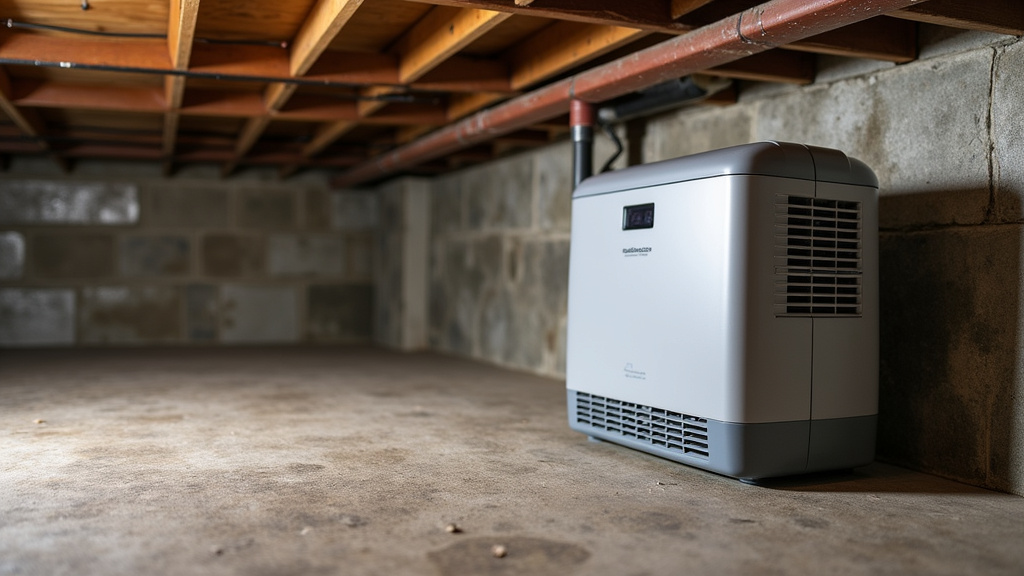
A crawl space dehumidifier works by drawing in moist air, removing the water vapor, and then releasing drier air back into the space. This continuous process lowers the overall humidity level.
Benefits of a Dehumidified Crawl Space
Once you implement a dehumidifier, you’ll start to see and feel the positive effects throughout your home.
| Problem Without Dehumidifier | Solution With Dehumidifier |
|---|---|
| Mold & Mildew Growth | Prevents growth by removing moisture |
| Wood Rot & Structural Damage | Protects wood, extends structural lifespan |
| Pest Infestations | Deters pests by eliminating damp habitats |
| Poor Indoor Air Quality | Improves air quality throughout your home |
| Musty Odors | Eliminates odors from moisture and mold |
| High Energy Bills (HVAC) | Reduces strain on your AC in summer |
Choosing the Right Dehumidifier
Not all dehumidifiers are created equal, especially for a crawl space. You can’t just drop any old portable unit down there and expect great results. There are specific features to look for.
Crawl Space Specific Models
We recommend choosing a dehumidifier designed specifically for crawl spaces or basements. These units are typically more robust, built to handle continuous operation in challenging environments, and often have higher capacity.
Key Features to Consider
- Capacity (Pints/Day): This indicates how much moisture the unit can remove daily. It needs to match the size and humidity level of your crawl space. We found that larger crawl spaces or very damp ones need higher capacity units.
- Automatic Drainage: Look for models with a hose connection for continuous drainage. This means you won’t have to manually empty a water collection bucket, which is a huge convenience in a crawl space.
- Built-in Humidistat: A humidistat allows you to set your desired humidity level, and the unit will turn on and off automatically to maintain it, saving energy.
- Low Temperature Operation: Crawl spaces can get cold, especially in winter. Ensure the unit can operate efficiently in lower temperatures without freezing up.
- Air Filtration: Some units include filters that can help remove airborne particles and improve the air quality even further.
- Energy Star Certified: An Energy Star rating means the unit is energy-efficient, saving you money on electricity bills over time.
Is Your Crawl Space Encapsulated?
You might have heard the term “crawl space encapsulation.” This is a process that seals off your crawl space from the outside environment, creating a cleaner, drier space. Does encapsulation negate the need for a dehumidifier?
Not necessarily. While encapsulation significantly reduces external moisture intrusion, it doesn’t eliminate all sources of moisture. Soil still contains some moisture, and air can still seep in from outside. We found that a dehumidifier is often an essential component of a successful encapsulation system, working in tandem to maintain optimal humidity levels.
Think of encapsulation as putting a lid on a pot, and the dehumidifier as gently simmering out any remaining steam. Both work together for the best outcome.
What is Encapsulation?
Encapsulation typically involves covering the crawl space floor with a heavy-duty vapor barrier, sealing foundation vents, insulating the walls, and sometimes sealing off access points. This process aims to create a semi-conditioned space.
Checklist for a Healthy Crawl Space
If you’re evaluating your crawl space, here’s a quick checklist to guide your thoughts:
- Is there a strong, musty smell?
- Do you see any visible mold or mildew?
- Are your floors feeling soft or sagging?
- Have you noticed an increase in indoor pests?
- Is there condensation on pipes or foundation walls?
- Is your home unusually humid indoors, especially downstairs?
Conclusion
Taking control of your crawl space humidity is a non-negotiable step for a healthy home. You’ve seen how a damp crawl space can silently undermine your property, from fostering mold and pests to compromising your air quality and structure. We found that investing in a quality crawl space dehumidifier is a proactive measure that pays dividends in comfort, safety, and home longevity.
Don’t wait for the musty smells or sagging floors to appear. If you’re experiencing any of the warning signs, or if you live in a humid region, it’s time to assess your crawl space. Protecting your home from moisture damage starts beneath your feet; take the first step towards a drier, healthier living environment today.
Frequently Asked Questions
What’s the ideal humidity level for a crawl space?
You should aim to keep your crawl space’s relative humidity between 30% and 55%. Levels above 60% create an environment where mold, pests, and wood rot can thrive. A hygrometer can help you monitor this accurately.
Can a regular home dehumidifier work in a crawl space?
While a regular portable dehumidifier might offer temporary relief, it’s generally not recommended for long-term use in a crawl space. These units aren’t built for the harsh, often cold, and dusty crawl space environment. They also require frequent emptying, which is inconvenient.
How much does it cost to run a crawl space dehumidifier?
The operating cost varies based on your electricity rates, the unit’s energy efficiency (look for Energy Star models), and how often it runs. Units with a humidistat and proper sizing can minimize energy consumption. It’s an investment that often saves money in the long run by preventing costly repairs.
Do I need to clean a crawl space dehumidifier?
Yes, regular maintenance is important for efficient operation and longevity. You should periodically clean or replace the air filter according to the manufacturer’s instructions. If your unit has a collection bucket, it should also be cleaned to prevent mold growth inside.
Where should I place a dehumidifier in my crawl space?
You should place the dehumidifier in a central location within your crawl space, away from walls, to allow for optimal airflow. Ensure it’s on a level surface. If you have a very large or compartmentalized crawl space, you might need more than one unit.