Can You Use a Dehumidifier in a Grow Tent?
On this page (11 sections)
- Using a Dehumidifier in Your Grow Tent
- Why Humidity Control is So Critical in a Grow Tent
- How a Dehumidifier Works Inside a Grow Tent
- Setting Up Your Dehumidifier for Success
- Practical Tips for Running a Dehumidifier in Your Tent
- Common Mistakes and How to Avoid Them
- Comparing Dehumidifier Types for Grow Tents
- Monitoring and Adjusting Your Setup
- Final Thoughts on Using a Dehumidifier in Your Tent
- Conclusion
- Frequently Asked Questions
Using a Dehumidifier in Your Grow Tent
Yes, you absolutely can and often should use a dehumidifier in a grow tent. It’s one of the best tools for controlling humidity and protecting your plants from mold and other issues.
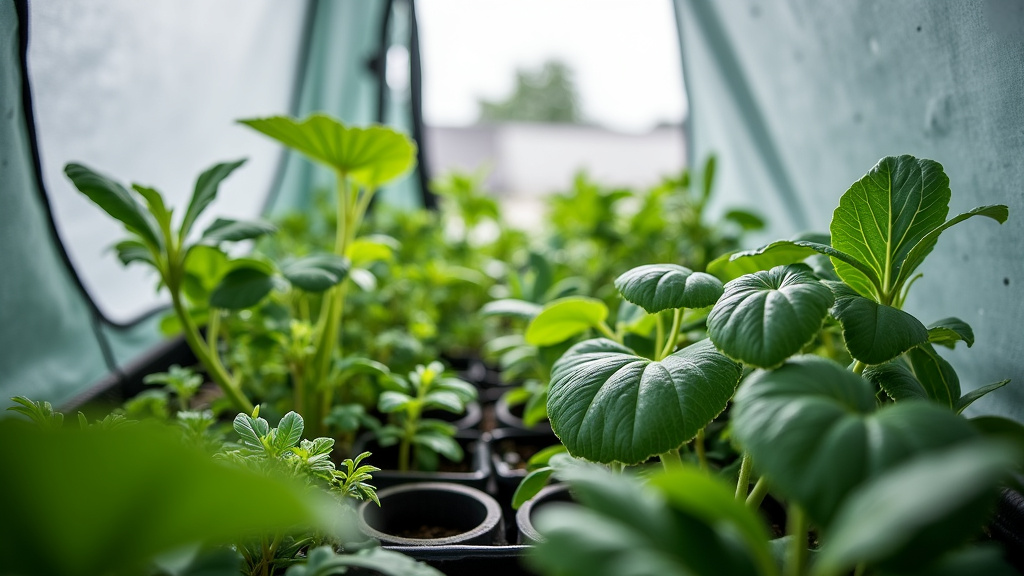
Think of your grow tent as a tiny, enclosed world. The plants inside are breathing, transpiring, and releasing moisture into the air. Without a way to manage that, things can get swampy fast. A dehumidifier steps in to pull excess moisture from the air, keeping the environment stable and healthy for your plants.
Why Humidity Control is So Critical in a Grow Tent
Controlling humidity isn’t just a nice-to-have; it’s a core part of successful indoor growing. Too much moisture creates a perfect breeding ground for problems. We found that many new growers underestimate how quickly humidity can rise inside a sealed tent.
The Real Dangers of High Humidity
High humidity is like a welcome mat for pests and diseases. When the air is heavy with moisture, your plants can’t transpire properly. This means they can’t move water and nutrients from their roots to their leaves. It slows their growth and can even cause nutrient deficiencies.
Mold, Mildew, and Root Rot
White powdery mildew is a common enemy of indoor growers. It thrives in humid conditions, often starting on the leaves. Another silent killer is root rot, where the roots suffocate in wet, oxygen-poor soil. Both are difficult to treat once they set in. Many guidelines point to keeping relative humidity between 40-60% during the vegetative stage to prevent this (Mayo Clinic).
Pest Infestations
Humid environments also attract pests like fungus gnats and spider mites. These pests love the damp, cozy conditions of a grow tent. A dehumidifier helps make the air less inviting to them.
How Humidity Affects Plant Growth
Your plants are communicating with the air around them. When humidity is too high, they close their stomata (tiny pores on their leaves) to prevent water loss. This stops photosynthesis, the process that makes them grow. It’s like trying to breathe in a steam room—uncomfortable and inefficient.
How a Dehumidifier Works Inside a Grow Tent
A dehumidifier is a simple machine. It pulls in humid air, cools it on coils, and condenses the moisture into water. This water collects in a tank or drains out via a hose. The machine then blows out drier, warmer air back into the tent.
Types of Dehumidifiers for Grow Tents
Not all dehumidifiers are the same. For a larger growing space, compare our grow room dehumidifier picks. For a grow tent, you’ll usually consider two main types. The best choice depends on your tent size and how much humidity you need to control.
- Desiccant Dehumidifiers: These use a special material to absorb moisture from the air. They work well in cooler temperatures, which is perfect for grow tents. They are often quieter but can be more expensive to run.
- Compressor Dehumidifiers: These are the more common, traditional type. They use a refrigerant to cool the air and condense moisture. They are very effective in warmer, humid environments and are often more energy-efficient.
Many experts say compressor models are the go-to for most grow tent setups because they balance cost and effectiveness (CDC).
Sizing Your Dehumidifier for the Tent
Getting the right size is key. A dehumidifier that’s too small will run constantly without making a difference. One that’s too large will over-dry the air. The rule of thumb is to get a unit rated for a space slightly larger than your tent. A good starting point is to match the pint capacity to the square footage of your tent. For example, a 50-pint dehumidifier might be good for a small 4×4 tent, while a larger 70-pint unit could be needed for a 5×5 or bigger.
Setting Up Your Dehumidifier for Success
Placement matters almost as much as the dehumidifier itself. You want to create a cycle of airflow that benefits the whole tent, not just one spot.
Best Placement Strategies
Place your dehumidifier near the bottom of the tent, on the floor. This is where the heaviest, most humid air tends to settle. Make sure the unit’s air intake and exhaust vents are not blocked by plants or equipment. We found that placing it near the intake or exhaust fan can help move the drier air throughout the space more evenly.
Using a Hygrometer is Non-Negotiable
You need to measure humidity to control it. A hygrometer is a small device that reads the relative humidity in the air. Place it at plant canopy level. Set it to alert you when humidity goes above or below your target range. This is your eyes and ears inside the tent.
Practical Tips for Running a Dehumidifier in Your Tent
Here is a checklist to get you started on the right foot. Keep these steps in mind for a smooth operation.
- Set a target RH range: Decide on your ideal relative humidity, usually 40-60% for most stages.
- Use a continuous drainage hose: Don’t rely on the bucket. It can overflow and cause water damage.
- Check the air filter regularly: A clogged filter makes the unit work harder and less efficiently.
- Monitor plant health: Watch for signs of stress, like wilting, which could mean the air is too dry.
- Consider a hygrostat: Some dehumidifiers have a built-in humidity sensor to turn on/off automatically.
- Pair it with an exhaust fan: Good airflow helps the dehumidifier do its job faster.
Common Mistakes and How to Avoid Them
Even with the right gear, it’s easy to make a few common errors. Avoiding these will save you headaches and protect your plants.
Over-Dehumidifying the Space
Dropping humidity too low can stress plants just as much as high humidity. Very dry air can lead to crispy leaf edges and slow growth. Always aim for a balanced, moderate humidity level. Think of it like finding the perfect room temperature for you—not too hot, not too cold.
Ignoring Ventilation and Airflow
A dehumidifier works best with good airflow. Don’t just turn it on and forget about your exhaust and intake fans. The dehumidifier removes moisture from the air, but the fans help circulate that drier air and bring in fresh air. They need to work as a team. Many growers found that poor ventilation can make a dehumidifier almost useless (NIH).
Forgetting about the Water Tank
If your dehumidifier fills up and the tank is full, the unit will shut off automatically. This leaves you with rising humidity. Use a hose for continuous drainage, or empty the tank regularly. It’s a simple step that prevents big problems.
Comparing Dehumidifier Types for Grow Tents
Choosing between compressor and desiccant dehumidifiers can be confusing. Here is a simple table to help you decide which might be better for your setup.
| Feature | Compressor Dehumidifier | Desiccant Dehumidifier |
|---|---|---|
| Best For | Warmer temperatures (above 65°F) | Cooler temperatures (below 65°F) |
| Energy Use | Generally more energy-efficient | Can use more electricity |
| Noise Level | Can be louder due to compressor | Often quieter operation |
| Cost | Lower initial cost, cheaper to run | Higher initial cost, more expensive to run |
| Durability | Long lifespan with maintenance | Good lifespan, but desiccant wheel needs care |
For most home growers, a compressor dehumidifier offers the best value and performance. However, if you run a cooler environment, like in a basement, a desiccant unit could be a better fit.
Monitoring and Adjusting Your Setup
Your job isn’t done once the dehumidifier is plugged in. You need to be an active manager of your tent’s environment. Check your hygrometer readings multiple times a day, especially during lights-on and lights-off cycles. Humidity can change quickly.
The Role of Your Exhaust Fan
Your exhaust fan is a partner in humidity control. It pulls humid air out of the tent. If you run it too high, it might pull out humid air before the dehumidifier can process it. If you run it too low, the air becomes stagnant. Find a balance where the fan runs steadily but not at maximum speed. This allows the dehumidifier to work on the air inside the tent more effectively.
Final Thoughts on Using a Dehumidifier in Your Tent
So, can you use a dehumidifier in a grow tent? Definitely. It’s a powerful tool that helps you create the ideal environment for your plants to thrive. It prevents mold, pests, and growth issues caused by excess moisture. By choosing the right size, placing it correctly, and monitoring the air, you set yourself up for a healthy, productive grow. For more precautions, read our guide to dehumidifier safety in grow tents.
Remember, every grow tent is a little different. You may need to experiment a bit to find the perfect settings. But with patience and the right equipment, you’ll be able to control humidity like a pro. Your plants will thank you for it.
Conclusion
To wrap it up, using a dehumidifier in your grow tent is a smart move for keeping your plants healthy and thriving. It helps prevent mold, pests, and growth issues by controlling moisture levels. Remember to choose the right size, place it near the bottom, and always monitor with a hygrometer. Your plants will benefit from a balanced, stable environment. Start by checking your tent’s current humidity and picking a dehumidifier that fits your space. Take that first step today to set your grow up for success.
Frequently Asked Questions
What is the ideal humidity level for a grow tent?
The ideal relative humidity for most grow tents is between 40-60% during the vegetative stage. During flowering, aim for 30-50% to prevent mold and mildew. Always adjust based on your plant’s specific needs and the growth stage.
Can I use a dehumidifier during the flowering stage?
Yes, using a dehumidifier during flowering is crucial for preventing bud rot and other issues. Lower humidity helps protect the buds and keeps the air dry. Monitor with a hygrometer and adjust settings to maintain the right level.
How do I know if my dehumidifier is the right size for my tent?
To size your dehumidifier, match its pint capacity to your tent’s square footage. For example, a 50-pint unit works well for a 4×4 tent. Always choose a unit rated for a slightly larger space to ensure effective humidity control.
Should I run my dehumidifier 24/7?
Not necessarily; it depends on your tent’s environment. Use a hygrostat to automate it and run it only when humidity rises. Some growers run it continuously, but others adjust based on daily readings to save energy.
What happens if my dehumidifier over-dries the air?
Over-dehumidifying can stress plants, causing crispy leaf edges and slow growth. Keep humidity in the 40-60% range. If the air gets too dry, reduce the dehumidifier’s runtime or adjust settings to balance moisture.