Dehumidifier vs Humidifier for Mold: Which to Use? (November 2026)
For mold concerns, choose a dehumidifier, not a humidifier. In this dehumidifier vs humidifier for mold comparison, a dehumidifier removes excess moisture, while a humidifier adds moisture and can make a damp room worse.
On this page (12 sections)
- Dehumidifier vs humidifier for mold: the direct answer
- The two types side by side
- Why a humidifier can make a mold problem worse
- Why a dehumidifier helps, and what it cannot do
- Coverage: matching the device to the room size
- Daily output: pints removed versus mist added
- Small spaces: closets, cars and cabinets
- Large and damp rooms: basements and living areas
- Dry bedrooms in winter: when a humidifier is the right call
- Care and cleaning for both device types
- Can you use both devices in one home?
- Which should you buy for mold: the verdict
For mold concerns, choose a dehumidifier, not a humidifier. A dehumidifier vs humidifier for mold choice is really a choice between removing moisture and adding it.
Mold needs moisture to grow, so the device that lowers humidity is the one that helps.
A humidifier has its own place in a dry bedroom in winter. It adds moisture when indoor air is too dry for comfort.
That help becomes a problem when a room already feels damp or musty.
We compared the specs for 2 dehumidifiers and 2 humidifiers here. The dehumidifiers state how much water they pull from the air, while the humidifiers state how much mist they put out.
 Best for bedrooms in winter
Levoit Humidifiers for Bedroom 4.2L Top Fill
Dehumidifier vs humidifier for mold: the direct answer
A dehumidifier is the right tool when mold is your concern, and a humidifier is the wrong tool for that job. A dehumidifier removes water from the air, which makes the room less friendly to mold growth.
A humidifier adds water to the air, which does the opposite.
This does not mean a humidifier is a bad device. It means it solves the opposite problem.
If your bedroom air is dry in winter and you wake with a dry throat, added moisture can feel better. If your basement or closet is damp, added moisture is the last thing you want.
Think about the cause first, not the device. A leak, poor ventilation or a cool surface that stays wet can keep a room damp.
A dehumidifier can lower humidity while you fix the source, but it cannot fix a leak on its own. Our guide on Are Dehumidifiers Good for Mold? explains that limit in more detail.
Dehumidifier vs humidifier for mold in plain terms
A dehumidifier pulls moisture out and collects it as water. A humidifier turns water into mist and releases it into the room.
When mold is the worry, you want the first action, not the second.
You can test the room with a simple check. If windows sweat or a closet smells musty, humidity is likely too high.
If skin and throat feel dry, humidity may be too low.
The two types side by side
The table below shows why these devices cannot swap jobs. The dehumidifiers list pints removed per day and square feet covered.
The humidifiers list litres of water added and mist output per hour.
| Device | What it does | Key capacity here | Coverage here |
|---|---|---|---|
| Eva-Dry Wireless Mini Dehumidifier | Removes moisture | 6 ounces, 0.38 pints per day | Up to 333 cubic feet |
| Levoit 4.2L Top Fill Humidifier | Adds moisture | 4.2L tank, 270 mL/h mist | Up to 432 ft² |
| Levoit Large Room Humidifier, 6.2L | Adds moisture | 6.2L tank, 320 ml/h mist | Up to 536 ft² |
| AEOCKY 5500 Sq.Ft Dehumidifier | Removes moisture | 80 pints per day | Up to 5500 sq.ft |
The numbers use different units because the jobs are different. Pints per day measures removal.
Litres and millilitres per hour measure addition.
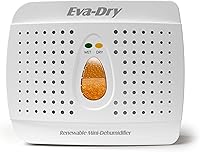
Eva-Dry Wireless Mini Dehumidifier: Best for closets and small spaces

- 6 ounces capacity
- Works for areas up to 333 cubic feet
- 100% cordless, no cables or batteries required
- Silica gel beads last 20-30 days before recharging
- Hanging hook included
Choose this mini unit for closets, cabinets, cars, boats and gun safes up to 333 cubic feet. It absorbs up to 6 ounces of moisture without cords or batteries and can be recharged when its beads turn green.
Pros
- Cordless and spill free
- Hangs or sits in small spaces
- Renewable silica gel design
Cons
- Small capacity for whole rooms
- Needs recharging every 20-30 days
- Only 0.38 pints per day
Levoit Humidifiers for Bedroom 4.2L Top Fill: Best for bedrooms in winter
- 4.2L tank capacity
- Up to 42 hours runtime in Sleep Mode
- 270 mL/h mist output
- 432 ft² coverage
- 21dB quiet Sleep Mode
Choose this humidifier for a dry bedroom that needs added moisture up to 432 ft². Its 4.2L tank runs up to 42 hours in Sleep Mode and its detachable tray is dishwasher safe.
Pros
- Long 42 hour runtime
- Quiet 21dB Sleep Mode
- Easy top fill and cleaning
Cons
- Adds moisture, so it is wrong for mold rooms
- Tank and silencer cover are hand wash only
- Needs regular cleaning to avoid build up
Levoit Humidifiers for Bedroom Large Room: Best for large dry rooms

- 6.2L tank capacity
- Up to 62 hours runtime
- 320 ml/h mist output
- 536 ft² coverage
- Auto Mode with ±5% sensor accuracy
Choose this larger humidifier for dry rooms up to 536 ft² that need steady moisture. Its 6.2L tank runs up to 62 hours and its Auto Mode aims to prevent over humidification.
Pros
- 62 hour runtime
- Covers 536 ft²
- Precise Auto Mode
Cons
- Adds moisture, so it is wrong for mold rooms
- Larger and heavier at 4.9 pounds
- Tank and silencer cover are hand wash only
AEOCKY 5500 Sq.Ft Energy Star Most Efficient: Best for basements and large damp rooms

- 80 pints per day capacity
- Covers up to 5500 sq.ft
- 1.45 gallon tank
- Drain hose included
- Adjustable humidity control
Choose this compressor dehumidifier for basements and large damp rooms up to 5500 sq.ft. It removes up to 80 pints per day and includes a drain hose for continuous use.
Pros
- 80 pints per day removal
- Large 5500 sq.ft coverage
- Drain hose included
Cons
- Large unit at 31 pounds
- Tank needs emptying if not drained
- Higher capacity than most small rooms need
Why a humidifier can make a mold problem worse
A humidifier can make a mold problem worse because it raises the moisture mold needs to grow. Mold spores are common indoors, and they grow on surfaces that stay damp.
The risk is highest in cool, still rooms. Basements, crawl spaces, closets and bathrooms trap moisture after showers, laundry or leaks, so added mist pushes conditions the wrong way.
Over humidification can also happen in a dry room. The larger Levoit uses Auto Mode with ±5% sensor accuracy to help prevent it, according to Levoit, because a humidifier set too high can overshoot.
Cleaning matters too. Levoit says to clean a humidifier before first use and replace the water filter regularly to avoid mold or mineral build up.
For hygiene, see Can Mold Grow in a Dehumidifier?.
Why a dehumidifier helps, and what it cannot do
A dehumidifier helps by lowering indoor humidity so surfaces dry out and stay dry. It does not kill existing mold on its own.
It makes the room less hospitable while you clean, repair and ventilate.
That limit is important. If mold is already visible on drywall, wood or fabric, you still need to clean or remove affected material.
A dehumidifier can help stop new growth by keeping the air drier after the cleanup.
Placement helps the device do its work. A large unit should sit where air can circulate around it, not pushed tight into a corner full of boxes.
A small closet unit should hang or sit inside the closet itself. Does Air Dehumidifier Help with Mold? covers how the air side of the problem works.
Drainage also affects how well a dehumidifier works over time. The AEOCKY includes a drain hose and garden hose adapter, so it can run continuously without stopping to empty a tank.
That matters in a basement that stays damp for weeks.
Coverage: matching the device to the room size
Coverage decides whether a device will help or just run without effect. A small unit will struggle in a large room, while a large unit in a closet is wasteful.
The Eva-Dry mini works for areas up to 333 cubic feet, such as a closet, cabinet or car. It absorbs up to 6 ounces and lasts 20 to 30 days before the silica gel beads need recharging, turning from orange to green.
The AEOCKY covers up to 5500 sq.ft and removes up to 80 pints per day in humid mid summer conditions. It also removes 56 pints per day in a warm, damp basement at 86℉ and 80% RH, according to AEOCKY.
On the humidifier side, the 4.2L Levoit covers up to 432 ft² and the 6.2L Levoit covers up to 536 ft², for bedrooms and living rooms, not moldy basements.
Daily output: pints removed versus mist added
Daily output tells you the strength of each device in its own job. The AEOCKY removes up to 80 pints per day.
The Eva-Dry removes 0.38 pints per day.
That gap is normal because one targets a basement and the other targets a closet.
The humidifiers work in a different unit. The 4.2L Levoit puts out 270 mL/h of mist.
The 6.2L Levoit puts out 320 ml/h. Those rates refill room air with moisture over hours, which is why they pair with long runtimes of 42 hours and 62 hours in Sleep Mode.
A high mist rate is good in a dry bedroom and bad in a damp basement. Match the output to the problem you actually have, not to the biggest number on the box.
Energy claims also need a careful read. AEOCKY says it holds ENERGY STAR Most Efficient 2025 certification and that only 2.6% of ENERGY STAR models earn that title.
That is a maker claim about efficiency, not a promise about your power bill.
Small spaces: closets, cars and cabinets
Small enclosed spaces need a small dehumidifier, not a humidifier or a large basement unit. A closet, gun safe, boat cabin or car holds a small amount of air, so a mini unit can keep it dry without cords.
The Eva-Dry is 100% cordless and needs no cables or batteries. It hangs by a hook or sits in place, weighs 1.5 pounds, and moves easily between a closet, car and boat.
It also suits places where a cord is a trip or leak risk. Cars, gym bags, cabinets and gun safes are the examples Eva-Dry gives, and the cordless design avoids spill issues in a moving vehicle.
The trade off is capacity. Six ounces of absorption and a 20 to 30 day recharge cycle will not dry a bedroom.
Use it where the air volume is small. For more help, our page on What Is the Best Dehumidifier for Mold? breaks down the small space choice.
Large and damp rooms: basements and living areas
Large damp rooms need a compressor dehumidifier with high pint capacity and continuous drainage. A basement can hold thousands of cubic feet of damp air and damp surfaces.
A mini unit will recharge too often and barely move the humidity.
The AEOCKY weighs 31 pounds and measures 14.45 x 8.66 x 24.09 inches, so it is a fixed appliance, not a portable helper. Its 1.45 gallon tank collects water when you do not use the drain hose.
Its lowest fan speed is 44dB, according to AEOCKY, which helps in a living space that connects to a basement.
Its smart humidity control and power off memory suit a basement that you do not check every day. It can resume after a power cut when used with a smart socket, according to AEOCKY.
That helps after storms, which is often when basements get dampest.
Low temperature performance matters in some basements. AEOCKY says the unit keeps working at low temperatures with defrost sensors, while ordinary compressor models can frost up under 65℉.
Dry bedrooms in winter: when a humidifier is the right call
A humidifier is the right call when a bedroom is dry, not when it is damp. Winter heating can drop indoor humidity and leave skin, eyes and throats feeling dry.
A humidifier adds moisture back into that air.
The 4.2L Levoit runs up to 42 hours in Sleep Mode and operates at 21dB in that mode. Its night light has two brightness levels and no blue light, according to Levoit.
Those details suit a bedroom where quiet and dark matter for sleep.
The 6.2L Levoit runs up to 62 hours and covers up to 536 ft², so it suits a larger bedroom or a nursery. Its detachable tray is dishwasher safe on the top rack with mild detergent and no heated drying, according to Levoit.
The tank and silencer cover are hand wash only.
Use purified or distilled water to avoid white dust or possible hums, according to Levoit. Clean the unit on a regular basis to avoid mold or mineral build up.
Care and cleaning for both device types
Both device types need regular care, but for opposite reasons. A dehumidifier collects water and can build up dust on filters and coils.
A humidifier holds standing water and can build up minerals and microbial growth.
For humidifiers, empty and dry the tank when you can. The Levoit detachable tray can go in a dishwasher once a week at most, with no settings above 70°C, according to Levoit.
The tank and silencer cover need hand washing only.
For the Eva-Dry, care means recharging the silica gel beads when the indicator turns green. The cycle is 20 to 30 days, and the unit is renewable for years of use, according to Eva-Dry.
For the AEOCKY, empty the 1.45 gallon tank on schedule or connect the drain hose. A full tank can stop the unit, which defeats the purpose in a damp basement.
Can you use both devices in one home?
You can own both devices, but you should not run them in the same room at the same time. A dehumidifier in a damp basement and a humidifier in a dry bedroom can both earn their place.
Running them together in one room wastes energy and cancels each other out.
Season also matters. A humidifier may help in January when heating dries the air.
A dehumidifier may help in July when summer humidity feeds mold in a cool basement.
If you are unsure whether your home needs both, start with a humidity reading in each room. A damp basement and a dry bedroom can exist in the same house.
Treat each room by its own reading, not by a single setting for the whole home. Our guide Do I Need a Dehumidifier and a Humidifier? walks through that decision.
Also consider the source of the moisture. A humidifier will not help a room that is already damp from a leak.
Fix leaks and ventilation first, then let the device match the room that remains.
Which should you buy for mold: the verdict
For mold, buy a dehumidifier sized to the room, and skip the humidifier for that room. Pick the Eva-Dry mini for a closet, car or cabinet up to 333 cubic feet.
Pick the AEOCKY for a basement or large damp room up to 5500 sq.ft.
Pick a humidifier only when a bedroom or living room is dry. The 4.2L Levoit suits a bedroom up to 432 ft² with long quiet runtime.
The 6.2L Levoit suits a larger dry room up to 536 ft² with Auto Mode control.
Do not use a humidifier to treat a mold concern. It adds the moisture that mold needs.
Do not expect a dehumidifier to remove mold that is already growing on a surface. Clean or remove affected material, fix the moisture source, then keep the air dry.
If you want the next step, read Can a Dehumidifier Get Rid of Mold? before you order. It explains what a dehumidifier can and cannot do for existing growth.
Then size the unit to your room and set a target humidity you can hold.
Frequently asked questions
Should I use a dehumidifier or humidifier for mold?
Use a dehumidifier for mold concerns because mold needs moisture to grow and excess humidity feeds it. A humidifier adds moisture to the air, so it can make damp rooms, basements and closets more likely to support mold growth.
Can a humidifier cause mold?
A humidifier can help create conditions where mold grows if it raises humidity too high or runs in a damp room. Regular cleaning helps, but a humidifier is still the wrong tool when your goal is to reduce moisture and control mold.
How large a dehumidifier do I need for mold?
Match the dehumidifier to the space, not just the mold spot. A mini unit for a 333 cubic foot closet will not dry a basement, while a unit rated for 5500 sq.ft is built for large damp areas.
Do I need a dehumidifier and a humidifier at the same time?
Usually not in the same room at the same time. One pulls moisture out and the other puts it back in, so they work against each other unless you use them in different seasons or different rooms.