How to Dehumidify a Warehouse?
On this page (8 sections)
- Keeping Your Warehouse Dry: Essential Dehumidification Strategies
- Understanding Warehouse Humidity and Its Dangers
- Choosing the Right Dehumidification Equipment
- Implementing a Dehumidification Plan
- Ongoing Maintenance for Optimal Performance
- A Quick Checklist for Warehouse Dehumidification
- Conclusion
- Frequently Asked Questions
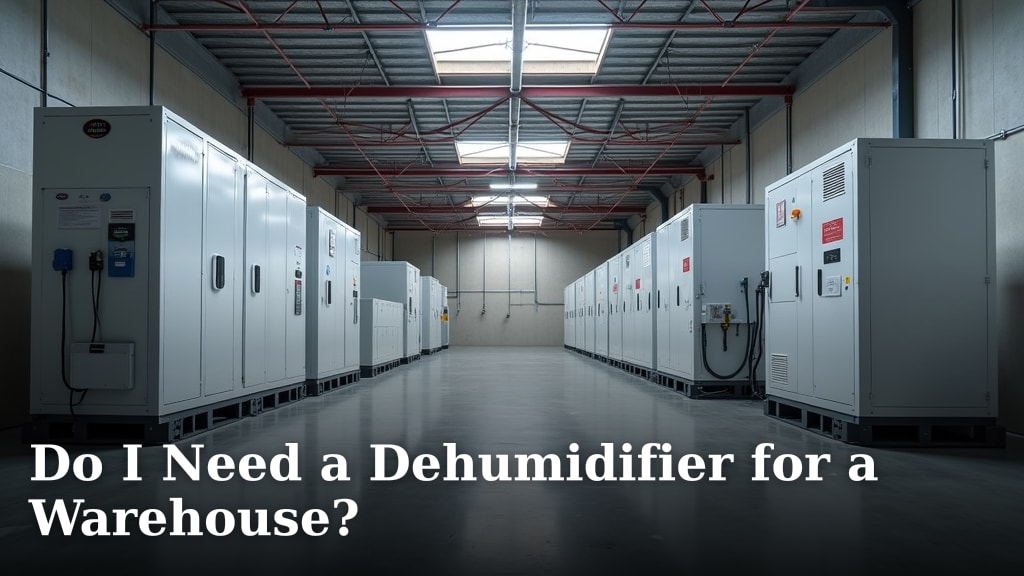
The best way to dehumidify a warehouse is to invest in commercial-grade dehumidifiers. These units are designed to handle large spaces and high humidity levels. Proper dehumidification helps prevent mold growth and protects your stored goods from damage. It’s an essential step for any warehouse manager.
High humidity in a warehouse can lead to serious problems. You might see condensation forming on surfaces. This moisture can damage inventory, leading to costly losses. It also creates an unhealthy environment for your staff. Addressing warehouse humidity is about protecting your investment and ensuring a safe workplace. We found that consistent monitoring is key.
- Use commercial dehumidifiers for large spaces.
- Maintain ideal humidity levels to prevent mold.
- Protect your inventory from moisture damage.
- Improve air quality for staff safety.
- Regularly check humidity readings.
Below, we’ll walk you through the most effective methods for tackling warehouse humidity. Let’s get your warehouse dry and your goods safe!
Keeping Your Warehouse Dry: Essential Dehumidification Strategies
A damp warehouse is like a leaky faucet. It seems small at first, but it can cause a surprising amount of damage over time. You’re probably wondering what the best approach is to manage moisture. We found that a multi-pronged strategy works best. This involves understanding the problem, choosing the right equipment, and implementing consistent maintenance.
Let’s break down how you can effectively dehumidify your warehouse. We want to help you protect your valuable inventory and create a healthier workspace. Your warehouse environment matters, and controlling humidity is a big part of that. It’s an investment that pays off by reducing spoilage and protecting your bottom line.
Understanding Warehouse Humidity and Its Dangers
Before we talk about solutions, let’s quickly touch on why high humidity is such a problem. Think of condensation. When warm, moist air hits a cooler surface, water droplets form. This is a common issue in warehouses, especially during certain times of the year. It can happen on walls, ceilings, and even your stored products.
This moisture creates the perfect breeding ground for mold and mildew. We found that even small amounts of mold can spread quickly. Mold not only damages goods, making them unsellable, but it can also cause respiratory problems for your employees. The U.S. Environmental Protection Agency (EPA) notes that mold exposure can trigger symptoms like coughing, wheezing, and shortness of breath.
What Are Ideal Humidity Levels?
So, what’s the magic number? Most experts recommend keeping warehouse humidity below 60% relative humidity (RH). For some sensitive goods, like electronics or certain foods, aiming for 40-50% RH is even better. Maintaining this level helps prevent condensation and inhibits mold growth.
We found that consistently monitoring these levels is key. Think of it like a thermostat for moisture. If it gets too high, you need to take action. If it’s too low, you might even have issues with static electricity, which can damage sensitive electronics. Finding that sweet spot is crucial.
Choosing the Right Dehumidification Equipment
This is where we get into the tools of the trade. Not all dehumidifiers are created equal, especially when you’re dealing with the square footage of a warehouse. You need industrial power.
Commercial-Grade Dehumidifiers: Your Best Bet
For most warehouses, investing in commercial-grade dehumidifiers is the most effective route. These units are built to handle larger volumes of air and extract more moisture than their residential counterparts. They are designed for tough, continuous operation.
When selecting a unit, consider the size of your warehouse and the typical humidity levels you experience. Manufacturers usually provide ratings based on square footage and pints of water removed per day. It’s better to oversize slightly than to undersize. We found that a unit that can handle 50-100 pints per day might be suitable for smaller warehouses, while larger facilities could need units that extract 100-200+ pints daily. Our guide on how to size a dehumidifier explains the factors to consider.
Types of Commercial Dehumidifiers
There are a few main types to consider:
- Refrigerant Dehumidifiers: These work like an air conditioner. They pull air over cold coils, condensing the moisture, which is then collected or drained. They are effective in warmer temperatures.
- Desiccant Dehumidifiers: These use a desiccant material (like silica gel) to absorb moisture from the air. They are excellent in cooler temperatures where refrigerant units might struggle. They can also achieve lower humidity levels.
The best choice depends on your warehouse’s typical temperature and the specific humidity reduction you need. Many experts suggest refrigerant models for general use and desiccant models for very cold environments or when extremely low humidity is required (CDC).
Portable vs. Installed Systems
Some commercial dehumidifiers are portable, meaning you can move them around your facility as needed. Others are designed for more permanent installation, often with a direct drainage option, so you don’t have to empty a tank constantly. For a warehouse, an installed system with continuous drainage is often more convenient and efficient.
Drainage Options: A Key Consideration
Think about how the collected water will be removed. You’ll likely have two main options:
- Internal Collection Tank: This requires regular emptying. For a large warehouse, this can become a full-time job!
- Continuous Drainage Hose: This is the preferred method for industrial settings. The dehumidifier pumps water out through a hose to a floor drain or larger collection system. This automates the process and saves significant labor.
Implementing a Dehumidification Plan
Purchasing the right equipment is only part of the solution. You need a plan for how to use it effectively.
Strategic Placement of Dehumidifiers
Where you put your dehumidifiers matters. Don’t just stick them in a corner. Place them in areas where you’ve noticed the most moisture or condensation. If you have particularly sensitive inventory, consider placing a unit nearby.
Ensure there’s adequate airflow around the unit. Dehumidifiers need space to draw air in and expel dry air. Blocking the vents will reduce their efficiency and could even damage the unit. Think of it like giving the machine room to breathe.
Ventilation and Airflow Management
Sometimes, the problem isn’t just moisture in the air, but moisture coming in. Sealing up cracks and gaps in your warehouse walls and doors can help. Also, consider your ventilation system. Can you control how much outside air comes in?
If your warehouse is prone to high humidity from external sources, you might need to rethink how you manage air exchange. Sometimes, running your HVAC system in a dehumidification mode, if available, can help. We found that many warehouse managers benefit from consulting with an HVAC professional to optimize airflow and ventilation.
Monitoring Humidity Levels Consistently
You can’t manage what you don’t measure. Invest in a few reliable hygrometers (devices that measure humidity) to place in different areas of your warehouse. Digital hygrometers are affordable and provide clear readings.
Some commercial dehumidifiers have built-in humidistats that allow you to set a target humidity level. The unit will then automatically turn on and off as needed. This automation is a lifesaver. We found that checking these readings daily, or at least several times a week, is a good practice. It allows you to catch issues before they become major problems.

Ongoing Maintenance for Optimal Performance
Like any machinery, your dehumidifiers will work best with regular care.
Regular Cleaning and Filter Changes
The filters on your dehumidifier will collect dust and debris. If they get clogged, airflow is reduced, and the unit’s efficiency plummets. Check your owner’s manual for the recommended cleaning schedule, but a good rule of thumb is to clean or replace filters monthly or bi-monthly, depending on your environment.
Also, keep the coils and fan blades clean. Dust buildup here can also hinder performance. Many experts recommend a thorough cleaning of the unit every 6-12 months. Keeping your dehumidifier clean is like giving it a fresh start, ensuring it can do its job properly.
Checking Drainage Systems
If you’re using a continuous drainage system, periodically check the hose for kinks or blockages. Ensure the water is flowing freely to the drain. A backed-up hose can quickly lead to a full collection tank or, worse, water pooling in your warehouse.
This is a simple step that can prevent major headaches. We found that a quick visual check of the drainage hose once a week can save you from dealing with a flooded area or an overloaded dehumidifier.
A Quick Checklist for Warehouse Dehumidification
Here’s a handy list to keep you on track:
- Identify high-moisture areas in your warehouse.
- Select commercial-grade dehumidifiers appropriate for your space.
- Ensure continuous drainage is set up if possible.
- Strategically place units for maximum airflow and coverage.
- Monitor humidity levels daily with hygrometers.
- Schedule regular cleaning and maintenance for your equipment.
Taking these steps will help you maintain a dry, safe, and productive warehouse environment. It’s all about staying ahead of the moisture and protecting what you’ve worked so hard to build.
Conclusion
You’ve learned that tackling warehouse humidity isn’t just about comfort; it’s about protecting your assets and ensuring a safe work environment. Investing in commercial-grade dehumidifiers, strategically placing them, and maintaining consistent airflow are your key strategies. Remember, regular checks and cleaning of your equipment are vital for long-term success. Don’t let moisture get the upper hand. Your next step is to assess your warehouse’s humidity levels and identify the best dehumidification solution for your specific needs. Start by getting a few reliable hygrometers to understand your current situation.
Frequently Asked Questions
How often should I run my warehouse dehumidifier?
You should run your dehumidifier based on the humidity levels in your warehouse. Many commercial units have built-in humidistats that allow you to set a target. The unit will then cycle on and off automatically to maintain that level, ensuring continuous protection without constant manual adjustment. Learn how long you should run your dehumidifier for optimal results.
Can I use a residential dehumidifier in a warehouse?
While a residential dehumidifier might work for a very small storage area, it’s generally not recommended for a full warehouse. Commercial units are designed for larger spaces, higher moisture loads, and continuous operation, making them far more effective and cost-efficient for industrial environments.
What’s the difference between refrigerant and desiccant dehumidifiers for warehouses?
Refrigerant dehumidifiers work like air conditioners and are best for warmer conditions. Desiccant dehumidifiers use absorbent material and excel in cooler temperatures, capable of achieving very low humidity levels. Your warehouse’s typical temperature and humidity goals will determine which type is best.
How do I know if my warehouse is too humid?
You’ll likely see signs like condensation on walls or stored goods, a musty smell, or visible mold growth. Investing in a hygrometer is the most reliable way to get an accurate reading; aim to keep your warehouse humidity below 60% relative humidity for optimal conditions.
What happens if I don’t dehumidify my warehouse?
Without proper dehumidification, you risk significant inventory damage from mold, mildew, and water rot. Condensation can ruin products, making them unsaleable and leading to financial losses. Furthermore, high humidity creates an unhealthy environment for your staff due to potential mold exposure.