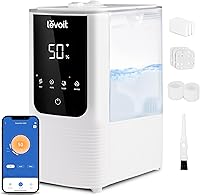
Is a Humidifier Good for Bronchitis?
A humidifier may make dry air feel more comfortable during bronchitis, but it does not treat the infection or replace medical care. Keep indoor humidity moderate, clean the unit often, and stop if breathing or allergy symptoms worsen.
On this page (8 sections)
- Is a humidifier good for bronchitis?
- How can moisture help with a bronchitis cough?
- Is cool mist or warm mist better for bronchitis?
- What should you look for in a humidifier?
- How do you clean a humidifier for bronchitis?
- Can blankets or warm socks help while you recover?
- Can a humidifier and dehumidifier be used together?
- When should you stop using a humidifier?
A humidifier may make dry air feel more comfortable during bronchitis, but it does not treat the infection or replace medical care. Use one only when the room air is dry, keep humidity moderate, and clean the unit carefully.
Bronchitis can cause coughing and airway irritation. Added moisture may feel soothing for some people, but too much moisture can support mold and dust mites, while a dirty humidifier can add unwanted particles to the air.
The Centers for Disease Control and Prevention explains that acute bronchitis often improves with time, but certain symptoms need medical attention. Read its information about acute bronchitis if you need help understanding when to seek care.
Is a humidifier good for bronchitis?
A humidifier can be useful for comfort when dry indoor air irritates your throat or airways. It will not kill the cause of bronchitis, shorten the illness, or replace advice from a doctor.
It may suit you best when heating has made the bedroom or living room feel dry and scratchy. In that setting, added moisture can make ordinary breathing and resting feel a little easier.
Use a humidity meter if you have one, and avoid turning the room damp. The goal is comfortable air, not visible mist covering furniture or condensation forming on windows.
Keep the unit running only while it helps, and turn it off when surfaces feel damp or the air already feels comfortable. That simple check helps you avoid adding excess moisture while you recover.
If you are deciding between appliances, our guide to best air humidifiers for home explains the main types and features. For cough-focused choices, see best humidifier for cough as well.
The right choice depends on care as much as comfort. Pick a model you can empty, wash, and dry without trouble, and place it where mist will not settle on bedding or nearby furniture.
How can moisture help with a bronchitis cough?
Moist air may make a dry throat feel less scratchy and may make coughing feel less harsh for some people. That comfort is different from treating inflammation or infection.
Keep the humidifier near enough to affect the room without directing mist at bedding, walls, electronics, or furniture. Empty standing water when the unit is not in use, and follow the care instructions for the model.
A humidifier also shouldn't be used as a reason to ignore warning signs. Breathing difficulty, chest pain, blue lips, confusion, or coughing blood needs prompt medical attention.
Should you use a humidifier overnight?
You can use one overnight if the room stays comfortable and the unit remains clean. Keep it on a stable, water-resistant surface and place cords where nobody can trip over them.
A sleep setting may help reduce light and sound, but it does not remove the need for cleaning. If you wake with more congestion, notice condensation, or feel that the room is damp, turn it off and check the humidity.
For nighttime coughing, read best humidifier for coughing at night for features that matter during sleep.
Is cool mist or warm mist better for bronchitis?
Cool mist is often the simpler choice around children because it does not use hot water or steam. Warm mist can feel pleasant to some adults, but hot surfaces and heated water create burn risks.
Neither option is a bronchitis treatment, and neither one changes how long the illness lasts. Think of the mist type as a comfort and safety choice rather than a medical one.
Cool mist may suit a shared family room or a child's bedroom because there is no heated water to spill. It also avoids a warm surface that curious hands could touch while the unit sits within reach.
Warm mist may suit an adult who finds the gentle warmth more soothing while resting. Even then, the unit needs careful placement away from bedding, cords, and anyone who might knock it over.
Set up either type on a stable, water resistant surface and keep the outlet turned away from walls and furniture. A short distance from the bed is usually enough, since mist should spread through the room instead of settling nearby.
Cleaning access matters just as much as mist type. A wide tank opening, a removable tank, and parts you can dry fully will make regular care easier.
Noise and controls also deserve attention during recovery. A quieter unit with simple settings may be easier to use at night, while bright lights or complex controls can become a nuisance.
Neither mist type will help if the room becomes too humid. Watch for condensation, a musty smell, or damp bedding, and switch the unit off when those signs appear.
Choose cool mist if safety around children is your main concern. Choose warm mist only if you prefer that feel and can manage the extra care around heat.
Our comparison of warm or cool humidifier for cough covers the practical differences. If you specifically want a cool-mist model, see best cool mist humidifier for bronchitis.
Once you pick a type, keep the same routine every day. Empty stale water, clean the unit as directed, let parts dry, and stop using it if symptoms worsen.
What should you look for in a humidifier?
Look for easy cleaning, a tank you can empty fully, stable placement, and controls that let you avoid excessive moisture. A larger tank is not automatically better if it is difficult to lift, wash, or dry.
Top filling can make refills easier, while a wide opening can make it easier to reach the inside. An auto shut-off feature can stop operation when the water runs out, but it does not replace supervision or regular care.
Does the Homvana Cool Mist Humidifiers for Bedroom fit this use?
The Homvana Cool Mist Humidifiers for Bedroom has a 3.6-liter tank, top filling, a detachable tank, and a 5.3-inch opening for filling and cleaning. It is a corded electric ultrasonic unit with touch controls and a grey plastic body.
It is sized for a bedroom and lists a floor area of 161 square feet. Its features include a 23 dB quiet setting, display-off sleep mode, auto shut-off, a carbon filter, a 360° rotatable outlet, and a 7-color night light.
The unit also includes an aroma diffuser, with a built-in pad for 2–6 drops of essential oil. The box includes the humidifier body, power cord, user manual, and cleaning brush.
Choose it if you want a cool-mist humidifier with a larger tank and added light or aroma functions. Skip those features if you prefer a basic unit with fewer parts to manage, or if fragrance irritates your airways.
How do you clean a humidifier for bronchitis?
Empty the tank regularly, clean the parts according to the manual, and let them dry fully. Stale water and buildup can make a humidifier less suitable for a room where someone is already coughing.
Unplug the unit before cleaning. Do not put electrical parts under water, and do not mix cleaning chemicals.
Use fresh water as directed, and don't leave water sitting in the tank between uses. If you see slime, a strong odor, heavy mineral buildup, or damaged parts, stop using the unit until it has been cleaned or replaced.
Hard water can leave mineral deposits. A filter may reduce some buildup, but it does not make cleaning optional.
Can blankets or warm socks help while you recover?
Warm clothing and bedding can improve comfort without changing the humidity. They may help you stay comfortable while resting, but they do not treat bronchitis or make a humidifier safer.
The Bedsure GentleSoft Sherpa Fleece Throw Blanket is a non-heated, 50 x 60 in throw made from 100% polyester. It has 220 GSM velvety flannel on one side and 260 GSM Sherpa on the other, with a solid grey pattern and machine-wash care instructions.
Choose it if you want a soft layer for a couch, bed, travel, or a pet. It is a comfort item, so it cannot replace fluids, rest, medical advice, or treatment prescribed by a health professional.
The Alvada Mens Merino Wool Crew Socks Thermal come as 3 pairs and are designed for winter work, hiking, and running. Their material blends merino wool and nylon, with cushioning in the footbed and cold-wash care.
Choose them if cold feet make resting harder and you want several pairs. They are not a bronchitis remedy, and anyone sensitive to wool should stop wearing them if they cause skin irritation.
Can a humidifier and dehumidifier be used together?
Use a humidifier only when the air is too dry, and use a dehumidifier when indoor moisture is too high. Running both without checking humidity can waste energy and make the room harder to balance.
Condensation on windows, a musty smell, or damp surfaces can signal excess moisture. Dry throat and static can suggest dry air, but a meter gives you a better basis for deciding.
Read Do I Need a Dehumidifier and a Humidifier? for situations where both appliances may have a role. If you're unsure which one fits the room, see Do You Need a Humidifier or Dehumidifier?.
When should you stop using a humidifier?
Stop using it if coughing, wheezing, congestion, or breathing discomfort gets worse after the unit runs. Also stop if the room develops condensation, the appliance smells bad, or you cannot keep it clean.
A humidifier is a comfort tool, not a diagnosis. Ask a health professional about symptoms that are severe, worsening, unusually long-lasting, or linked to an existing lung condition.
For everyday use, pick the humidifier that you can clean consistently and operate safely. Use the Homvana for a bedroom-sized space if its 3.6-liter tank and added features suit you, choose warm or cool mist based on safety and comfort, and keep blankets or socks as separate comfort choices rather than medical treatments.
Frequently asked questions
Is a humidifier good for bronchitis?
A humidifier may make dry air feel less irritating and can add comfort while you recover, but it does not treat bronchitis. Keep the room at a moderate humidity level, clean the unit as directed, and seek medical advice for severe, worsening, or long-lasting symptoms.
Is warm or cool mist better for bronchitis?
Neither mist type treats bronchitis. Cool mist avoids hot water and steam near children, while warm mist may feel comfortable to some adults.
Choose a unit that is easy to clean, place it safely, and keep humidity from becoming excessive.
Can a humidifier make bronchitis worse?
Yes, a dirty humidifier can spread minerals or microorganisms into the air, and excessive humidity can encourage mold and dust mites. Stop using it if symptoms worsen, clean it regularly, and use a humidity meter to avoid making the room damp.
When should you call a doctor for bronchitis?
Contact a health professional for trouble breathing, chest pain, coughing blood, dehydration, confusion, or symptoms that are severe or getting worse. A cough that continues longer than expected also deserves medical advice, especially for a child, older adult, or person with a long-term lung condition.