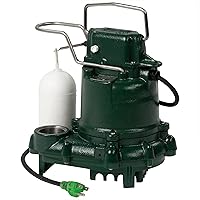
Basement Sump Pumps: The Complete Buying Guide
A sump pump for basement should match your water load, basin size and discharge height, usually with a 1/3 HP submersible as the starting point for most homes. Add a backup plan and a maintenance routine, and you can keep the basin empty during heavy rain without surprises.
On this page (11 sections)
- What types of sump pump for basement should you choose?
- How do you size a sump pump for basement water flow?
- What does horsepower mean for a basement sump pump?
- Which Zoeller models fit a basement sump pump search?
- When do you need a condensate pump instead?
- How do you install a sump pump for basement use?
- What parts and accessories complete the system?
- How do you plan backup power and quiet operation?
- How do you maintain a sump pump for basement reliability?
- Explore sump and condensate pumps by topic
- How do you choose the right sump pump for basement protection?
A sump pump for basement is a basin pump that lifts groundwater out of your home before it spreads across the floor. It sits in a pit at the lowest point, senses rising water and sends that water through a discharge pipe to a safe point outside.
The quiet answer many buyers want is simple. A standard 1/3 HP automatic submersible handles most homes, while bigger or longer discharge runs may need more power.
Think of the system in parts. The basin collects water.
The pump moves it. The discharge pipe carries it away.
The check valve stops water from flowing back. The switch starts and stops the pump.
Power, including a backup plan, keeps it running. If any part fails, the rest cannot do its job alone.
That is why this guide covers pump types, capacity, installation and maintenance together.
We compared the pump types and checked the specs for the models below. Two are true basement sump pumps.
Two are condensate pumps for HVAC and dehumidifiers, which solve a different but related problem in many basements. Knowing the difference helps you buy the right tool for the water you actually need to move.
What types of sump pump for basement should you choose?
Submersible pumps are the default choice for most basements. They sit fully inside the basin, stay cool in the water and usually run quieter than a pedestal model.
A submersible also fits a standard basin depth and lid, which makes it the easiest type to install in an existing pit.
Pedestal pumps sit above the basin on a tall column, with only the inlet at the bottom. They make service easier and can fit a shallow basin, but they take up vertical space and may be louder.
They also have fewer moving parts in the water, which some owners like for simple maintenance.
Condensate pumps are smaller pumps that lift condensation from air conditioners, furnaces, dehumidifiers and refrigeration gear. They are not a substitute for a basement sump pump that must handle groundwater.
They move small amounts of water from a tank, often with an overflow switch that can shut down the appliance if the tank fills.
For a first purchase, our pedestal vs submersible sump pump comparison walks through fit, noise and service access in plain terms. If sides of the basin are tight, a low profile submersible is often the better fit.
If the pit is shallow and you want the motor out of the water, a pedestal may make sense.
Fit also depends on basin diameter and lid clearance. A submersible such as the Zoeller M63 measures about 10.25 inches long by 7.75 inches wide by 10.25 inches high and weighs 10 pounds, so it needs a basin that allows the float to travel.
The Zoeller M53 Mighty-mate measures about 9.96 by 7.95 by 10.16 inches, which gives a similar footprint for standard pits. A pedestal avoids that full body footprint but needs headroom above the basin for the column and motor.
How do you size a sump pump for basement water flow?
Size by gallons per hour at your lift height, not by horsepower alone. Horsepower gives a rough sense of power, but flow at the height you must push water tells you how fast the basin will empty.
A pump that moves a lot of water at 5 feet may move far less at 15 feet.
Find your lift first. Measure from the water level in the basin to the highest point of the discharge pipe outside.
Add a little margin for bends and winter conditions. Then compare the pump curve or the stated gallons per hour at that lift.
If the numbers are close, choose the pump with more capacity at the height you need.
For most homes with a normal basin and a discharge run under about 15 feet, a 1/3 HP pump is a sound starting point. Our best 1/3 hp submersible sump pump guide explains why that size covers so many cases.
If your run is long, your lift is high or your area gets heavy inflow, step up in power rather than hoping a smaller pump will keep up.
You can also compare our best 1/2 hp submersible sump pump picks when you want more flow at height. More power helps, but it does not fix a discharge pipe that is too small, clogged or pointed at a spot where water can return to the foundation.
How do you measure lift and inflow in a real basement?
Measure lift with a tape from the basin water line to the top of the discharge exit. Note every elbow, since each bend adds friction and lowers flow.
A home with a high side exit may have a lift near 15 to 19 feet, which changes the pump class you should buy.
Inflow is harder to measure, but you can time how fast water rises in the basin during rain. If the basin fills in minutes, you need a pump that empties it faster than new water arrives.
A slow seep may suit a smaller pump, while fast inflow points to a higher gallons per hour rating at your exact lift.
What does horsepower mean for a basement sump pump?
Horsepower is a rough power label, not a full measure of performance. A 1/3 HP pump can outperform a poorly matched larger pump at a given lift if its flow curve is better suited to your setup.
Always check gallons per hour at 5, 10 and 15 feet where that data is available.
A 1/2 HP pump often suits basements with higher lift, larger basins or strong groundwater inflow. It can empty the basin faster and cycle less often during a long storm.
The trade off is size, weight and power draw, so a bigger pump is not automatic for every home.
A 3/4 HP or 1 HP pump may be right for high water tables, finished basements with costly damage risk or properties where water arrives fast. For the brand many buyers ask about, see our wayne sump pump reviews, including notes on wayne 1 hp sump pump, wayne sump pump 1 hp and wayne sump pump 3/4 hp options.
Those higher power models still need the right discharge pipe and basin to work well.
Cast iron construction can help with heat dissipation and long service life. Our best 1/3 hp cast iron sump pump and best cast iron sump pump 1/2 hp guides break down when that build is worth choosing.
For a wider look at basement cast iron models, see best cast iron sump pumps for basements.
Horsepower also affects physical size and handling. The Zoeller M63 is listed at 3/10 HP and 10 pounds, while the M53 is listed at 1/3 HP with a maximum lifting height of 19.25 feet.
That lift figure matters more for many buyers than the small gap between 0.30 and 0.33 HP. A pump that can still move water near the top of the run will cycle less than a pump that is near its limit.
Which Zoeller models fit a basement sump pump search?
Zoeller is a name many plumbers and homeowners know well. Its M63 and M53 are both automatic submersible sump pumps aimed at basement use, with cast iron housings and vortex impellers.
That shared design helps them pass solids and reduce clogging compared with a basic impeller design.
The Zoeller M63 is a 3/10 HP automatic submersible with up to 4320 gallons per hour stated by Zoeller, a cast iron motor housing and a built in snap action float switch. It also includes a 9 foot cord and an LED plug so you can check power at a glance.
Stainless steel hardware on the float guard and switch arm resists corrosion, and Zoeller backs this model with a 5 year limited warranty.
The Zoeller M53 Mighty-mate is a 1/3 HP submersible with a float activated switch, a non clogging vortex impeller and cast iron switch case, motor and pump housing. Its maximum lifting height is 19.25 feet, which suits many standard discharge runs.
It has a 9 foot cord with LED plug as well, based on the product data for this model.
If you want more Zoeller context, read our best zoeller sump pumps for basements. For comparison with other brands, our best submersible sump pump for basement roundup places these models in a wider field.
Buyers often mention the LED plug as a simple way to confirm power before a storm.
Construction details help explain the price and service life gap between basic and premium pumps. Zoeller describes an oil filled motor and cast iron housing for heat dissipation on the M63, plus an epoxy coated finish that resists wear in harsh conditions.
The M53 also uses cast iron for the switch case, motor and pump housing, with a plastic base in the listed specs. Both designs use stainless steel hardware on moving parts, which reduces rust where water sits for long periods.
When do you need a condensate pump instead?
A condensate pump handles water from cooling and dehumidifying equipment, not groundwater rising around your foundation. Air conditioners, furnaces, dehumidifiers and refrigeration units produce condensate that must be lifted to a drain or outside point.
A small tank pump with a float switch does that job in a tight space.
The Little Giant VCMA-20ULS is a 1/30 HP automatic condensate removal pump for HVAC and refrigeration systems and dehumidifiers. It moves 80 gallons per hour at 1 foot of lift, has a 20 foot shut off and includes an overflow detection switch.
The package includes a 1/2 gallon tank, a barbed discharge adapter with check valve and a 6 foot cord. Its ABS tank and volute, stainless steel motor shaft and thermal overload protection support steady use, and Zoeller style brands are not the only names in this category.
The Little Giant VCMA-15ULST is a 1/50 HP automatic condensate pump that moves 65 gallons per hour at 1 foot of lift. It includes 20 feet of 3/8 inch vinyl tubing, an overflow detection switch and a 1/2 gallon tank.
Its 15 foot shut off and 6 foot cord suit shorter lifts where the drain point is not far above the unit. Both Little Giant models use ABS construction and a stainless steel motor shaft, with thermal overload protection.
For HVAC condensate, see our best condensate pump for hvac guide. If a dehumidifier is part of the same basement plan, our Best Dehumidifier For Basement With A Sump Pump and Best Pump Dehumidifier For Basement posts help you match the two systems.
The spec gap between the two Little Giant models is clear in the numbers. The VCMA-20ULS draws 1.5 amps and 93 watts at 115 volts, weighs 4.1 pounds and is rated to 8.7 PSI with a 20 foot shut off.
The VCMA-15ULST draws 1.0 amp and 60 watts, weighs 5.1 pounds with tubing included and is rated to 6.5 PSI with a 15 foot shut off. Both measure 11 by 5 by 7 inches, both use three 1 and 1/8 inch inlet holes and both handle water up to 140 degrees F.
Choose the stronger VCMA-20ULS for higher lift or heavier condensate load, and the VCMA-15ULST when the included 20 foot tubing saves a separate purchase.
How do you install a sump pump for basement use?
Installation starts with the basin, discharge route and power outlet, not just the pump itself. A good pump in a poorly planned system will still fail.
Map where water enters, where it must exit and how you will reach each part for service. A typical basin is a large plastic or concrete pit set into the floor at the lowest point, and the pump sits level at the bottom.
The discharge pipe rises from the pump, exits the house and ends where water can drain away from the foundation. The end should be far enough out that water does not soak back toward the basin.
A check valve on the discharge line stops water from draining back when the pump stops. Without it, the pump will cycle on and off as water returns, wasting power and wearing the switch.
Our best sump pump check valve guide explains sizing and placement. The discharge hose or pipe size must match the pump outlet, and our best sump pump discharge hose guide covers common hose choices.
Use a dedicated outlet where possible, keep cords out of standing water and make sure the float can move without hitting the basin wall or discharge pipe. If you are not comfortable with electrical work or cutting a discharge route, hire a plumber or licensed electrician.
A short sump pump vs grinder pump check can also confirm you do not need a grinder pump for sewage or slurry, which is a different job.
For condensate pumps, installation follows a different path. The VCMA-20ULS and VCMA-15ULST each have a 1/2 gallon tank, a 6 foot cord and a barbed discharge with a built in check valve.
The tank must sit level so the vertical switch and overflow detection switch work as intended. The overflow switch can shut down the appliance or trigger an alarm, but the alarm itself is not included and basic wiring knowledge is required.
Remove the cardboard insert marked REMOVE before first use, since leaving it in will cause the pump to overflow. Check the tubing for obstructions or kinks and clean or replace it if needed.
What parts and accessories complete the system?
A pump alone is only one part of a working water removal system. The basin lid, check valve, discharge pipe, hose clamps, float switch clearance and backup power all affect daily performance.
Missing one part can turn a strong pump into a weak system. A sealed lid helps keep debris out and reduces humidity and noise, which also helps in a finished basement.
Replacement parts matter over time, so our best sump pump parts guide lists common switches, valves and fittings. A complete best sump pump kit can save a trip, but check that every part matches your pump outlet and discharge size.
For condensate systems, parts differ. Our best condensate pump parts guide covers tanks, switches and tubing for HVAC condensate pumps.
If your condensate pump stops working, our condensate pump not working guide helps you check power, float movement, tubing blockages and the overflow switch before you replace the unit.
Brand choice also matters for parts and support. Our everbilt sump pump reviews cover a widely sold store brand, our best sump pump liberty guide covers Liberty models, and our superior sump pump reviews cover Superior Pump options.
Our best sump pump little giant guide covers Little Giant sump and utility pumps beyond the condensate models above.
Included parts shape first project cost and time. The VCMA-20ULS includes the pump with 6 foot cord and 1/2 gallon tank, a barbed discharge adapter with check valve, an installation manual and the overflow detection switch.
The VCMA-15ULST includes the same core parts plus 20 feet of tubing. The Zoeller M63 and M53 are listed as product only, so plan for a check valve, discharge pipe, clamps and lid separately.
How do you plan backup power and quiet operation?
Backup power matters because storms that bring the most water often bring power outages too. A primary pump that stops during an outage can let the basin fill in hours.
A battery backup or water powered backup can keep water moving until power returns or you can act.
Our best battery backup sump pump system guide explains battery capacity, alarms and runtime limits. A backup is not a full time replacement for the primary pump.
It is a bridge that buys time during an outage. Test the backup on the same schedule as the primary pump, and replace the battery before it weakens.
Noise matters in finished basements and homes with bedrooms near the utility area. A submersible pump is often quieter than a pedestal because the water and basin absorb some sound.
For low noise priorities, see our best quiet sump pump guide. A discharge pipe that vibrates against framing can also hum, so secure the pipe and keep it from touching the basin lid.
Outdoor use is a separate question. A pump rated for indoor sump use may not suit a yard, pond or outdoor pit.
Our best sump pump for outdoor use guide covers outdoor rated choices. For a tight space under a sink, our best sump pump under sink guide covers small basin options that a full size basement pump would not fit.
The LED plug on the Zoeller M63 and M53 adds a simple power check that complements a backup plan. Zoeller notes the LED plug lets you verify power at a glance, which helps you spot a tripped outlet or unplugged cord before water rises.
That visual cue does not replace a battery backup, but it reduces the chance that a silent power fault goes unnoticed for weeks. For condensate pumps, the overflow detection switch plays a similar guard role by shutting down the appliance or sounding an alarm when the tank fills, though the alarm device is not included with the Little Giant models.
How do you maintain a sump pump for basement reliability?
Maintenance keeps the switch free, the inlet clear and the discharge open. Most failures come from simple causes that a short routine can catch.
Stuck floats, clogged inlets, frozen discharge lines and dead outlets cause most of the trouble. Test the pump every few months by pouring water into the basin until the switch turns on, then watch it pump down and shut off.
Confirm the check valve holds, since water should not rush back after shut off. Check the outside discharge end for ice, mulch, soil or a blocked splash block, especially after winter.
Clean the basin and inlet screen so mud, grit and debris do not choke the pump. Make sure the float moves through its full range without rubbing the wall, pipe or lid.
Listen for new grinding, rattling or long run times, which can point to a worn impeller, a weak motor or a discharge restriction. Pedestal pumps need a check of the column and inlet screen, while condensate pumps need tank cleaning and tubing checks, since algae and sediment can block small lines.
For the Little Giant condensate models, remove the cardboard insert marked REMOVE before first use, since leaving it in can cause overflow. Also check tubing for kinks or blockages during setup.
Our best pedestal sump pump guide covers pedestal care in more detail. Read our best sump pump kit notes again if a test shows a worn switch or valve, and replace parts early.
Test before spring thaw and before fall rain, when ground saturation is high and discharge lines are most likely to freeze or clog. For the Little Giant models, check the three inlet holes and discharge tubing for sediment, since the 3/8 inch line can block faster than a full size sump discharge.
For Zoeller submersibles, check the vortex impeller area and float guard for grit, and confirm the LED plug still lights when power is applied. A five minute test each quarter reveals a sticky switch long before a storm.
Explore sump and condensate pumps by topic
- Best Cast Iron Sump Pumps for Basements
- Pedestal vs Submersible Sump Pump: Which Should You Choose?
How do you choose the right sump pump for basement protection?
The right choice comes down to your lift height, basin size, inflow rate and backup plan. Start with the lift, then match flow at that height.
Add a check valve, a clear discharge path and a test routine. That order prevents most buying mistakes.
Pick a 1/3 HP submersible for a typical home with a standard basin and moderate lift. Step up to 1/2 HP or more for high lift, long runs or heavy inflow.
Choose pedestal only where basin depth or service access favors it. Choose a condensate pump only for HVAC and dehumidifier water, never as a groundwater sump pump.
For a basement that also needs moisture control, pair the sump system with a dehumidifier plan. Our best dehumidifier for basement with a sump pump post shows how the two systems work together.
Energy and running cost also matter over a pump's life, so compare flow at height and cycle behavior rather than horsepower alone.
Our score for each product weighs specs, features and buyer feedback against what you are shopping for. The Zoeller models score high here because they speak directly to basement sump use, with cast iron housings, vortex impellers and automatic switches.
The Little Giant models score for condensate jobs, where their overflow switch, tank and tubing solve a real basement problem, even though they do not replace a primary sump pump.
Warranty and certification add a final tie breaker in close calls. The Zoeller M63 carries a 5 year limited warranty in the listed data, while both Little Giant condensate models carry a 1 year manufacturer warranty and CSA certification to US and Canadian standards.
The VCMA-20ULS and VCMA-15ULST also use thermal overload protection and fan cooled motors, with rated temperatures up to 140 degrees F for condensate from high efficiency furnaces and condensing boilers. Match those details to your risk tolerance, then confirm that the basin, discharge and backup plan support the pump you selected.
Frequently asked questions
What size sump pump do I need for a basement?
Most homes start with a 1/3 HP pump, because it balances flow and lift for a typical basin and discharge run. Check the lift height and gallons per hour at that height before you buy, since a pump that moves less water as it pushes higher may cycle too long in wet weather.
How often should I test a sump pump for basement use?
Test it every few months and before the wet season by pouring water into the basin until the switch turns on. Listen for steady operation, watch the discharge outside, and confirm the float moves freely.
Replace a pump that hesitates, sticks or runs without moving water.
Do I need a battery backup for a basement sump pump?
A battery backup helps when a storm knocks out power at the same time water is rising. It will not run forever, but it can carry the pump through a short outage.
A water powered backup is another option where water pressure and local rules allow it.
When should I replace a sump pump?
Plan to replace a primary pump about every 7 to 10 years, or sooner if it gets louder, cycles more often or struggles to empty the basin. Age alone is not the only sign.
Weak flow, sticky switches and visible wear all point to a replacement.