Can You Leave a Dehumidifier Running While on Vacation?
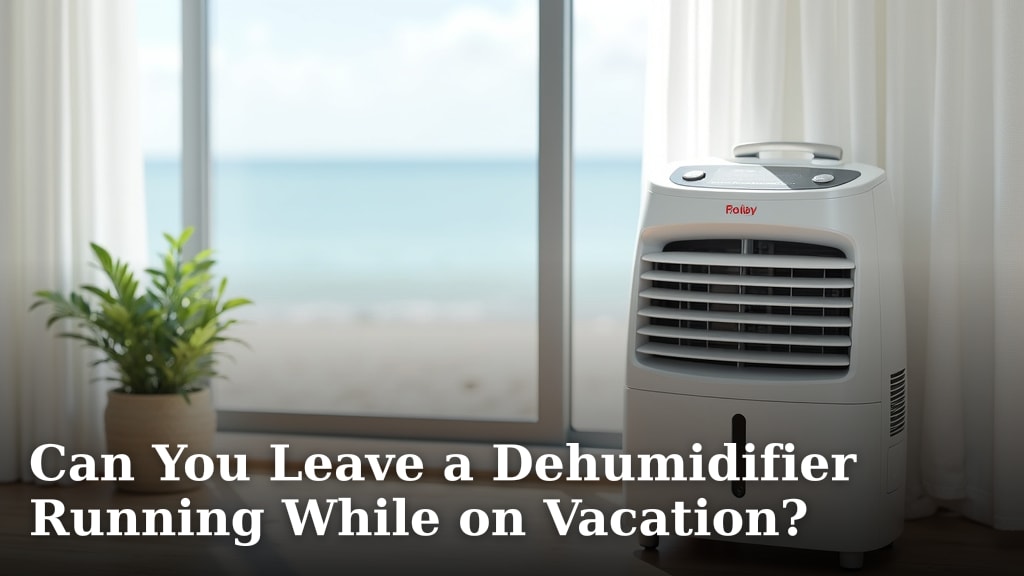
Yes, you can leave a dehumidifier running while on vacation, but with some important precautions. Most modern units are designed for continuous operation. We found that proper setup ensures both safety and effectiveness.
Leaving your home for an extended period often means worrying about humidity. A dehumidifier can protect your home from mold and mildew. It also keeps your air feeling fresh and clean while you are away.
- Automatic shut-off: Essential for safety and preventing overflows.
- Drainage options: Continuous drain hose is best for vacations.
- Tank size: Large tanks are needed if you cannot use a hose.
- Regular maintenance: Clean the filter before you leave.
- Energy efficiency: Look for Energy Star models to save money.
Let’s walk through exactly how to set up your dehumidifier for worry-free operation while you’re enjoying your time off.
Running Your Dehumidifier While You’re Away
Yes, you can absolutely leave your dehumidifier running while you’re on vacation. Many homeowners do this to protect their property from moisture damage. The key is setting it up correctly for unattended operation. We found that modern dehumidifiers are quite robust, but preparation is vital.
Why Leave Your Dehumidifier On?
Think of your home as needing a babysitter for its humidity levels. When you’re gone, the air doesn’t stop getting humid. High humidity can lead to some unpleasant surprises. We often see concerns about mold growth and musty smells. Your dehumidifier acts as a silent guardian.
- Prevents mold and mildew: This is a big one. Mold loves damp, still air, especially in basements or humid climates.
- Protects belongings: Furniture, electronics, books, and even clothing can suffer from excess moisture. Warping, corrosion, or mildew spots are real risks.
- Maintains air quality: Returning to a fresh-smelling home is much nicer than a stuffy, damp one.
- Deters pests: Some pests, like dust mites and certain insects, thrive in high-humidity environments.
Choosing the Right Dehumidifier for Vacation Use
Not all dehumidifiers are created equal when it comes to being left alone. You want a reliable workhorse. We’ve looked at many models and found certain features are non-negotiable for vacation use.
Automatic Shut-Off and Overflow Protection
This is your dehumidifier’s safety net. Every unit you consider for vacation use absolutely needs an automatic shut-off feature. This means it will stop running when the collection bucket is full. It prevents water from overflowing onto your floors, which could cause significant damage. Imagine coming home to a flooded basement – no fun!
Continuous Drainage Capability
If you’re going away for more than a few days, emptying a collection bucket just isn’t practical. This is where continuous drainage becomes your best friend. Many dehumidifiers have a port where you can attach a standard garden hose. This hose then directs the water to a drain, like a floor drain, utility sink, or even outside if properly sloped. This setup allows your dehumidifier to run indefinitely without intervention.
Appropriate Tank Size (If No Continuous Drain)
What if you don’t have a convenient drain for a hose? Then the size of the water collection tank matters immensely. You’ll need to calculate how much water your dehumidifier typically collects in a day. For example, if it pulls 10 pints a day and you’re gone for a week (7 days), you’d need a tank larger than 70 pints. That’s a huge tank, which is why Our guide on how to size a dehumidifier for a room can help you determine the appropriate capacity for your space.continuous drainage is usually preferred for longer trips.
Pre-Vacation Dehumidifier Checklist
Before you lock the door and head out, give your dehumidifier some TLC. A little preparation goes a long way in ensuring it runs smoothly while you’re away. Think of it as a pre-flight check for your home’s air quality system.
- Clean the air filter: A clogged filter makes your unit work harder and less efficiently. A clean filter ensures optimal performance and prevents overheating.
- Check the drainage hose: If using continuous drain, ensure the hose is securely attached, not kinked, and free of blockages. Test it by running the unit for a bit.
- Empty and clean the water bucket: Even if using a hose, start with a clean bucket. This prevents mold or mildew from growing inside the bucket itself.
- Set the desired humidity level: Aim for between 45% and 55% relative humidity for optimal comfort and mold prevention (CDC guidelines often recommend this range).
- Place on a stable, level surface: This prevents tipping and ensures proper water drainage.
- Ensure proper airflow: Don’t place it flush against a wall or furniture. Give it a few inches of space on all sides.
Setting Up for Safe and Efficient Operation
Safety first! When an appliance runs unattended, you want to minimize any risks. We found that most incidents are preventable with careful setup.
Electrical Safety Considerations
Always plug your dehumidifier directly into a wall outlet. Avoid extension cords, especially thin household ones. They can overheat and become a fire hazard, particularly with high-wattage appliances like dehumidifiers. If you must use an extension cord, ensure it’s a heavy-duty appliance-rated cord (12- or 14-gauge) and as short as possible.
Optimal Placement in Your Home
Where you place your dehumidifier matters. Put it in the area that tends to be the most humid. This is often the basement, a damp laundry room, or a poorly ventilated bathroom. Central locations in open floor plans can also work well. Avoid placing it in a closet where it can’t circulate air effectively.
Monitoring and Energy Usage
While you’re not there to check it, you can still be smart about its operation. Consider how much energy it will use.
Smart Home Devices for Peace of Mind
For the tech-savvy, a smart plug can offer an extra layer of control. You can turn your dehumidifier on or off remotely from your phone. Some smart plugs also monitor energy usage. Another option is a smart leak detector placed near your dehumidifier. If any water escapes, you’ll get an alert. These devices can really ease your mind while you’re away.
| Feature | Benefit for Vacation Use | Consideration |
|---|---|---|
| Automatic Shut-off | Prevents overflows when tank is full. | Essential for safety, especially with tank collection. |
| Continuous Drain Port | Allows for indefinite, unattended operation. | Requires a drain location (floor drain, sink). |
| Humidistat | Maintains desired humidity level automatically. | Saves energy by turning off when target is met. |
| Energy Star Rated | More efficient operation, lower electricity bill. | Good for continuous running, saves money over time. |
| Large Tank Capacity | Fewer empties if continuous drain isn’t used. | Still requires emptying, limiting vacation length. |
Managing Energy Costs
Running a dehumidifier continuously will add to your electricity bill. To minimize this, ensure your unit is Energy Star certified. These models are designed to be more efficient. Also, setting your humidistat to a slightly higher, yet still effective, level (e.g., 55% instead of 45%) can reduce runtime and save energy. Remember, the cost is often less than the damage prevention it provides.
Conclusion
Leaving your dehumidifier on while you’re away can be a smart move to protect your home from humidity-related damage. We’ve seen how essential features like continuous drainage and automatic shut-off are for worry-free operation. By taking a few minutes to prepare your unit, you ensure it works efficiently and safely in your absence.
From preventing mold to preserving your belongings, your dehumidifier acts as a quiet guardian. So, before your next trip, use our checklist to set it up properly. You’ll return to a fresh, healthy home, free from damp surprises.
Frequently Asked Questions
How much electricity does a dehumidifier use if left on vacation?
The electricity usage varies by model and your home’s humidity. Energy Star-rated dehumidifiers are generally more efficient. Setting the humidistat to a slightly higher level, like 55%, can reduce runtime and lower costs compared to a lower setting.
Can a dehumidifier cause a fire if left unattended?
While rare, any electrical appliance carries some risk. You can minimize this by plugging it directly into a wall outlet, avoiding extension cords, and ensuring the filter is clean. Newer models have safety features to reduce risks.
What humidity level should I set my dehumidifier to when I’m gone?
We recommend setting your dehumidifier to maintain a relative humidity between 45% and 55%. This range is effective at preventing mold and mildew growth without over-drying your home, which can also be damaging.
Should I turn off my home’s AC if the dehumidifier is running?
It’s generally best to leave your AC on a conservative setting (e.g., 78-80°F) while you’re away. The AC also helps control humidity, and together with the dehumidifier, provides comprehensive protection. Turning it off completely can make the dehumidifier work harder.
Is it okay to leave a dehumidifier running in the basement with no one home?
Yes, it’s often recommended, especially if your basement is prone to dampness. Basements are common places for mold. Ensure you’ve set up continuous drainage and checked all safety precautions for unattended operation.