How to Choose an In-Wall Dehumidifier
The best in-wall dehumidifier is one sized for the moisture load and designed for the wall opening you can safely install. Check capacity, clearances, drainage, power, and access for service before choosing a unit.
On this page (9 sections)
- What does “in-wall dehumidifier” mean?
- How much capacity do you need?
- Will the unit fit inside your wall?
- Which drainage setup will work?
- What electrical and installation requirements should you check?
- Which dehumidifiers in this guide can help with nearby setups?
- How do you compare an in-wall unit with whole-house equipment?
- What should you confirm before buying?
- How do you choose the best in-wall dehumidifier?
The best in-wall dehumidifier is sized for the moisture load and built for the wall opening you can install. Before buying, verify capacity, wall depth, clearances, drainage, electrical needs, and access for cleaning or repairs.
“In-wall” can describe different setups, from a unit built into a wall to a dehumidifier placed in an adjoining utility space with ducting. A dehumidifier controls moisture rather than exchanging indoor air; see whether it is an air exchanger for the distinction.
Confirm the exact installation type in the manufacturer’s instructions.
A conventional portable unit should not be enclosed in a wall cavity unless its design and instructions allow it.
If you’re deciding between a room unit and a larger system, start with what a whole house dehumidifier does. The right system depends on how much of the home needs moisture control and how you can route the collected water.
What does “in-wall dehumidifier” mean?
An in-wall dehumidifier is a unit designed to serve a space through a wall opening or through wall-connected airflow. The phrase can also be used loosely for equipment installed in a nearby closet, basement, or crawl space, so check the design before comparing models.
A built-in unit may need a framed opening, support, electrical wiring, and an accessible drain. A ducted unit can sit outside the room while moving air through ducts, which changes the space and installation requirements.
Look for the installation diagram and model manual before you shop. Confirm whether the unit is wall-mounted, recessed, or installed in a different area, and whether the wall must be structural, exterior, or clear of plumbing and wiring.
A portable floor unit is different. It needs open intake and outlet airflow, a stable level surface, and a tank or drain arrangement; a wall cavity can block its airflow and make servicing difficult.
How much capacity do you need?
Choose capacity for the room or zone the unit will actually serve, then account for how damp that space gets. A rating based only on square footage may not reflect a persistent moisture source or the conditions around the installation.
Check the rated moisture removal and the conditions attached to that rating. Some products show more than one capacity figure, so compare figures measured under the same standard rather than treating them as interchangeable.
Make a short list before settling on a size:
- Measure the room or connected zone.
- Note recurring condensation, damp materials, or a musty smell.
- Check whether a leak or water entry needs repair first.
- Look for the maker’s recommended area and operating conditions.
- Consider whether doors stay open to nearby rooms.
A dehumidifier can reduce moisture in the air, but it does not repair a leak or dry a wet wall by itself. For that distinction, see whether a dehumidifier can dry out walls.
If you are comparing a central system, our guide to what size AprilAire dehumidifier you need explains how to think about whole-home capacity.
Will the unit fit inside your wall?
Confirm the unit’s full dimensions and required clearances against the wall and nearby space. Cabinet size alone does not tell you whether there is room for wiring, airflow, drainage, or future service.
Measure wall thickness, available cavity depth, and the clear opening. Then check what sits behind the wall, including studs, pipes, wiring, insulation, and any fire-rated or moisture-control layers that must remain intact.
Also check the area around the opening. The intake and outlet must not be blocked by furniture, curtains, doors, or trim, and service panels need enough room to open.
Before cutting or framing, have a qualified installer assess structural members and concealed utilities. Follow the unit’s installation instructions and local requirements for wiring, condensate discharge, and wall penetrations.
A freestanding dehumidifier set near a wall still needs open space around its air intake and outlet. Read how close you can put a dehumidifier to a wall for placement considerations.
Which drainage setup will work?
Plan how water will leave the unit before installation. The drain route should match the unit’s design and stay accessible for inspection and cleaning.
A gravity drain needs a continuous downward slope to a suitable drain point. Check the route for rises, kinks, and places where water could collect, and follow the manufacturer’s instructions for hose size and connection.
If the outlet is higher than the dehumidifier, a condensate pump may be needed. Check the pump’s lift limit, power supply, discharge route, and overflow protection before relying on it.
A tank can work where emptying it is practical, but it requires regular attention. For a system with pump drainage, compare options in best with pump dehumidifier for whole house.
The riser kit is for specified AprilAire models and supports a level installation. It does not replace checking the slope, outlet location, or pump requirements.
What electrical and installation requirements should you check?
Check the unit’s voltage, circuit, controls, and installation instructions before work begins. Electrical needs vary by model, and the wiring must suit both the equipment and local code.
Find out whether the unit plugs into a receptacle or requires a hardwired connection. Confirm the receptacle or circuit location, access to controls, and whether the installation requires a disconnect or other electrical work.
Also check what the unit needs for airflow and service. Filters, coils, drain connections, and control panels may need routine access, so avoid placing them behind fixed finishes or inside a cramped cavity.
Use a qualified HVAC or electrical installer when the job involves new wiring, ductwork, structural changes, or a wall penetration. Ask the installer to confirm the planned clearances, drain path, and service access against the manual before closing the wall.
Which dehumidifiers in this guide can help with nearby setups?
These products are not all in-wall units; each may help with a different part of a moisture-control setup. Compare the stated installation type and features with your project before choosing.
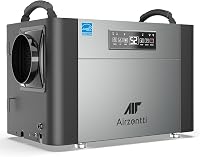
ALORAIR Sentinel HD55 for crawl spaces and basements
The ALORAIR Sentinel HD55 is a compact crawl-space and basement dehumidifier with automatic drainage and an optional remote control system. Its listed dimensions are 19.2 x 12.2 x 13.3 in, so check the installation plan and clearances before considering a confined location.
Its product information gives a 53-pint-per-day AHAM capacity and a 113-pint saturation capacity. Those figures use different conditions, so use the rating and area guidance that match your space and the manufacturer’s instructions.
This is not described as a wall-recessed model. Consider it for an appropriate crawl-space or basement installation rather than assuming it can be fitted into a bedroom wall.
AprilAire 5879 riser kit for drainage clearance
The AprilAire 5879 is an accessory, not a dehumidifier. It includes 4 risers that add 6 inches of height to compatible AprilAire models, giving a supported installation more room for a drain trap or pump when needed.
Check model compatibility before buying. The kit is designed for the AprilAire E070, E080, E100, E130, 1820, 1830, 1850, 1852, 1870, and 1872.
Waykar 150 Pint for large spaces
The Waykar 150 Pint is a freestanding dehumidifier for large spaces, with a stated coverage of up to 7,000 sq ft. It has an 8 L tank and supports continuous drainage through its included hose, so placement must allow access to the tank or a suitable drain route.
The unit measures 10.83 x 14.96 x 24.29 in. It is not described as an in-wall model, so don’t plan to enclose it in a wall cavity.
How do you compare an in-wall unit with whole-house equipment?
Choose an in-wall or zone setup when one defined area needs humidity control and the installation fits that unit’s design. A whole-house system can be a better match when you need coverage across connected spaces.
Compare the scope, not just the capacity number. A whole-house setup may use ducts or a central location, while a room unit treats air near where it stands; neither format removes the need to manage the source of moisture.
Check where the equipment will sit, how air will move, and where condensate will drain. If the system uses ducts, confirm the route and openings with an installer.
For broader coverage, see Best Dehumidifier For Whole House. If you want to understand the system type first, the whole-house dehumidifier overview explains the basic approach.
What should you confirm before buying?
Verify five details before ordering: installation type, capacity, fit, drainage, and service access. If any one of those is unclear, ask the manufacturer or installer to confirm it against the model manual.
Use this checklist:
- Confirm the unit is designed for the intended wall, room, or ducted installation.
- Match moisture capacity to the space and operating conditions.
- Measure the opening, cavity, wall thickness, and required clearances.
- Plan the tank, gravity drain, or compatible pump route.
- Check electrical needs, controls, filter access, and repair access.
Then decide who will handle the installation. A qualified installer can identify hidden utilities, confirm safe support, and plan a drain route that follows the unit’s instructions.
How do you choose the best in-wall dehumidifier?
Choose the best in-wall dehumidifier by matching its rated capacity and installation design to your space. Select a wall-specific unit only when its opening, airflow, electrical setup, drainage, and service access all fit your home.
For one damp zone, consider a suitable room or crawl-space system that can drain safely. For humidity across several connected areas, compare a whole-house system and plan for its ducts, controls, and condensate route before buying.
Frequently asked questions
Can you install a regular dehumidifier through a wall?
Only if the unit is designed for that installation and its manual allows the planned opening, airflow, drainage, and electrical setup. A portable dehumidifier needs open air circulation and a way to collect or drain water, so placing it in a wall cavity can block airflow or create water and service problems.
What size in-wall dehumidifier do I need?
Choose capacity based on the area, moisture source, and conditions the unit is designed to handle, then confirm the maker's sizing guidance. Square footage alone can mislead if the space has a persistent leak, damp foundation, poor ventilation, or unusually high humidity.
Does an in-wall dehumidifier need a drain?
Most dehumidifiers collect extracted moisture, so plan for a tank, gravity drain, or compatible pump. A gravity drain needs a continuous downward route to an approved outlet; a pump can move water upward only within its specified lift and installation limits.
Can a dehumidifier go in a bedroom wall?
It can go in a bedroom wall only when a model is designed for that location and the installation preserves required clearances, airflow, electrical safety, and service access. Also consider sound, condensate routing, and whether the unit's capacity suits the room rather than an adjoining space.
Is an in-wall dehumidifier better than a whole-house system?
An in-wall unit can suit one room or a defined zone when its installation requirements fit the building. A whole-house system is designed to manage humidity across connected areas, but sizing, ductwork, drainage, controls, and installation needs differ; compare the scope in our whole-house guide.