Can a Bathroom Fan Be Vented into an Attic?
No, a bathroom exhaust fan should not be vented into an attic. Send the moist air outdoors through a wall, soffit, or roof vent, because attic discharge traps humidity where it can rot wood, grow mold, and damage insulation.
On this page (10 sections)
- Can a bathroom fan be vented into an attic?
- What happens when bathroom exhaust fan to attic discharge ends inside?
- Why do people vent bathroom exhaust fans into the attic?
- Can bathroom exhaust fans vent into attic if the attic is ventilated?
- What is the correct outdoor route for a bathroom fan?
- How do you reroute an existing bathroom exhaust fan to attic termination?
- Do dehumidifiers change the answer about attic venting?
- When does a wall-mounted shutter fan make sense instead?
- What should you check before you close up the ceiling?
- How do you decide between a wall vent, soffit vent, and roof vent?
No, a bathroom exhaust fan should not be vented into an attic. A bathroom fan discharges water vapor, and an attic gives that vapor nowhere safe to go.
Send it outdoors through a wall, soffit, or roof vent with a damper cover.
If you are checking what size bathroom fan you actually need, start with our guide on what size bathroom fan to match airflow to room size before you fix the duct route.
Can a bathroom fan be vented into an attic?
No, because the attic becomes a moisture trap. A 10-minute shower can release about a pint of water, and that water has to leave the house.
A bathroom fan timer switch can keep the fan running after bathing.
Warm bathroom air hits cold roof sheathing and condenses. That condensation soaks insulation, stains ceilings, and feeds mold on wood framing.
If you are insulating around an attic fan, see how to insulate an attic fan.
Home inspectors flag attic termination for that reason. The fan may work on day one, yet damage builds slowly, and insulation above a stain may already be wet.
Our step-by-step guide explains how to how to vent bathroom exhaust fan to the outside, including duct support and sealing. Read it before you cut any holes.
What happens when bathroom exhaust fan to attic discharge ends inside?
A bathroom exhaust fan vent to attic leaves moisture inside the building envelope. The air leaves the bathroom, but the water stays in the house.
Condensation forms first on the coldest surfaces. Roof decks and metal flashing run cooler than the air, so vapor turns to liquid there and drips into insulation and across joists.
Wet insulation then holds water against wood and slows drying. Wet wood can rot over time, and mold can grow on paper-faced materials and dust.
The attic can also push that moist air back into rooms. Pressure differences can draw attic air through ceiling gaps, bringing musty odors into bedrooms below.
A whole-house fan is a different tool. The Quietcool QC CL-4700 RF Classic Advanced Whole moves up to 4,415 CFM on high and 3,402 CFM on low, and its design expects 5.89 sq ft of net free attic venting.
Why do people vent bathroom exhaust fans into the attic?
Many people vent into the attic because it is fast and cheap. The duct is already near the fan, so ending it in the attic feels like the easy path.
Some older homes were built this way, so buyers may assume it was approved. Codes and understanding of moisture have changed, so an older setup is not a safe model for a new install.
Sometimes the duct was meant to continue outside but the exterior run was never finished. A duct pointed at a gable vent and stopping short still counts as attic discharge, because the air never crosses the building shell.
Routing through the attic as a passage is fine. Terminating in the attic is not.
If your fan already ends in the attic, plan a fix rather than adding a second fan. Our guide on how to vent exhaust fan in attic shows how to use the attic as a route while ending the duct outside.
Can bathroom exhaust fans vent into attic if the attic is ventilated?
No, attic ventilation does not fix bathroom exhaust discharge. Attic vents are sized for slow air exchange, not for a burst of shower moisture.
A shower releases moisture in minutes. Attic vents move air slowly over hours, so humidity spikes and condensation forms before the vents can help.
Insulation, baffles, and stored items also block air movement. Moist air can sit in pockets and condense where it touches wood.
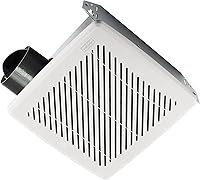
The Broan-NuTone Bathroom Exhaust Fan in this guide is rated at 50 CFM for a bathroom up to 45 sq ft, at 2.0 sones. If you have a suspended ceiling, see this drop ceiling exhaust fan guide for installation considerations.
That airflow is meant to carry moisture out of the room in minutes. If the duct ends in the attic, that same 50 CFM carries moisture into the attic in minutes too.
What is the correct outdoor route for a bathroom fan?
The correct route sends the duct straight outside with the fewest bends you can manage. Use a wall, soffit, or roof penetration, then add a vent cover with a damper.
Measure from the fan outlet to the nearest exterior wall and choose the shortest path. A short, smooth duct keeps airflow strong and reduces condensation inside the duct, so support it every few feet if it sags.
At the outside end, a working damper closes when the fan is off to block cold air, pests, and rain. Our picks for the best bathroom exhaust fan exterior vent cover help you match the cover to your wall or soffit.
Roof routes work too when the fan sits far from a wall. See the best bathroom exhaust fan roof vent kit options when your shortest path goes up.
How do you reroute an existing bathroom exhaust fan to attic termination?
You reroute by extending the duct from its attic endpoint to an exterior vent. Keep the existing fan if it works, add duct, seal joints, and add an outside cover.
First, find where the duct ends now. Look for a loose duct, a taped joint, or a duct pointed at a gable vent, and run the fan to feel for airflow at the end.
Next, choose the nearest safe exit. A side wall or soffit is usually easier than the roof, and the cover should sit flat so the damper can swing freely.
Then connect new duct to the old run and seal every joint with mastic or foil tape. Support the duct so it does not sag, and slope it slightly toward the outside so condensation drains out.
Finally, test the fan at the exterior cover. Hold tissue near it to confirm strong airflow and check that the damper opens fully.
Do dehumidifiers change the answer about attic venting?
No, a dehumidifier in the attic does not make attic discharge safe. A portable unit cannot keep up with shower moisture, and it adds heat to the attic.
The fan still needs an outdoor route.
Some homeowners ask this after reading about whole-home humidity control. A dehumidifier can lower room humidity, yet it collects water in a bucket or drains it to a sink.
It does not move bathroom air outside.
Our related guides answer similar questions for other appliances. Read Does a Dehumidifier Need to Be Vented? if you are mixing up dehumidifier venting with bathroom exhaust venting.
For outdoor venting questions, Do Dehumidifiers Need to Be Vented Outside? explains when outside air matters. Neither answer changes the rule for bathroom fans: exhaust must leave the house.
When does a wall-mounted shutter fan make sense instead?
A wall-mounted shutter fan suits garages, workshops, and greenhouses where you want strong air exchange through a wall. It solves a different problem from a ceiling bathroom fan.
Do not swap one for the other without checking the room and the code.
The iLiving 12" Wall Mounted Shutter Exhaust Fan moves 960 CFM and covers up to 1,400 sq ft. It has a 12-inch shutter, variable speed and thermal control from 32 to 130F, and a galvanized steel frame with aluminum shutters. iLiving says the shutter opens and closes with fan operation.
That size and airflow suit a workshop or garage that needs heat and odor removal. A bathroom needs quiet, steady moisture removal at a much lower CFM, plus a duct to the outdoors.
Read its specs against your room before you consider it for any bathroom use.
What should you check before you close up the ceiling?
Check airflow, duct joints, and the exterior damper before you patch the ceiling. A quick test now saves you from opening the ceiling again later.
Run the fan for five minutes and confirm the exterior damper opens fully. Tissue held near the cover should flutter or press against it.
If the damper sticks, adjust the cover or choose a larger one.
Feel along the duct joints in the attic for leaks. Seal gaps with mastic or foil tape, not cloth duct tape, which fails when it gets damp.
Tighten any loose connections at the fan housing too.
Look at the duct slope and supports. The duct should slope so water drains out, and you should add straps where it sags, because a low spot can hold condensation.
Check the fan size against the room one more time. The 50 CFM Broan-NuTone suits a bathroom up to 45 sq ft, so a larger bathroom may need a higher CFM fan.
How do you decide between a wall vent, soffit vent, and roof vent?
Pick the exit that gives you the shortest straight run and a flat surface for the cover. Shorter and straighter beats a fancy route with extra bends.
A side wall vent suits a bathroom on an outside wall. The duct runs straight out, the cover mounts on siding or trim, and the damper stays easy to reach for cleaning.
A soffit vent suits a bathroom under the eaves. The duct runs to the soffit and the cover mounts under the roof edge, so check the panel is solid enough and the damper can open.
A roof vent suits a fan in the middle of the house. The duct runs up through the attic to a roof cap, so keep bends to a minimum and use a cap made for bathroom exhaust.
If you are unsure which exit fits, measure the paths first. The shortest path with a flat mounting surface is usually the right one.
Frequently asked questions
Can bathroom fan be vented into attic?
No. Venting a bathroom exhaust fan into an attic releases warm, moist air into a cool space where it can condense on wood and insulation.
That moisture can cause mold, rot, and higher heating costs.
Route the duct outdoors through a wall, soffit, or roof vent instead, with a vented exterior cover.
Why is bathroom exhaust fan in attic a problem?
A bathroom exhaust fan in attic service usually means the duct ends inside the attic rather than outside. Each shower sends gallons of water vapor into that space over a year.
In cold weather the vapor condenses on cold surfaces, and in warm weather it can feed mold on wood and cardboard.
Can bathroom exhaust fans vent into attic if the attic is vented?
No, an attic vent does not make attic discharge safe. Attic vents move some air, but they do not remove moisture fast enough during a shower or bath.
Humidity rises, condenses in cold spots, and collects in insulation.
Building codes in most places require bathroom exhaust to leave the building.
What is the correct way to vent a bathroom exhaust fan?
Connect the fan to a short, smooth duct that runs to an exterior vent on a wall, soffit, or roof. Support the duct, seal joints, and use a vent cover with a damper.
Keep the run as straight as possible, because bends and long runs reduce airflow and let moisture condense inside the duct.