Ventilation Fans: The Complete Buying Guide
What size bathroom fan you need depends on room area and airflow demand: 50 CFM fits rooms up to about 45 to 50 sq ft, 80 CFM fits up to about 80 sq ft, 110 CFM fits up to about 110 sq ft, and 160 CFM fits up to about 160 sq ft. Match CFM to area first, then check noise, duct size and light needs.
On this page (13 sections)
- What size bathroom fan do you need for your room?
- How does CFM work and why does it matter?
- What sone level should you look for in a bathroom fan?
- Should you get a fan with a light?
- How does duct size and venting affect fan power?
- What controls should you plan for: switch, timer or sensor?
- How do you install a bathroom exhaust fan without attic access?
- How do you fix a bathroom exhaust fan that is weak or noisy?
- Do bathroom fans dehumidify or do you need a dehumidifier too?
- Which fan should you buy first: our top picks by room size
- How should you maintain a bathroom fan for quiet, strong airflow?
- What should you check on the label before you order?
- Final decision rule: what size bathroom fan should you buy?
What size bathroom fan you need depends on room area first, then airflow, noise and ducting. A 50 CFM fan suits a small room up to about 45 sq ft, while 110 CFM suits a room up to about 110 sq ft and 160 CFM suits a room up to about 160 sq ft.
That simple CFM per square foot rule gets you close in most cases. It does not save a fan that is in the wrong spot, tied to a long narrow duct, or run for only two minutes after a long shower.
This guide is the complete starting point for the ventilation fans category on Top 10s List. It links to every topic cluster we cover, from sizing and quiet models to lights, heaters, timers, covers, venting, repair and whole house options.
Our score weighs specs, features and buyer feedback against what you are shopping for. We compared specs and features across the category, and we checked what owners report about install, noise and moisture removal in daily use.
What size bathroom fan do you need for your room?
Pick CFM by bathroom area, not by guesswork. Measure length times width to get square feet, then aim for about 1 CFM per sq ft for a simple first pass.
A 40 sq ft half bath can often use 50 CFM with room to spare. A 70 sq ft full bath often lands near 80 CFM.
A 100 sq ft bath often needs 110 CFM, and a 150 sq ft bath often needs 160 CFM or two smaller fans placed well.
Style and color do not change airflow. If you want a dark finish to match trim, our best bathroom exhaust fan black roundup helps you compare looks without giving up CFM.
How to measure your bathroom before you choose CFM
Measure the room in feet and multiply length by width. Count only the floor area of the bathroom itself, not an attached closet unless that space shares the same air and door opening.
Note the ceiling height too. A standard 8 ft ceiling is the usual base for the rule above.
A very tall ceiling or a room with a large soaking tub and frequent long showers may need more airflow than the basic math suggests.
Write down where the shower, tub and toilet sit. A fan near the moisture source works harder than a fan across the room near a drafty door.
That placement choice matters as much as a small step up in CFM.
If your room is over about 120 sq ft, read our best large exhaust fan for bathroom guide before you settle on one fan. Large rooms often need higher CFM, a second fan, or both.
How does CFM work and why does it matter?
CFM means cubic feet per minute, and it tells you how much air a fan can move in one minute under test conditions. Higher CFM usually clears steam faster, but only when the duct and air supply can keep up.
A fan rated at 160 CFM in a small 40 sq ft room will be more than enough on paper. It may also feel strong, pull air from under the door with force, and still leave a corner near the shower damp if placement is poor.
A fan rated at 50 CFM in a 160 sq ft room will struggle. It may run all day and still not keep up after back to back showers.
That mismatch is the most common reason a new fan seems weak in daily use.
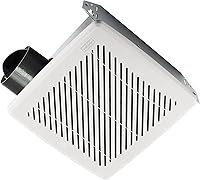
The Broan-NuTone model above is a clear example of a small room fan. Broan-NuTone rates it at 50 CFM for a smaller powder room or bathroom up to 45 sq ft, with Energy Star certification and 2.0 sones for quieter operation.
Its housing is compact at 7-1/4 in by 7-1/2 in by 3-5/8 in, with a 3 in duct connection. That compact size helps in tight ceilings, but you still need to confirm your duct run and ceiling opening before you order.
What sone level should you look for in a bathroom fan?
Choose sone level by how close the fan sits to daily use. Sones measure loudness on a scale where 1 sone is a soft whisper level and higher numbers get more noticeable.
A 1.0 sone fan is a good target if the bathroom is near bedrooms or if you shower late at night. A 2.0 sone fan is still quiet for most bathrooms, especially in a powder room that runs for short bursts.
If noise is your top concern, start with our best broan quiet bathroom fan roundup and compare sone ratings side by side. Broan-NuTone has many quiet options, but sone ratings differ by model, so do not assume every fan from one brand sounds the same.
The Panasonic FV-0511VF1 WhisperFit lets you select 50, 80 or 110 CFM at a switch. That flexibility helps if your room size estimate was rough, and Panasonic describes the DC/ECM motor and SmartFlow design as quiet and Energy Star certified.
Its low profile 5-5/8 in housing depth fits 2 x 6 joist space or larger, per Panasonic. That can help in shallow ceilings, but you still need to check your actual joist depth and duct route.
For a suspended ceiling, compare exhaust fans for drop ceilings and confirm how the fan will be supported.
Should you get a fan with a light?
Get a fan with a light when you need light in the same spot or you want to save ceiling space. A combo unit can light a shower area, a vanity, or a small bathroom where adding a separate fixture is hard.
A combo also adds wiring and switch choices. Some models need two wall switches so you can run light and fan on separate controls.
Others use one switch or a wall switch plus touch control, so check the control method before you plan wiring.
If you already have good lighting, a fan only unit keeps the job simpler and often costs less. If your current light is weak or poorly placed, a combo can solve two problems in one install.
The OREiN 3-in-1 model pairs 160 CFM at 1.0 sone with a 1500 lumen LED light and a humidity sensor that auto activates above 60 percent humidity. OREiN lists it for bathrooms up to 160 sq ft, with 3000K, 4000K or 5000K light choice and a 2200K night light.
That sensor helps if you forget to turn the fan on after a shower. OREiN notes humidity mode is off by default and you enable it by toggling the fan switch on, off, on three times quickly, so plan a few minutes at setup to turn it on.
The OREiN 2-in-1 model pairs 110 CFM at 2 sones with a 1000 lumen LED light at fixed 5000K daylight. OREiN lists it for spaces up to 110 sq ft, with Energy Star certification and a 5-year warranty.
It fits a 7.36 in by 7.68 in ceiling opening with a 4 in duct outlet and a 4 in to 3 in reducer in the box. That reducer helps if your existing duct is 3 in, but confirm sizes before you start so you do not need a return trip.
How does duct size and venting affect fan power?
A fan is only as good as its duct path to the outside. A long run, sharp bends, crushed flex duct, or a duct that ends in an attic instead of outside can cut real airflow fast.
Use the duct size the fan calls for, keep runs as short and straight as you can, and vent to the exterior through a wall or roof cap made for bath fans. Do not vent into an attic, soffit cavity, or another room, since that just moves moisture into the house.
Our step by step guide on how to vent bathroom exhaust fan walks through routing, supports and exterior caps. Read it before you cut ceiling drywall, especially if your current duct is old or undersized.
For whole home airflow beyond a single bathroom, compare options in best inline duct fan, best attic exhaust fans and best whole house attic fans for homes. Those categories solve different problems, from boosted duct runs to attic heat and whole house air movement.
Fresh air also needs a path in. If your bathroom door stays shut and the gap under the door is tiny, the fan can growl against low pressure and move less air.
A larger door gap, a transfer grille, or borrowing air from a hall can help the fan do its job.
What controls should you plan for: switch, timer or sensor?
Plan controls around how you actually shower. A simple wall switch works if you turn the fan on before you step in and leave it on after you step out.
Many people do not, and that habit leaves moisture behind.
A timer switch helps because you set run time once and the fan keeps going after you leave. Our best bathroom fan timer switch roundup compares timer options that pair with most standard bath fans.
A humidity sensor helps even more if you forget the switch. The OREiN 3-in-1 above turns on automatically above 60 percent humidity, per OREiN, and shows a green LED when sensor mode is enabled.
You still need to enable that mode at setup, as noted above.
Heat is another control choice in cold climates. If you want warmth on winter mornings, our best broan bathroom fan with heater guide covers heater combos and what to check for wiring and room size.
How do you install a bathroom exhaust fan without attic access?
Install from the room side when you have no attic access or your ceiling is tight. Many modern fans are built for that job, with foldable brackets, retrofit housings, or mounting from below.
The Broan-NuTone 50 CFM model above uses foldable mounting brackets for no cut install in some cases, with compact housing and a 3 in duct. Broan-NuTone describes a 10 minute install, but your time will vary with wiring, duct access and ceiling type.
The Panasonic WhisperFit uses a Flex-Z Fast Bracket with a single hinge for positioning. Panasonic describes that as a flexible install aid, and the low profile housing helps in 2 x 6 joist space or larger.
The OREiN 2-in-1 is designed for install from inside the bathroom with no attic access, per OREiN, and fits a 7.36 in by 7.68 in opening. The OREiN 3-in-1 needs a larger 11.81 in by 11.02 in cutout and a 6 in duct outlet, so measure your opening before you choose the bigger unit.
Our full walkthrough on how to replace a bathroom exhaust fan covers power off, old fan removal, duct check, wiring and grille fit. Take photos before you remove anything, and label wires so reassembly is calm.
How do you fix a bathroom exhaust fan that is weak or noisy?
Start with airflow path and simple wear checks. A fan that hums, rattles, runs slow, or seems to move little air often has dust on the wheel, a loose grille, a sagging duct, or a motor nearing the end of its life.
Turn power off before you touch the fan. Vacuum dust from the grille and wheel with a brush attachment, tighten loose screws, and check that the duct connection is firm and not kinked.
Run the fan and watch the grille for flutter, which can signal loose springs or a warped cover.
Our guide on how to fix a bathroom exhaust fan breaks down noise, weak airflow, lights that fail, and motors that stop. If the motor is sealed, loud, or slow, replacement is often more sensible than repair.
Covers matter too. A worn or stained grille can make a good fan look old and can rattle.
Our best bathroom exhaust fan covers roundup helps you match cover size and style before you order a swap.
Do bathroom fans dehumidify or do you need a dehumidifier too?
A bathroom fan removes moist air, but it does not dehumidify the rest of the home. That distinction matters if your problem is a steamy bathroom after showers versus damp air in bedrooms, basements or closets.
Our explainer on do bathroom fans dehumidify covers what fans can and cannot do, and our does a dehumidifier help with ventilation guide covers when a dehumidifier is the better tool. In short, use a fan for short bursts of shower steam and odor, and use a dehumidifier for steady whole room humidity.
For damp lower levels, our best basement ventilation fan guide covers a different airflow problem. Basements need steady air exchange and moisture control, not just a 20 minute post shower run.
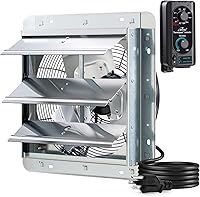
For wall mounted options in garages, kitchens or workshops, see our best wall mount exhaust fan roundup. Wall mount units suit spaces where ceiling mount is not practical or where you need to pull air across a work area.
Which fan should you buy first: our top picks by room size
Start with small rooms if your bath is under about 50 sq ft. The Broan-NuTone 50 CFM fan is a straightforward pick there, with 50 CFM, 2.0 sones, Energy Star certification and a compact 7-1/4 in by 7-1/2 in housing.
Pick the Panasonic WhisperFit if you want one fan that can adapt to 50, 80 or 110 CFM. That switch lets you match airflow to room size without swapping models, and the retrofit design helps in remodels.
Pick the OREiN 2-in-1 if you want 110 CFM plus light in one unit for a mid size bath. It suits rooms up to about 110 sq ft, runs at 2 sones, and gives you 1000 lumens of 5000K light for grooming and daily tasks.
Pick the OREiN 3-in-1 if you want 160 CFM, light and hands free humidity control. It suits rooms up to about 160 sq ft, runs at 1.0 sone, and adds a night light and 3CCT light choice.
It needs a larger cutout and a 6 in duct, so check those first.
For a broader shortlist by style and brand, start with our best bathroom exhaust fan roundup. That page compares more models by CFM, noise and features, so you can see how these four picks stack up against other options in the category.
How should you maintain a bathroom fan for quiet, strong airflow?
Maintain a fan with simple regular cleaning and a quick airflow check. Dust builds on the wheel and grille, and that buildup can add noise and cut performance over time.
Turn power off before you handle any parts near the motor or wiring. Use the wall switch and, where you can reach it, confirm the circuit is off before you remove a cover.
Remove the grille cover by pressing the springs or clips as your model directs. Set it on a towel so the finish does not pick up dust or scratches while you clean inside.
Vacuum dust from the housing, wheel and grille with a brush attachment. A soft brush helps lift lint from the wheel blades where airflow first slows down.
Wipe the grille with a damp cloth and a small amount of mild soap. Rinse the cloth well and dry the grille so moisture does not sit on metal springs or clips.
Check springs, clips and screws while the cover is off. A loose spring can let the grille flutter or buzz, and that small movement can make a quiet fan sound worn.
Look at the duct connection from below where you can see it. A gap, a slipped joint or crushed flexible duct can send moist air into the ceiling instead of outside.
Run the fan for a minute after you refit the grille. Listen for rattles, slowing or a pitch change that suggests a loose part or a motor that needs attention.
Test airflow with a sheet of toilet paper held near the grille while the fan runs. It should pull the sheet up firmly and hold it there without flapping.
Thin tissue held close to the grille gives a second check for uneven pull. A weak or patchy pull points to a clogged duct, a closed damper or dust still on the wheel.
If the sheet barely moves, check the duct path before you blame the fan. A blocked vent cap outside can choke even a strong motor, and that blockage is simple to spot from outside.
Clean the exterior vent cap and damper flap on a calm dry day. Remove leaves, lint and nests, then confirm the flap opens freely when the fan runs.
Plan to run the fan for every shower, not just long ones. Short showers still add moisture, and odor lingers after guests use a powder room.
Leave the fan running during the shower and for a while after you step out. That habit clears steam from mirrors, walls and towels before dampness settles into grout and paint.
A timer or sensor makes that habit automatic, which is why those controls are worth considering at buy time. If you already own a basic switch model, a timer switch can still help you keep the routine.
Set a simple schedule that fits your household, such as a few minutes each weekday and longer after baths. A steady routine protects the room better than occasional long runs after moisture has built up.
Inspect the grille and housing every few months and vacuum more often in homes with pets or heavy dust. Five minutes with power off can keep a fan quiet and strong for years.
What should you check on the label before you order?
Check CFM, sones, duct size, cutout size, light output and control type on every fan you consider. Those six items decide fit, noise, airflow and wiring more than brand name alone.
CFM tells you airflow capacity. Sones tell you noise.
Duct size tells you if your existing duct will work or if you need a reducer or new run. Cutout size tells you if the housing fits your ceiling opening.
Light output in lumens tells you brightness, and color temperature in Kelvin tells you warmth. The OREiN 3-in-1 gives 1500 lumens with 3000K, 4000K or 5000K choice, while the OREiN 2-in-1 gives 1000 lumens at fixed 5000K.
Control type tells you if you need one switch, two switches, a timer, or a sensor setup.
Energy Star certification is a useful signal for efficient motors, and all four picks here carry Energy Star certification per their makers. That does not replace CFM and sone checks, but it is a good tie breaker when two fans size the same.
Final decision rule: what size bathroom fan should you buy?
Buy by room size first, then by noise, light and install fit. For up to about 45 sq ft, a 50 CFM fan like the Broan-NuTone is a solid start.
For flexible sizing up to 110 CFM, the Panasonic WhisperFit gives you switch selectable airflow. That choice suits a room where your square foot estimate felt rough or where you may change use later.
For 110 CFM with light, the OREiN 2-in-1 is a strong combo pick. It suits a mid size bath where one fixture needs to clear steam and light the vanity or shower area.
For up to 160 CFM with light, night light and auto humidity control, the OREiN 3-in-1 covers large baths and forgetful switch habits. It needs a larger cutout and a 6 in duct, so check those first.
Measure your room in feet and multiply length by width before you compare fans. That one number sets the CFM range and stops a quiet fan from being undersized for the space.
Note ceiling height and where the shower and tub sit in the room. Tall ceilings and long showers can demand more airflow than the basic square foot math suggests.
Check noise next, especially if bedrooms sit close to the bathroom. A fan near 1.0 sone suits late night use, while 2.0 sones still works well in most bathrooms.
Choose light only if you need it in the same spot. A combo saves ceiling space, but it also adds wiring choices and may need two switches for separate control.
Confirm duct size and ceiling opening for every fan on your shortlist. A mismatch there can force a reducer, a new duct run or a return, even when CFM and features look right.
Decide on timer or sensor control at buy time, not after install. A timer helps you run the fan after you leave, and a sensor can start the fan when humidity rises.
Before you order, measure your room, confirm duct size and ceiling opening, and decide on timer or sensor control. Then compare your shortlist in our best bathroom exhaust fan roundup and pick the model that matches all four checks at once.
Keep the fan close to the shower or tub where steam forms. Short travel to the grille helps the rated CFM do real work in daily use.
Match the grille finish to your ceiling so the fan blends in after install. A white painted grille suits most ceilings and keeps the room looking tidy.
Think about care as well as power, since dust on the wheel can add noise over time. A removable grille and a motor you can service make routine cleaning simpler.
If two fans size the same, use Energy Star certification as a tie breaker. It signals an efficient motor, but it does not replace checks for CFM, sones and fit.
Pick the model that clears steam fast, stays quiet in your routine and fits your ceiling without extra work. That match will serve the room far better than a higher CFM number alone.
Frequently asked questions
What size bathroom fan do I need for a small bathroom?
For a small bathroom up to about 45 to 50 sq ft, a 50 CFM fan is a common starting point. That size can remove moisture, odor and pollutants from a smaller powder room or bathroom.
Check duct size and noise level before you order, and run the fan during and after showers.
What CFM for a large bathroom?
Use about 1 CFM per sq ft as a starting rule. A 110 sq ft room often needs about 110 CFM, and a 160 sq ft room often needs about 160 CFM.
Large rooms may also need a second fan or better placement near the shower or tub so steam has a short path out.
Do bathroom fans dehumidify?
A bathroom fan does not lower humidity like a dehumidifier, but it removes moist air and replaces it with drier air from the rest of the home when that air is drier. That helps mirrors clear faster and reduces dampness after showers.
See our guide on whether bathroom fans dehumidify for the full picture.
How long should I run a bathroom fan after a shower?
Run the fan during the shower and for about 20 to 30 minutes after, or until mirrors are clear and the air feels dry. A timer switch makes this easier to keep consistent.
If you tend to forget, a humidity sensor model can turn on automatically above a set level.