Do All Humidifiers Have a Compressor?
No, most humidifiers do not have a compressor. Common evaporative, ultrasonic, and warm mist models use other methods to add water vapor or droplets to indoor air.
On this page (7 sections)
- Do all humidifiers have a compressor?
- How do common humidifiers add moisture?
- Why do people associate compressors with humidity appliances?
- How can you tell what mechanism a humidifier uses?
- Which products fit a humidifier setup?
- Does a humidifier with a compressor mean something is wrong?
- How should you choose the right type?
No, most humidifiers do not have a compressor. Evaporative, ultrasonic, and warm mist models use a wick and fan, vibration, or heat to add moisture to indoor air.
For model options, see Honeywell humidifiers for home.
The confusion often comes from dehumidifiers, which remove moisture and commonly use refrigeration parts. A compressor is not a standard part of the usual household humidifier.
Do all humidifiers have a compressor?
No, humidifiers can add moisture without compressing refrigerant. Their method depends on the type: some move air across a wet wick, some create a fine mist with vibration, and others heat water to release vapor.
The word “compressor” usually points to a refrigeration system. That system cools air to collect water, which is why it is more closely associated with many dehumidifiers than humidifiers.
If you're still sorting out the basic purpose, our guide to how humidifiers work explains what each main type does.
How do common humidifiers add moisture?
Most household humidifiers use evaporation, ultrasonic vibration, or heat. None of these common mechanisms depends on a compressor.
Does an evaporative humidifier use a compressor?
No, an evaporative humidifier uses a wet wick or filter and a fan. The wick absorbs water, and the fan moves air through it so moisture can evaporate into the room.
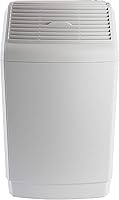
The AIRCARE Space Saver is an evaporative model with a 1043 Super Wick, digital controls, an auto humidistat, and automatic shutoff when the desired humidity is reached or the unit is empty. For whole-home options, compare types of furnace humidifiers.
Its product details describe no compressor mechanism.
Follow the unit's instructions for filling, cleaning, and wick care. For step-by-step care, see how to clean a humidifier.
A wick is a consumable part, so check its condition as directed.
Does an ultrasonic humidifier need a compressor?
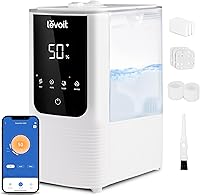
No, ultrasonic humidifiers use vibration to create a fine mist. A small fan may help disperse the mist, but that is different from a compressor-based cooling system.
Mist may be visible near the outlet, depending on the design and room conditions. For water guidance, see tap water in humidifiers.
Follow the manual's water and cleaning guidance, since the type of water and maintenance needs vary by model.
Do warm mist humidifiers have compressors?
No, warm mist models heat water to release vapor. For the distinction from vaporizers, see humidifiers vs vaporizers.
They use a heating element rather than a refrigeration compressor.
Because they heat water, place them where they cannot be bumped or reached by children or pets. Use the safety and cleaning steps in the manufacturer's manual.
Why do people associate compressors with humidity appliances?
Many dehumidifiers use a compressor to remove moisture from air. They cool air over a coil, collect water, then return drier air to the room.
A humidifier does the reverse job by adding moisture. Compare the different appliance roles in humidifier vs purifier vs diffuser, especially if you're deciding which device suits your concern.
For the choice between the latter two moisture-related options, see diffuser vs humidifier.
For the compressor question on the moisture-removal side, see Do Dehumidifiers Have Compressors? and Does a Dehumidifier Have a Compressor?.
How can you tell what mechanism a humidifier uses?
Check the appliance type and operating instructions. Words such as evaporative, ultrasonic, or warm mist describe common moisture-producing methods.
Look for practical clues:
- A wick or filter points to an evaporative design.
- A mist outlet may indicate an ultrasonic model.
- A heating element or warm vapor points to a warm mist design.
- A compressor and refrigerant system suggest a cooling or dehumidifying function.
A fan alone does not mean an appliance has a compressor. Fans move air; compressors are part of a different mechanical system.
Which products fit a humidifier setup?
Choose a humidifier for adding moisture, and an air purifier for filtering airborne particles. These appliances have different jobs, so an air purifier is not a substitute for a humidifier.
The Levoit Core 300-P is an air purifier, not a humidifier. Its listed functions include particle filtration, sleep mode, and manual fan speed control; it does not add moisture to air.
The Levoit Core Mini-P is also an air purifier, with a pre-filter and main filter intended to capture lint, hair, pet dander, fine pollutants, and smoke particles. It includes sleep mode and an auto-off display.
For humidifier types that produce heated vapor, compare vaporizer vs humidifier for adults. If you're choosing a unit to add moisture at home, start with best air humidifiers for home.
Does a humidifier with a compressor mean something is wrong?
Not necessarily, but confirm the appliance's full function and model. A combination unit or a device marketed for both cooling and humidity control may use parts beyond those in a basic humidifier.
Check the nameplate and manual for the model's functions and maintenance requirements. If the appliance behaves differently from its instructions or makes an unfamiliar noise, contact the manufacturer before opening its housing.
How should you choose the right type?
Pick a humidifier based on how it adds moisture and the care it requires. If you are choosing one for a grow tent, compare humidifiers for grow tents.
An evaporative model uses a wick, an ultrasonic model uses vibration, and a warm mist model heats water.
If your goal is to lower humidity, choose a dehumidifier instead and check whether it uses a compressor. For clean air, an air purifier serves a separate purpose.
The useful decision rule is simple: humidifiers add moisture; dehumidifiers remove it. Choose the appliance for the job you need, then use its manual to guide setup and care.
Frequently asked questions
Do all humidifiers have a compressor?
No. Most household humidifiers use a wick and fan, ultrasonic vibrations, or heat to add moisture.
A compressor is associated with refrigeration-based appliances such as many dehumidifiers and air conditioners, not with the common humidifier designs.
What type of humidifier uses a compressor?
A standard evaporative, ultrasonic, or warm mist humidifier does not need a compressor. If an appliance both cools and humidifies air, it may use refrigeration components, so check the manual to identify how that specific appliance works.
Does an evaporative humidifier have a compressor?
No. An evaporative humidifier draws air through a wet wick or filter, and a fan helps move the humidified air into the room.
The wick needs regular care or replacement according to the appliance instructions, but this process does not require a compressor.
Is a humidifier the same as a dehumidifier?
No. A humidifier adds moisture to indoor air, while a dehumidifier removes it.
Many compressor dehumidifiers cool air over a coil to collect water, but some use other methods, so the appliance type and manual matter.