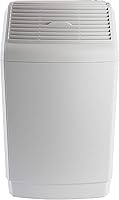
How to Clean a Humidifier
To clean a humidifier, unplug it, empty the tank, remove mineral buildup, wash the tank and base, then rinse and dry every part completely. Clean it regularly and follow the manufacturer's manual for model-specific parts.
On this page (10 sections)
- How do you clean a humidifier step by step?
- What should you use to clean a humidifier?
- How do you clean the humidifier tank?
- How do you clean the humidifier base?
- How do you clean different humidifier types?
- How do you clean a humidifier that has mold?
- How can you prevent mold after cleaning?
- Can scent pads replace humidifier cleaning?
- When should you replace the humidifier?
- What is the simple cleaning routine?
To clean a humidifier, unplug it, empty the tank, remove mineral buildup, wash the tank and base, then rinse and dry every part completely. Clean it at least weekly during regular use, and empty standing water daily when the manual permits.
If you use a humidifier for dry skin, see how humidifiers may help dry skin.
The exact steps vary by cool-mist, warm-mist, ultrasonic, and evaporative models. Read the manual before removing a filter, opening the base, or using vinegar, hydrogen peroxide, or bleach.
How do you clean a humidifier step by step?
The safest order is unplug, empty, disassemble, descale, wash, rinse, dry, and reassemble. Keep water away from electrical controls throughout the process.
- Turn the humidifier off and unplug it.
- Pour out old water from the tank and base.
- Remove the tank, cap, tray, nozzle, filter, and other removable parts.
- Rinse loose residue with fresh water.
- Use a soft brush or cloth to remove film and mineral scale.
- Rinse every cleaned part until no cleaner remains.
- Wipe the base without soaking electrical areas.
- Let the parts air-dry fully before reassembly.
Never run the humidifier with cleaner inside it unless the manual specifically gives that procedure. Do not combine cleaning chemicals.
If you're choosing a new unit, our Humidifiers: The Complete Buying Guide explains which features can make routine care easier.
What should you use to clean a humidifier?
Use fresh water, a soft cloth, and a soft brush for routine cleaning. White vinegar can help loosen mineral scale when the manufacturer's instructions allow it.
Avoid steel wool, abrasive pads, and sharp tools. Scratches can create places where residue collects and may damage a tank or base.
Hard water often leaves white crust or powder. If you use tap water, review Can You Use Tap Water in a Humidifier? before deciding whether distilled water would reduce buildup.
How do you remove mineral scale?
Soak removable, non-electrical parts in diluted white vinegar only when the manual permits it. Let the solution loosen the scale, then brush gently and rinse several times.
Do not pour vinegar into electrical housings or leave it on a part longer than the instructions allow. The goal is to soften residue, not scrape aggressively.
For a disinfecting method, see How to Clean a Humidifier with Bleach. Never mix bleach with vinegar or any other cleaner.
How do you clean the humidifier tank?
Wash the tank separately, paying attention to the cap, threads, seams, and bottom corners. These areas can hold water after the tank looks empty.
Remove the cap and rinse it under fresh water. Use a soft bottle brush if the opening allows one, but don't force a tool through a narrow opening that could damage the tank.
Wipe the outside and dry the threads before replacing the cap. Leave the tank open to air-dry whenever possible.
If the tank has a strong odor, visible film, or dark spots that remain after cleaning, stop using it until the manual's mold-cleaning procedure is complete. Replace the tank if it is cracked or cannot be cleaned fully.
How do you clean the humidifier base?
Empty the base and wipe around the reservoir, sensor, float, and mist outlet without soaking the electrical housing. Mineral deposits often collect in the shallow areas where water sits.
Use a soft cloth or cotton swab for corners. A soft brush can loosen scale around removable parts, but never force a sensor, float, or gasket.
Rinse only the parts the manual identifies as washable. Wipe away cleaner with fresh water, then dry the base before putting the humidifier back together.
A warm-mist model may have heating-area scale that needs special care. Follow its instructions rather than using a general vinegar soak.
How do you clean different humidifier types?
Cool-mist and ultrasonic humidifiers usually need tank and base cleaning, while evaporative models also need filter or wick care. Warm-mist models may need scale removal around the heating element.
For a Vicks cool-mist model, follow How to Clean a Vicks Cool Mist Humidifier for model-specific guidance.
For a Crane unit, see How to Clean a Crane Cool Mist Humidifier. Vicks warm-mist owners can use How to Clean a Vicks Warm Mist Humidifier as the next step.
HoMedics models may use different tanks, trays, and mist outlets. Use How to Clean a HoMedics Humidifier before taking those parts apart.
Does an evaporative humidifier need a new pad?
An evaporative humidifier may need a replacement pad instead of washing the old one. For AIRCARE models, compare AIRCARE humidifier replacement filters.
Check the model number and the manufacturer's schedule before reinstalling a stained, damaged, or scaled pad.
The OEM GeneralAire 990-13 Evaporator Pad Media Filter is a single evaporator pad for specified GeneralAire models, including SL-16, 1137, 709, 1040, and 1042.
Confirm compatibility before ordering. Its listed size is 9 3/4 in W by 11 3/4 in H by 1 1/2 in D, and it is sold as one filter.
For moisture equipment in another part of the home, see How to Clean a Dehumidifier? and Best Dehumidifier For Most Homes.
How do you clean a humidifier that has mold?
Stop using a moldy humidifier until every affected part has been cleaned or replaced. For guidance on humidity and sinus comfort, see humidifier and sinus comfort.
Empty the tank, unplug the unit, and follow the manual's approved disinfecting method.
Some mold can remain in gaskets, filters, seams, and hidden channels. If a filter or wick is disposable, replace it rather than trying to restore it.
Our guide on How to Clean a Humidifier That Has Mold covers the safer response when dark growth or a musty smell is present.
Don't use a humidifier again until all parts are rinsed and fully dry. If the smell or residue returns quickly, replace the affected part or the unit.
How can you prevent mold after cleaning?
Prevent mold by emptying unused water, drying the parts, and refilling with fresh water each time. Keep the tank open while it dries, if the design allows it.
Clean the humidifier on a schedule instead of waiting for an odor. Keep the surrounding area dry, and don't let mist settle on walls, furniture, bedding, or electronics.
See How to Prevent Mold in a Humidifier for a daily and weekly care routine. Water treatments may help only when they are approved for your exact model.
For compatible options, compare Best Humidifier Water Treatments, Best Humidifier Bacteriostatic Treatments, and Best Fish-Shaped Humidifier Cleaning Cartridges. Follow the humidifier manual before adding any treatment.
Can scent pads replace humidifier cleaning?
No, scent pads do not clean or disinfect a humidifier. For how the appliances differ, see diffusers vs humidifiers.
Use them only in compatible Vicks devices and keep normal tank and base cleaning on schedule.
Vicks VapoPads– Soothing Menthol Vapor Pads are non-medicated refill pads designed for listed Vicks humidifiers, vaporizers, waterless vaporizers, and plug-ins. Each pad is described as providing up to 8 hours of comfort in compatible devices.
Check your model number before use. VapoPads are an accessory for scent, not a substitute for rinsing the tank, cleaning the base, or replacing a dirty filter.
When should you replace the humidifier?
Replace a humidifier when cracks, persistent mold, damaged electrical parts, or hard-to-clean residue make safe care difficult. A new unit can also make sense when replacement filters or parts are no longer available.
For winter dryness, compare humidifiers for winter dry air.
The Vicks Filter-Free Ultrasonic Humidifier for Bedroom has a 1.2-gallon tank, filter-free design, and an opening intended for filling and cleaning. Vicks describes it as suitable for bedrooms, nurseries, and medium-sized rooms.
The unit is model V4600 and can hold up to 2 compatible Vicks VapoPads. Check the manual for cleaning steps and measure your space before choosing a replacement.
What is the simple cleaning routine?
Empty the water daily, clean the tank and base weekly, remove scale as needed, and let every part dry fully. Use only cleaners and replacement parts approved for your model.
Choose vinegar for mineral scale only when allowed, and use a manufacturer-approved disinfectant for mold concerns. Pick a replacement filter or pad when washing no longer restores it.
The best routine is the one you can repeat without leaving standing water behind. Clean the humidifier before residue becomes thick, and check the manual whenever a part, treatment, or cleaning method is uncertain.
Frequently asked questions
How often should you clean a humidifier?
Clean a humidifier at least weekly when you use it often, and empty and dry it daily if the manual allows. More frequent cleaning may be needed when you see scale, film, odor, or standing water.
Always follow the cleaning schedule and solution instructions for your model.
What can you use to clean a humidifier?
Use water and a soft cloth or brush for routine cleaning, plus white vinegar when the manual allows it for mineral scale. Rinse every part well afterward.
Don't mix vinegar with bleach, and don't use abrasive cleaners unless the manufacturer specifically approves them.
How do you clean a humidifier that has mold?
Unplug the humidifier, discard the water, and clean all removable parts according to the manual. A manufacturer-approved disinfectant may be needed for mold.
Rinse and dry completely, and replace parts that remain stained, damaged, or difficult to clean.
Should you clean the humidifier base?
Yes, clean the base because water, scale, and residue can collect around the reservoir, sensor, and mist outlet. Keep electrical controls and the cord dry.
Never immerse the motor housing or any part the manual says is not washable.