What Humidifier Settings Should You Use in Winter?
For humidifier settings for winter, aim for 40 to 50 percent indoor humidity and adjust mist output until windows stay clear. Start with the control at a middle setting, check for condensation after a few hours, and lower it if moisture builds on glass or walls.
On this page (8 sections)
- What humidity level should you target in winter?
- How do you adjust humidifier controls for cold weather?
- How do you stop window condensation with a humidifier?
- What mist setting works best for bedrooms at night?
- How do humidity settings change for large rooms?
- Should you run a humidifier in summer as well as winter?
- How do you clean and refill a humidifier in winter?
- Where should you place a humidifier for the best winter results?
For humidifier settings for winter, aim for 40 to 50 percent indoor humidity and adjust mist output until windows stay clear. Start with the control at a middle setting, check for condensation after a few hours, and lower it if moisture builds on glass or walls.
That range adds moisture to dry winter air without pushing a cold home toward damp surfaces. Use a hygrometer near the humidifier, not right above its mist, to get a useful reading.
What humidity level should you target in winter?
Target 40 to 50 percent relative humidity in most heated rooms. That level often helps dry throats, flaky skin, and static while staying below the point where windows sweat.
Very cold climates may need a lower target. If the outdoor temperature is far below freezing, windows and exterior walls run cold, so even 40 percent can cause condensation.
Start at 40 percent and watch the room for signs. Dry lips and static suggest you can move up a little, while fogged windows suggest you should step down.
Our guide to best air humidifiers for home explains how room size and tank capacity affect the setting you need.
How do you adjust humidifier controls for cold weather?
Set the humidifier to a middle mist level, then change it in small steps. High output is rarely needed for a full night, and it raises the risk of wet windows.
Place the unit on a hard, level surface away from walls and bedding. Keep it a few feet from upholstered furniture and wooden pieces so mist can spread into the room instead of settling nearby.
Run it for a few hours, then check the hygrometer and the windows. Raise the mist by one notch if humidity stays below 40 percent, or lower it if readings climb past 50 percent.
If you want help choosing a type of machine for cold air, see what kind of humidifier is best for winter.
Should you use auto mode or manual mist?
Use auto mode if your humidifier has a built-in sensor. Auto mode can cut mist output as the room reaches your set level, which helps prevent over-humidifying while you sleep.
Manual mode still works if you check the hygrometer and adjust by hand. It suits small rooms where humidity changes fast and you can react quickly.
For a bedroom, our picks for the best humidifier for bedroom in winter focus on quiet operation and controls you can manage at night.
How do you stop window condensation with a humidifier?
Lower the humidity setting when you see moisture on windows. Condensation is a clear sign that the air holds more water than cold glass can handle.
Open curtains during the day so air can move around the glass. At night, a small gap between the curtain and the window can help more than a closed, still pocket of air.
Do not point the humidifier at a window or place it directly below one. Distance gives mist time to mix with room air before it reaches the cold surface.
If condensation appears right away at 40 percent, drop to 35 or 38 percent. Comfort matters, but repeated wet glass can feed mold on frames and sills over time.
What mist setting works best for bedrooms at night?
Use low or medium mist for sleeping, with the display light off if possible. Low output still adds moisture over several hours, and it usually makes less noise than a high setting.
Place the humidifier a few feet from the bed, not on the pillow side. That distance spreads mist through the room and reduces the chance of a damp spot on bedding.
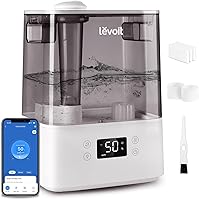
A 6 liter tank can run for many hours at low output, so you may not need to refill during the night. The Levoit model below is built for large rooms and has a sensor that can adjust output.
Levoit says this model covers rooms up to 505 sq ft with 300 mL per hour mist output. It also has app control, voice control, and a top-fill tank that is easier to refill.
Is a large tank better for winter nights?
A large tank helps when you want longer runtime with fewer refills. It does not mean you must run the machine on high, and high mist can still cause condensation.
Match the tank to your room and your routine. A large tank suits a big bedroom or a whole living area, while a smaller tank may fit a desk or a small nursery better.
Check the runtime claims at the setting you plan to use. Runtime at low mist is usually much longer than runtime at high mist.
How do humidity settings change for large rooms?
Large rooms need more mist output, but the humidity target stays the same. A 300 mL per hour output can raise humidity in a big space faster than a small unit can.
For open floor plans, place the humidifier where air can circulate through the main area. A hallway or central spot sometimes works better than a far corner.
If you are shopping for open spaces, our list of the best humidifier for winter dry air compares tank size, coverage, and control options.
Levoit says its 6L model runs up to 60 hours and operates at 26 dB in its title specs, with a noise level of 30 dB or less in its feature list. Those quiet, long-runtime traits suit people who run a humidifier all night.
Vicks says this 1.2 gallon model gives up to 30 hours of mist and needs no replacement filters. It uses cool mist and has auto shut-off, which helps when the tank runs low.
Should you run a humidifier in summer as well as winter?
Use a humidifier only when indoor air is actually dry, whatever the season. Winter heating dries air most often, but air conditioning can dry a bedroom in summer too.
In summer, high outdoor humidity can push indoor levels up. Check your hygrometer before adding more moisture, since extra humidity can feel muggy and can feed dust mites.
Our guide on a humidifier for summer or winter explains when to run one and when to turn it off.
For the opposite problem, see what is the best dehumidifier setting for winter and can you use a dehumidifier in winter. A dehumidifier removes moisture, while a humidifier adds it, so the controls work in opposite ways.
How do you clean and refill a humidifier in winter?
Empty, rinse, and dry the tank on a regular schedule during winter use. Stale water can develop odor, and mineral scale can cut mist output over time.
Follow the maker steps for your model. Some units need a vinegar soak for scale, while others should not use certain cleaners, so the manual matters.
Use distilled or purified water if your maker recommends it. The Levoit unit also suggests distilled or purified water for health, and it notes replacement water filter and aroma pad options.
Refill with clean water before the tank runs dry. Do not add essential oils directly to the tank unless the maker allows it, since oils can damage some parts.
This co-pack is not a humidifier. It is cold and flu medicine with 48 LiquiCaps, so it covers a different need during winter illness.
Where should you place a humidifier for the best winter results?
Place it on a hard surface in the center of the room you use most, a few feet from walls and windows. Central placement helps mist mix with room air instead of pooling in one spot.
Keep it away from heat vents. Air from a vent can push mist to one side of the room and can make the hygrometer reading misleading.
Do not place it on carpet or on a rug. A hard surface contains spills and makes cleaning easier if the tank leaks.
For winter settings, the simple rule is this: pick 40 to 50 percent humidity, start at medium mist, and lower the setting if windows fog. That approach adds comfort without creating a new moisture problem.
Frequently asked questions
What is the best setting for a humidifier in winter?
Set indoor humidity at 40 to 50 percent and use a middle mist output first. Check windows after two to three hours and lower the setting if condensation forms.
Raise it slowly if your throat still feels dry and the air has no sign of window moisture.
Why does my window get condensation when I run a humidifier?
Condensation forms when warm, moist indoor air meets cold glass. Lower the humidity setting, improve air flow near the window, and keep the humidifier a few feet from the glass.
A hygrometer helps you find the level that adds comfort without wet windows.
Should I use warm mist or cool mist in winter?
Cool mist works well for most bedrooms in winter and avoids a burn risk around children. Warm mist may feel more comfortable to some adults, but it uses more energy and needs more care.
Choose the type that fits your room, budget, and cleaning routine.
How often should I clean a winter humidifier?
Empty and rinse the tank often, and follow the maker cleaning steps at least weekly during daily winter use. Mineral scale and stale water can reduce mist output and spread odor.
Distilled or purified water can slow scale in some models.