How to Choose an Exhaust Fan for a Drop Ceiling
A drop ceiling exhaust fan works only when the housing is supported, the duct route is short, and the size matches the room: check ceiling support, duct connection and airflow before you buy. A lightweight ceiling unit suits most bathrooms, while a large wall unit or a ceiling fan with a light solves a different job.
On this page (18 sections)
- How does a drop ceiling exhaust fan fit a suspended ceiling?
- What size drop ceiling exhaust fan do you need?
- How do you support a fan above drop ceiling tiles?
- How do you connect the duct to a drop ceiling exhaust fan?
- Should you choose a wall fan instead of a ceiling fan for a drop ceiling?
- When does a thermostat help a drop ceiling exhaust fan?
- How quiet should a drop ceiling exhaust fan be?
- Can a ceiling fan with a light do the job of an exhaust fan?
- How do you install a drop ceiling exhaust fan step by step?
- How do you care for a drop ceiling exhaust fan?
- What are the most common drop ceiling exhaust fan mistakes?
- Which drop ceiling exhaust fan should you buy for a garage?
- How do you choose the right ceiling exhaust fan for a drop ceiling?
- Our score weighs specs, features and buyer feedback against what you are shopping for.
- What should you check before you order a drop ceiling exhaust fan?
- How do you plan a ceiling exhaust fan for a drop ceiling in a bathroom?
- How do you plan a ceiling exhaust fan for a drop ceiling in a garage?
- Final decision rule for a drop ceiling exhaust fan
A drop ceiling exhaust fan needs support, a duct to the outside, and airflow matched to the room. The tile opening is only the visible part.
Plan housing support, duct route and controls before you buy. A fan that rattles, sags or blows into the ceiling cavity will not work well.
How does a drop ceiling exhaust fan fit a suspended ceiling?
A drop ceiling exhaust fan fits by supporting the housing above the tiles and connecting it to a duct. The grille sits below, while the housing and duct stay in the plenum above.
Suspended tiles are not structural. They should not carry a fan, motor or duct, so transfer that load to framing or a rated support system.
Measure plenum depth first. A shallow space may not fit a tall housing or bent duct, while a deep space allows a straighter run and easier service.
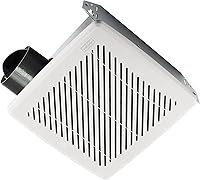
The Broan-NuTone housing measures 7-1/4 in by 7-1/2 in by 3-5/8 in, with a grille of 8-5/8 in by 8-3/8 in. Check these sizes against your tile layout first.
Rule: support the housing first, then worry about grille fit.
What size drop ceiling exhaust fan do you need?
Size a drop ceiling exhaust fan by room area and moisture load, not tile size. For a crawl space, compare ventilation fans and dehumidifiers.
A powder room and a garage need very different airflow.
A 50 CFM fan suits a bathroom up to 45 sq ft, according to Broan-NuTone. Larger rooms or frequent showers need more capacity.
Use our guide to what size bathroom fan for the small-room math.
For a garage or warehouse, the iLiving unit moves 960 CFM and covers 1,400 sq ft. Size for the peak load from showers, tubs, kilns, stoves or vehicles.
Rule: pick airflow for the room and source, then check housing fit.
How do you support a fan above drop ceiling tiles?
Support a fan above drop ceiling tiles by tying the housing to structure, not the tile. Level it, lock it in place and keep it from vibrating against the grid.
The grid is made for tiles and light fixtures, not fan weight, movement and duct pull. Your support must cover all three.
Look for flanges, foldable brackets or threaded rods. Broan-NuTone offers foldable brackets with no attic access needed.
Leave room to lift a tile for service and keep duct weight off the housing. If the support plan is unclear, do not install yet.
Rule: use rated structure, not tiles, to carry the fan.
How do you connect the duct to a drop ceiling exhaust fan?
Connect the duct with a short, straight run to the outside. For bathroom-specific routing, see how to vent a bathroom exhaust fan.
Long runs, sharp bends and loose joints cut airflow and add noise.
Duct losses rise when the run exceeds fan rating, so keep the route direct. Match the duct to the outlet.
The Broan-NuTone unit uses 3 in duct, and a reducer can reduce airflow.
Seal and support each joint so the duct does not pull the housing out of level. The duct must end outside, not in the plenum or attic, or moisture will return inside.
Rule: a short sealed duct outside beats a longer bent one.
Should you choose a wall fan instead of a ceiling fan for a drop ceiling?
Choose a wall fan instead of a ceiling unit when the ceiling cannot support the housing or the duct route is poor. A wall opening can give you a direct path outside.
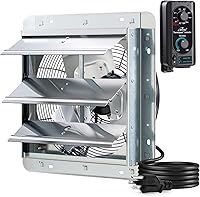
The iLiving 12 in Wall Mounted Shutter Exhaust Fan is a wall unit, not a ceiling unit. It has a 12 in blade, galvanized steel frame and aluminum shutters, with 960 CFM and coverage to 1,400 sq ft.
It suits a garage, warehouse, greenhouse or workshop, with variable speed and thermal control from 32 to 130 F. Shutters open and close with the fan to block outdoor air when off.
A wall opening can simplify the duct route, but you still need sealing, support, power and free-moving shutters. See our best wall mount exhaust fan guide.
Rule: choose a wall fan for a shorter, safer route outside.
When does a thermostat help a drop ceiling exhaust fan?
A thermostat helps when heat is the main problem and you want the fan to run only above a set temperature. It stops unnecessary runs when the room is cool.
The iLiving unit includes a Thermospeed controller with variable speed and thermal control, suited to garages and workshops. A thermostat does not replace a timer or humidistat for bathrooms, where moisture must clear after a shower.
Our guide to a ceiling exhaust fan with thermostat explains when each control helps. Place the sensor in the room air you care about, not a warm pocket.
Rule: use a thermostat for heat and a timer or humidistat for moisture.
How quiet should a drop ceiling exhaust fan be?
A drop ceiling exhaust fan should be quiet enough for the room you use it in. A bedroom or small bathroom needs less sound than a workshop.
Bathroom fans are rated in sones and industrial fans in decibels. The Broan-NuTone runs at 2.0 sones, while the iLiving stays below 65 dB, which fits a garage but not a quiet office.
A suspended ceiling can carry vibration into the grid. Keep the housing level and avoid tight contact, and use variable speed to lower noise during normal use.
Rule: match sound to the room and isolate the housing.
Can a ceiling fan with a light do the job of an exhaust fan?
A ceiling fan with a light cannot do the job of an exhaust fan because it moves air in the room but does not remove it. For whole-home air exchange, see 30-inch whole-house fans.
That difference matters in a bathroom, a kitchen or a garage.
The Amico 42 Inch Black Low Profile Ceiling fan is a ceiling fan, not an exhaust fan. It has a 42 in diameter, flush mount, 2,000 lumen light, six speeds, remote control and reversible airflow.
It suits bedrooms and offices for air movement and light, but it does not send steam, odors or heat outside. Our exhaust fan vs ceiling fan guide explains the difference.
Some rooms need both devices. Do not assume one covers circulation and exhaust.
Rule: pick exhaust to remove air and a ceiling fan to circulate it.
How do you install a drop ceiling exhaust fan step by step?
Install a drop ceiling exhaust fan by supporting the housing, connecting the duct, wiring the unit and fitting the grille in that order.
Mark the tile opening and duct route, then check plenum depth and grid position. Set the housing level and locked to support, keeping the duct outlet aligned so the first section does not bend.
Connect and seal the duct, support it at intervals and run it outside with a vent. Wire per manual and local code, noting the iLiving unit needs hardwiring.
Fit the grille last, test each speed, listen for rattles and confirm air exits outside.
Rule: test support, duct and wiring before closing the ceiling.
How do you care for a drop ceiling exhaust fan?
Care for a drop ceiling exhaust fan by cleaning the grille and blades, checking the duct and testing controls on a schedule. Dust and grease cut airflow and add noise.
Wash the grille with mild soap and wipe blades and housing with a damp cloth. Dry parts fully before refitting.
Check the exterior vent for leaves, lint or nests and confirm the damper or shutter moves freely. Listen for rattle from loose screws, springs or shifted support.
Our guide Does a Dehumidifier Need an Exhaust? helps if you also run a dehumidifier.
Rule: clean the grille, clear the vent and check support twice a year.
What are the most common drop ceiling exhaust fan mistakes?
Avoid mistakes by not hanging the fan from tiles, not venting into the plenum and not sizing by tile openings. Each error cuts performance or damages the ceiling.
Tile-hung fans can sag and crack edges, and plenum venting fills the cavity with moisture and odors. Long ducts with sharp bends add resistance and noise, so use a shorter route with gentle bends.
Also check the exterior vent for rain entry, sticking shutters and discharge near windows. Our guide Do Fans Help Dehumidify? explains fan limits for moisture.
Rule: check support, vent path and size before cutting a tile.
Which drop ceiling exhaust fan should you buy for a garage?
Buy a garage fan by matching airflow, controls and sound to a large, hot and dusty space. A small bathroom fan will not do that work.
Our best ceiling exhaust fan for garage guide compares garage units by airflow, duct size and controls.
A garage needs heat, dust and vehicle exhaust handling, so look for variable speed, thermostat or timer. The iLiving wall unit offers 960 CFM, 1,400 sq ft coverage and thermal control.
A ceiling unit still needs support and a duct route, and the grid may already carry lights and storage. Check grid load and plenum depth first.
Rule: size a garage fan for heat and dust, not a bathroom.
How do you choose the right ceiling exhaust fan for a drop ceiling?
Choose the right fan by checking support, duct fit, airflow and sound in that order. Those checks rule out most wrong options.
If housing support is unsafe, stop and fix the plan. Map the duct route to the outside, and consider a wall fan if it is too long or bent.
Size by room: 50 CFM suits a bathroom to 45 sq ft, while 960 CFM suits a large garage. Then check sound and controls, with 2.0 sones for bathrooms and below 65 dB for workshops.
Revisit what size bathroom fan for bathrooms.
Rule: buy the fan that fits support, duct and room, in that order.
Our score weighs specs, features and buyer feedback against what you are shopping for.
Our score weighs specs, features and buyer feedback against what you shop for. A high score means fit for this guide, not every room.
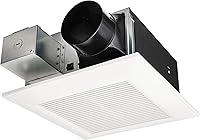
The products show three answers. A compact ceiling unit suits a small bathroom, a large wall unit suits a garage, and a ceiling fan with light suits circulation.
Pick the product matching your ceiling, duct route and room size. We research and compare specs and do not test in a home, so this guide focuses on sizes, airflow, sound and support.
Rule: match the product to the room, not the tile.
What should you check before you order a drop ceiling exhaust fan?
Check housing size, duct size, support method and power needs before you order. Those details decide fit.
The Broan-NuTone housing is 7-1/4 in by 7-1/2 in by 3-5/8 in, with an 8-5/8 in by 8-3/8 in grille. Confirm that footprint against your grid.
Check the duct outlet and route. A 3 in duct needs a clear path with bend room, and larger fans need larger ducts and more plenum space.
Also check plug versus hardwiring and controls. Compare the exhaust fan vs ceiling fan guide if still deciding.
Rule: measure housing, duct and power before ordering.
How do you plan a ceiling exhaust fan for a drop ceiling in a bathroom?
Plan a bathroom fan by choosing a quiet unit, a short duct and a timer or humidistat control. Bathrooms need moisture removed after each shower.
A 50 CFM fan at 2.0 sones suits a bathroom to 45 sq ft and uses a 3 in duct. Run it during and after showers, since a thermostat alone may stop too soon in a cool room.
Keep the grille clean and exterior vent clear, or moisture will build in the plenum and stain tiles. Use what size bathroom fan to confirm CFM.
Rule: size for moisture and run the fan after the shower.
How do you plan a ceiling exhaust fan for a drop ceiling in a garage?
Plan a garage fan by choosing high airflow, strong support and controls for heat. Garages need more air than bathrooms, at different times.
A garage fan must handle heat, dust and fumes, which a 50 CFM bathroom fan cannot. The iLiving wall unit moves 960 CFM, covers 1,400 sq ft and offers variable speed, thermal control and shutters.
A ceiling unit still needs a duct outside, and the route may cross storage or openers. Our best ceiling exhaust fan for garage guide helps narrow options.
Rule: in a garage, buy airflow and controls first, then confirm support.
Final decision rule for a drop ceiling exhaust fan
Pick a compact ceiling unit for a small bathroom, a large wall unit for a garage or workshop, and a ceiling fan with light only for circulation.
Check support, duct route, airflow and sound before ordering. If a check fails, fix the plan or choose another fan type.
Revisit the exhaust fan vs ceiling fan guide for a final check, and the ceiling exhaust fan with thermostat guide if heat control matters.
Measure first, support the housing and keep the duct short for quiet airflow and a dry ceiling.
Frequently asked questions
Can you mount an exhaust fan in a drop ceiling?
Yes, if the housing is supported by the ceiling structure or a support kit and the duct can run to the outside. Suspended tiles alone should not carry the fan weight.
Use supports that tie the housing to solid framing or to the grid structure rated for that load.
What size drop ceiling exhaust fan do I need?
Size the fan by room area, moisture source and duct length, not by the tile opening. Small bathrooms need far less airflow than garages or workshops.
Our guide to what size bathroom fan helps you work out the bathroom case before you order.
Does a drop ceiling exhaust fan need a duct?
Yes, it should exhaust to the outdoors through a duct. Recirculating into the space above the tiles spreads moisture and odors through the ceiling cavity.
Keep the duct run short, supported and sealed at each joint.
Can a ceiling fan replace an exhaust fan?
No, a ceiling fan moves air inside the room but does not remove moisture or odors. An exhaust fan removes air from the room and sends it outside.
See our exhaust fan vs ceiling fan comparison before you swap one for the other.
How loud should a drop ceiling exhaust fan be?
Lower sones mean a quieter fan at the ceiling. A bathroom fan near 2.0 sones suits quiet rooms, while a 65 dB industrial unit suits garages and workshops.
Match the noise level to how close people sit or sleep to the fan.