Can a Dehumidifier Lower Humidity in a Whole House?
On this page (8 sections)
- How One Dehumidifier Handles Your Home’s Humidity
- Sizing Your Dehumidifier for Whole-House Coverage
- The Role of Your Home’s Layout and Airflow
- Where to Place Your Whole-House Dehumidifier
- When a Single Dehumidifier Might Not Be Enough
- Monitoring and Maintaining Your Dehumidifier
- Conclusion
- Frequently Asked Questions
Yes, a single dehumidifier can lower humidity in a whole house, but its effectiveness depends on several factors. You will need a properly sized unit for your home’s square footage and humidity levels.
You might think one small unit is enough, but many factors impact a dehumidifier’s reach. We found that open floor plans and good air circulation help. Blocked doorways or closed-off rooms will limit its ability to reduce moisture everywhere.
- A single dehumidifier can work for a whole house.
- Unit size and home layout are very important.
- Good airflow helps the dehumidifier spread dry air.
- Some areas might need extra help with humidity.
So, can one dehumidifier really tackle your entire home’s moisture problem? Let’s break down what you need to know to make the best choice for your living space.
How One Dehumidifier Handles Your Home’s Humidity
You’re wondering if a single dehumidifier can truly manage your entire home’s humidity. It’s a great question, and the answer is yes, it’s possible with the right setup. Think of your dehumidifier as a small, diligent worker. Its job is to pull moisture from the air. But how far can that worker’s efforts spread?
We found that the key isn’t just the dehumidifier itself, but also how your home is designed and how you manage airflow. If your home has an open layout and good air circulation, that single unit has a much better chance of reaching every nook and cranny.
Understanding How Dehumidifiers Work
Before we dive into whole-house solutions, let’s quickly review what a dehumidifier does. It’s not magic; it’s science. A dehumidifier works by drawing in humid air over cold coils. The moisture condenses into water, which is then collected in a bucket or drained away. The dryer air is then released back into your room.
This process reduces the overall humidity level. For more on how this may affect comfort, see whether a dehumidifier keeps your house warmer. Imagine your home’s air as a sponge. A dehumidifier slowly squeezes the water out of that sponge. The more powerful the squeeze and the bigger the sponge (your home), the longer it takes to dry it out effectively.
Sizing Your Dehumidifier for Whole-House Coverage
This is probably the most critical factor. Choosing the right size isn’t about guessing. Too small, and it will run constantly without making much difference. Too large, and it could make the air too dry, waste energy, and potentially even freeze its coils in some conditions.
The Association of Home Appliance Manufacturers (AHAM) provides clear guidelines for dehumidifier sizing. We always recommend checking these guidelines. They’re based on your home’s square footage and how damp it typically feels.
Matching Unit Capacity to Your Home’s Needs
Dehumidifier capacity is measured in pints per day. This tells you how much moisture the unit can remove from the air in 24 hours. A larger home or a very damp home needs a higher pint capacity. Our guide on how much dehumidifier do I need provides detailed calculations based on your home’s specific conditions.
For example, a home that’s 2,000 square feet and moderately damp might need a 50-pint dehumidifier. If that same home feels very wet, you might need a 60-pint unit. It’s not just about size, it’s about dampness too.
Here’s a quick guide to help you get started:
| Area (Square Feet) | Condition of Area | Recommended Capacity (Pints/Day) |
|---|---|---|
| 500 sq ft | Slightly damp | 10-20 Pints |
| 1,000 sq ft | Moderately damp | 20-30 Pints |
| 1,500 sq ft | Very damp | 30-40 Pints |
| 2,000 sq ft | Wet | 40-50 Pints |
| 2,500 sq ft + | Extremely wet | 50-70 Pints + |
Remember, these are starting points. If you live in a particularly humid climate, you might need to go up one level. It’s better to slightly oversize than undersize, within reason, to ensure effectiveness.
The Role of Your Home’s Layout and Airflow
Imagine trying to cool your entire house with one small fan in the corner of your living room. It wouldn’t work very well, right? The same principle applies to dehumidifiers. For one unit to work across your whole house, air needs to be able to move freely.
Homes with open-concept designs and few internal barriers will see much better results. The dry air can circulate and replace humid air throughout the entire space. It’s like a gentle current pushing the humidity out.
Optimizing Air Circulation
Good airflow is your dehumidifier’s best friend. How can you help it along? We found a few simple tricks:
- Keep interior doors open: This allows air to flow between rooms.
- Use ceiling fans: They don’t cool the air, but they do circulate it, helping the dehumidifier’s dry air reach more areas.
- Avoid blocking vents: Make sure nothing is obstructing your HVAC system’s return air vents or supply registers.
- Position the dehumidifier centrally: Placing the unit in a central location, like a main hallway or living area, helps its reach.
Sometimes, even with an open layout, certain areas might still feel a bit sticky. This could be due to specific moisture sources or poor air movement in those spots. For example, a bathroom that’s always steamy after showers.
Where to Place Your Whole-House Dehumidifier
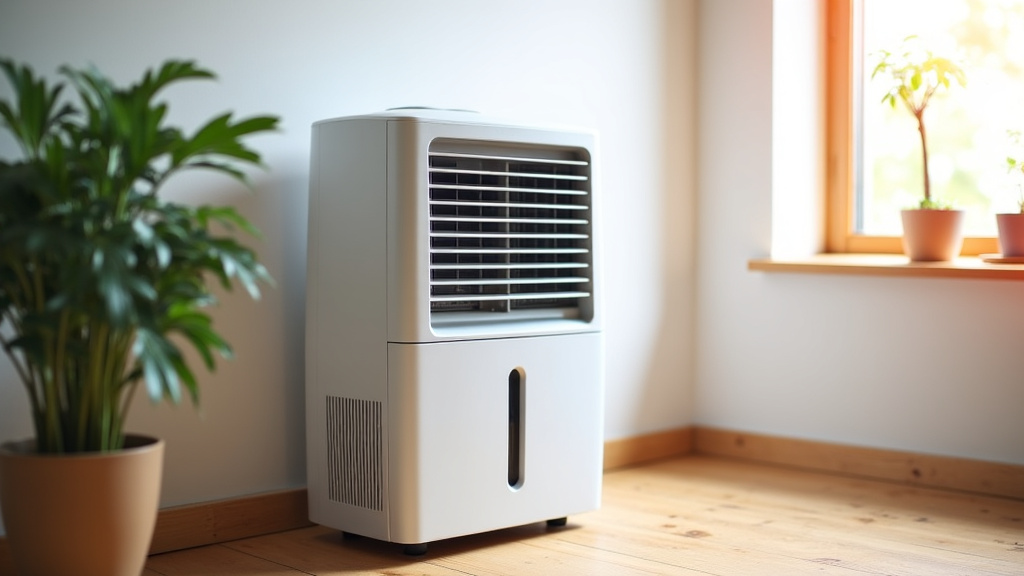
Placement matters almost as much as size. The goal is to put the unit where it can have the most impact on the air quality of your entire home. Think about where humidity tends to be highest, or where air movement is most efficient.
Strategic Placement for Maximum Effect
Many experts suggest placing your dehumidifier in a central location. This could be a main living area, a large hallway, or even near a return air vent for your HVAC system. We found that placing it near your home’s central air return can help distribute the dryer air through your existing ductwork.
However, if you have a specific problem area, like a damp basement, sometimes it makes sense to place the unit there first. Then, once that area is under control, you can move it to a more central spot for overall maintenance. It’s about finding the balance for your unique home.
Consider these points for ideal placement:
- Central Location: Allows dry air to spread most easily.
- Away from Walls: Give the unit space for air intake and exhaust.
- Near a Drain (if continuous drainage is used): Saves you from emptying the bucket.
- Avoid Direct Sunlight or Heat Sources: These can affect its performance.
When a Single Dehumidifier Might Not Be Enough
While a single, properly sized dehumidifier can often do the trick, there are situations where it might struggle. This isn’t a sign of failure; it just means your home has specific challenges.
Identifying Stubborn Humidity Pockets
Does your bathroom always feel muggy, even when the rest of the house is fine? Do you have a damp crawl space or a perpetually humid basement? These are what we call “humidity pockets.” They are areas where moisture is either generated more intensely or trapped due to poor ventilation.
For these areas, a single whole-house unit might not be enough. You might need to consider a supplemental solution. Many experts point to addressing the source of moisture first. For instance, fixing a leaky pipe or improving bathroom ventilation (Mayo Clinic).
A few examples of tough spots include:
- Bathrooms without proper exhaust fans.
- Basements or crawl spaces with moisture intrusion from outside.
- Laundries where clothes are air-dried indoors frequently.
- Rooms that are closed off for long periods.
Considering Supplemental Solutions
If you find that your main dehumidifier isn’t cutting it for a specific problem area, don’t despair! You have options. You could add a smaller, dedicated dehumidifier for that particular room, like a mini unit for a bathroom or a powerful one for a very damp basement. Or, you might need to look at fixing the underlying moisture issue in that spot. For complex situations, our article on how many dehumidifiers do you need offers further guidance.
Sometimes, improving insulation or sealing air leaks can also make a big difference. It’s about creating a holistic approach to humidity control, rather than relying on one device to solve all problems.
Monitoring and Maintaining Your Dehumidifier
Once you have your dehumidifier in place, your job isn’t quite over. For it to work effectively and last a long time, it needs a little attention. Think of it like taking care of a pet; a little care goes a long way.
Keeping Your Unit Running Smoothly
Regular maintenance ensures your dehumidifier continues to perform at its best. We found that these simple steps make a big difference:
- Clean the air filter regularly: A clogged filter restricts airflow and reduces efficiency. Most manufacturers recommend cleaning it every 2-4 weeks.
- Empty the water bucket: If you’re not using continuous drainage, keep an eye on the bucket. A full bucket stops the unit from running.
- Check for ice buildup on coils: If your unit is running in very cold conditions (below 65°F), coils can freeze. Many units have an auto-defrost feature, but it’s good to check.
- Ensure proper airflow around the unit: Don’t push it right up against a wall or furniture. Give it breathing room.
- Set the humidistat correctly: Aim for a relative humidity between 40% and 50% for optimal comfort and health (CDC).
By keeping up with these tasks, your single dehumidifier has the best chance of effectively managing the humidity throughout your entire home. It’s an investment in your comfort and your home’s health.
Conclusion
Successfully using a single dehumidifier for your whole home is absolutely achievable when you understand its capabilities and limitations. You’ve learned that proper sizing is paramount, matching the unit’s capacity to your home’s square footage and dampness. We found that optimizing your home’s layout for good airflow is just as vital, allowing the dry air to circulate effectively. Remember to consider strategic placement and keep up with routine maintenance.
By applying these practical tips, you can effectively manage your home’s humidity with just one unit, creating a healthier and more comfortable living environment for you and your family.
Frequently Asked Questions
How can I tell if my home’s humidity is too high?
You might notice a sticky feeling in the air, condensation on windows, a musty odor, or even mold growth. We found that visible signs like these are strong indicators that your home’s relative humidity is above the ideal 40-50% range.
Where is the best central location for a whole-house dehumidifier?
A main living area, a large hallway, or a landing on an upper floor often works well. Placing it near your HVAC return air vent can also help distribute the dry air throughout your existing ductwork, maximizing its reach.
Can a dehumidifier help with allergies or asthma?
Yes, by reducing humidity, a dehumidifier helps control common allergens like dust mites, mold, and mildew. These thrive in moist environments, so keeping humidity levels low can significantly improve indoor air quality and reduce allergy and asthma triggers.
How often should I empty the water bucket from my dehumidifier?
This depends on how humid your home is and the unit’s capacity. In very damp conditions, you might need to empty it daily. If your home is less humid, you might only need to do it every few days. Many prefer continuous drainage to avoid manual emptying.
What if my home has multiple levels or closed-off rooms?
For homes with distinct levels or many closed-off rooms, a single dehumidifier will be less effective in reaching every area. You might need to open interior doors, use fans to aid circulation, or consider a smaller, supplemental unit for a particularly stubborn room or floor.