Crawl Space Fan vs Dehumidifier: Which to Choose? (November 2026)
Pick a ventilation fan to exchange stale crawl space air and a dehumidifier to remove moisture from the air. In a crawl space ventilation fan vs dehumidifier choice, fans move air out and dehumidifiers pull water out, so your moisture source and vent access decide the winner.
On this page (17 sections)
- Crawl space ventilation fan vs dehumidifier: the quick verdict
- The two types side by side
- How air exchange actually works
- How moisture removal actually works
- Airflow numbers, explained
- Pint capacity, explained
- Controls and automation
- Size and fit in a real crawl space
- What each option cannot do
- Cost of ownership, in plain terms
- Who should buy the CADPXS Crawlspace Ventilation Fan
- Who should buy the Abestorm 8.7 Inch Crawlspace Ventilation Fan
- Who should buy the ALORAIR 113 Pints Crawlspace Dehumidifier
- Who should buy the Moiswell 155 Pint Commercial Dehumidifier
- Can you use both at once?
- Setup and care, whichever you choose
- The verdict on crawl space fan vs dehumidifier
A ventilation fan is the better pick for air exchange, and a dehumidifier is the better pick for moisture removal. In this crawl space ventilation fan vs dehumidifier comparison, the fan pushes damp air out through a vent, while the dehumidifier pulls water from the air and drains it away.
The four units here split cleanly by job. Two are exhaust fans, and two are dehumidifiers, so choose the job first and the model second.
Our score weighs specs, features and buyer feedback against what you are shopping for. We compared the airflow, pint capacity, controls and size of each unit.

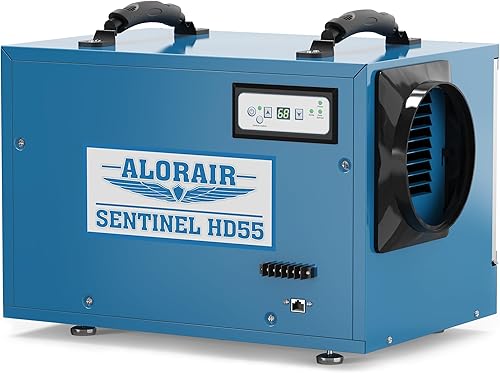 Best for sealed crawl spaces
ALORAIR 113 Pints Crawlspace Dehumidifier for Commercial
Crawl space ventilation fan vs dehumidifier: the quick verdict
Choose a fan for vented spaces with stale, damp air, and a dehumidifier for sealed or persistently wet spaces. A fan cannot dry air on a humid day, and a dehumidifier cannot bring in fresh air.
The CADPXS moves 220 CFM, and the Abestorm moves 540 CFM. The ALORAIR removes up to 113 pints per day, and the Moiswell removes up to 155 pints per day.
Our best crawl space ventilation fan guide covers fan sizing in more detail. Read it if you have already decided on air exchange.
The two types side by side
Fans exchange air; dehumidifiers extract water. That one difference drives every other choice in this comparison.
A fan needs an opening in the foundation and a path for outside air to enter. It works best when outdoor air is drier than the crawl space air.
A dehumidifier needs a power outlet and a drain route. It works in a sealed space because it does not depend on outdoor air at all.
| Feature | Ventilation fan | Dehumidifier |
|---|---|---|
| Main job | Exchange indoor and outdoor air | Remove water from the air |
| Needs a vent opening | Yes | No |
| Needs a drain | No | Yes, for continuous models |
| Works in a sealed space | No | Yes |
| Helps with odors and radon gas | Yes, by exhausting air | Only by drying the air |
| Limits | Depends on outdoor humidity | Uses more power while drying |
How air exchange actually works
A fan lowers humidity only when replacement air is drier.
The CADPXS runs at 220 CFM and the Abestorm at 540 CFM. Both exhaust stale air and draw in outdoor air through other vents, so the Abestorm turns air over faster.
Both have a built-in dehumidistat. The CADPXS range is 20% to 80% RH and the Abestorm range is 5% to 80% RH.
Both stop below 35°F through freeze protection. A fan also exhausts radon gas, treated wood gases and odors before they migrate into living areas.
If your crawl space has no working vents, a fan has nowhere to exhaust air. Our best basement ventilation fan guide shows the same logic for a related space.
How moisture removal actually works
A dehumidifier lowers humidity in any enclosed space, whatever the weather outside.
It draws moist air over a cold surface, collects the water and drains it away. The ALORAIR is rated at 113 pints per day at saturation and 53 pints per day at AHAM, the standard test condition.
The Moiswell is rated at 155 pints per day max and 70 pints per day at AHAM. It is the stronger dryer of the two.
Both drain continuously, so you do not empty a tank. Both have automatic defrost, with the compressor pausing while the fan keeps running so frost can thaw.
Plan a drain route to a sump, floor drain or outside point before either unit arrives.
Airflow numbers, explained
CFM tells you how fast air moves, not how dry it gets.
Compare CFM only between fans, and pints only between dehumidifiers. The Abestorm at 540 CFM moves about 2.5 times the air of the CADPXS at 220 CFM, so in a large or very stale crawl space it means faster turnover.
The Moiswell moves 265 CFM as a dehumidifier, and the ALORAIR moves 120 CFM. Higher airflow helps a dehumidifier pass more air over its coil per hour.
Do not compare a fan's CFM with a dehumidifier's CFM as if they do the same job. One pushes air out of the space, and the other recirculates air within it.
For bathroom-scale air exchange, our what size bathroom fan guide explains how CFM relates to room size.
Pint capacity, explained
Pints per day tells you how much water a dehumidifier can pull from the air.
It is the right number to compare between the ALORAIR and the Moiswell. The Moiswell removes up to 155 pints per day, which is about 19 gallons of water.
The ALORAIR removes up to 113 pints per day, or about 14 gallons.
At AHAM, the figures drop to 70 and 53 pints per day. Use the AHAM figure for a fair real-world comparison, since saturation is a best-case lab condition.
Coverage follows the same pattern. The ALORAIR covers up to 1,200 sq ft, while the Moiswell covers up to 6,000 sq ft.
A bigger number is not always better for a mild space, where a unit that is too large will cycle on and off more often.
Controls and automation
Both types can run automatically, but they sense different things. Fans respond to humidity at the vent, and dehumidifiers respond to humidity in the space.
Both fans have a knob control panel and a built-in dehumidistat. The CADPXS range is 20% to 80% RH, and the Abestorm range is 5% to 80% RH.
Both fans also have freeze protection that stops them below 35°F. Set the humidity level, plug in the unit and let it run.
The ALORAIR lets you set a target humidity and runs continuously until it reaches it. The Moiswell cycles on and off to hold your setting.
The Moiswell also has a 24-hour timer and auto restart after a power outage. Auto restart matters in a crawl space, since outages are common and the space is hard to check.
Size and fit in a real crawl space
Measure your clearance before you choose, since crawl spaces are often tight. The four units here have very different shapes.
The CADPXS measures 18 in x 9 in x 2 in and weighs 5.7 pounds. It mounts on a wall over a vent, so it is easy to position.
The Abestorm measures 15 in x 2.8 in x 10.2 in. Its faceplate can be trimmed to fit the opening.
The ALORAIR measures 19.2 in x 12.2 in x 13.3 in and weighs 41.7 pounds. Its rugged handle helps when you carry it between jobs.
The Moiswell measures 22.5 in x 14 in x 14.7 in and weighs 63 pounds. Its horizontal design fits between floor joists and in low-clearance spaces, where a taller unit may not fit at all.
What each option cannot do
A fan cannot dry air on a humid day, and a dehumidifier cannot ventilate.
On a humid summer day, a fan draws in air that may be wetter than the crawl space air. The fan will run, but humidity will not fall.
A dehumidifier in a vented space fights a losing battle. It dries the air, and then moist outdoor air flows in through the vents.
A dehumidifier also does not exhaust radon gas or odors. It dries the air in place, but stale air stays stale.
A fan does not condense water or drain it away.
If you are unsure which problem you have, our Do I Need a Crawl Space Dehumidifier? guide walks through the signs.
Cost of ownership, in plain terms
Fans are simpler and usually cheaper to run; dehumidifiers cost more to own but do more. Exact running costs need your local rates and runtime, so we will not guess at them.
A fan has a simpler setup. Mount it over a vent, plug it in and set the humidity level.
A dehumidifier needs a drain route, which may mean a hose run to a sump or a condensate pump. That setup work is the main added cost.
Both types need basic care. Fans need the vent opening kept clear, and dehumidifiers need filters checked and coils kept clean.
The ALORAIR has a MERV-1 filter that protects internal parts from dust.
Energy use differs by model and runtime. Check each unit's ratings and compare them at your expected hours of use.
Who should buy the CADPXS Crawlspace Ventilation Fan
Buy the CADPXS if you want a compact, automatic fan for a vented crawl space with a mild moisture load. It is the simpler fan here at 220 CFM.
Its 20% to 80% RH dehumidistat range covers most settings you would want. The freeze protection stops it below 35°F, which protects the space in winter.
At 18 in x 9 in x 2 in and 5.7 pounds, it fits most vent openings without drama. The 6.56 foot grounded cord gives you some reach to an outlet.
Choose it when your crawl space is vented, outdoor air is often dry and you mainly need air exchange. Skip it if the space is sealed or stays very damp.
Who should buy the Abestorm 8.7 Inch Crawlspace Ventilation Fan
Buy the Abestorm if you want the fastest air exchange in this comparison. At 540 CFM, it moves far more air than the CADPXS.
Its dehumidistat range runs from 5% to 80% RH, which gives you finer control at the low end. It also stops below 35°F, like the CADPXS.
The aluminum-zinc shell has an IP-55 rating, so it resists dust and liquids. A 5.5mm isolation mesh helps keep pests out of the space.
At 55 dB, it is not silent. If the vent sits near a bedroom, that noise level is worth weighing.
Choose it for a large, stale or musty crawl space with good vents. Skip it if you need actual dehumidification in a sealed space.
Who should buy the ALORAIR 113 Pints Crawlspace Dehumidifier
Buy the ALORAIR if you want strong drying with continuous draining in a sealed or damp crawl space. It removes up to 113 pints per day.
Its metal casing suits rugged conditions, and it is cETL-listed. The automatic defrost helps it keep working in cold air.
At 41.7 pounds, it is heavy but manageable, and the rugged handle helps with carrying. It covers up to 1,200 sq ft.
Automatic draining is the big convenience here. There is no tank inside, so you do not need to empty it by hand.
Choose it for a sealed crawl space or a space with steady moisture. Skip it if you have no drain route and cannot create one.
Who should buy the Moiswell 155 Pint Commercial Dehumidifier
Buy the Moiswell if you need the most drying power here, or if your space has low clearance. It removes up to 155 pints per day.
Its horizontal design fits between floor joists and in tight basements. That shape alone may decide it for a low crawl space.
It covers up to 6,000 sq ft and moves 265 CFM of air. The 24-hour timer, auto drain and auto restart make it hands-off.
At 63 pounds, it is the heaviest unit here. Plan how you will carry it into the space before it arrives.
Choose it for a very damp space, a large area or a low-clearance layout. Skip it if your space is small and mild, where a smaller unit would do.
Can you use both at once?
Yes, and pairing them can be the best answer for a space with both stale air and excess moisture. The fan handles air exchange, and the dehumidifier handles water.
Run the fan to exhaust odors and stale air through the vents. Run the dehumidifier to hold humidity down between fan cycles.
Watch the weather, though. On humid days, the fan may bring in moist air that the dehumidifier then has to remove.
Our Best Dehumidifier For Crawl Space guide covers dehumidifier sizing in more detail. Use it if you decide to go the drying route first.
Setup and care, whichever you choose
Install either type with clear access for checks, and set it up for automatic running. Crawl spaces are easy to forget, so automation matters.
For a fan, mount it over the vent opening, plug it in and set the humidity level. Confirm that other vents can supply replacement air.
For a dehumidifier, place it where air can circulate around it, then run the drain hose to a suitable point. Confirm the drain cannot back up or freeze.
Check both types every few months. Clear the vent, check the filter and confirm the unit is still running.
A hygrometer in the space helps you confirm the result. Put it away from the vent and the unit's own sensor.
The verdict on crawl space fan vs dehumidifier
Pick a fan for a vented crawl space with stale, mild damp air, and pick a dehumidifier for a sealed or very wet space. That single question decides most of this choice.
The Abestorm offers the strongest air exchange at 540 CFM. The CADPXS offers a smaller, simpler fan at 220 CFM.
The Moiswell offers the most drying at 155 pints per day. The ALORAIR offers strong drying at 113 pints per day with continuous draining.
If your space is sealed, start with a dehumidifier. If it is vented and outdoor air is often drier, start with a fan.
For fan options, see our best crawl space ventilation fan guide and match the CFM to your space. For drying options, compare pint capacity at AHAM rather than the headline number.
Frequently asked questions
Is a crawl space ventilation fan or dehumidifier better?
A fan is better when you need to exchange damp indoor air with outdoor air through existing vents, while a dehumidifier is better when you need to lower humidity in a sealed or very damp space. Fans move moisture out with the exhaust air, and dehumidifiers remove water from the air itself, so the moisture source matters most.
Can a ventilation fan replace a dehumidifier?
A fan can replace a dehumidifier only when outdoor air is dry enough and the crawl space has working vents, since the fan exchanges air rather than condensing water. If outdoor air is humid or the space is sealed, the fan may bring in moisture, and a dehumidifier will control humidity more directly.
Which is cheaper to run, a fan or a dehumidifier?
Running cost depends on the exact model, runtime and local electricity rates, and those figures are not directly comparable here. A fan runs only when its humidity setting calls for it, while a dehumidifier cycles with its compressor, so check each unit's ratings and your expected runtime before deciding.
Should I use both a fan and a dehumidifier?
You can use both when you need fresh air exchange plus active moisture removal, such as after a leak or in a space that stays damp. Run the fan to clear stale air and odors, and run the dehumidifier to hold humidity down, then check that outdoor air is not adding moisture.
What humidity should a crawl space fan be set to?
Set the fan to the humidity level you want to maintain, using the range on the unit, such as 20% to 80% RH on the CADPXS or 5% to 80% RH on the Abestorm. A hygrometer in the crawl space helps you check the result, since the fan's own sensor may sit near the vent.


