Whole House Fan vs Attic Fan: Which Do You Need? (November 2026)
A whole house fan cools the rooms you live in, while an attic fan cools only the attic. In a whole house fan vs attic fan choice, pick the fan for the space that feels too hot.
On this page (11 sections)
- Whole house fan vs attic fan: the two side by side
- What each fan actually does in your home
- Cooling living space versus cooling the attic
- Airflow capacity and coverage: how much CFM do you need?
- Noise: where you feel the fan matters most
- Install and controls: ceiling, gable or wall
- Why you might want both fans in one home
- Humidity: fans move air, they do not dry it
- Energy use and operating habits
- Who should buy which fan
- Whole house fan vs attic fan: our verdict
A whole house fan cools the rooms you live in, while an attic fan cools only the attic. That is the core of this choice.
If bedrooms feel stuffy on a cool evening, a whole house fan helps directly.
We compared specs and features against the job each fan is built for. Our score weighs specs, features and buyer feedback.
We did not test these fans in a home.
The 4 fans split by job. One is a whole house fan for living spaces.
Two are attic fans for gable vents. One is a large shutter exhaust fan for an attic, garage or shed.
 Best for cooling living rooms
Quietcool QC CL-4700 RF Classic Advanced Whole House Fan with Wireless Control
 Best for gable attic venting
Air Vent Gable Ventilator 53315 Attic Fan
Whole house fan vs attic fan: the two side by side
The whole house fan moves room air; the attic fan moves attic air. That difference changes airflow, noise, controls and install work.
A whole house fan must run quietly where you live.
| Whole house fan | Attic fan | |
|---|---|---|
| Main job | Cool and ventilate living rooms | Cool and ventilate the attic |
| Air path | Windows in, through rooms, out through attic | Outside air in through vents, out through gable or roof |
| Example here | QuietCool QC CL-4700 RF at 4415 CFM | QuietCool AFG SMT PRO-2.0 at 1945 CFM |
| Coverage guide | Up to 2,208 sq ft | Air Vent pick rated for 1500 sq ft max |
| Controls | Wireless RF with timer | App with thermostat and humidistat |
| When off | R5 dampers help seal the ceiling | Shutter or vent cover helps close the opening |
The QuietCool QC CL-4700 RF is the only true whole house fan here. It covers up to 2,208 sq ft and moves 4415 CFM on high and 3402 CFM on low.
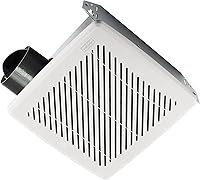
Its motor head hangs from attic rafters and pulls air through a 14 in x 30 in ceiling grille.
The Air Vent 53315 moves 1050 CFM through a 14 inch blade and mounts in a gable. It is rated for 1500 sq ft max, and that rating describes the attic, not living space.
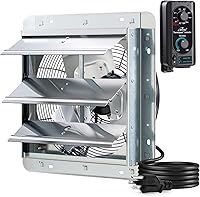
The iLiving ILG8SF36S moves 6128 CFM through a 36 inch blade and closes its shutter when off.
What each fan actually does in your home
A whole house fan creates a breeze you feel in bed; an attic fan lowers heat above your ceiling. QuietCool says a person can feel 5 to 10 degrees cooler in its breeze.
An attic fan works one step removed. It removes hot air under your roof, and the QuietCool smart attic fan says it can cool an attic by up to 30 to 50 degrees Fahrenheit.
A hot attic pushes heat into rooms below, even with the thermostat set low. A whole house fan needs open windows, and QuietCool suggests two or three windows a few inches wide.
Our guide to what size bathroom fan shows how ventilation needs change by room.
Cooling living space versus cooling the attic
Choose a whole house fan for evening comfort; choose an attic fan for attic protection. If your home feels fine at noon but stuffy by 9 p.m., cooler evening air may help most.
QuietCool says its fans use up to 90% less energy than air conditioning. If your attic is the problem, a whole house fan alone may not fix it.
It exhausts warm room air into the attic, and without enough venting that air can grow hotter. The QuietCool QC CL-4700 RF requires 5.89 sq ft of net free attic venting.
Screens and louvers reduce free area, so measure free area, not just outside dimensions. Many homes use both types, as our roundup of the best whole house attic fans for homes shows.
Airflow capacity and coverage: how much CFM do you need?
Match CFM to the space you are moving air through, not to bigger is always better. CFM means cubic feet per minute.
A whole house fan for a 2,000 sq ft home needs far more CFM than an attic fan for a small gable attic.
The QuietCool QC CL-4700 RF moves 4415 CFM on high and 3402 CFM on low, covering up to 2,208 sq ft. The Air Vent 53315 moves 1050 CFM and is rated for 1500 sq ft max.
The QuietCool AFG SMT PRO-2.0 moves up to 1945 CFM, nearly double the Air Vent pick. The iLiving ILG8SF36S moves 6128 CFM, the highest flow here, with a stated 9000 sq ft coverage area.
How to read coverage ratings without overbuying
Coverage ratings assume typical ceiling height and enough venting, so treat them as a starting point. Tall ceilings mean more air volume for the same floor area.
Heat load, window placement and attic venting also change the result.
Start with floor area, then allow for ceiling height and sun exposure. A top floor bedroom under a hot roof may need more air than a shaded ground floor room.
Our guide to how to choose a 30 inch whole house fan walks through size and placement in more detail.
Noise: where you feel the fan matters most
A whole house fan must be quiet in your rooms; an attic fan mostly needs to be quiet above your ceiling. The QuietCool QC CL-4700 RF has a stated noise level of 37.2 dB.
Two speed control lets you drop from 4415 CFM to 3402 CFM when you want less noise. An attic fan sits in or near the gable, above insulation and ceiling material, and that distance can soften sound in rooms below.
The QuietCool AFG SMT PRO-2.0 uses a two speed PSC motor that adjusts with attic temperature. Running slower can reduce both sound and energy use during mild heat, and the iLiving fan is described as motion balanced for quiet operation.
Low speed and timers help you use the fan more
A timer and a low speed make a whole house fan easier to live with. The QuietCool whole house fan includes a wireless RF control kit with a glass switch and a countdown timer of up to 12 hours.
You can set it in the evening and let it run without getting up.
The smart attic fan uses a thermostat and humidistat instead of a timer. It can start cooling at 80 degrees Fahrenheit and adjust speed with attic temperature.
That automation suits an attic you rarely visit.
Install and controls: ceiling, gable or wall
A whole house fan needs a ceiling opening; an attic fan needs a gable or roof opening. The QuietCool QC CL-4700 RF hangs its motor head from attic rafters and needs a 14 in x 30 in ceiling cut out for the grille.
Installation takes a typical 1 to 2 hours, with no framing or joist cutting required. The Air Vent 53315 is a gable mount fan with a 19 x 19 x 8 in housing.
The QuietCool AFG SMT PRO-2.0 is wall mount and plug and play, with a 20 ft power cord and no wiring. The iLiving ILG8SF36S is hardwired and wall mounted, with a housing measuring 5.75 x 39 x 39 in.
It needs a large flat wall area, so plan electrical work before you order.
Sealing the opening when the fan is off
Dampers and shutters matter in cold weather as much as airflow matters in summer. The QuietCool whole house fan includes a damper box with R5 damper doors.
Those doors help insulate the home from the attic in colder seasons when the fan is not in use.
The iLiving fan uses weather resistant aluminum shutters that close on their own. The QuietCool smart attic fan includes vent covers.
If you have a ceiling opening, read how to insulate an attic fan before your first cold season.
Why you might want both fans in one home
A whole house fan and an attic fan solve different halves of the same airflow path. The whole house fan pulls cool outdoor air through windows and rooms, then exhausts it into the attic.
The attic fan then pulls that warm air out through a gable or roof vent.
That pairing suits homes with a large attic and enough venting. The attic fan can run on its own schedule based on attic temperature, while the whole house fan can run in the evening based on your comfort.
The QuietCool smart attic fan fits the second role with its thermostat and humidistat. The Air Vent 53315 is a simpler gable ventilator for a smaller attic, and the iLiving fan can serve a large attic or garage where a shutter and high flow matter more than app control.
When one fan is enough
One fan is enough when only one space has the problem. If your attic stays close to outside temperature and your issue is stale air in bedrooms, a whole house fan may be the right single choice.
If bedrooms feel fine but your attic traps heat and moisture, an attic fan may be enough.
Check attic heat first with a thermometer on a sunny afternoon. Then check how rooms feel in the evening with windows open.
Those two checks can point you to the right fan before you spend money.
Humidity: fans move air, they do not dry it
A fan can remove moist attic air, but it cannot dehumidify indoor air. A whole house fan pulls outdoor air through your home, and that air may carry moisture.
An attic fan removes humid attic air, but it pulls in outdoor air to replace it.
The QuietCool AFG SMT PRO-2.0 includes a humidistat and humidity turn off and turn on points. That helps avoid pulling in high humidity air when it would feed mold, and helps reduce winter condensation.
If indoor humidity is your main issue, a fan may be the wrong tool. Our guide to the best dehumidifier for whole house and our explainer on what is a whole house dehumidifier cover systems that remove moisture from indoor air.
Mold, roof stress and winter condensation
Attic ventilation can reduce heat and moisture stress, but it does not replace good insulation and air sealing. QuietCool says its smart attic fan can help reduce winter roof ice build up and protect appliances and home structure.
Those benefits depend on your roof, insulation and vent layout.
A hot attic can stress roofing materials over time. A humid attic can feed mold on wood.
Treat an attic fan as one part of attic health. Keep soffit vents clear, seal air leaks from the home, and use enough insulation.
Energy use and operating habits
A fan usually uses far less energy than air conditioning, but savings depend on how you run it. QuietCool says its whole house fan uses up to 90% less energy than air conditioning.
It also says homeowners can save up to 50 to 90% off air conditioning usage with ventilation cooling.
The QuietCool QC CL-4700 RF uses a 551 watt PSC motor on high and 415 watts on low. You can run high for a fast cool down, then drop to low overnight.
The QuietCool AFG SMT PRO-2.0 moves up to 1945 CFM on high at 120 watts.
The Air Vent 53315 is rated at 180 watts with 1/12 HP and 3.2 amps. The iLiving ILG8SF36S runs at 120 volts, 1/2 HP and 6.00 amps at 825 rotations per minute.
Habits that shape your energy result
Run the whole house fan when outside air is cooler, and let the attic fan respond to attic heat. A whole house fan at noon on a humid 95 degree day will not cool well.
The same fan at 9 p.m. at 72 degrees can replace air conditioning for hours.
An attic fan with a thermostat can start at 80 degrees Fahrenheit and adjust speed with temperature. Close windows for safety when a whole house fan runs.
The QuietCool QC CL-4700 RF includes window locks to help keep windows secure during operation.
Who should buy which fan
Buy the fan for the space that bothers you most, then size it to that space. If you want a breeze in bed on cool nights, the whole house fan is the clear pick.
The QuietCool QC CL-4700 RF covers up to 2,208 sq ft, moves 4415 CFM on high, and includes wireless RF control with a 12 hour timer. If your attic runs hot and you rarely think about it, the smart attic fan fits better.
The QuietCool AFG SMT PRO-2.0 moves up to 1945 CFM, uses app control, and runs by thermostat and humidistat, with a fire safety sense shut off. For a simple gable vent and smaller attic, the Air Vent 53315 is a straightforward choice at 1050 CFM for 1500 sq ft max.
For a garage, shed or large attic, the iLiving ILG8SF36S moves 6128 CFM through a 36 inch blade.
Whole house fan vs attic fan: our verdict
Pick a whole house fan for room comfort and an attic fan for attic heat, and pick both when your attic must exhaust what your rooms supply. A whole house fan cools you.
An attic fan protects the attic and the rooms below it.
For most homeowners with a stuffy home and a vented attic, the QuietCool QC CL-4700 RF is the strongest whole house pick here. Confirm 5.89 sq ft of net free attic venting and plan for the 14 in x 30 in ceiling opening.
For most homeowners with a hot attic and no wish to manage controls, the QuietCool AFG SMT PRO-2.0 is the strongest attic pick here. Its 1945 CFM output, app control and thermostat with humidistat make it easy to leave on automatic.
Start by naming the hot space. If it is your bedroom, shop whole house fans, and if it is your attic, shop attic fans, sized to the space and the venting.
Frequently asked questions
Can a whole house fan replace air conditioning?
QuietCool says its whole house fan was not created to eliminate air conditioning, and it can decrease how much you use it.
The fan works best when outside air is cooler than inside air. On hot or humid days, you may still need cooling from another source.
Is a whole house fan the same as an attic fan?
No. A whole house fan pulls air through your living rooms and exhausts it into or through the attic, so you feel the breeze indoors.
An attic fan only moves air in and out of the attic. It can lower attic heat and help your home, but it does not cool your rooms directly.
What size whole house fan do I need?
Match CFM and coverage to your home size and ceiling height, and confirm net free attic venting before you order.
The QuietCool QC CL-4700 RF covers up to 2,208 sq ft at 4415 CFM and needs 5.89 sq ft of net free attic venting. A larger or taller home may need more capacity.
Do whole house fans and attic fans work together?
Yes, many homes use both. The whole house fan exhausts room air into the attic, and the attic fan then pushes that warm air outside through a gable or roof vent.
That pairing can keep the attic from getting hotter as the whole house fan runs. Size both fans to your attic venting.