Exhaust Fan vs Ceiling Fan: Which Do You Need? (November 2026)
Choose an exhaust fan to remove moist or stale air from a room and a ceiling fan to circulate air inside it. In an exhaust fan vs ceiling fan choice, removal and circulation solve different problems, so many rooms need one or the other, not both.
On this page (12 sections)
- Exhaust fan vs ceiling fan: the quick verdict
- The two side by side
- Removal vs circulation: the point that decides the choice
- Air flow, CFM and room size
- Noise: quiet removal vs quiet circulation
- Mounting, ducts and setup
- Controls, lights and extra features
- Heat, moisture and odors: what each fan really does
- Energy, upkeep and everyday care
- Kitchens, garages and special rooms
- Who should buy which
- The verdict on exhaust fan vs ceiling fan
Choose an exhaust fan to remove moist or stale air from a room and a ceiling fan to circulate air inside it. This guide compares removal, circulation, size, sound and setup so you can match the fan to the job, not just to the room name.
An exhaust fan pulls air out through a duct or wall opening. Fresh air enters to replace it, often through a door gap, a vent or a window left slightly open.
A ceiling fan pushes air across the room. It makes the same air feel cooler, but no air leaves and no moisture, smoke or fumes are carried away.
That split decides most choices. A bathroom after a shower needs removal, while a bedroom at night usually needs quiet circulation.
A garage with heat, dust or car fumes also needs removal, because moving stale air around does not clear it.
Setup follows the same split. Exhaust units need a path to the outside, while ceiling fans need a junction box and safe headroom above.
For larger ventilation choices, compare whole house fans and attic fans. Sound matters too.
A bath exhaust runs for short bursts, while a bedroom fan may run all night.
Size is measured differently. Exhaust fans use CFM, while ceiling fans are judged by diameter and the room they can cover.
For temperature control, see ceiling exhaust fans with thermostats.
Cost and care differ as well. Removal fans may need duct checks and grille cleaning, while ceiling fans need blade dusting and light cover care.
Keep that removal versus circulation question in mind for every room. It will make the models below easier to judge.
 Best for large garages and workshops
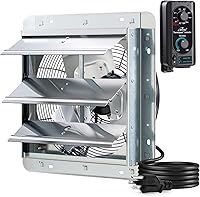
iLiving 12" Wall Mounted Shutter Exhaust Fan

Exhaust fan vs ceiling fan: the quick verdict
Pick exhaust for removal and a ceiling fan for comfort. Room size, noise and mounting decide the exact model.
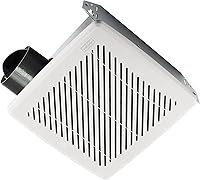
The Broan-NuTone Bathroom Exhaust Fan gives 50 CFM at 2.0 sones for rooms up to 45 square feet. It removes moisture quietly.
The iLiving 12" Wall Mounted Shutter Exhaust Fan gives 960 CFM for up to 1400 square feet. It suits a large garage or workshop.
The Amico 42 Inch Black Low Profile Ceiling gives 6 speeds, a reversible DC motor and a dimmable light. It circulates air in a small bedroom.
The Depuley Modern Ceiling Fan with Light gives 5 blades, 6 speeds and a timer. It suits a small living area or covered patio.
Our score weighs specs and buyer feedback for the room each fan serves.
The two side by side
Exhaust fans remove air; ceiling fans move air inside the room.
| Fan | Type | Key size | Air flow | Sound | Best room |
|---|---|---|---|---|---|
| iLiving 12" Wall Mounted Shutter Exhaust Fan | Exhaust, wall mount | 12 inch blades | 960 CFM | Under 65dB | Garage, workshop, greenhouse |
| Broan-NuTone Bathroom Exhaust Fan | Exhaust, ceiling mount | 3 inch duct | 50 CFM | 2.0 sones | Small bathroom, powder room |
| Amico 42 Inch Black Low Profile Ceiling | Ceiling fan with light | 42 inch diameter | Circulates, no CFM rating given | Low at 35dB | Small bedroom, office |
| Depuley Modern Ceiling Fan with Light | Ceiling fan with light | 42 inch diameter, 5 blades | Circulates, no CFM rating given | 30dB | Bedroom, covered patio |
CFM means cubic feet per minute moved out by an exhaust fan. A higher CFM rating means more air is pushed outside in the same time.
Ceiling fans do not send air outside, so they do not use CFM the same way. Their comfort comes from moving air across people in the room, not from changing the room air volume.
An exhaust fan sized for a small bathroom will clear a large garage too slowly. The same low rating would leave a large garage feeling stuffy for far longer.
A ceiling fan that is too small for a large living room may only stir air near the center. A ceiling fan that fits a small bedroom can feel strong and steady at low speed.
Exhaust fans need a duct path or wall opening. The path must lead outside, not into a ceiling cavity, attic or wall void.
Ceiling fans need a ceiling junction box and headroom. Even a low profile model still needs clearance so blades stay clear of heads and tall furniture.
Mounting strength matters for both types. A wall exhaust must seal well against weather, while a ceiling fan must hang level and still.
For bathrooms, compare wall-mounted bathroom exhaust fans.
Daily care also follows the mounting. Exhaust grilles collect dust and can cut airflow, while ceiling blades collect dust and can make a quiet fan feel uneven.
Removal vs circulation: the point that decides the choice
Removal takes stale air out; circulation keeps the same air moving.
After a shower, bathroom air holds water vapor. An exhaust fan pulls that vapor out through a duct.
Without removal, vapor condenses on mirrors and walls.
A ceiling fan in that bathroom would spread vapor more evenly. It might feel cool, but the room would stay damp longer.
After cooking, an exhaust fan pulls smoke and odors out. A ceiling fan would push them into nearby rooms.
In a garage, an exhaust fan pulls hot air, dust and fumes out. A ceiling fan would make it breezier, but heat and fumes would stay inside.
In a bedroom at night, you want steady, quiet movement to feel cool under covers. You do not need removal there.
Our post on Do Fans Help Dehumidify? explains why moving air alone does not remove moisture.
Air flow, CFM and room size
Match CFM to room size for exhaust fans, and diameter to room size for ceiling fans.
The iLiving unit moves 960 CFM and covers up to 1400 square feet. That suits a warehouse, large garage or greenhouse.
The Broan-NuTone unit moves 50 CFM for a room up to 45 square feet. That suits a powder room after a shower.
The iLiving moves about 19 times the air per minute of the Broan-NuTone. That makes it right for a much larger space, not better in every room.
Both ceiling fans are 42 inch in diameter. Amico compares that to the width of a twin bed.
Depuley lists 129 to 215 square feet for its 42 inch model.
For a large living room, 42 inch may feel weak. For a small bedroom, it fits well and sits close to the ceiling.
To size a bathroom unit, start with what size bathroom fan to turn square feet into CFM.
Noise: quiet removal vs quiet circulation
Choose exhaust fans by sones or dB for removal spaces, and ceiling fans by dB for sleep spaces.
The Broan-NuTone runs at 2.0 sones. That low hum suits a bathroom run after a shower.
The Amico ceiling fan runs as low as 35dB, compared to soft sounds like falling leaves. That suits light sleepers.
The Depuley ceiling fan runs as low as 30dB. That suits a bedroom where soft sound matters more than strong wind.
The iLiving unit is rated under 65dB. That fits a garage where tools already create sound.
It would feel too loud in a bedroom.
A bathroom exhaust runs for minutes. A bedroom ceiling fan may run all night, so night use demands lower sound.
Mounting, ducts and setup
Exhaust fans need a path to the outside; ceiling fans need a ceiling box and headroom.
The Broan-NuTone is a ceiling mount unit with a 3 inch duct. Ducting must lead outside the home.
The iLiving unit is a wall mount unit. It exhausts directly through an exterior wall.
Its automatic shutter closes when the fan stops.
Our guide to the best wall mount exhaust fan covers wall units for garages. For grid ceilings, see drop ceiling exhaust fan.
Ceiling fans need a standard ceiling junction box. The Amico and Depuley models are flush mount, so they sit close to the ceiling.
Check ceiling height before you buy. Even a flush mount needs clearance so blades do not block headroom.
Controls, lights and extra features
Ceiling fans here add light and remote control; exhaust fans here add speed and thermostat control.
The Amico ceiling fan has a remote with 6 speeds, a dimmable light at 10% to 100%, and 3 color temperatures at 3000K, 4000K and 6000K.
The Depuley ceiling fan has 6 speeds, 3 color temperatures at 3000K, 4500K and 6000K, and a 2 to 4 hour timer. It also keeps your last settings in memory.
The iLiving exhaust fan has variable speed and thermostat control from 32 to 130 degrees F. It runs faster when the garage is hot.
The Broan-NuTone exhaust fan is single speed at 50 CFM. That simplicity suits a bathroom.
A bathroom does not need a light and remote. A bedroom does not need a thermostat set at 32 degrees.
Heat, moisture and odors: what each fan really does
Exhaust fans lower heat, moisture and odors by removing air; ceiling fans lower the feel of heat by moving air.
In a hot garage, the iLiving unit pulls hot air out. Fresh air enters, so trapped heat falls over time.
In a damp bathroom, the Broan-NuTone unit pulls moist air out through the duct. Mirrors clear faster and walls feel less damp.
In a bedroom, ceiling fans do not lower room temperature. They move air across skin, which helps you feel cooler at the same thermometer reading.
That is why a ceiling fan does not dry a bathroom, and an exhaust fan does not give a wide breeze at a desk.
If dampness is the main issue, read Does a Dehumidifier Need an Exhaust? to see how removal and dehumidifying relate.
Energy, upkeep and everyday care
Exhaust fans run for short bursts; ceiling fans may run for hours, so energy and care differ.
The Broan-NuTone is Energy Star certified. That helps because bathroom exhausts run often, even in short bursts.
Ceiling fans here use DC motors. DC motors tend to use less power than older AC motors at the same speed, which helps during all night summer use.
Clean exhaust grilles and blades as dust builds. A clogged grille reduces CFM.
Dust ceiling fan blades and check the light cover. Dust reduces air movement and can make a quiet fan sound louder.
Check duct joints once a year if you can access them. A loose joint can leak moist air into the ceiling cavity.
Check the iLiving shutter to be sure it opens and closes freely. For damper options, see the best exhaust fan backdraft damper guide.
Kitchens, garages and special rooms
Kitchens and garages usually need exhaust; living rooms usually need ceiling fans for comfort.
A kitchen that boils, fries or sears needs strong removal. The 42 inch ceiling fans here circulate air and cannot pull smoke out.
Our guide to the best kitchen ceiling exhaust fans covers units built for cooking removal.
A garage with cars or a workshop bench needs wall exhaust. The iLiving unit at 960 CFM fits that job.
See best ceiling exhaust fan for garage for ceiling mounted garage options.
A bedroom, study or small office needs circulation and light. The Amico and Depuley fans add a breeze and light in one fixture.
A covered patio is a middle case. A ceiling fan makes sitting feel cooler, but it will not remove heat from the outdoor area.
Who should buy which
Buy exhaust for wet, hot, dusty or smelly rooms; buy a ceiling fan for rooms where you sit, sleep or work.
Buy the iLiving 12" Wall Mounted Shutter Exhaust Fan for a large garage, workshop, greenhouse or warehouse. Its 960 CFM and thermostat suit heat and dust in a big space.
Buy the Broan-NuTone Bathroom Exhaust Fan for a small bathroom up to 45 square feet. Its 50 CFM and 2.0 sones suit quiet moisture removal.
Buy the Amico 42 Inch Black Low Profile Ceiling for a small bedroom or office with light and remote. Its 6 speeds and dimmable light cover sleep and work.
Buy the Depuley Modern Ceiling Fan with Light for a quiet bedroom or covered outdoor space. Its 5 blades, 30dB level and timer suit rest.
For kitchen removal, choose kitchen rated exhaust units. For a large living room, choose a ceiling fan larger than 42 inch.
The verdict on exhaust fan vs ceiling fan
Pick exhaust when air must leave the room, and pick a ceiling fan when air must move within it. That one test keeps the choice simple in wet, hot, dusty and sleep spaces.
For moisture after showers, pick the Broan-NuTone at 50 CFM. It suits a small bathroom up to 45 square feet, where quiet removal matters more than a strong breeze.
For heat and dust in a large garage, pick the iLiving at 960 CFM. Its wall mount, shutter and thermostat control suit a workshop, greenhouse or warehouse space up to 1400 square feet.
For a breeze and light in a small bedroom, pick the Amico or Depuley at 42 inch. Both models add remote control, speed choice and dimmable light in a low profile fixture.
Do not use a ceiling fan as a bathroom dryer. It may spread moist air, but it will not pull that moisture outside through a duct.
Do not use a bathroom exhaust as a bedroom comfort fan. It removes air in one spot and will not give a wide, gentle breeze across a bed or desk.
Many homes use both types in different rooms. Before you order, measure the room and check the mounting spot, because the right fan still needs the right place to fit.
Frequently asked questions
Can a ceiling fan replace an exhaust fan in a bathroom?
No. A ceiling fan circulates air inside the room, while an exhaust fan removes moist air and sends it outside through a duct.
A bathroom needs removal after showers to limit moisture, so a ceiling fan alone will not dry walls, mirrors or towels.
Which is better for a garage, an exhaust fan or a ceiling fan?
An exhaust fan is usually better for a garage because it removes heat, dust and fumes to the outside. A ceiling fan only moves air around inside, which can feel cooler but leaves stale air and pollutants in the space for you to breathe.
Do I need both an exhaust fan and a ceiling fan?
You need both only when a room needs air removal and daily air movement. A bathroom usually needs exhaust only, while a bedroom usually needs circulation only.
A large kitchen or workshop may need exhaust for cooking or dust, plus a ceiling fan for comfort.
How do I know what size exhaust fan to buy?
Match CFM to room size and use. A small bathroom up to 45 square feet can use about 50 CFM, while a large garage up to 1400 square feet may need hundreds of CFM.
Our guide to what size bathroom fan explains the math in plain steps.