How to Choose a Ceiling Exhaust Fan with a Thermostat
A good ceiling exhaust fan with thermostat starts with the room, not the fan: match CFM to room size, confirm the thermostat range fits your target temperature, and check that ducting and mounting suit a ceiling. If storage heat or dust is the main problem, a thermostat wall fan may work better.
On this page (10 sections)
- How do you size a ceiling exhaust fan with thermostat?
- What thermostat range do you need?
- What is the difference between an exhaust fan and a ceiling fan?
- When does a bathroom fan beat a thermostat fan?
- How do you choose ceiling, wall or drop ceiling mounting?
- How do you match CFM, duct size and room area?
- What features matter in a thermostat exhaust fan?
- How do you keep noise, energy and air quality in check?
- How do you install and care for a thermostat exhaust fan?
- Which thermostat exhaust fan should you pick?
A ceiling exhaust fan with thermostat works best when the fan size, temperature setting and air path fit the same room. Start with room size and heat load, then check controls and ducting.
Thermostat control helps in stores, garages, workshops and greenhouses where heat builds during the day. For moisture below a home, compare crawl space ventilation and dehumidifiers.
It is less useful in a small bathroom where moisture and odor matter more than temperature.
The products in this guide show three different answers. One is a high airflow wall fan with thermal control, one is a small bathroom fan, and one is a comfort ceiling fan.
How do you size a ceiling exhaust fan with thermostat?
Size the fan by room area and air changes, not by ceiling height alone. A small bathroom needs far less airflow than a garage or workshop.
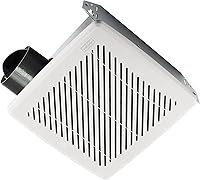
The Broan-NuTone bathroom fan moves 50 CFM and suits bathrooms up to 45 square feet. That small capacity works for moisture and odor in a powder room or small bathroom.
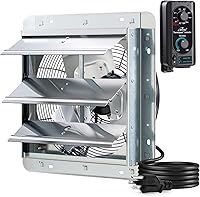
The iLiving shutter fan moves 960 CFM and covers up to 1,400 square feet. That scale suits warehouses, greenhouses, garages and workshops, not a normal bathroom.
Measure length and width, then multiply for square feet. Add extra capacity if the room gets direct sun, holds engines or stores heat producing equipment.
Choose too small and hot air will linger. Choose too large and you may pay for airflow, noise and duct work you do not need.
Rule: pick CFM for the room area first, then confirm the thermostat range fits the temperature you want to hold.
What thermostat range do you need?
Pick a thermostat range that starts the fan before the room feels too hot. The iLiving Thermospeed controller covers 32 to 130 degrees Fahrenheit.
That wide range suits garages, workshops and greenhouses where heat varies by season. It also lets you set a higher start point for storage and a lower one for work areas.
Variable speed matters as much as the on and off point. Lower speed can move air with less noise, while higher speed clears heat faster when the room is full.
The iLiving fan runs at 0.6 amps and uses a 1/20 horsepower motor. Its 12 inch blades and deep pitch are built to move 960 cubic feet per minute.
Noise is listed below 65 dB for that fan. That level is more suited to a workshop or garage than a bedroom or office.
The Broan-NuTone fan has one speed and no thermostat in its listed controls. It suits short bathroom use rather than automatic heat control.
Use a thermometer in the room for a few days before you set the control. Note the temperature when the space feels stuffy, then set the fan to start a few degrees lower.
Rule: set the thermostat a few degrees below the temperature where the room feels too hot, and use variable speed when noise matters.
What is the difference between an exhaust fan and a ceiling fan?
An exhaust fan removes air from the room, while a ceiling fan circulates air within the room. A 30-inch whole-house fan also exhausts indoor air through the attic.
That difference decides whether heat, moisture and odor leave the space.
Our exhaust fan vs ceiling fan guide explains the split in more detail. A thermostat exhaust fan can start on its own, but it still needs an outlet path.
The Amico fan is a 42 inch low profile ceiling fan with light and remote control. It has six speed levels, a reversible DC motor and a light that can dim from 10 percent to 100 percent.
Its fan and light can run separately, and the remote can be used after mounting. It suits small bedrooms, offices, studies and living rooms where moving air is the goal.
It does not remove hot air, moisture or odor from the room. A ceiling fan can make a warm room feel cooler, but the heat stays inside unless another fan removes it.
Low profile mounting helps on lower ceilings. The fan measures 42 inches across and 9.3 inches high, so check headroom before you install it.
For rooms that need both comfort and removal, pair a ceiling fan with a ducted exhaust fan. Run the exhaust fan for heat or moisture, and run the ceiling fan for even air movement.
Rule: buy an exhaust fan to remove air, and a ceiling fan to circulate air; do not use one as a substitute for the other.
When does a bathroom fan beat a thermostat fan?
A bathroom fan beats a thermostat fan when moisture and odor are the problem. Bathrooms rarely need heat based starting, and small rooms need low airflow.
The Broan-NuTone fan moves 50 CFM at 2.0 sones and is Energy Star certified. See the best Broan bathroom exhaust fans for more options.
That low sound level suits a small bathroom where you want quiet operation.
It mounts in the ceiling with no cut installation and foldable brackets. The housing is 7-1/4 by 7-1/2 by 3-5/8 inches, and the cover is 8-5/8 by 8-3/8 inches.
The duct connection is 3 inches in diameter. Short, straight ducting helps the fan move its rated airflow without extra resistance.
Its white grille is made to blend with common ceiling paint. The motor assembly is removable, which helps with cleaning and service.
It has one speed and a touch control method. That simple setup suits short runs after showers, baths and toilet use.
Learn what size bathroom fan fits your room before you order. A 50 CFM fan covers up to 45 square feet, so larger bathrooms may need more capacity or a different model.
Rule: choose a quiet low CFM bathroom fan for moisture, and a thermostat fan for heat in larger spaces.
How do you choose ceiling, wall or drop ceiling mounting?
Choose mounting by where the air can leave the building. Ceiling fans need a duct path above or through the ceiling.
Wall fans need a clear wall opening.
A ceiling exhaust fan suits bathrooms, kitchens, laundry rooms and garages with duct access. It keeps the grille overhead and moves air through a duct to the outside.
A wall shutter fan suits workshops, warehouses and greenhouses where a ceiling duct path is hard to build. The iLiving model is wall mount and 15 by 15 by 5.75 inches.
Its automatic shutters open and close with fan operation. That helps limit drafts and pests when the fan is off.
For suspended ceilings, our drop ceiling exhaust fan guide covers support, ducting and access. A drop ceiling tile alone may not support the fan or duct weight.
Check joists, blocking and junction boxes before you buy. Confirm the fan weight, duct size and electrical route fit the ceiling structure.
Wall mounting can shorten the duct path and simplify service. Ceiling mounting can hide the fan behind a grille and shorten runs in some rooms.
Rule: choose the mounting style that gives the shortest safe duct path to the outside, not the style that looks best first.
How do you match CFM, duct size and room area?
Match CFM to room area, heat load and duct resistance. The fan rating assumes a clear path, so long ducts and bends reduce real world airflow.
The iLiving fan moves 960 CFM with 12 inch blades. That high capacity suits rooms up to 1,400 square feet, but only when the outlet path can handle the volume.
The Broan-NuTone fan moves 50 CFM through a 3 inch duct. That pairing suits a small bathroom with a short duct run.
Use the smallest duct that the fan maker allows, and keep bends gentle. Avoid crushed flex duct, sharp turns and long horizontal runs where you can.
Measure the duct route before you order. Mark where the duct will pass through joists, walls and roof or wall openings.
If the route is long, consider a wall fan near the outlet. A shorter path can move more air with the same fan.
For garages, our best ceiling exhaust fan for garage guide compares options by space and heat load. Garages often need more CFM than bathrooms because of sun exposure and stored equipment.
Rule: size the fan and duct together, and shorten the route before you buy a bigger fan.
What features matter in a thermostat exhaust fan?
Look for a thermostat range, variable speed and a shutter when heat control is the main job. Those features let the fan start on its own and match airflow to the room.
The iLiving Thermospeed controller covers 32 to 130 degrees Fahrenheit. It lets the fan cycle on and off at your chosen temperature.
Variable speed helps you tune airflow for mild days and full heat. That control can reduce noise and energy use when full power is not needed.
The automatic shutter opens and closes with fan use. It helps block outside air and pests when the fan is off.
The frame is galvanized steel with aluminum shutters and blades. The motor is direct drive, permanently lubricated and thermally protected.
Wire guards meet OSHA requirements. The fan is UL and cUL listed, and it comes with the controller and owner manual.
The Broan-NuTone fan has a modern white grille and a removable motor assembly. Those details help with cleaning, but they do not add thermostat control.
The Amico ceiling fan has six speeds, three light color temperatures and timer settings of 1, 2 or 4 hours. Those features control comfort and light, not exhaust.
Rule: for heat control, prioritize thermostat range and variable speed over light, remote and timer features.
How do you keep noise, energy and air quality in check?
Keep noise down by matching fan speed to the task. Low speed often works for steady heat, while high speed suits short purges.
The Broan-NuTone fan runs at 2.0 sones, which is quiet enough for a small bathroom. Its Energy Star certification points to efficient operation.
The iLiving fan is listed below 65 dB. That sound level fits a garage or workshop better than a bedroom, office or classroom.
The Amico fan is listed as low as 35 dB. That quiet rating suits bedrooms and offices where comfort matters more than air removal.
Energy use depends on motor size, speed and run time. A thermostat can cut run time by starting only when heat builds.
Fans help move air, but they do not remove moisture from the air itself. Our guide on whether fans help dehumidify explains when air movement helps and when it does not.
A dehumidifier also needs air flow to work well. Our guide on whether a dehumidifier needs an exhaust covers heat and moisture removal in enclosed rooms.
Use exhaust to remove damp air, then use a dehumidifier if the incoming air is still humid. That pairing works better than either device alone in many basements and garages.
Rule: use the lowest speed that holds the room at your target temperature, and add dehumidification when outdoor air is humid.
How do you install and care for a thermostat exhaust fan?
Install the fan with a clear duct path, steady power and firm support. A good install prevents vibration, drafts and weak airflow.
Start by marking the fan location and duct route. Confirm joists, blocking, junction box access and the outside vent location.
For ceiling fans, support the housing so it does not sag or rattle. Seal duct joints, keep bends gentle and vent outdoors.
For wall fans, cut a clean opening, seal the frame and keep the shutter free to move. Confirm the electrical route before you mount the unit.
After install, set the thermostat with a thermometer in the room. Run the fan on low and high speed, then listen for rattles or whistling.
Clean the grille, shutter and blades on a schedule that fits the room. Dust, grease and lint reduce airflow and add noise.
Check the outside vent and shutter a few times each year. Remove leaves, nests and debris so air can leave freely.
The iLiving fan comes fully assembled, and only installation is required. The Broan-NuTone fan uses foldable brackets for no cut ceiling mounting in suitable ceilings.
The Amico fan mounts flush to a standard ceiling junction box. It should not be wired to a dimmer, fan speed switch or smart switch.
Rule: test the thermostat, speed settings and outside vent after install, then clean the grille and shutter on a regular schedule.
Which thermostat exhaust fan should you pick?
Pick the fan by the main problem in the room. Heat, moisture and comfort each point to a different choice.
Pick the iLiving shutter fan for a large garage, workshop, warehouse or greenhouse. Its 960 CFM, thermostat range of 32 to 130 degrees Fahrenheit and variable speed suit high heat loads.
Pick the Broan-NuTone bathroom fan for a small bathroom up to 45 square feet. Its 50 CFM, 2.0 sones noise level and 3 inch duct suit moisture and odor removal.
Pick the Amico ceiling fan for a small bedroom or office where you want moving air and light. Its 42 inch size, reversible motor and remote control suit comfort, not air removal.
If you decide between a best wall mount exhaust fan and a ceiling model, compare duct length and outlet position first. The shorter safe path often wins.
Our score weighs specs, features and buyer feedback against what you're shopping for. For this guide, we compared CFM, thermostat control, mounting, noise and included features.
Rule: choose the iLiving for thermostat heat control in large spaces, the Broan-NuTone for quiet bathroom moisture, and the Amico for room comfort with light.
Frequently asked questions
What CFM do I need for a ceiling exhaust fan with thermostat?
Match CFM to room size and how fast you need the air changed. A 50 CFM fan suits a bathroom up to 45 square feet, while 960 CFM is aimed at spaces up to 1,400 square feet.
More airflow is not always better, so size the fan to the room and the heat or moisture load.
Can a thermostat control a bathroom exhaust fan?
Some fans have built in thermal control, while many bathroom fans use a wall switch or timer instead. Check the control method before you buy, and confirm the thermostat range covers the temperature where you want the fan to start.
Match the control to your daily routine, not just the room size.
Is a ceiling fan the same as an exhaust fan?
No. A ceiling fan circulates air inside the room, while an exhaust fan moves air out through a duct or opening.
A thermostat exhaust fan can start based on temperature, but a comfort ceiling fan mainly changes how the air feels.
Our exhaust fan vs ceiling fan guide walks through the difference.
Where should a thermostat exhaust fan vent?
It should vent outdoors through a duct or wall opening, not into an attic, drop ceiling cavity or garage. The duct path affects airflow, noise and condensation risk.
Measure the route first, then choose a fan and mounting style that fit that path without sharp bends or long runs.